
Chinese EV maker XPENG is accelerating its autonomous mobility ambitions on multiple fronts.
The company has officially rolled its first mass-produced robotaxi off the production line in Guangzhou, while simultaneously exploring manufacturing expansion across Europe and Southeast Asia.
TL;DR
- XPENG began mass production of its first Robotaxi in Guangzhou, built entirely with in-house technologies
- The Robotaxi runs on four XPENG-developed Turing AI chips with 3,000 TOPS computing power
- XPENG is in talks with Volkswagen and other automakers about acquiring a European factory
- The company also acquired a controlling stake in Indonesia-based EIDO to expand Southeast Asian production
XPENG Rolls Out China’s First Mass-Produced In-House Robotaxi
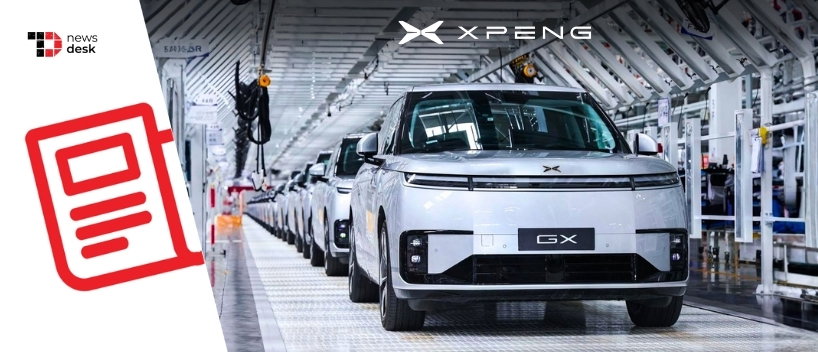
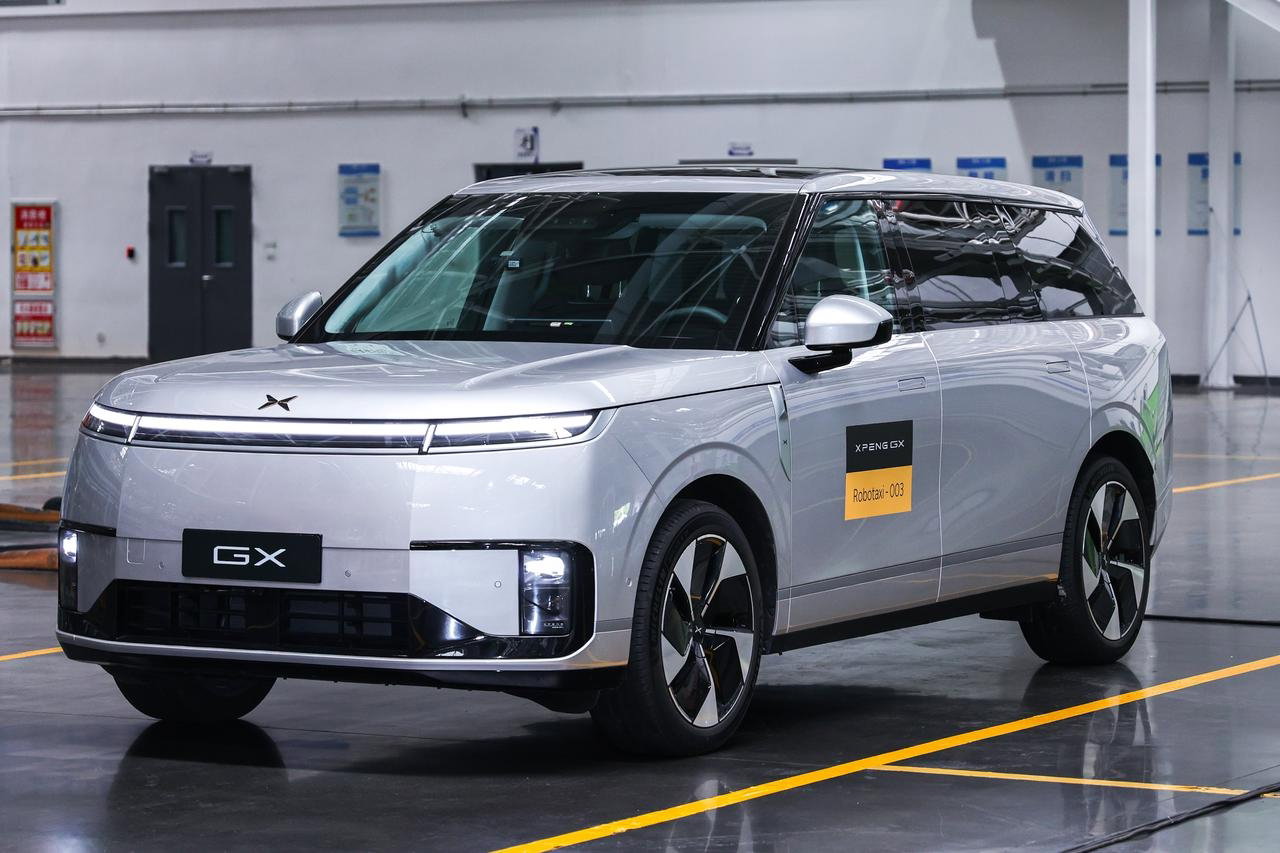
XPENG said its first mass-produced Robotaxi has officially rolled off the production line in Guangzhou, marking what the company calls the first time a Chinese automaker has achieved Robotaxi mass production through full-stack in-house development.
It plans to launch pilot Robotaxi operations in the second half of 2026 and aims to achieve fully autonomous operations without on-site safety officers by early 2027.
Built on the XPENG GX platform, the vehicle is engineered to L4 autonomous driving standards and is powered by four self-developed Turing AI chips delivering 3,000 TOPS of onboard computing power.
Unlike many autonomous vehicle systems that rely heavily on LiDAR and high-definition maps, XPENG’s Robotaxi uses a pure vision approach powered by its VLA 2.0 end-to-end AI model. According to the company, this architecture reduces response latency to under 80 milliseconds while improving cross-city deployment capabilities.
The Robotaxi includes premium cabin features such as privacy glass, gravity seats, entertainment screens, and voice-controlled in-car functions aimed at improving passenger experience.
The company secured a public road testing permit in Guangzhou earlier this year and has since established a dedicated Robotaxi business unit focused on commercialization.
XPENG Expands Global Manufacturing Strategy Beyond China
At the same time, XPENG is aggressively expanding its international production footprint as overseas sales continue climbing.
Reports indicate the company is in discussions with Volkswagen and other automakers regarding the possible acquisition of a European factory. XPENG’s Managing Director for Northeastern Europe, Elvis Cheng, said the company is exploring opportunities to establish a manufacturing location in Europe.
The talks come shortly after Volkswagen CEO Oliver Blume suggested the German automaker could share European factory capacity with Chinese partners.
XPENG’s overseas momentum appears to be accelerating rapidly. The company exported 6,006 vehicles in April 2026 alone, representing a 62% year-over-year increase. During the first four months of 2026, overseas shipments reached 17,563 vehicles, up 55% from the previous year.
However, XPENG reportedly believes some older European factories may not fully meet its future production requirements, which means building a new plant also remains an option.
Topics For More Insights
- XPENG’s Physical AI Reveal: New Humanoid Robot, Robotaxi, Flying Car And More
- Tesla’s Robotaxi Safety Story Just Hit A Curb Twice, Teleoperators Involved In Crashes
- Nuro’s California Driverless Permit Pushes The Premium Robotaxi Dream Closer To Reality
- Uber And Nuro Begin Employee Testing For Premium Robotaxi Service In San Francisco
XPENG Deepens Southeast Asia Presence With Indonesia Factory Deal
Beyond Europe, XPENG is strengthening its Southeast Asian strategy through Indonesia.
The company acquired a 90.1% stake in PT Era Industri Otomotif (EIDO), an Indonesian auto assembly entity previously owned by Erajaya Group. The acquisition officially took effect on May 13 and positions XPENG as the controlling shareholder of the manufacturing business.
EIDO will continue operating as a dedicated manufacturing facility focused on XPENG's local production and assembly operations.
XPENG entered Indonesia in March 2025 and later delivered its first locally assembled X9 MPV from an Indonesian plant in July 2025. The company previously said Indonesia would serve as the starting point for its global localized production strategy.
The move also adds to XPENG’s growing international manufacturing network, which already includes localized production partnerships in Austria through Magna Steyr.
As autonomous driving technology moves closer toward commercialization, XPENG appears to be positioning itself as one of the few Chinese EV makers attempting to scale simultaneously across AI, robotaxis, and global manufacturing infrastructure.
