
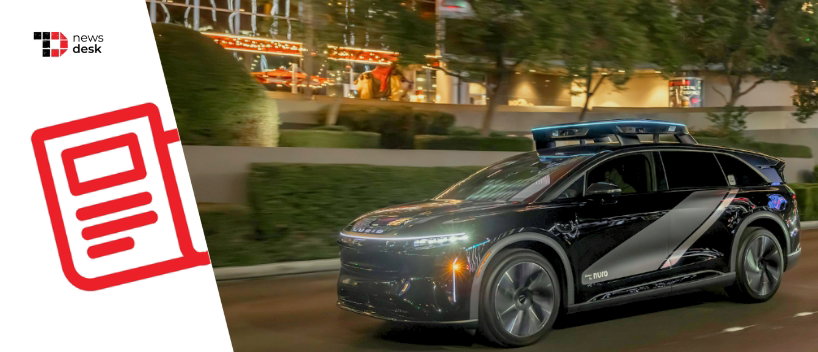
Uber and Nuro have begun employee-only testing of a premium robotaxi service in San Francisco, marking a key step toward a planned public rollout. The test uses Lucid Gravity SUVs equipped with Nuro’s autonomous driving system and is currently limited to internal riders.
TL;DR
-
Uber employees in San Francisco can now request rides in Nuro-powered robotaxis via the Uber app, with a safety driver present during testing.
-
The service uses Lucid Gravity electric SUVs equipped with Nuro’s autonomous driving technology.
-
This marks a shift from prototype unveiling to real-world rider testing, but the service is not yet available to the public.
-
The testing phase is focused on validating ride experience, system performance, and operational readiness ahead of a wider launch.
Uber and Nuro have taken a tangible step toward launching a premium robotaxi service by starting employee-only ride testing in San Francisco. According to TechCrunch, select Uber employees can now hail autonomous rides through the Uber app, using Lucid Gravity SUVs integrated with Nuro’s self-driving system.
This phase represents a controlled real-world trial rather than a public deployment. Each vehicle operates autonomously but includes a human safety operator behind the wheel, ensuring oversight while the companies validate system performance in live urban conditions.
Nuro confirmed the development in an official blog post, describing the test as a milestone toward robotaxi deployment. The update underscores the transition from concept and showcase vehicles to actual rider-facing operations.
The test is significant because it introduces real passengers into the loop. Unlike earlier autonomous trials that focused primarily on mapping and system training, this phase allows Uber and Nuro to evaluate the complete ride experience. That includes how users request rides, interact with the vehicle, and respond to autonomous driving behavior in dense city environments.
The Lucid Gravity SUV serves as the foundation for this premium offering. The vehicle is equipped with a suite of sensors, including cameras, lidar, and radar, enabling it to perceive and navigate complex urban surroundings. The choice of a high-end electric SUV also signals Uber’s intention to position this as a premium mobility product rather than a basic autonomous shuttle service.
Topics For More Insights
TechCrunch noted that sightings of these sensor-equipped vehicles in San Francisco likely indicate active test rides with Uber employees onboard. This makes the city one of the key proving grounds for Uber’s next push into autonomous ride-hailing, an area where competition has intensified in recent years.
Despite the progress, the service remains in an early stage. The current rollout is limited strictly to employees, and there is no confirmed timeline yet for public availability. The companies are expected to use this phase to gather operational data, refine safety protocols, and optimize the rider experience before expanding access.
In essence, the latest development is not a launch but a transition. Uber and Nuro have moved from showcasing technology to testing a real service with real riders, bringing them one step closer to introducing a premium robotaxi experience to the public.
