
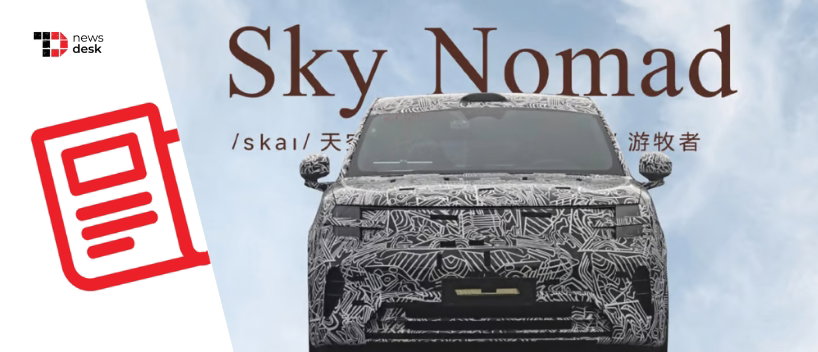
Xiaomi has unveiled a new SUV series called Sky Nomad, marking its entry into China’s extended-range electric vehicle segment as the technology company pushes deeper into automobiles beyond its SU7 sedan and YU7 crossover.
TL;DR
- Xiaomi unveiled Sky Nomad, branded Xiaomi Pengcheng in Chinese.
- The series will focus on smart, versatile, and spacious SUVs.
- Sky Nomad brings Xiaomi into the EREV market, where Li Auto and Aito are strong.
- Reported details point to a large family SUV with long combined range.
Xiaomi is expanding its electric vehicle ambitions with a new SUV series named Sky Nomad, as the company looks to strengthen its presence in China’s fast-moving automotive market.
The series, called Xiaomi Pengcheng in Chinese, will focus on extended-range electric vehicles, a category that combines electric driving with a combustion engine that works as a generator to extend range. This puts Sky Nomad between conventional petrol-electric hybrids and fully battery-powered EVs.
According to Reuters, Xiaomi CEO Lei Jun said the new lineup will comprise “smart, versatile, spacious” SUVs. He also positioned the car as more than a transport product, saying, “They want their car to be a second home. For them, a car is not merely a means of transport but another moving space.”
That framing fits the target market. China’s EREV segment has become especially competitive in the family SUV category, where buyers often look for long-distance comfort, flexible cabin space, and lower range anxiety. This is also the segment where brands such as Li Auto and Huawei-backed Aito have built strong momentum.
Xiaomi EV also teased the name on its official Weibo account, saying, “SkyNomad. Sky, nomad. A new name about space and life, saying hello to everyone first.” However, there is still some uncertainty around whether Sky Nomad will function as a standalone sub-brand or as a series under Xiaomi EV.
The move expands Xiaomi’s auto portfolio beyond its existing battery-electric vehicles. The company entered the car market with the SU7 sedan and followed it with the YU7 crossover, both positioned as high-tech Chinese alternatives to Tesla’s Model 3 and Model Y.
Reuters reported that Xiaomi had delivered 258,232 YU7 crossovers in China by the end of June since the model’s June 2025 launch. Over the same period, Tesla sold 471,207 Model Y vehicles in China, according to DCar data cited by Reuters.
Topics For More Insights
The first Sky Nomad model is widely expected to be a full-size SUV, reportedly called the N90. CnEVPost said earlier reports point to a vehicle more than 5.3 meters long, with a large battery pack above 70 kWh and a battery-only range of 400 km to 500 km. CarNewsChina reported that the mixed range could exceed 1,500 km.
These figures have not all been formally confirmed by Xiaomi, so they should be treated as reported expectations until the company shares full specifications.
Still, the strategy is clear. Xiaomi is entering a category that can help it reach more family buyers and reduce dependence on pure battery-electric models alone.
The timing also matters. Xiaomi’s core smartphone and home appliance markets are mature, while its auto business has become a major new growth pillar. However, cars require heavy investment and operate on thinner margins than consumer electronics.
For Xiaomi, Sky Nomad could be a way to widen its appeal in China before it begins exporting vehicles. Reuters reported that the company has not yet started overseas vehicle exports, though it plans to launch vehicles in Europe next year.
If Sky Nomad delivers on the promise of spacious design, intelligent features, and extended range, Xiaomi may have a stronger shot at challenging China’s leading family SUV players.
