
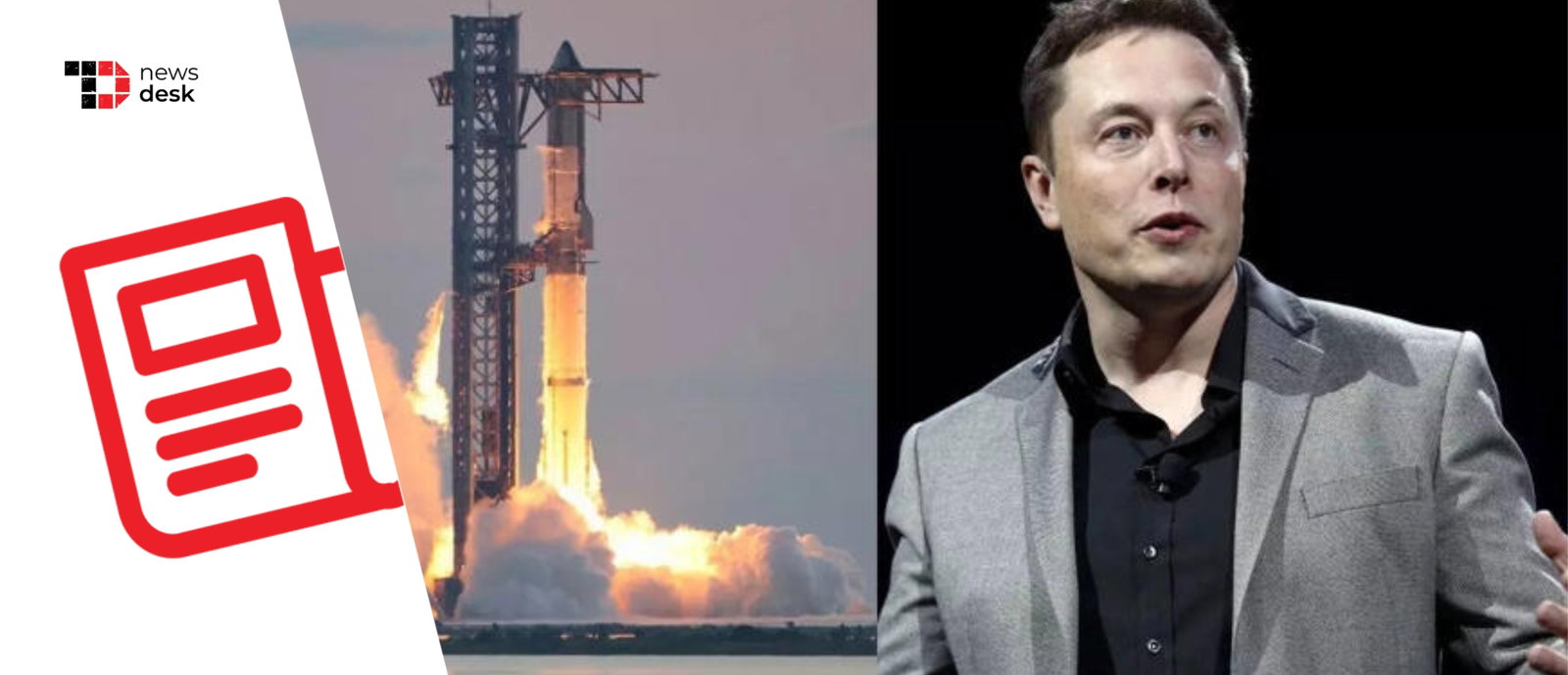
SpaceX has delayed the next Starship test flight to May 2026, pushing back the debut of its upgraded Version 3 vehicle after previously signaling an April window. The postponement keeps one of the company’s most important launch programs waiting as Starship remains central to future Starlink deployments, NASA’s Artemis moon plans, and SpaceX’s broader fully reusable rocket ambitions.
TL;DR
-
Elon Musk now says the first Starship V3 flight is 4 to 6 weeks away, which shifts the launch from April into May.
-
The schedule had already slipped from early March and later April 7 to early or mid-May.
-
The flight matters because V3 is expected to be more powerful, more reusable, and increasingly important for Starlink and Artemis.
SpaceX’s next Starship launch has taken another step back. CEO Elon Musk said the company’s next Starship test flight would happen in May instead of April. Musk wrote on X that the next flight of Starship and first flight of V3 ship and booster is 4 to 6 weeks away, effectively ruling out the earlier April target.
The delay is notable because this mission is expected to mark the first flight of Starship Version 3, a more advanced iteration of SpaceX’s giant rocket system. The V3 debut has already been delayed for months as SpaceX packed dozens of upgrades into the vehicle to improve reliability and make it better suited for NASA missions, including future Artemis lunar operations.

Other reporting points to a launch timeline that has been moving for a while. The mission had first been targeted for early March, then April 7, and is now expected in early or mid-May. That lines up with earlier coverage from Space.com, which said Musk had initially pointed to early April for the first V3 test flight after earlier targeting mid-March in January.
The mission is important because V3 is not a routine refresh. The upgraded vehicle is taller at 124.4 meters and is designed to deliver more than 100 tons to low Earth orbit, a major jump from the roughly 35-ton capacity associated with V2. Booster 19, the first V3 Super Heavy, completed a 10-engine static fire at Starbase’s Pad 2 on March 16, although that test ended early because of a ground-side issue.
SpaceX itself says Starship is designed to be a fully reusable transportation system capable of carrying crew and cargo to Earth orbit, the Moon, Mars, and beyond. On its updates page, the company also said Starship is expected to begin deploying far more capable V3 Starlink satellites this year, with each launch adding more than 20 times the capacity to the network than current-generation satellites.
Topics for more insights:
There is also a regulatory backdrop to this delay. SpaceX must obtain the appropriate permit or vehicle operator license for Starship launches, and the agency’s current Boca Chica environmental approval allows up to 25 annual Starship and Super Heavy launches and landings from the site. That means the bottleneck is less about annual launch allowance and more about SpaceX getting the upgraded vehicle ready to fly.
For now, the bigger takeaway is familiar. Starship remains the most ambitious piece of SpaceX’s launch roadmap, but it is still moving on rocket time. And rocket time, once again, means waiting longer than planned.
