
Manufacturing Technology
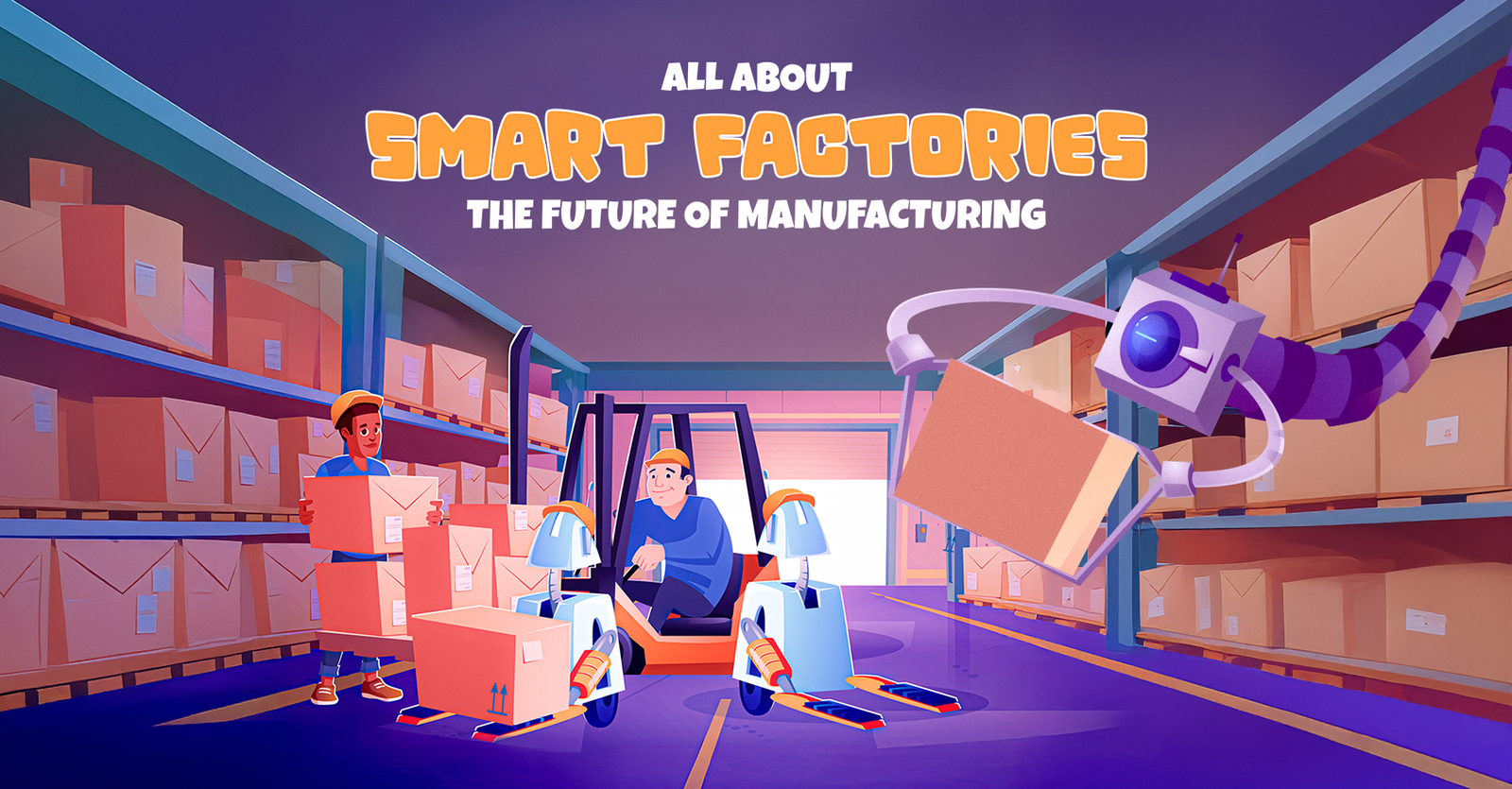
All About Smart Factories: The Future Of Manufacturing
Share
Introduction
Today, technology is advancing, and every industry is being impacted by it. Factories, a common feature across sectors, are also changing.
Factories have started to think beyond machines and manual processes. They are becoming connected, data-driven, and more aware of how their actions impact costs, people, and the environment. This is where the idea of Smart Factories comes in.
Before we go deeper, let’s first understand what Smart Factories actually are and why so many industries are paying attention to them now.
TL;DR
-
Smart factories use Industry 4.0 technologies to improve efficiency, flexibility, and real-time decision-making across manufacturing operations.
-
AI, IIoT, and data analytics help reduce downtime, improve product quality, and support sustainable production practices.
-
Smart factory adoption is growing, but full implementation remains gradual for most manufacturers.
-
High costs, cybersecurity risks, and workforce skill gaps remain key challenges in smart manufacturing transformation.
What Is A Smart Factory?
An Industry 4.0 (Fourth Industrial Revolution) or "Smart Factory" is a highly digitized, connected manufacturing center. As a self-optimizing ecosystem that combines physical machines with advanced digital technologies, it goes beyond standard automation. To improve quality, efficiency, and flexibility, the primary objective is to ensure information flows smoothly from the shop floor to the company level.

Satya Nadella, CEO of Microsoft, once said, “Digital technology is transforming every industry, including manufacturing, by enabling new levels of efficiency and agility.”
A Smart Factory stands out for its ability to learn and adapt over time. It can automatically adjust production schedules, reassign assembly lines for special orders, and optimize energy use, resulting in a stronger, more sustainable manufacturing setup.
As a result, Smart Factories offer multiple operational and business benefits. Let’s get to them.
Benefits Of Smart Factories
Here are the benefits of Smart Factories:
-
Productivity And Efficiency
Smart Factory technologies aim to reduce reactive practices and shift supply chain management toward greater resilience and responsiveness. Using predictive analytics and Big Data analysis helps you find and implement better processes.
Smart Factories bring a bunch of efficiency perks: real-time inventory management, accurate demand forecasting, faster time-to-market. A 2025 Deloitte survey also found that 46% of executives prioritize process automation and 60% anticipate increased revenue from Smart Factory initiatives. -
Sustainability And Safety
Consumers are increasingly prepared to pay more for socially and ecologically responsible products. Businesses may now easily discover and implement greener, safer, and more socially responsible production processes.
Digital advancements such as blockchain and RFID sensors can help Smart Factory managers verify the provenance and quality of all materials and supplies, even across remote supply chains. The International Society of Automation reports that robots and automated equipment can eliminate three of the five leading causes of industrial injuries. -
Product Quality And Customer Experience
Like the children's telephone game, conventional manufacturers often struggle to ensure if lower-tier suppliers and manufacturers in their supply chains understand and follow the instructions correctly. Cloud connectivity and end-to-end visibility in Smart Factories provide all levels of the manufacturing process with real-time information and recommendations.
The ability to customize and adapt quickly to changing trends ensures products remain closely aligned with customer needs. Taking a closer look at system data helps us quickly identify weaknesses and areas for improvement. According to Tebillion's research (2025), 87% of manufacturers worldwide are actively investing in Smart Factory or Industry 4.0 initiatives.
These benefits demonstrate how groundbreaking Smart Factories have become today. However, some advanced technologies are working behind the scenes. Let’s dig into them.
Technologies Behind Smart Factories
Smart Factory technologies are super flexible. When businesses dive into digital transformation, the options for scaling, tweaking, and adjusting are practically endless. Here are the technologies behind Smart Factories:
-
Cloud Connectivity
The cloud, whether it's public, private, or hybrid, serves as the channel that lets all data and information flow across a Smart Factory. This setup provides instant visibility into all connected assets and systems across the supply chain.
-
Artificial Intelligence
In a Smart Factory, the automated processes and intelligent systems are always being fine-tuned and guided by artificial intelligence. They can gather and analyze diverse datasets and provide real-time insights and actionable recommendations.
-
Machine Learning
Machine learning really enhances the ability to do advanced predictive maintenance in Smart Factories. Monitoring manufacturing processes enables you to issue alerts before issues arise.
-
Big Data
Smart Factories can perform predictive and sophisticated analytics using enormous data volumes. Digital transformation in supply chains and smart manufacturing allows firms to optimize and innovate utilizing Big Data.
-
Industrial Internet Of Things (IIOT)
Within a Smart Factory, machines and devices that have unique identifiers and can share and receive digital data make up an IIoT network. Modern machines may already have digital ports, but IIoT gateway devices can bring even legacy analog machines up to speed.
-
Digital Twins
A digital twin is basically a precise, virtual copy of a machine or system. It opens the door to opportunities for innovation and creativity while keeping operational risks low in factories. You can really push a digital twin to its limits, reconfigure it in all sorts of virtual ways, or test how well it fits into an existing system. The best part is that you can do all this without any risk or wasting resources in the real world.
-
Additive Printing
Also known as 3D printing, it enables Smart Factories to leverage intelligent automation to produce on demand. Even when business as usual resumes, virtual inventories can significantly reduce risk and waste by enabling just-in-time manufacturing.
-
Virtual Reality (VR) And Augmented Reality (AR)
VR and AR have always been about the experiences. This immersive sensory experience enables users to enhance their natural senses with real-time data from any location or time and gives them a clear view of what's happening in the factory.
-
Blockchain
Blockchain can be used in various ways in the supply chain, such as making "smart contracts" with suppliers, keeping track of where things come from, and moving them along the supply chain. Blockchain is especially useful in Smart Factories for controlling access to connected assets and machines across the company.
-
Modern Database
In-memory databases and modern ERP systems are the “brains” behind Industry 4.0 and all Smart Factory and intelligent supply chain solutions. Legacy, disk-based databases are often pushed well beyond their limits to keep up with the complex data management and analytics functionality required to run Smart Factories and modern supply chains.
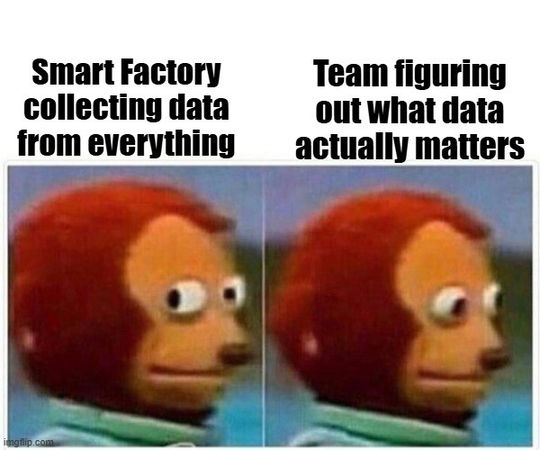
Who would have thought a factory operation could involve almost all the technologies in the world? While these technologies take factories to the next level, a few challenges remain.
“Topics for More Insights”
Challenges Of Smart Factories
Given below are the key challenges of Smart Factories:
-
High Investment Costs
Adopting smart manufacturing technologies like IoT and AI robotics usually means making big investments in hardware, software, and infrastructure. For small and medium-sized businesses, these costs can hold them back. Holding back means competing with bigger companies.
-
Data Security And Privacy Concerns
As more devices and systems get connected, smart manufacturing and Industry 4.0 are facing some real threats like data breaches, ransomware, and even industrial espionage. It is important for manufacturers to focus on securing sensitive information and complying with data protection regulations such as GDPR.
-
Workforce Skill Gaps
Switching to Smart Factories with Industry 4.0, there's a real need for workers who are skilled in data analytics, programming, and machine learning. However, many workers in traditional manufacturing lack these technical skills, creating a significant skills gap that companies must address through training and education.
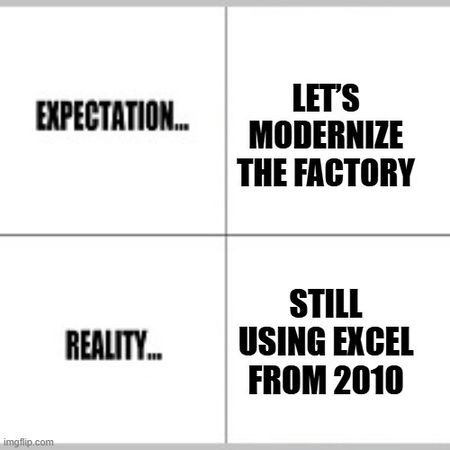
Let’s bring everything together.
Conclusion
Today, digital transformation and supply chain modernization have shifted from long-term goals to urgent priorities for companies seeking to innovate and remain competitive.
Making your existing factory a smart one depends on your current situation and the major operations of your business. A quick systems audit is a great way to assess your current processes, assets, and business systems. Before automating workflows and manufacturing processes, it's important to take a close look at how things are currently set up.
One of the coolest things about Smart Factory is that you don’t need to make the factory smart all at once. It doesn't need to stop or pause any ongoing business activities. Every move a business makes to update and streamline its digital systems gets it a bit closer to achieving a fully integrated Smart Factory.
Frequently Asked Questions
What Is A Smart Factory?
A Smart Factory is a factory that leverages technologies to enhance efficiency, flexibility, and decision-making. It helps manufacturers reduce downtime, optimize resources, improve product quality, respond more quickly to market changes, and support long-term sustainability.
What Are The Features Of A Smart Factory?
A Smart Factory is highly connected and data driven. Key features include real-time monitoring through IIoT sensors, AI-driven analytics, predictive maintenance, digital twins for simulation, flexible production systems, automation with collaborative robots, and cloud-based visibility across operations and supply chains.
How To Build A Smart Factory?
Building a Smart Factory starts with assessing existing systems and identifying high-impact processes. Businesses then integrate IIoT sensors, cloud platforms, and data analytics tools. Gradual adoption of AI, automation, and digital twins follows, along with workforce training to ensure smooth transformation without disrupting daily operations.
Thu, Jan 8, 2026

Liked what you read? That’s only the tip of the tech iceberg!
Explore our vast collection of tech articles including introductory guides, product reviews, trends and more, stay up to date with the latest news, relish thought-provoking interviews and the hottest AI blogs, and tickle your funny bone with hilarious tech memes!
Plus, get access to branded insights from industry-leading global brands through informative white papers, engaging case studies, in-depth reports, enlightening videos and exciting events and webinars.
Dive into TechDogs' treasure trove today and Know Your World of technology like never before!
Disclaimer - Reference to any specific product, software or entity does not constitute an endorsement or recommendation by TechDogs nor should any data or content published be relied upon. The views expressed by TechDogs' members and guests are their own and their appearance on our site does not imply an endorsement of them or any entity they represent. Views and opinions expressed by TechDogs' Authors are those of the Authors and do not necessarily reflect the view of TechDogs or any of its officials. While we aim to provide valuable and helpful information, some content on TechDogs' site may not have been thoroughly reviewed for every detail or aspect. We encourage users to verify any information independently where necessary.
Loading comments...