

Manufacturing Technology
Manufacturing Technology Trends Driving Industry 4.0 In 2026
Share
TL;DR
-
Collaborative Robots and AMRs: Interact Analysis forecasts that over 11,000 mobile cobot units will be shipped in 2026. 58% of global business leaders are already using physical AI (cobots and robots) in operations (Deloitte). Amazon has deployed over 1 million warehouse robots, boosting throughput 25%.
-
Sustainable Manufacturing: The iron and steel industry contributes 7% of global GHG emissions and 11% of global CO2. Up to 28 low-carbon hydrogen steel plants will be built between 2026 and 2030 (OECD).
-
IIoT, Edge Computing, and 5G: Every North American industrial establishment had 365 IIoT devices in 2025. Asia-Pacific generated 58% of global IIoT data, up from 46% in 2020.
-
AR Wearables: AR-based training halved new hire training time (ScienceDirect), with leading brands reporting 50% faster production and 80% error reduction.
-
Generative AI for Demand Forecasting: 90% of supply chain professionals predict AI-assisted workflows by the end of 2026 (IBM).
Introduction
Tony Stark didn't build the Iron Man suit in a boardroom. He built it in a workshop, a space where holographic AR overlays guided every assembly step, robotic arms handled the precision work, JARVIS connected every data stream in real time, and clean arc reactor power kept the whole operation running. Every trend in this article is part of that same workshop. And in 2026, manufacturers are finally building it at scale.
Where would the world be without manufacturing? Imagine a world without smartphones, electric vehicles, vaccines, satellites, or solar panels. No global supply chains, trade, or automation. Manufacturing technology drives the engine of innovation.
Last year, manufacturing leaders adopted AI automation, leveraged big data analytics and industrial IoT (IIoT), integrated 3D printing and digital twin technologies, and focused on securing supply chains.
The manufacturing sector is expanding its horizons in 2026. Leaders will explore advanced robotics, green manufacturing, edge AI, and mixed reality wearables to forge ahead with unprecedented accuracy, reliability, and innovation. What was experimental in 2025 is a strategic lever this year.
The scale of commitment reflects this ambition. Deloitte's 2026 Manufacturing Industry Outlook found that 80% of manufacturing executives plan to invest 20% or more of their improvement budgets in smart manufacturing initiatives, viewing it as their primary driver of competitiveness over the next three years. The AI in manufacturing market is projected to grow from $9.85 billion in 2026 to $128.81 billion by 2034 (Fortune Business Insights).
Here are the latest manufacturing technology trends reshaping industries in 2026.
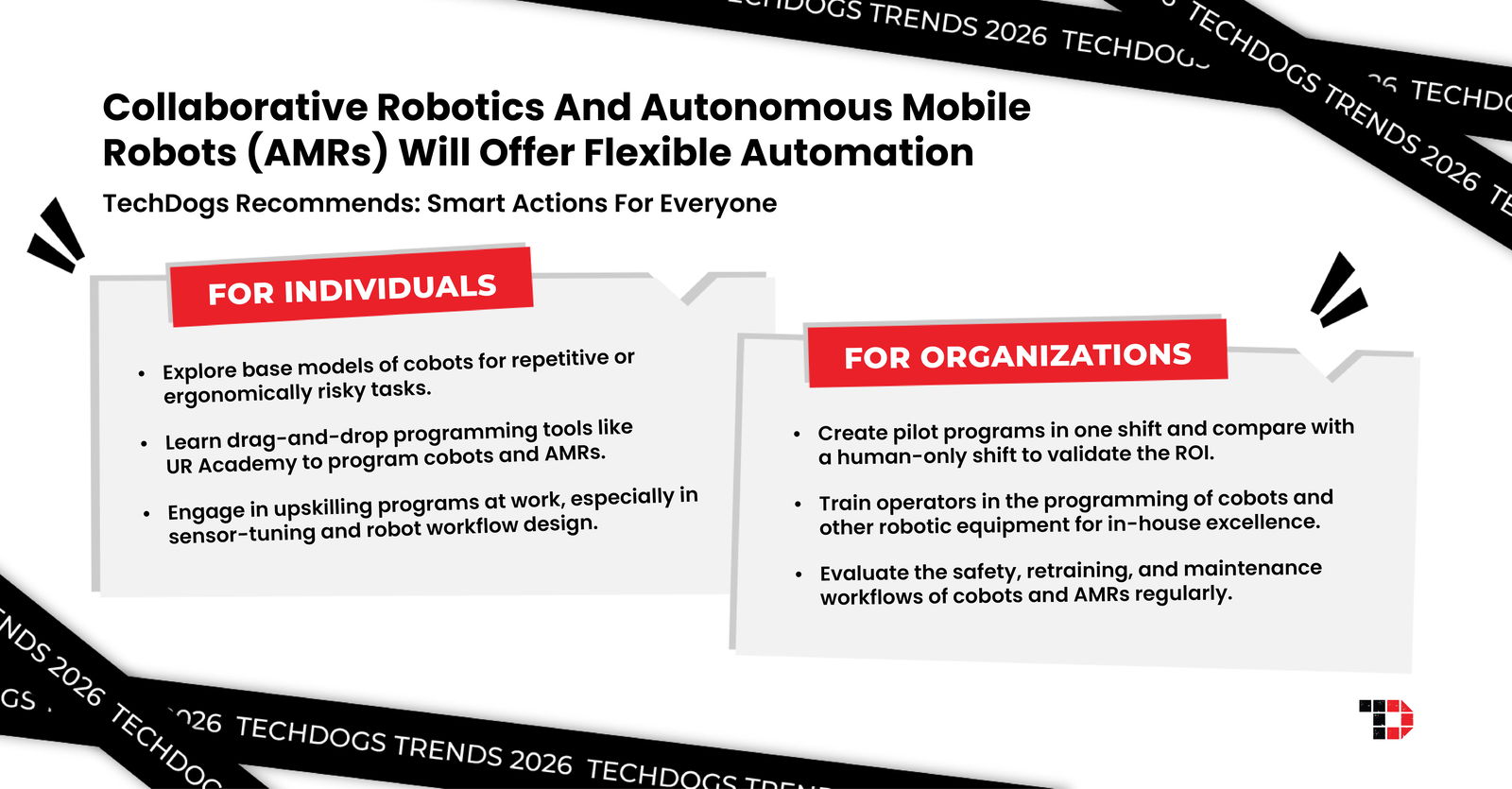
Trend 1: Collaborative Robotics And Autonomous Mobile Robots (AMRs) Will Offer Flexible Automation
Collaborative robots (cobots) and Autonomous Mobile Robots (AMRs) are ushering in a new era of man-machine collaboration in manufacturing. Designed to handle repetitive jobs or precision tasks, assembly, welding, quality inspection, cobots are deployed to work alongside humans in factories. AMRs transport materials and components across the factory floor, reducing reliance on human labor for logistics.
With falling hardware costs, advances in AI, and increasing labor shortages, autonomous robot developers are witnessing a sharp rise in demand. In 2026, human-cobot collaboration is no longer a pilot project; it is an expectation for manufacturing and warehousing productivity.
How Is The Industry Responding?
The physical AI moment has arrived in manufacturing. Deloitte's survey of 3,200+ global business leaders found that 58% are already using physical AI, including cobots and robotic arms, for smart monitoring or production alongside humans. That number grows to 80% within two years. The global collaborative robot market is expected to reach nearly $11.6 billion by 2030 at a CAGR of roughly 32%, according to Grand View Research, with the current market already valued at $11.3 billion with 28% annual growth in 2026.
Ford has deployed UR10 cobots at its Cologne and Romania plants for repetitive tasks, including oil-filling, UV inspection, and shock-absorber placement, accelerating maintenance cycle time. Amazon has deployed over a million warehouse robots, many functioning as AMR-style pickers or conveyance helpers, boosting throughput 25% and assisting in 75% of Amazon's deliveries. Workers have shifted to supervisory roles, a theme we expect across manufacturing settings in 2026.
The shift is clear: cobots and AMRs are no longer experimental; they are operational infrastructure. The structural labor shortage of 425,000 manufacturing workers means automation is less a competitive differentiator and more a macroeconomic necessity in 2026.
Challenges To Watch
Despite their promise, cobots require skilled integrators while AMRs struggle with unstructured or changing environments. Safety standards and policies vary across countries, necessitating complex compliance and operational strategies.
TechDogs Recommends: Smart Actions For Everyone
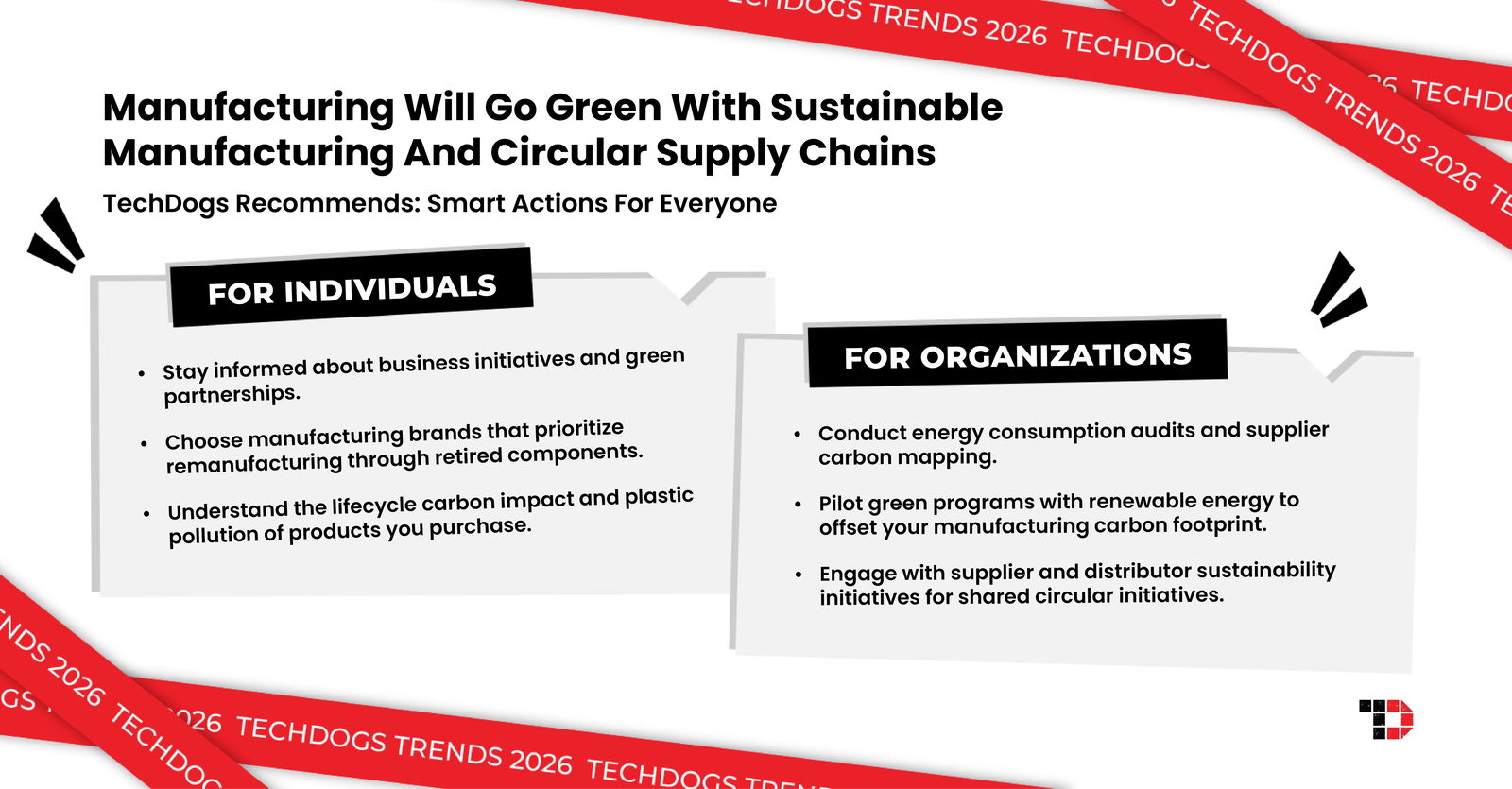
Trend 2: Manufacturing Will Go Green With Sustainable Manufacturing And Circular Supply Chains
Industrial decarbonization and green manufacturing are key focus points for manufacturers in 2026. With more waste being generated than ever, manufacturers are tapping into green technologies and sustainable practices. From adopting green hydrogen furnaces and clean steelmaking to integrating closed-loop recycling, 2026 will witness the rise of green manufacturing. Circular supply chains are extending beyond tier-1 OEMs to supplier partners, packagers, and distributors, accelerating ESG compliance and building brand equity with eco-conscious consumers.
How Is The Industry Responding?
The global sustainable manufacturing market is valued at $257.66 billion in 2026 (Straits Research), with the industry growing at 10.4% CAGR as decarbonization frameworks and green industrial policies accelerate adoption. The iron and steel industry, pillars of the manufacturing era, contribute 7% of global greenhouse gas emissions and roughly 11% of global CO2 emissions. Leaders such as H2 Green Steel in Sweden and U.S.-based Electra are deploying hydrogen-based direct-reduced iron and molten oxide electrolysis, reducing emissions 80-90% compared to traditional coal-based smelting.
As per the OECD, up to 28 low-carbon hydrogen steel plants will be built between 2026 and 2030 in Germany, Sweden, Portugal, Egypt, and Spain. The COMPASS project aims to remanufacture up to 30% of aerospace-sourced sheet metal and thermoplastic composite parts, while Airbus-owned Tarmac Aerosave recycles aluminum fuselages, emitting 95% fewer CO2 emissions.
Ian Ellison, Senior Associate at Cambridge Institute for Sustainability Leadership, says: "If you're getting very significant reductions in pollution and waste, if you're using waste material as your fundamental building blocks, then you ought to be able to reduce costs and also improve output from the same resource base."
The reality is this: green manufacturing is no longer just an ESG commitment; it is a cost and competitive argument. A $257.66 billion market, 28 new green steel plants, and EU carbon border adjustment mechanisms are pushing manufacturers to decarbonize whether they're ready or not.
Challenges To Watch
For businesses piloting green manufacturing, high capital expenditures will create limitations. A lack of clean hydrogen infrastructure, a fragmented supply chain, and uncertainty around consumers paying a green premium must be addressed globally.
TechDogs Recommends: Smart Actions For Everyone
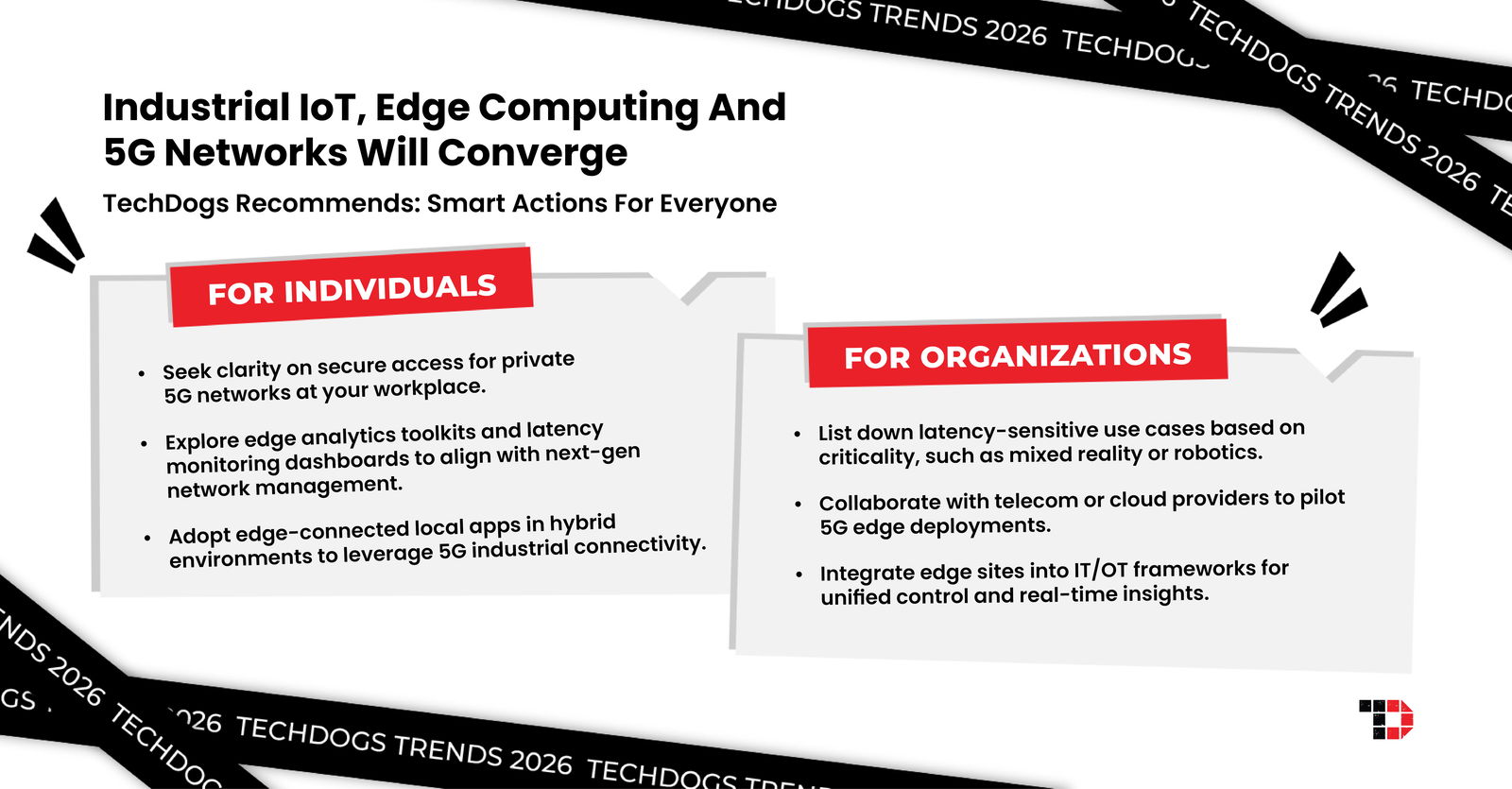
Trend 3: Industrial IoT, Edge Computing, And 5G Networks Will Converge
Think of it as JARVIS for the factory floor: a real-time nervous system that connects every sensor, machine, and data stream into a single intelligent mesh. That is what the convergence of IIoT, edge computing, and 5G is building in 2026. Factories are moving from discrete networks to a distributed mesh of nodes within the plant and beyond, with cloud-based dashboards delivering instant alerts, anomaly detection, and process optimization at millisecond latency.
How Is The Industry Responding?
The 5G-enabled industrial IoT (IIoT) market is forecast to reach $15.7 billion by 2026, growing at an incredible 79% CAGR, according to MarketsandMarkets. While North America leads the 5G edge computing market with just under 40% share, other regions are rapidly catching up.
According to ITransition, every industrial establishment in North America had 365 IIoT devices in 2025. Meanwhile, Asia-Pacific generated almost 58% of global IIoT data, up from 46% in 2020, driven by automotive, warehouse, and logistics hubs across China and India.
Ken YT Lee, Head of Moxa Serial Device Server Segment, validates: "Industrial connectivity is evolving rapidly to support the increasing demands of smart manufacturing. Three key pillars are shaping this evolution: hyperconnectivity, interoperability, and cybersecurity."
What this means in practice: manufacturers operating with isolated 5G, edge, and IIoT networks are leaving performance on the table. The convergence model, unified under a single control framework, is how 2026's leading factories are closing the gap between real-time data collection and real-time decision-making.
Challenges To Watch
Key areas include the lack of standardization for interconnectivity and the potential cyber risks at network edges. Initial capex for setting up IIoT edge networks and ensuring 5G coverage in outdoor logistics zones remains an ongoing challenge.
Topics For More Insights
TechDogs Recommends: Smart Actions For Everyone
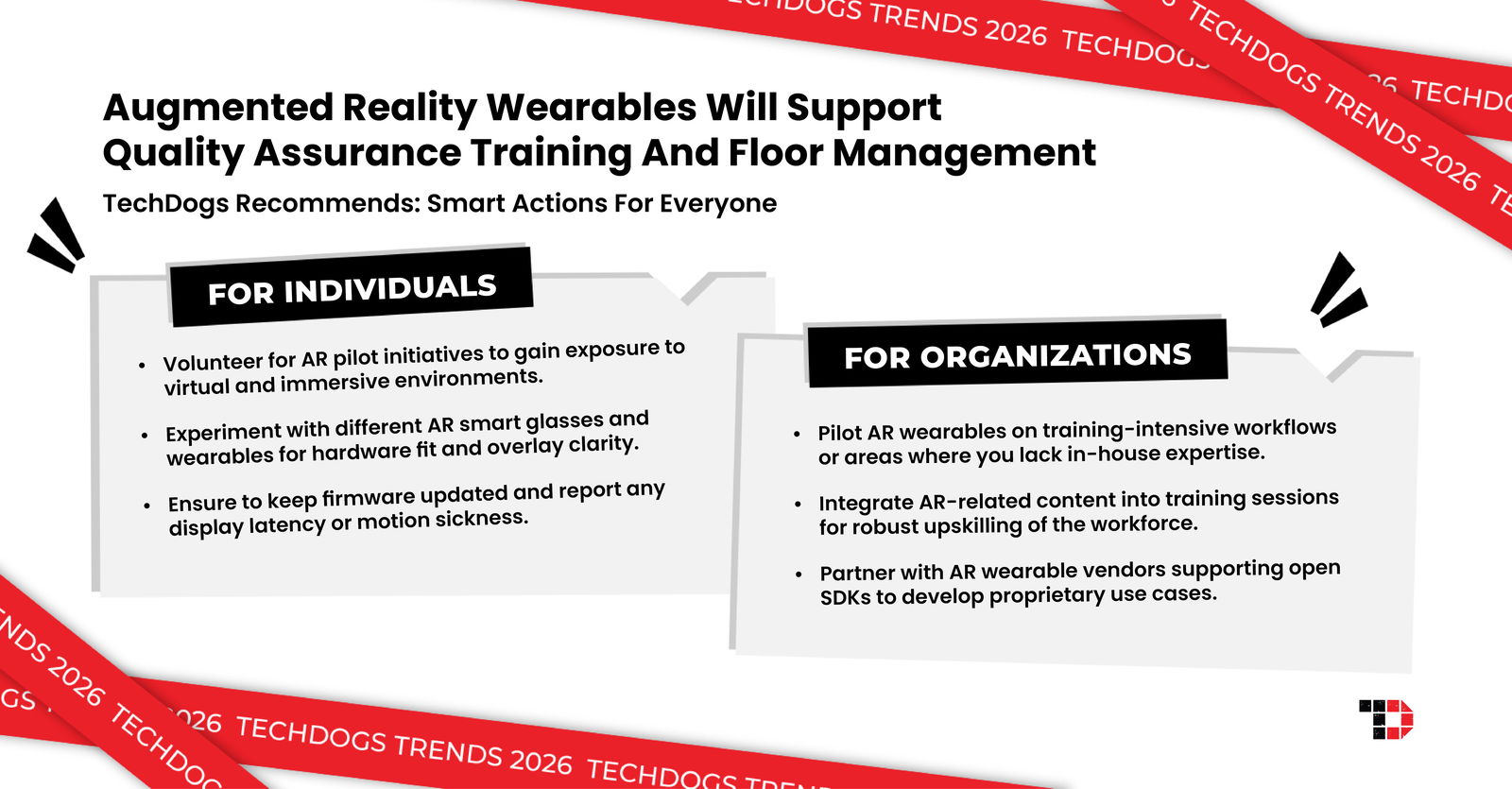
Trend 4: Augmented Reality Wearables Will Support Quality Assurance Training And Floor Management
In 2026, manufacturing is joining virtually every other industry in adopting immersive reality. Wearables that deliver augmented reality overlays are transforming manual labor into interactive, guided workflows. Think welding instructions overlaid for precision products or step-by-step assembly with visual cues. That's what AR wearables, smart glasses, and wrist displays provide: real-time guidance and assured quality control. They are also cutting onboarding and training time, scaling across automotive, chemical, and electronics manufacturing plants.
How Is The Industry Responding?
Investment in AR wearables for business applications continues to grow, with ResearchAndMarkets predicting the global industrial wearables market to reach $6.1 billion by 2026, a 3x growth from $2 billion in 2021. A study by ScienceDirect found that AR-based training in manufacturing tasks halved the training time for new hires, with major brands like Honeywell, Porsche, Boeing, and Mercedes-Benz reporting up to 50% faster production time and over 80% error reduction.
AR smart glasses allow workers to process more model variations with fewer mistakes, especially in quick-change setups. Smart glasses and wearables are becoming ruggedized for factory floors, a strategy we predicted in our Enterprise Mobility Trends for 2025, leading to interactive training modules and QA workflows. Jackson Duncan, a manufacturing engineer at PBC Linear, says of AR wearables: "Just put on the headset, connect to the training, and emerge twenty minutes later as an expert in the field."
The advantage is shifting to manufacturers that treat wearables as operational infrastructure rather than novelty devices. A 3x market expansion from 2021 to 2026, combined with halved training times, makes the ROI case for AR wearables one of the most compelling in manufacturing technology today.
Challenges To Watch
Creating comfortable wearables and extending low battery lives remain limiting factors. The lack of interoperability across vendor ecosystems is also a key challenge, and securing live AR feeds adds complexity to network and cybersecurity policies.
TechDogs Recommends: Smart Actions For Everyone
Trend 5: Generative AI Will Boost Demand Forecasting And Optimize Product Engineering
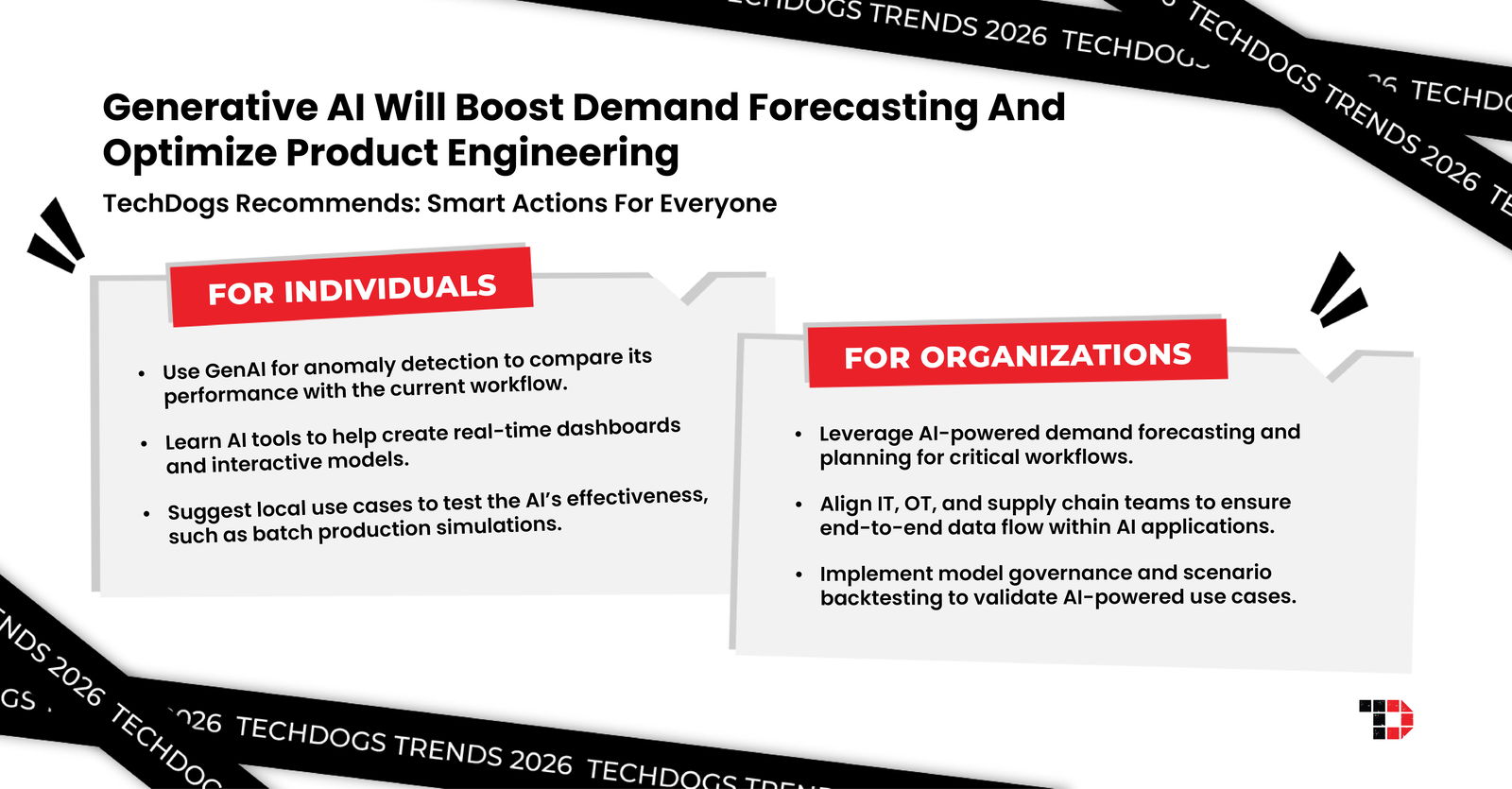
How can we discuss the top technology trends of 2026 without mentioning Artificial Intelligence or Generative Artificial Intelligence? Using AI's analytical prowess and GenAI's creative potential, manufacturers are enhancing operational aspects such as demand forecasting and product engineering. AI-driven systems generate scenario-based simulations in real time, from weather changes to supplier delays, allowing manufacturers to adjust schedules, plan buffer inventory, and reroute workflows. GenAI also extracts data from documents, logs, and videos to create contextualized work instructions, saving hours in manual documentation.
How Is The Industry Responding?
The AI in manufacturing market is projected to grow from $9.85 billion in 2026 to $128.81 billion by 2034 at a 37.9% CAGR (Fortune Business Insights), reflecting the structural shift from AI as a tool to AI as the operational backbone of manufacturing. AI is helping manufacturing leaders optimize demand forecasting down to the SKU level, minimizing under- and over-stocking, with the AI-powered demand forecasting market predicted to be valued at $22.15 billion by 2033.
Research by Accenture shows that potentially 43% of working hours for supply chain professionals can be transformed with GenAI, with the highest potential impact up to 75% of working hours. Brian R. May, Managing Director at Accenture Industrial North America, said: "I believe the paramount goal now is to use generative AI to exponentially increase operational efficiency, dramatically reduce cycle times, and rapidly identify and respond to potential supply disruptions."
IBM's survey found 90% of supply chain professionals predicting that supply chain workflows will incorporate intelligent automation and AI assistants by 2026.
The takeaway for manufacturers: generative AI is no longer a future investment in manufacturing; it is an operational imperative today. With 90% of supply chain professionals expecting AI-assisted workflows in 2026 and a market growing toward $128 billion by 2034, the gap between early adopters and laggards is already widening into a structural disadvantage.
Challenges To Watch
Data fidelity issues, siloed legacy systems, and limited explainability of AI outputs will be major concerns. High up-front costs and unclear data ownership strategies may also create friction with compliance and security teams.
TechDogs Recommends: Smart Actions For Everyone
Conclusion
Tony Stark's workshop wasn't just a room full of gadgets. It was a system, one where every component talked to every other, where JARVIS anticipated the next step, where the arc reactor kept everything running clean. In 2026, manufacturers are building that system on an industrial scale.
Cobots and AMRs will make shop floors agile. 5G edge and IIoT networks will deliver instant intelligence. AR wearables will enhance training and quality assurance. Generative AI will enable adaptability and process agility. And low-carbon steelmaking and circular supply chains will power a sustainable manufacturing vision.
Looking ahead, we expect these manufacturing technology trends to converge and amplify, taking us closer to self-optimizing factories. Manufacturers that embrace these trends will lead in operational resilience, industrial performance, and brand value.
Manufacturing in 2026 won't just be better automated; it promises to be more adaptive, intelligent, and planet-conscious.
Frequently Asked Questions
What Are The Top Manufacturing Technology Trends Of 2026?
The top manufacturing technology trends in 2026 include the rise of collaborative robots (cobots) and Autonomous Mobile Robots (AMRs), the shift toward sustainable manufacturing and circular supply chains, the convergence of industrial IoT with edge computing and 5G networks, the adoption of augmented reality wearables, and the use of generative AI for demand forecasting and product engineering.
How Is AI Transforming Manufacturing Operations In 2026?
AI, particularly generative AI, is transforming manufacturing by enhancing demand forecasting accuracy, streamlining product engineering, and enabling real-time scenario simulations. The AI in manufacturing market grows from $9.85 billion in 2026 to $128.81 billion by 2034 (Fortune Business Insights), and 90% of supply chain professionals expect AI-assisted workflows in 2026 (IBM), making intelligent automation a baseline expectation rather than a competitive advantage.
Why Is Green Manufacturing Important, And How Are Manufacturers Implementing It?
Green manufacturing is essential in 2026 as companies face regulatory pressure, rising environmental concerns, and growing consumer demand for sustainable products. The global sustainable manufacturing market is valued at $257.66 billion in 2026, and up to 28 low-carbon hydrogen steel plants are being built between 2026 and 2030 (OECD). Manufacturers are implementing hydrogen-based steelmaking, closed-loop recycling, and circular supply chains to reduce emissions and build resilient, future-proof operations.
Wed, Oct 29, 2025

Enjoyed what you read? Great news – there’s a lot more to explore!
Dive into our content repository of the latest tech news, a diverse range of articles spanning introductory guides, product reviews, trends and more, along with engaging interviews, up-to-date AI blogs and hilarious tech memes!
Also explore our collection of branded insights via informative white papers, enlightening case studies, in-depth reports, educational videos and exciting events and webinars from leading global brands.
Head to the TechDogs homepage to Know Your World of technology today!
Disclaimer - Reference to any specific product, software or entity does not constitute an endorsement or recommendation by TechDogs nor should any data or content published be relied upon. The views expressed by TechDogs' members and guests are their own and their appearance on our site does not imply an endorsement of them or any entity they represent. Views and opinions expressed by TechDogs' Authors are those of the Authors and do not necessarily reflect the view of TechDogs or any of its officials. While we aim to provide valuable and helpful information, some content on TechDogs' site may not have been thoroughly reviewed for every detail or aspect. We encourage users to verify any information independently where necessary.
Loading comments...