
Manufacturing Technology
SpaceX Launches Starship On Historic First Orbital Flight
Share
TL;DR
-
Starship reached Earth orbit for the first time on September 28, 2026, during its 14th integrated flight.
-
The mission deployed 26 Starlink V3 satellites, making it Starship's first commercial payload deployment.
-
An engine shut down prematurely, but the spacecraft still completed orbital insertion.
-
SpaceX shortened the planned 10-hour mission to roughly three hours before a controlled deorbit and Pacific splashdown.
-
The flight strengthened Starship's case for Starlink expansion, heavy payload launches, and future lunar missions.
-
Raptor reliability remains important as NASA prepares lander tests and later crewed lunar missions.
Introduction
If you're a fan of space movies and TV shows, you've got to be a fan of Star Trek. Even if you are a rival because you're an ardent Star Wars lover, Star Trek should be held in (space) high regard.
Unlike Star Wars, which transpired a long time ago in a galaxy far, far away, Star Trek takes place in the future and has its primary base on Earth. Of course, Starfleet has multiple bases spread across the galaxy, thanks to advanced warp-speed space travel.
We might be a bit away from Star Trek-like space travel, but we have been making a wide range of moves to get there.
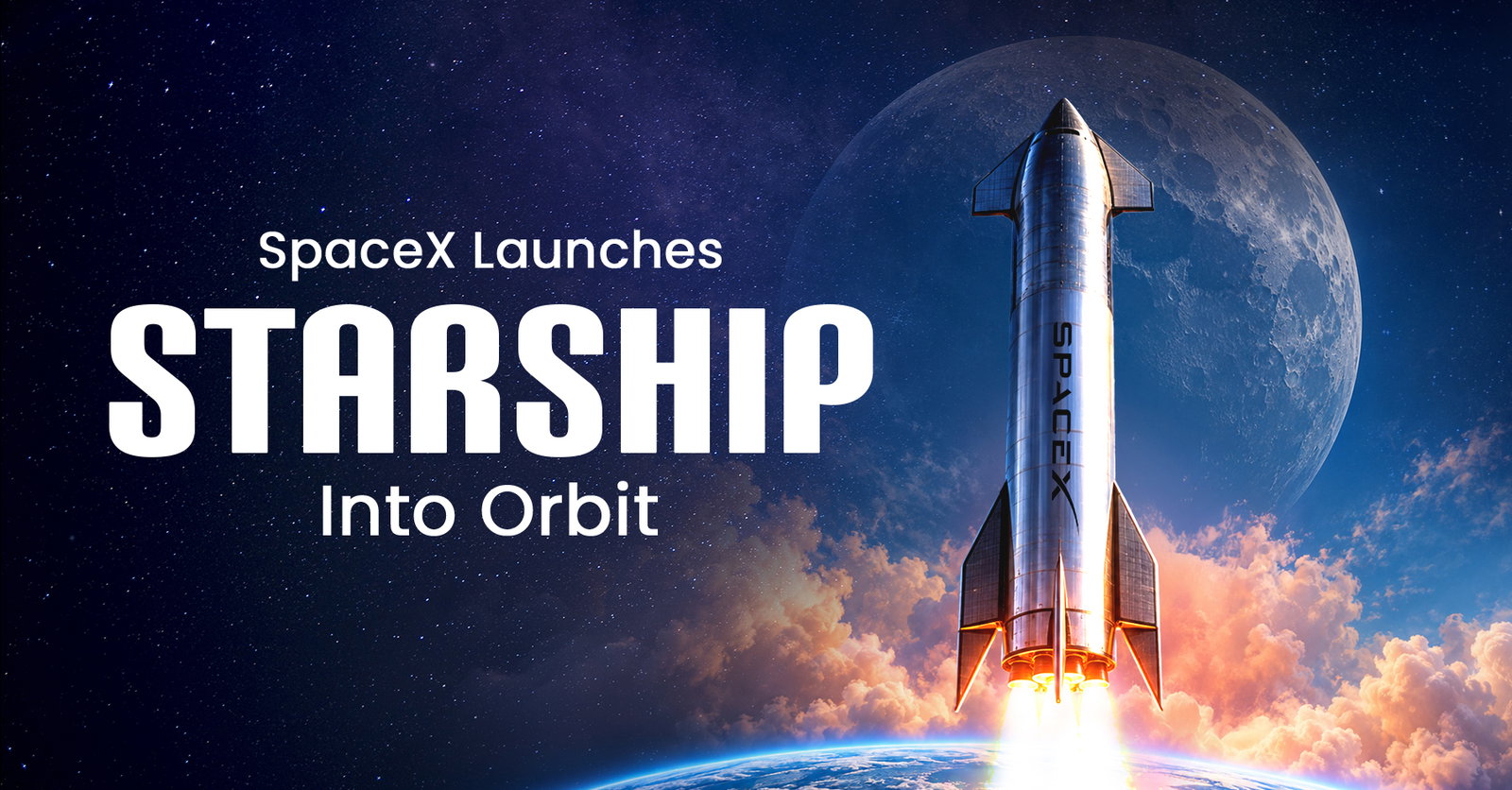
One key move was made by space technology company SpaceX, which recently launched its Starship into orbit for the very first time. This came after years of test launches that never quite soared as high. Now it has.
So, what did SpaceX and its Starship achieve, and what does it mean for the world?
SpaceX Starship's Historic First Orbital Flight
On September 28, 2026, SpaceX finally crossed the line its previous Starship tests had stopped short of.
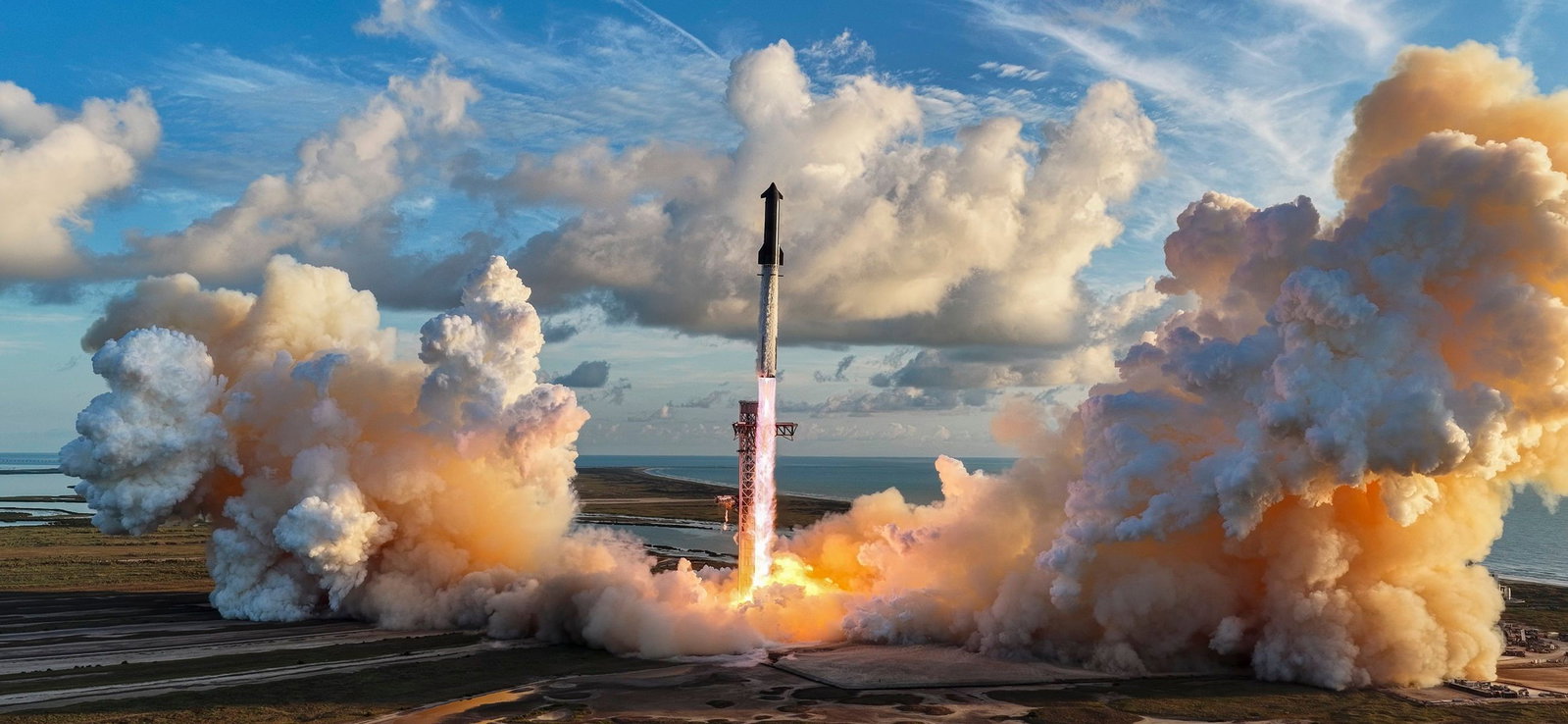
Flight 14 lifted off from Starbase, Texas, on the Starship orbital launch test and sent the upper-stage spacecraft into orbit for the first time. The Super Heavy booster launch Starbase hosted also ended with the booster making an engine-controlled splashdown in the Gulf of Mexico.
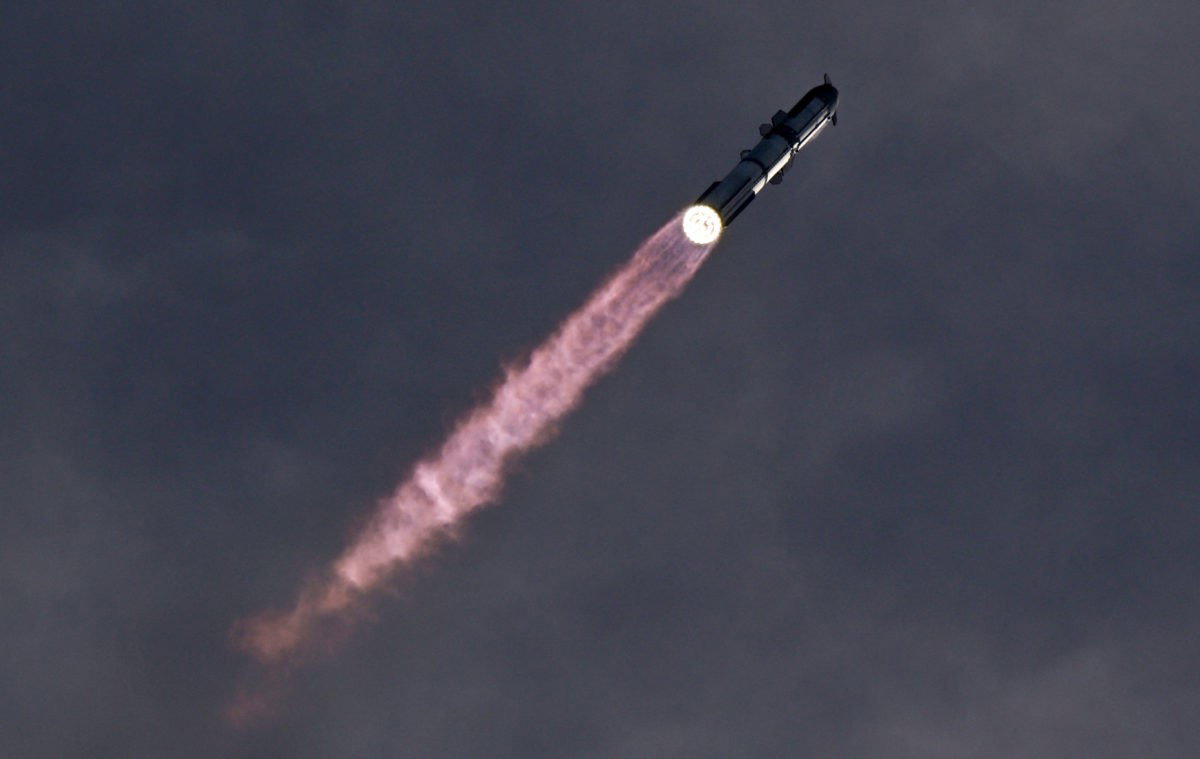
The bigger moment came above it. One of Starship's engines shut down prematurely after separation, briefly raising doubts over whether the spacecraft could complete orbital insertion. Engineers determined the remaining propulsion system could still do the job, and Starship reached its target orbit.
That made the SpaceX Starship first orbital flight more than a symbolic milestone.
The spacecraft deployed 26 next-generation Starlink V3 satellites at roughly 269 kilometers above Earth, completing the first SpaceX Starlink V3 orbital deployment from Starship and its first mission carrying an operational commercial payload.
The satellites were reported to be operating normally after deployment.
SpaceX says a future Starship can carry up to 60 V3 satellites in one launch, giving it around 20 times the capacity of a Falcon 9 mission. That could accelerate a network that SpaceX is already trying to expand with newer, higher-capacity satellites.
So, did SpaceX Starship successfully reach orbit? Yes. Yet getting there was only the opening act.
What Does Starship Reaching Orbit Mean For The World?
What changes when Starship reaches Earth orbit is what the vehicle can actually do there.
Reaching orbit moves Starship closer to becoming a working transportation system rather than a rocket still proving it can survive test flights.
For Starlink, the benefit is immediate. Larger batches of V3 satellites could increase deployment speed and network capacity while reducing the number of launches needed for the same amount of hardware. That could support broader satellite internet coverage, including markets where Starlink is being used to expand connectivity in underserved areas.
Starship also sits at the center of SpaceX's longer-term plans.
The company has discussed using the vehicle for lunar missions, much larger cargo, and even orbital AI computing infrastructure. At the same time, its ability to launch frequently will matter if SpaceX wants to support the scale implied by plans for a much larger launch campus.
The milestone also arrives after repeated schedule slips in Starship V3 development, including earlier delays to its upgraded test program. For a company whose public-market story now depends heavily on Starlink and Starship, the successful orbit gives investors something tangible beyond projections.
Wall Street's reaction, however, was surprisingly muted.
SpaceX shares fell about 2.5% to $145.47 on September 28 despite Starship reaching orbit for the first time. The wider market was also under pressure that day, with the S&P 500 and Nasdaq Composite falling 0.8% and 0.9%, respectively.
The reaction suggested investors were looking beyond the headline achievement toward Starship's engine reliability, reusability, and SpaceX's already lofty valuation.
Still, warp speed this is not.
Before Starship can fly routinely, SpaceX must prove it can return, recover, and reuse the system reliably.
What Happened During SpaceX Starship's Reentry?
Yes, it exploded into a fireball in the Pacific Ocean. But in reality, it's more complicated than that.
Flight 14 was originally expected to last about 10 hours, but the engine problem led SpaceX to shorten it to roughly three. After completing its satellite deployment, Starship performed a deorbit burn and began a controlled return through Earth's atmosphere.
The spacecraft survived reentry, descended toward its planned ocean landing zone, flipped into a vertical position, and reached the Pacific. Fire appeared around the base as it touched the water, after which Starship tipped over and broke apart in a large fireball.
That ending looked dramatic, but it was not the same as losing the vehicle during reentry.
SpaceX had not planned to recover this Starship from the ocean. The mission had already completed its orbital and payload objectives before the splashdown.
In other words, Starship came home from its first trip to orbit. Now comes the harder question: what does the engine problem mean for the missions that cannot afford one?
What Could SpaceX Starship's Engine Failure Mean For Future Missions?
The obvious answer is that SpaceX needs to understand why the engine shut down before treating Flight 14 as proof that Starship is ready for routine operations.
Raptor-related issues have appeared before, and propulsion reliability becomes far more important when a vehicle must maneuver precisely in orbit, carry people, or support lunar operations.
The concern extends beyond SpaceX's own satellite business. NASA plans to test commercial lunar lander hardware during Artemis III in low Earth orbit in 2027, with Starship Version 3 expected to support SpaceX's test article. NASA currently targets Artemis IV in 2028 for the first crewed lunar landing of the program.
A future lunar Starship will have to do far more than reach low Earth orbit. It must support docking, in-space propulsion, and eventually propellant-transfer operations before heading toward the Moon. That makes repeated engine performance a central part of whether the system can meet NASA's schedule.
Commercially, delays would also matter. Starship is expected to carry larger Starlink payloads, and SpaceX has tied much of its growth story to scaling launches. That scrutiny is sharper after its record-setting public-market debut.
Flight 14 proved Starship can reach orbit even after an in-flight problem. The next tests need to prove it can do so without needing that kind of recovery act.
Topics For More Insights
- SpaceX Aborts Second Starship V3 Flight Seconds Before Liftoff After Engine Failure
- SpaceX Seeks FCC Approval For 100,000 Gen3 Starlink Satellites To Supercharge Bandwidth
- SpaceX Says Orbital AI Satellites Will Use Existing Starlink Tech Ahead Of IPO
- Google To Launch 4 TPUs Into Space In First Project Suncatcher Test
- Why Everyone Is Talking About Data Centers In Space
The Final Frontier
SpaceX's first orbital Starship flight was historic for a simple reason: the vehicle finally did what an orbital launch system is supposed to do. It reached orbit and delivered a real payload. Yet Flight 14 also showed how much work remains around engines, reuse, and lunar operations. Starship may have taken its biggest step yet, but turning that step into routine spaceflight is the mission now, with a few practical questions still worth answering.
Frequently Asked Questions
What Is The Difference Between Starship And Super Heavy?
Starship is the upper-stage spacecraft, while Super Heavy is the first-stage booster that lifts it off the ground. Together, they form the complete Starship launch system. Super Heavy provides most of the thrust needed during liftoff, then separates and returns toward Earth. Starship continues into space carrying satellites, cargo or, eventually, crew. SpaceX designed both stages to be reusable, although the company has not yet demonstrated routine recovery and reuse of the full system in future missions.
Why Does Starship Use Methane As Fuel?
SpaceX uses liquid methane and liquid oxygen in its Raptor engines. Methane can support high engine performance while producing less soot than kerosene-based fuels, which can help with an architecture built around rapid reuse. SpaceX has also long tied methane to its Mars plans because methane and oxygen could potentially be produced from resources available there. For now, the more immediate challenge is safely proving that the Raptor system can deliver consistent reliability across repeated Starship flights.
When Could Starship Carry Astronauts?
SpaceX has not announced a firm date for Starship's first crewed orbital flight. The current program remains focused on uncrewed testing, orbital operations, recovery and reuse. NASA is also using uncrewed and demonstration steps before astronauts would rely on a Starship-derived lunar lander. That means reaching orbit is an important milestone, but several major capabilities still need to be demonstrated before Starship becomes a routine human spaceflight vehicle for Earth orbit, the Moon or beyond at scale.
Tue, Sep 29, 2026

Enjoyed what you read? Great news – there’s a lot more to explore!
Dive into our content repository of the latest tech news, a diverse range of articles spanning introductory guides, product reviews, trends and more, along with engaging interviews, up-to-date AI blogs and hilarious tech memes!
Also explore our collection of branded insights via informative white papers, enlightening case studies, in-depth reports, educational videos and exciting events and webinars from leading global brands.
Head to the TechDogs homepage to Know Your World of technology today!
Disclaimer - Reference to any specific product, software or entity does not constitute an endorsement or recommendation by TechDogs nor should any data or content published be relied upon. The views expressed by TechDogs' members and guests are their own and their appearance on our site does not imply an endorsement of them or any entity they represent. Views and opinions expressed by TechDogs' Authors are those of the Authors and do not necessarily reflect the view of TechDogs or any of its officials. While we aim to provide valuable and helpful information, some content on TechDogs' site may not have been thoroughly reviewed for every detail or aspect. We encourage users to verify any information independently where necessary.
Loading comments...