
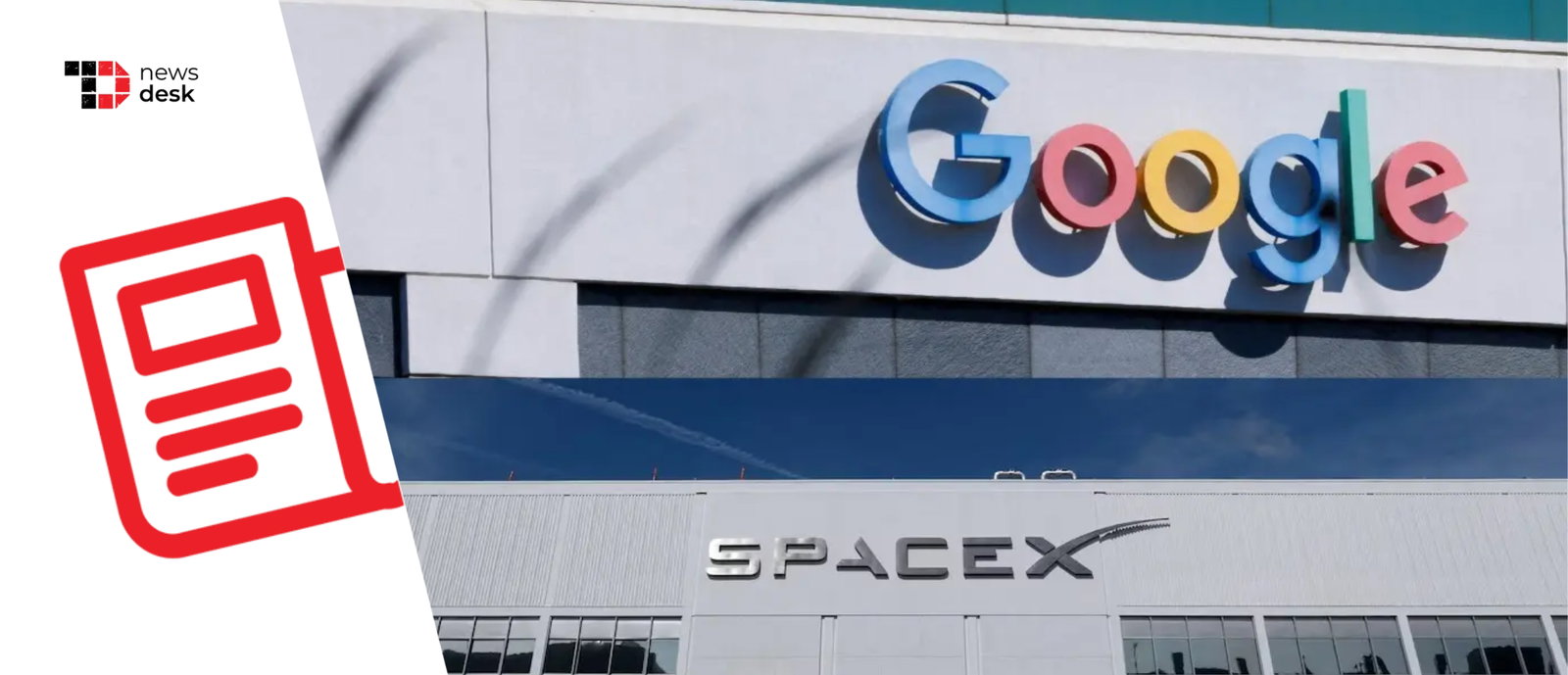
Google and SpaceX are reportedly in discussions to develop orbital data centers, a futuristic concept that could move AI computing infrastructure from Earth into space. The talks come as technology companies struggle with rising energy consumption, land shortages, and increasing resistance to large terrestrial data center projects amid the AI boom.
TL;DR
- Google and SpaceX are discussing plans for orbital data centers.
- The initiative aims to support growing AI compute demands using solar-powered satellites.
- Google is reportedly working on Project Suncatcher with Planet Labs.
- SpaceX believes orbital compute could eventually become cheaper than Earth-based infrastructure.
- Technical and economic hurdles remain significant, including cooling systems and launch costs.
Google And SpaceX Look Beyond Earth For AI Infrastructure
According to reports from Reuters, Alphabet-owned Google is in talks with Elon Musk’s SpaceX regarding a potential rocket-launch partnership tied to orbital data center projects. The discussions revolve around placing AI-focused computing infrastructure into orbit using solar-powered satellites.
The concept comes amid surging demand for AI compute power, driven by large language models, generative AI systems, and enterprise AI workloads. Traditional data centers are already consuming enormous amounts of electricity and land, while also facing growing regulatory and environmental scrutiny across multiple regions.

Supporters of orbital computing believe that moving infrastructure into space could solve several problems simultaneously. Satellites positioned in orbit could harness uninterrupted solar energy, reduce dependence on terrestrial power grids, and avoid opposition from local communities concerned about energy consumption, water usage, and environmental impact.
Google reportedly is also evaluating partnerships with additional launch providers. At the same time, the company is pursuing its own orbital computing initiative called Project Suncatcher in collaboration with Planet Labs. Prototype satellites under the project are expected to launch by 2027.
Google and SpaceX already share a close relationship. Google invested approximately $900 million into SpaceX in 2015 and currently owns roughly 6% of the company, while Google executive Don Harrison also sits on SpaceX’s board.
SpaceX Pushes Orbital Computing As Its Next Big Bet
The orbital data center discussions arrive as SpaceX reportedly prepares for a historic IPO that could value the company at nearly $1.75 trillion. Reports suggest the company is pitching space-based AI infrastructure as a key long-term growth opportunity for investors.
Earlier this year, SpaceX filed for regulatory approval to launch as many as one million solar-powered satellite data centers intended to support AI workloads and edge computing applications. The proposal outlined plans for a massive orbital computing constellation capable of delivering up to 100 gigawatts of compute capacity.
The company has also expanded its AI ambitions following the merger of xAI with SpaceX and recent infrastructure agreements involving Anthropic and xAI’s Colossus supercomputer facility in Memphis. Reports indicate that Anthropic may also collaborate on future orbital computing projects.
TechCrunch noted in its report that Elon Musk has created hype for orbital data centers by claiming they are cheaper to operate than Earth-based alternatives.
Topics for more insights:
- Why Everyone Is Talking About Data Centers In Space
- SpaceX Completes xAI Acquisition; To Build AI Data Centers In Space
- SpaceX IPO Frenzy Leaves Some Private Buyers Unsure What They Actually Own
Major Challenges Still Stand In The Way
Despite the excitement surrounding orbital computing, experts warn that the idea remains highly experimental.
One of the biggest hurdles is thermal management. While solar energy is abundant in orbit, dissipating heat in space is far more difficult because satellites cannot rely on atmospheric cooling systems. Radiation exposure, maintenance limitations, launch costs, and reliable communications infrastructure also remain major challenges.
Research papers published in recent months suggest that orbital data centers may only become economically viable if launch costs fall dramatically below current levels. Analysts estimate costs may need to drop below $200 per kilogram to make large-scale deployments commercially sustainable.
Still, momentum behind the concept continues to grow. Companies such as Blue Origin, Nvidia, Meta, Amazon, and multiple startups are now exploring variations of space-based computing infrastructure as AI demand continues climbing.
