

While Amazon has reportedly moved to restrict third-party artificial intelligence (AI) agents from making purchases on behalf of customers, rival retailer Walmart is embracing the technology, partnering with Meta to let its personal AI agent, Muse, handle Black Friday shopping.
The partnership marks another step in the growing adoption of agentic commerce, where AI goes beyond recommending products to completing transactions.
TL;DR
- Walmart has partnered with Meta to enable Black Friday shopping directly through its Muse AI agent.
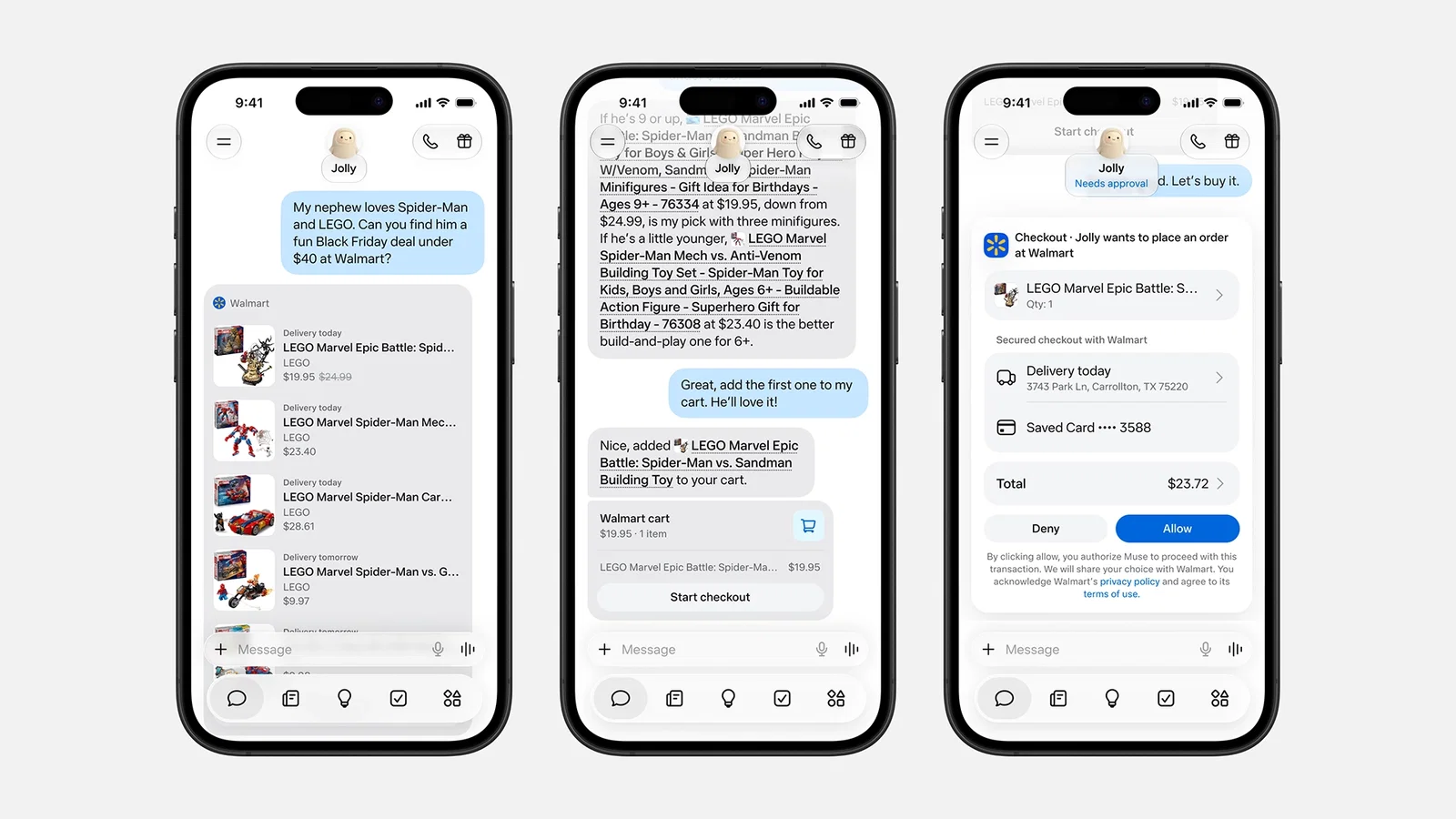
- Customers can discover products, compare deals, build shopping carts, and complete purchases through conversations.
- Shoppers retain control over spending limits, purchase approvals, and agent activity, without exposing their broader Walmart purchase history.
- Walmart plans to extend its agent-powered shopping capabilities to additional applications and AI platforms.
Walmart Brings Black Friday Shopping And Checkout To Meta’s Muse AI Agent
On November 24, Walmart announced its partnership with Meta, giving holiday shoppers an alternative to manually browsing its website and searching through product listings.
Whether customers are looking for a television under $500, popular toys, or gifts for family members, they can communicate their requirements to Muse using natural language.
Muse connects with Walmart through the retailer’s Agent Gateway, which processes customer requests and identifies suitable products.
The integration builds on Meta’s expanding AI agent capabilities, bringing product discovery and transactions into a single conversational experience.
Customers can access the same prices available on Walmart.com, retain applicable membership perks such as free delivery, and remain covered by Walmart’s existing return policy.
Walmart Gives Muse Users Control Over AI Shopping, Spending, And Privacy
To begin shopping, customers can describe what they want through Muse, which redirects them to Walmart for account authentication before returning them to the conversation.
When adding their first product to a cart, shoppers establish an Agent Profile within their Walmart account, defining the financial boundaries within which the assistant can operate.
Customers can configure purchase approvals and monitor their transaction history to identify orders initiated by the agent. Payments can be completed within Muse using an existing payment card linked to their Walmart account.
Walmart also says its system protects customers’ wider purchasing history from third-party agents, while shoppers can remove their Agent Profiles if they no longer wish to use the service.
The controls address an important aspect of AI-powered shopping: allowing consumers to delegate purchasing tasks without surrendering financial oversight.
Topics For More Insights
Walmart Expands Its Agentic Commerce Strategy Beyond Meta’s Muse
Introduced in October, Walmart’s Agent Gateway is designed to connect external AI assistants with its digital retail infrastructure.
As per reports, Walmart’s approach contrasts with Amazon’s restrictions on external purchasing agents. Meanwhile, Instacart has also partnered with Muse.
However, Walmart isn’t relying exclusively on third-party AI platforms to transform its shopping experience.
The retailer has expanded the capabilities of its proprietary AI shopping assistant, Sparky, enabling customers to convert handwritten lists into digital carts, discover products using photographs and voice commands, and navigate physical Walmart stores.
Its in-store functionality even includes locating products through digital maps and illuminating electronic shelf labels to help shoppers identify items.
With Walmart planning additional Agent Gateway integrations, its partnership with Meta represents more than a seasonal shopping initiative. It signals the retailer’s willingness to reach customers through external AI platforms rather than requiring them to visit its own digital storefront.
