
Wearable Technology
Meta Connect 2026 Launches Camera-Free Ray-Ban Meta Audio, Muse Charm And 100-Gram VR Glasses
Updated on Thu, Sep 24, 2026
Share
Meta spent years putting increasingly capable cameras into its smart glasses.
At Meta Connect 2026, it also introduced a pair without one.
The new Ray-Ban Meta Audio is Meta’s first audio-focused glasses line and is explicitly camera-free, while the wider event introduced 100-gram Meta VR Glasses, Muse Charm, Ray-Ban Meta Gen 3, new Meta Glasses styles, major Muse upgrades, new Meta Ray-Ban Display features and a fresh lineup of VR games.
Meta says its glasses portfolio across Ray-Ban, Oakley and Meta Glasses will offer more than 100 options by the end of 2026.
TL;DR
- Ray-Ban Meta Audio starts at $349, weighs 43 grams, has no camera and offers up to 12 hours of battery life.
- Meta VR Glasses weigh about 100 grams, cost $1,299.99 and arrive in spring 2027.
- Muse is gaining real-time voice, avatars, glasses access, email, Mac controls and new connectors, alongside the new Muse Charm.
- Meta also unveiled new glasses styles, display features and controller-free VR games.
Ray-Ban Meta Audio Removes The Camera And Focuses On AI, Music And Calls
The biggest departure in Meta’s AI glasses strategy may also be the simplest: take the camera out.
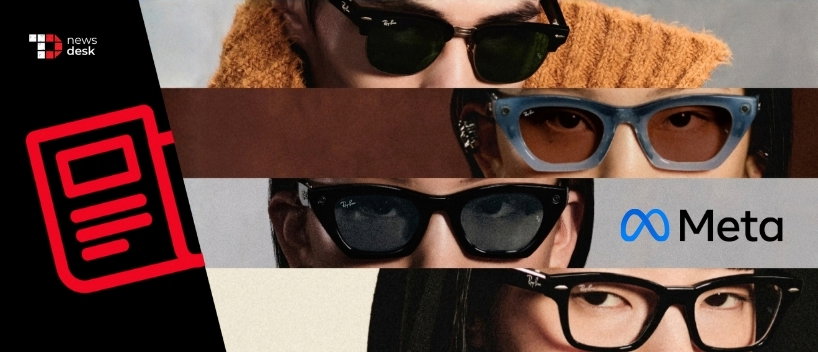
Ray-Ban Meta Audio is Meta’s first-ever audio glasses line, combining Meta AI with open-ear audio in its lightest and slimmest AI glasses yet. Meta’s product page confirms that the glasses are built without a camera, making the new model an audio-only alternative within its growing wearable lineup.
At 43 grams, Ray-Ban Meta Audio offers up to 12 hours of battery life on a single charge, with up to another 48 hours available through the included charging case. Users can listen to music and podcasts, make calls and interact with Meta AI hands-free.
The glasses arrive in Clubmaster and Burbank styles with 23 color and lens combinations, and both support a wide range of optical prescriptions. Pre-orders are open now starting at $349, with shipping scheduled for October 13.
The camera-free approach is especially notable after TechDogs recently covered Meta Plans Camera-Free Luna Glasses After Disabling Cameras On Thousands Of Pairs, when reports suggested Meta was preparing a camera-less wearable ahead of Connect.

Ray-Ban Meta Gen 3 Adds Longer Battery Life, 3K Video, And Better Audio
For users who do want a camera, Meta’s expanded glasses lineup also includes Ray-Ban Meta Gen 3, the next generation of what Meta calls the world’s best-selling AI glasses.
The redesign offers up to nine hours of battery life, an hour more than Gen 2, alongside a slimmer frame and professional-adjustable temple tips. A new customizable action button provides quicker access to Meta AI and other functions.
Meta has also added a six-microphone array designed to reduce more than 90% of background noise during calls and voice interactions. A 12 MP camera supports 3K Ultra HD video, while dynamic photos let users select the preferred frame after capturing an image.
The lineup spans Aviator, Zena and Wayfarer frames with 27 color and lens combinations. Ray-Ban Meta Gen 3 is available now starting at $449.
Meta also plans to let its AI glasses capture and play videos with Dolby Atmos and 360-degree spatial sound later this year.
Meta Glasses Adds Capri, Nova, LISA Editions, Fury And A $249 Adventurer
Meta is widening its own glasses range too, adding Capri and Nova frame shapes alongside new collaborations, limited editions and lower-cost options.
The Kylie Jenner Starfire range gets a new Ivory colorway starting at $399, while Meta’s first LISA collaboration introduces Meta Adventurer LISA Edition and Meta Capri LISA Edition. Both start at $399, support prescriptions and come with details including special-edition case charms and digital photocards unlocked through the glasses.
Meta Fury brings a limited-edition clear frame with mirrored lenses and will initially be sold at Connect and Meta Lab locations. Meanwhile, a new black Meta Adventurer with grey lenses starts at $249, making it Meta’s most affordable glasses option yet, with general sales beginning October 23.
Users can also customize frames, lenses and case colors through Meta’s Mix & Match program. Meta is expanding the glasses into additional international markets as it works toward more than 100 options across Ray-Ban, Oakley and Meta Glasses by year-end.
That wider strategy follows earlier launches such as Oakley Meta AI Glasses Launches As OpenAI Says Its First Jony Ive AI Device Isn’t A Wearable.

Meta AI Glasses Get Hearing Assistance, Workouts, Shopping Tools And Smarter Navigation
Meta also announced a substantial software upgrade for its glasses portfolio, with features designed to reduce how often users need to look at a phone.
An FDA-cleared hearing enhancement feature is coming to supported AI glasses for adults aged 18 and older with perceived mild to moderate hearing loss. It will launch in the US later this year for $149.99 or through a Meta One subscription, while new audio controls will allow users to adjust left-right balance or switch to mono audio.
Other additions include guided running and cycling workouts, nutrition tracking with personalized insights and shopping AI that can identify products, prices and reviews before setting alerts or helping users make purchases through voice.
Meta is also adding landmark-based walking directions, customizable gestures, personalized audio and smarter visual AI.
The visual capabilities arrive as the broader privacy implications of increasingly context-aware eyewear continue to draw attention, an area we explored in Meta Testing Super Sensing AI Glasses: Will Always-On Cameras Kill Privacy?.
Muse Gets Real-Time Voice, Avatars, Email, Mac Controls And More Connectors
Meta is also turning Muse into a more persistent personal AI agent rather than something users only open inside an app.
Muse is gaining a real-time voice mode designed for longer conversations while the agent continues completing tasks in the background. Users will also be able to customize how Muse sounds, including elements such as speaking speed and accent.
Meta Superintelligence Labs is developing Muse Realtime Avatar, which converts Muse Realtime Voice into expressive interactive avatars.
Muse will also come to Meta AI glasses in the coming months. Users will be able to activate the agent by saying its name, while visual awareness will let Muse act on objects the wearer is looking at, such as products, flyers or shopping lists.
It will also receive its own email address and expanded Mac computer controls, allowing it to operate apps with permission while users step away.
Meta is expanding Muse connectors too, adding Walmart, Best Buy, American Eagle Outfitters, DICK’S Sporting Goods, Fanatics, Gap, Michael Kors, Sephora, Ulta and Wayfair, alongside Shop Pay and PayPal. Expedia is coming later, while Instacart, Notion, Granola, GitHub and Box extend its shopping and productivity capabilities.

Muse Charm Puts Meta’s Personal AI Agent In A Pocket-Sized Device
Meta also introduced Muse Charm, a pocket-sized device designed specifically for talking to and interacting with Muse.
The device will use Muse’s real-time voice model and gives Meta another way to make the agent accessible away from phones, computers and glasses.
For now, details are limited. Meta says it will reveal more about Muse Charm later this year.

Meta Ray-Ban Display Adds Hologram Calls, Explore And More Useful Navigation
Meta Ray-Ban Display is getting another round of upgrades built around keeping information visible without pulling out a phone.
Cycling directions and real-time public transit information are coming to users in the US and Canada, while walking directions will increasingly reference visible landmarks instead of relying exclusively on street names.
Then there is Hologram.
After completing a short self-capture through the Meta AI app, users can create a photorealistic digital representation of their face for calls. The hologram is driven by the wearer’s voice, with Meta’s model inferring facial expressions based on what is being said and how it is delivered.
Early Access begins on WhatsApp for US Meta Ray-Ban Display users later this fall.
Meta is also introducing Explore, a new on-glasses app for experiences built specifically for the display, along with mirrored phone notifications, expanded calendar controls and Threads Community feeds.
Meta Ray-Ban Display is now available in Canada and the UK, while France, Italy and Germany will follow on October 13 after pre-orders.

Meta VR Glasses Put A 5K Cinema, Workspace And Gaming System Into 100 Grams
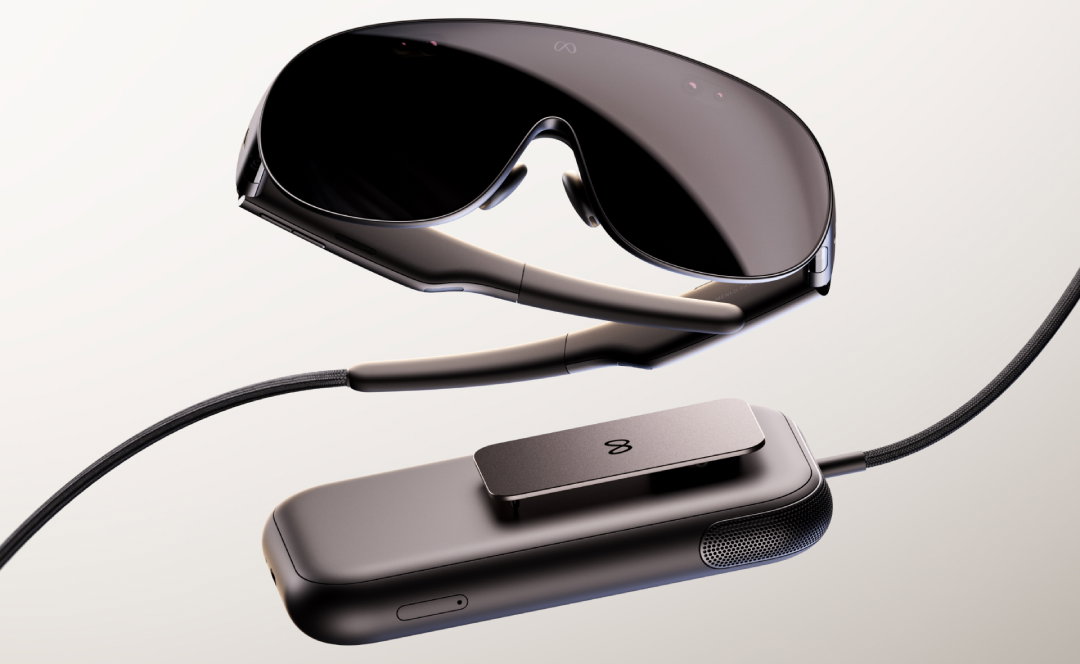
The largest new hardware product at Connect is Meta VR Glasses, a roughly 100-gram spatial computing device that Meta says is five times lighter than Meta Quest 3.
Instead of carrying all its hardware on the wearer’s head, the system splits the workload between the glasses and an optically tethered puck. The glasses house the sensors and display, while the puck handles processing, battery and storage and can clip onto a pocket, belt or bag.
The device uses Meta’s 5K Infinite Display built around micro-OLED panels and delivers 37 pixels per degree. Dolby Vision and Dolby Atmos are integrated, while Qualcomm’s Snapdragon Reality Elite handles processing.
Its puck offers up to three hours of continuous high-resolution media playback and supports 45W fast charging.
Meta VR Glasses is also the first IMAX Enhanced certified VR device. Disney+ will begin offering selected 3D movies in supported markets in November, while Meta is working with services including Prime Video, YouTube, DIRECTV, AMC+, Crunchyroll, Plex, ESPN, Tubi, Peacock, HBO Max and Paramount+.
Meta also expects more than 100 immersive live sporting events to be available annually after launch through partners including ESPN, MLB, NBC Sports, TNT Sports and UFC.
For work, users can create multiple private virtual screens and turn flat surfaces into a keyboard and touchpad, with interaction handled through eye tracking, hand gestures and voice instead of dedicated controllers.
Meta VR Glasses will launch in spring 2027 for $1,299.99.
Meta Connect 2026 Brings Beat Saber Flux And More Hand-Tracked VR Games
Gaming is another major part of the new VR hardware push, with Meta preparing titles designed around controller-free hand tracking.
Beat Saber will receive what Meta calls its biggest update ever next spring on Meta VR Glasses and Meta Quest. The update introduces Flux, a new mode built around high-fidelity hand tracking where players use their hands to channel energy, slice notes and build Jolt Energy for bonus points.
The wider lineup includes Cardmada, Dice Throne Digital, Dragon Grove, Phoenix Wright: Ace Attorney – Dual Destinies, Supernatural, Tetris Effect: Mixed Realities and Two Point Hospital.
These games are being designed to work with hand tracking on Meta VR Glasses while remaining compatible with controllers on Meta Quest.
Meta says more than 75 games will support gesture-only play when Meta VR Glasses launches, while Xbox Cloud Gaming will provide access to hundreds more.
Topics For More Insights
- Meta Plans Camera-Free Luna Glasses After Disabling Cameras On Thousands Of Pairs
- Meta Testing Super Sensing AI Glasses: Will Always-On Cameras Kill Privacy?
- Google I/O 2026: Google & Samsung’s New AI Glasses Want To Make Your Phone Feel Optional
- Oakley Meta AI Glasses Launches As OpenAI Says Its First Jony Ive AI Device Isn’t A Wearable
Meta Connect 2026 Pushes Meta From Smart Glasses Into A Full Wearable Computing Stack
Connect 2026 shows Meta spreading its wearable strategy across increasingly different devices instead of betting on one universal pair of glasses.
Camera-free Ray-Ban Meta Audio targets AI and entertainment without visual capture, Ray-Ban Meta Gen 3 keeps cameras and content creation, Meta Ray-Ban Display brings information into the wearer’s field of view, and Meta VR Glasses pushes toward full spatial computing.
Muse connects those formats through a common personal AI layer, while Muse Charm gives the agent another dedicated piece of hardware.
With Google and Samsung also developing AI glasses intended to reduce dependence on smartphones, Meta is making its own direction increasingly clear: more form factors, more price points and an AI agent that follows users across them.
First published on Thu, Sep 24, 2026

Enjoyed what you've read so far? Great news - there's more to explore!
Stay up to date with the latest news, a vast collection of tech articles including introductory guides, product reviews, trends and more, thought-provoking interviews, hottest AI blogs and entertaining tech memes.
Plus, get access to branded insights such as informative white papers, intriguing case studies, in-depth reports, enlightening videos and exciting events and webinars from industry-leading global brands.
Dive into TechDogs' treasure trove today and Know Your World of technology!
Disclaimer - Reference to any specific product, software or entity does not constitute an endorsement or recommendation by TechDogs nor should any data or content published be relied upon. The views expressed by TechDogs' members and guests are their own and their appearance on our site does not imply an endorsement of them or any entity they represent. Views and opinions expressed by TechDogs' Authors are those of the Authors and do not necessarily reflect the view of TechDogs or any of its officials. While we aim to provide valuable and helpful information, some content on TechDogs' site may not have been thoroughly reviewed for every detail or aspect. We encourage users to verify any information independently where necessary.
Loading comments...