Artificial Intelligence
arXiv Warns Researchers Of 1-Year Penalty Over AI-Generated Errors In Research Papers!
Updated on Mon, May 18, 2026
Share
TL;DR
- arXiv may ban researchers for a year if they submit unchecked AI-generated research papers.
- The platform says authors remain fully responsible for fake citations, errors, or misleading AI-written material.
- Moderators and section chairs will review flagged submissions before penalties or appeals are processed.
arXiv, one of the most widely used online repositories for scientific research papers, announced stricter measures against careless use of AI-generated content in academic submissions.
Although papers uploaded to arXiv are not peer-reviewed before publication, the platform plays a major role in how research is shared across fields such as computer science and mathematics. In recent years, moderators have seen an increase in papers containing fabricated references, misleading information and other signs of unchecked AI-generated text.
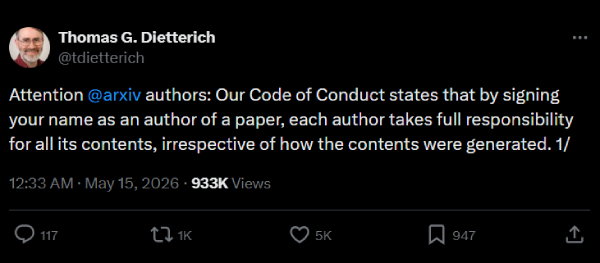
Thomas Dietterich, chair of arXiv’s computer science section, discussed the new AI paper rules in a post on X. He further said, “if a submission contains incontrovertible evidence that the authors did not check the results of LLM generation, this means we can’t trust anything in the paper.”
According to Dietterich, examples of such evidence include hallucinated references and comments accidentally left behind from AI chatbots. Authors found submitting these papers could face “a 1-year ban from arXiv followed by the requirement that subsequent arXiv submissions must first be accepted by a reputable peer-reviewed venue.”
Topics For More Insights:
The policy does not ban researchers from using AI tools altogether. Instead, arXiv says authors must take “full responsibility” for the content in their papers, regardless of how it was generated. That includes any “inappropriate language, plagiarized content, biased content, errors, mistakes, incorrect references, or misleading content” produced using AI tools.
Dietterich also told 404 Media that the rule will follow a “one-strike” approach. However, moderators and section chairs will review the evidence before penalties are imposed, and researchers will still have the opportunity to appeal decisions.
First published on Mon, May 18, 2026

Liked what you read? That’s only the tip of the tech iceberg!
Explore our vast collection of tech articles including introductory guides, product reviews, trends and more, stay up to date with the latest news, relish thought-provoking interviews and the hottest AI blogs, and tickle your funny bone with hilarious tech memes!
Plus, get access to branded insights from industry-leading global brands through informative white papers, engaging case studies, in-depth reports, enlightening videos and exciting events and webinars.
Dive into TechDogs' treasure trove today and Know Your World of technology like never before!
Disclaimer - Reference to any specific product, software or entity does not constitute an endorsement or recommendation by TechDogs nor should any data or content published be relied upon. The views expressed by TechDogs' members and guests are their own and their appearance on our site does not imply an endorsement of them or any entity they represent. Views and opinions expressed by TechDogs' Authors are those of the Authors and do not necessarily reflect the view of TechDogs or any of its officials. While we aim to provide valuable and helpful information, some content on TechDogs' site may not have been thoroughly reviewed for every detail or aspect. We encourage users to verify any information independently where necessary.
Loading comments...