
Manufacturing Technology
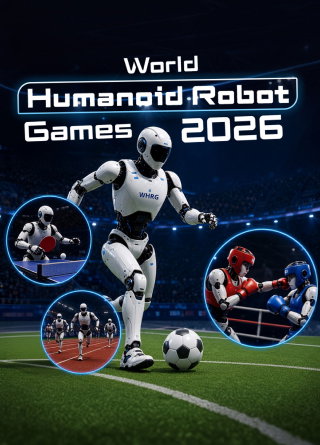
Everything Happened At World Humanoid Robot Games 2026
Share
TL;DR
-
The event brought together 2,056 robots from 666 teams across 16 countries for 51 events and 1,301 competition sessions.
-
Robots competed in athletics, football, table tennis, combat, dance, weightlifting, gymnastics, tug-of-war, and other sporting events.
-
Real-world challenges tested household chores, hotel services, restaurant work, retail, logistics, library tasks, and factory operations.
-
Emergency-response and dexterity events pushed robots to handle fires, hazardous materials, tools, cables, screws, nails, and other precision tasks.
-
Tiangong Ultra won the 100m in 8.64 seconds, while other track and jump marks improved sharply over 2025.
-
AGIBOT said it topped the overall medal table with 46 medals.
-
Crashes, fires, falls, bad hammering, slow laundry, and failed firefighting attempts exposed major limitations.
-
Organizers released more than 2,500 hours of data and confirmed a 2027 edition.
Introduction
Do you remember Real Steel, the 2011-released movie starring Hugh Jackman? Set in the future (which was 2020, but hey, the movie released 9 years prior) the film was about humans that controlled robots in high-stakes boxing matches.
It wasn't a new sport; robot boxing replaced human boxing, which became illegal.
We're still in the 2020s, and this movie's plot may have already come true. Don't worry, human boxing isn't banned yet, instead robots are competing in a wide range of sports, athletics, and other activities at the World Humanoid Robot Games 2026 in China.
From football to table tennis, this event is the second iteration of its kind, and has witnessed massive participation from countries and companies, and attention from audiences alike.
So, what was the event all about and what kind of activities did the robots ace and which ones blew up in their face (pun intended)? Let's (long) jump in.
Everything Happened At The World Humanoid Robot Games 2026
So, what happened at the World Humanoid Robot Games 2026?
Everything!
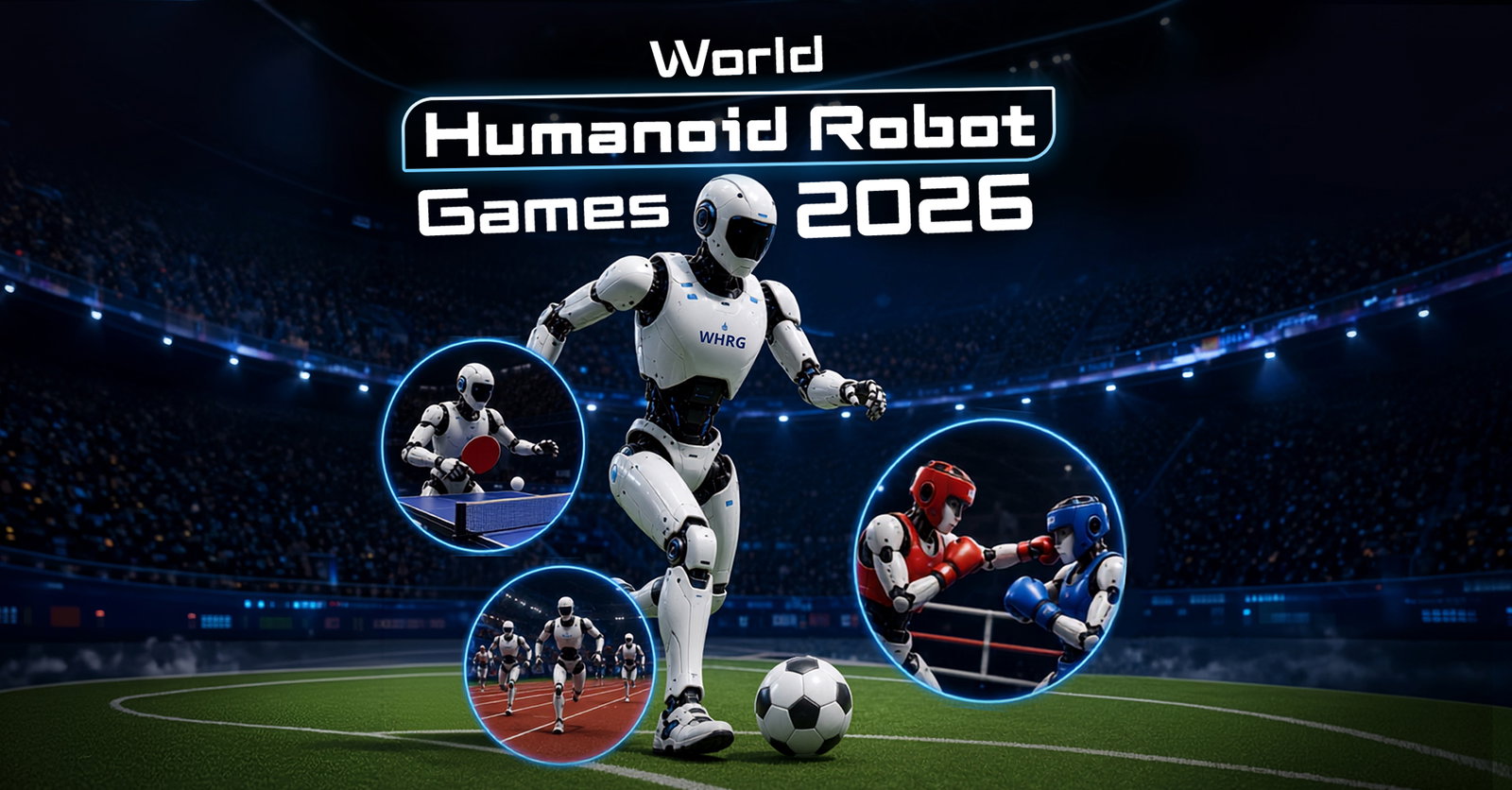
The second World Humanoid Robot Games 2026 AKA WHRG 2026 ran from August 22 to 26 at Beijing’s National Speed Skating Oval, better known as the Ice Ribbon, the venue used for speed skating during the 2022 Winter Olympics.
The numbers were anything but small: 2,056 robots, 666 teams, 16 countries across 6 continents, 51 events, and 1,301 competition sessions. That was a major jump from the inaugural 2025 edition, which had 280 teams and just over 500 robots.
China supplied most of the field, with 641 teams and 1,975 robots. Its domestic contingent included participants from 157 companies and 200 universities and research institutions.
International entries included teams from countries such as the US, Germany, and Japan, while Brazil fielded a national team made up of five RoboCup squads.
In other words, the World Humanoid Robot Games 2026 highlights were not limited to a few viral robot races. This was part sports meet, part robotics test lab, and part preview of what developers want humanoid machines to eventually do outside an arena.
Real Steel gave us one boxing ring. WHRG gave robots an entire sporting calendar.
What Were The World Humanoid Robot Games 2026 Events?
Robots have stolen yet another job!
Athletics.
The World Humanoid Robot Games 2026 events were divided into 30 competitive events and 21 scenario-based events.
One side tested speed, balance, strength, coordination, and teamwork. The other tested whether robots could handle the annoyingly ordinary things humans do every day.
Before we send them to work, though, here is what they did for sport.
-
Competitive Events
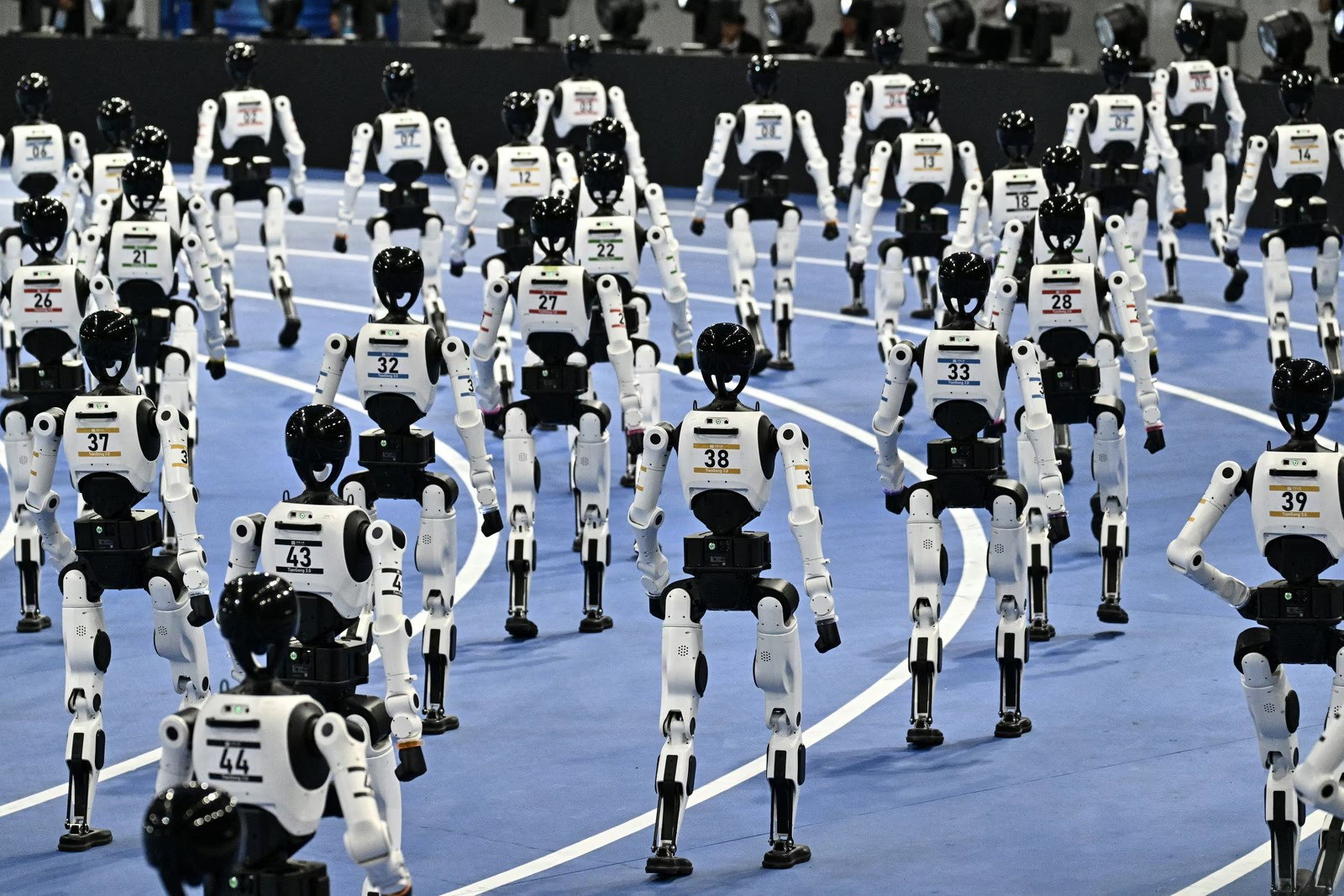
Track and field supplied some of the biggest spectacles, with robots taking on the 100m, 400m, 1,500m, obstacle races, relays, long jumps, and standing jumps.
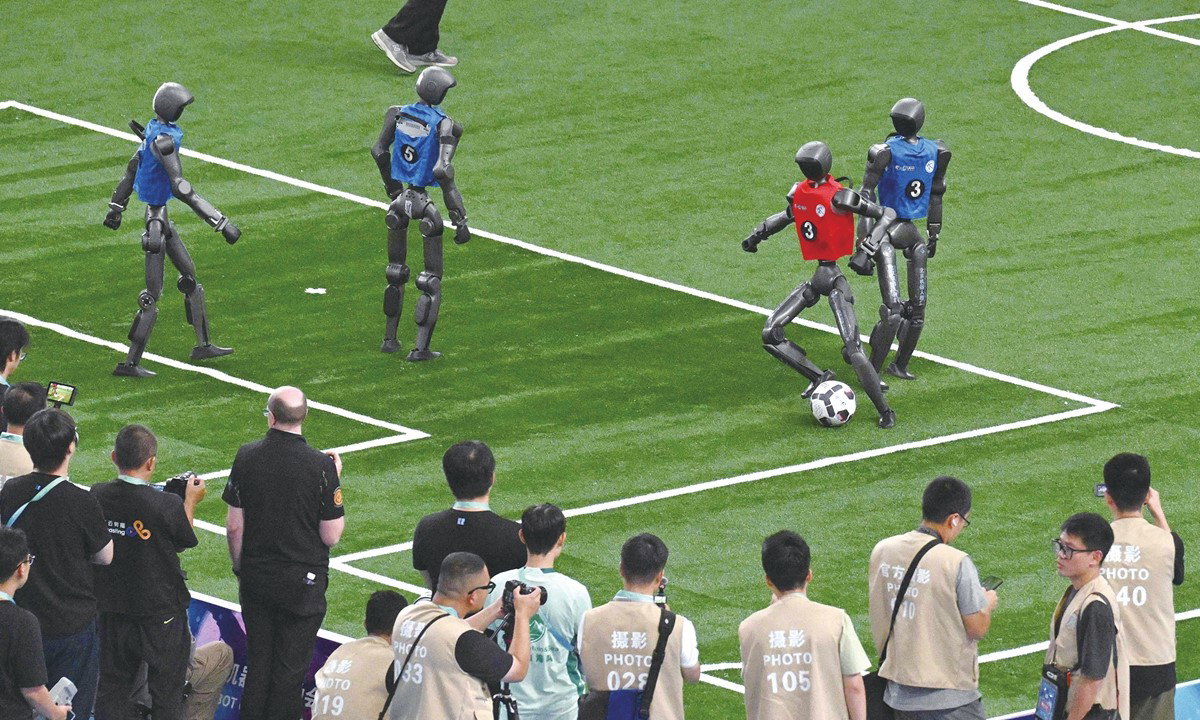
Beyond athletics, they played football (soccer) and table tennis, lifted weights, pulled against each other in tug-of-war, performed gymnastics and dancesport routines, practiced wushu and Tai Chi, competed in touhu or pitch-pot, and fought in freestyle combat.
Football itself had grown from 3v3 play at the previous Games to 5v5 matches. Dancesport attracted 108 teams across street dance, ballroom dance, and cheerleading.
FYI: It is not the first time robots have competed against each other for our entertainment. Robot Wars first aired in 1998. WHRG just gave the idea a much bigger battlefield.
The sports were flashy. The practical tests were where things got much harder. -
Real-World Scenario Events
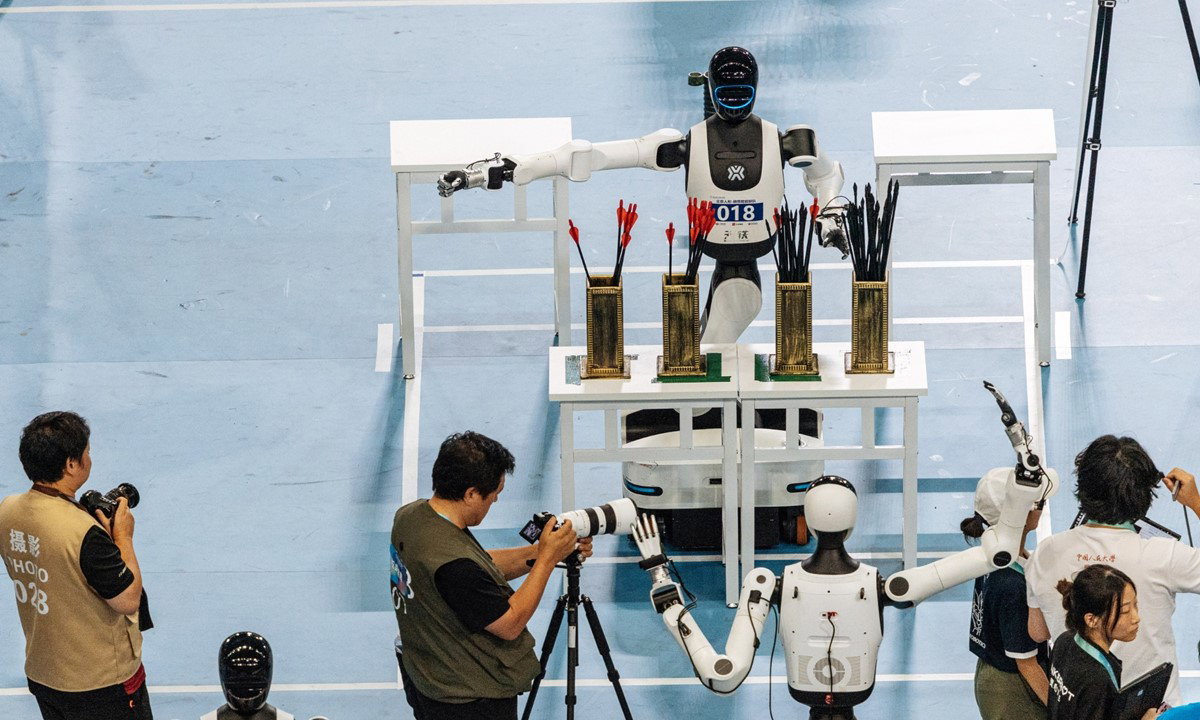
The 21 scenario-based contests pushed robots into nine real-world application settings, including homes, factories, hotels, logistics facilities, supermarkets, libraries, restaurants, and emergency-response environments.
-
Hotel robots had to move luggage, replenish towels and supplies, collect waste, and make beds.
-
Retail-focused robots stocked shelves and handled orders.
-
Library robots sorted returned books.
-
Restaurant challenges could involve turning a microwave timer accurately or carrying drinks without spilling them.
-
Emergency-response robots had to identify hazardous materials, close different valves, locate a fire extinguisher, and put out a simulated fire.
-
Dexterous-hand contests went smaller still, testing tasks such as picking up beans with tweezers, weighing powder, tightening screws, opening bottle caps, connecting flexible cables, and hammering nails straight.
-
That range explains why WHRG matters beyond entertainment. Running fast is impressive, but folding clothes without turning them into modern art may ultimately be the more useful skill.
So, which robots actually left Beijing with bragging rights?
Who Won And What Records Were Set At World Humanoid Robot Games 2026?
If you came looking for the World Humanoid Robot Games 2026 results, the track produced some of the loudest numbers.
Tiangong Ultra, developed by the Beijing Innovation Center of Humanoid Robotics, won the large-robot 100m final in 8.64 seconds. It had already lowered its time from 9.39 seconds to 8.86 seconds before going even faster in the final. For comparison, the winning time at the 2025 Games was 21.50 seconds.
That makes the Tiangong Ultra 100m record one of the biggest World Humanoid Robot Games 2026 records.
Its 8.64-second run was numerically 0.94 seconds faster than Usain Bolt's 9.58-second human world record, although the two should not be treated as equivalent official athletics records because the robots competed under different starting procedures and conditions.
The jumping numbers were just as wild. Tianzhuo Team, competing with a Tiangong Ultra robot, won the standing high jump with 3.40 meters, up from just 0.95641 meters at the 2025 Games. Tiangong Ultra robots actually occupied the top four positions in the final.
Track and field records were not the only way to dominate the Games. AGIBOT said its WHRG debut ended with 18 gold, 16 silver, and 12 bronze medals, giving it 46 medals overall and first place on both the gold and total medal tables.
Those may have been the headline-grabbers, but the World Humanoid Robot Games 2026 winners' list went much further:
-
100m: Tiangong Ultra won the large-size final in 8.64 seconds, after clocking 9.39 and 8.86 seconds earlier in the Games, while Tianxiao Team won the small-size category in 11.98 seconds. The best 100m time at the 2025 Games was 21.50 seconds.
-
400m: Tiangong won the large-size category in 38.15 seconds, while Tiangong Omni won the small-size group in 45.66 seconds. The previous Games' best 400m time had been 1 minute 28.03 seconds.
-
1,500m: Tianzhuo Team finished first in 2 minutes 21.64 seconds, cutting more than four minutes from the 6 minutes 34.40 seconds winning mark recorded at the previous Games.
-
Long jump: Tianjiao Team won with a massive 7.97-meter jump, while Tianzhuo finished second at 7.24 meters and Tiangong third at 7.19 meters. The best mark at the 2025 event had been around 1.25 meters.
-
4×100m relay: Tiangong took the relay final in 2 minutes 20.79 seconds, adding another athletics title to its haul.
-
Dexterous-hand events: AGIBOT's OmniHand reached all eight finals and reportedly won seven of the eight gold medals, including wins across tasks designed to test fine manipulation rather than raw speed or strength.
-
Obstacle racing and Tai Chi: AGIBOT's X2 won the 100m obstacle race, while its A3 took gold in Tai Chi. Separately, Tianjiao Team won the 400m obstacle final.
-
Table tennis: The PKU-BAAI joint team won the newly introduced table tennis event, defeating Hong Kong University's SMASH team 11-0 and 11-7 in the final. The event was particularly notable because robots had to autonomously detect the ball, predict its path, select shots, and execute them in real time.
-
Football: Tsinghua University's Vulcan Team retained the 5v5 Large Robot Group title with a dominant 10-1 victory over Italy's SPQR in the final. Germany's B-Human separately won both the WHRG Humanoid Soccer competition and the RoboCup Asia-Pacific Beijing Masters held alongside the Games.
-
Tug-of-war: Xingzhe Taishan Team won the newly introduced lightweight category, while Tiangong took the heavyweight title.
-
Freestyle gymnastics: Galaxea's Star Fleet team took the gold medal, showing that robot flexibility and coordination were being tested alongside speed and strength.
There were a lot of medals, records, and victory poses that made humanoid robots look alarmingly athletic. Unfortunately for the robots, there were also plenty of moments where gravity, walls, household chores, and basic common sense won instead.
Then the blooper reel started.
The Fails Of World Humanoid Robot Games 2026
For every record, there seemed to be a robot somewhere else discovering gravity.
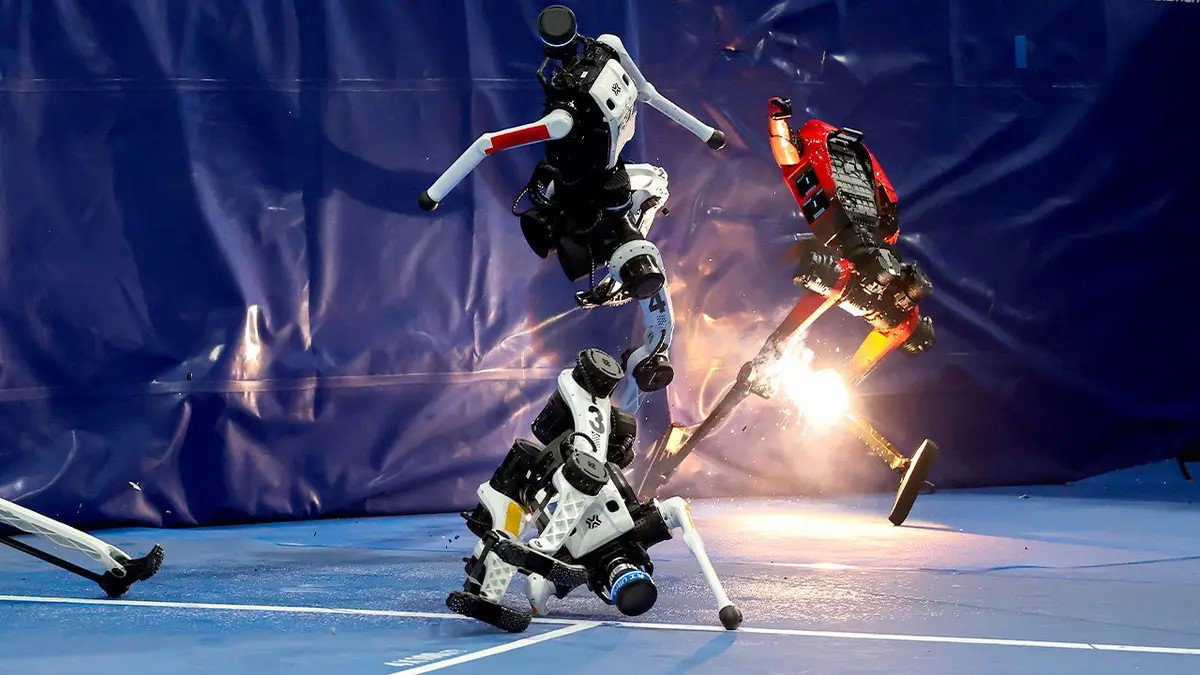
Some failures were funny. Others showed exactly why fast-moving humanoids still need better perception, stopping control, dexterity, and autonomous decision-making.
-
Tiangong Ultra finished one 100m run at full speed, slammed into a padded barrier, and the impact reportedly triggered a small fire.
-
In another sprint, an Honor humanoid broke apart around the waist while running, sending pieces and sparks across the track.
-
Honor’s Lightning also collapsed after an early 100m finish, proving that beating the clock and surviving the finish line are two separate skills.
-
During freestyle combat, one robot attempted a spinning head kick, lost its balance, and face-planted. Its opponent then appeared to celebrate with a victory dance.
-
A weightlifting robot lost its balance during an attempt and toppled toward the judges’ table.
-
Football produced plenty of falls and collisions, including a robot knocking over one of its own teammates.
-
A Galbot tennis robot fell while chasing the ball, rolled over, got back up, and continued playing, turning a fail into a decent recovery demo.
-
Laundry was less dramatic but arguably more revealing. Robots washing, folding, and hanging clothes worked far more slowly than a typical human.
-
Nail hammering exposed another weakness. Many robots drove nails in at an angle, which meant those attempts did not count.
-
In one firefighting challenge, only three of 12 teams completed every required stage within the 30-minute limit.
So, yes, everything happened. They ran faster than humans, fought, danced, dropped things, crashed, sparked, caught fire, and struggled with chores.
So much for the takeover. Apparently, sprint records come before taking laundry off our hands.
Real Steel suddenly feels less like science fiction, although Atom probably knew when to stop running.
What Did World Humanoid Robot Games 2026 Actually Show About Humanoid Robots?
The most important lesson was not that a robot can beat a human's time on a track.
Not just a human, the fastest human in the world: Usain Bolt. It was the gap between highly practiced movement and messy real-world work.
Experts noted that sprinting and jumping can follow tightly prescribed motion trajectories. Tasks such as using tools, recognizing changing surroundings, manipulating flexible objects, or switching between jobs demand far more perception, planning, dexterity, and autonomy.
That is why the household, hotel, factory, retail, and emergency challenges may matter more in the long run than the medals. The Games were effectively a public stress test for embodied AI, showing developers where their machines work and where they still fail.
Organizers also turned those failures into something useful.
At the closing ceremony, they released more than 2,500 hours of training and competition data covering 12 application scenarios, more than 100 skills, and over 10,000 detailed tasks for companies, universities, and research institutions.
The third World Humanoid Robot Games is already planned for Beijing in August 2027, with scenario-based events expected to take a bigger role.
If 2026 was the year robots learned to sprint faster than humans, 2027 may just produce robots that will outrun cheetahs, while also being able to make the bed without making us wait.
Topics For More Insights
Conclusion
World Humanoid Robot Games 2026 did exactly what its title suggests: everything happened. Robots outran human benchmarks, played football, fought, danced, handled hotel chores, fell over, caught fire, and still came back for more. The biggest takeaway was not one record, but the contrast between athletic control and real-world intelligence. Real Steel gave us robot boxing. WHRG is building the rest of the league.
Frequently Asked Questions
Who Organizes The World Humanoid Robot Games?
The World Humanoid Robot Games are jointly hosted by the Beijing Municipal People’s Government, China Media Group, the World Robot Cooperation Organization, and the RoboCup Asia-Pacific International Council. The event is supported by several Beijing municipal bodies, technology organizations, and operating partners. That mix reflects its unusual position between a sports competition, technology showcase, industry test environment, and public event rather than a conventional robotics conference or a traditional athletics tournament for human competitors alone.
Are The Robots At The World Humanoid Robot Games Autonomous?
Control rules varied by event. Organizers pushed much harder toward autonomy in 2026, with several competitive events requiring robots to operate without direct human control. Scenario-based contests also favored autonomous positioning, recognition, planning, and task execution, while teleoperation could reduce scores in some cases. That distinction matters because a remotely controlled robot may show impressive hardware, but an autonomous robot must also perceive its surroundings, make decisions, recover from mistakes, and act without constant human guidance.
What Is Embodied AI In Humanoid Robots?
Embodied AI refers to artificial intelligence that operates through a physical system, such as a humanoid robot, rather than only generating answers or processing information on a screen. It combines perception, decision-making, movement, and interaction with the physical world. The Games test those abilities under pressure. A robot may need to recognize an object, plan an action, move safely, adjust when conditions change, and physically complete the task, all within the same challenge and without predictable laboratory conditions.
Wed, Sep 2, 2026

Enjoyed what you've read so far? Great news - there's more to explore!
Stay up to date with the latest news, a vast collection of tech articles including introductory guides, product reviews, trends and more, thought-provoking interviews, hottest AI blogs and entertaining tech memes.
Plus, get access to branded insights such as informative white papers, intriguing case studies, in-depth reports, enlightening videos and exciting events and webinars from industry-leading global brands.
Dive into TechDogs' treasure trove today and Know Your World of technology!
Disclaimer - Reference to any specific product, software or entity does not constitute an endorsement or recommendation by TechDogs nor should any data or content published be relied upon. The views expressed by TechDogs' members and guests are their own and their appearance on our site does not imply an endorsement of them or any entity they represent. Views and opinions expressed by TechDogs' Authors are those of the Authors and do not necessarily reflect the view of TechDogs or any of its officials. While we aim to provide valuable and helpful information, some content on TechDogs' site may not have been thoroughly reviewed for every detail or aspect. We encourage users to verify any information independently where necessary.
Loading comments...