
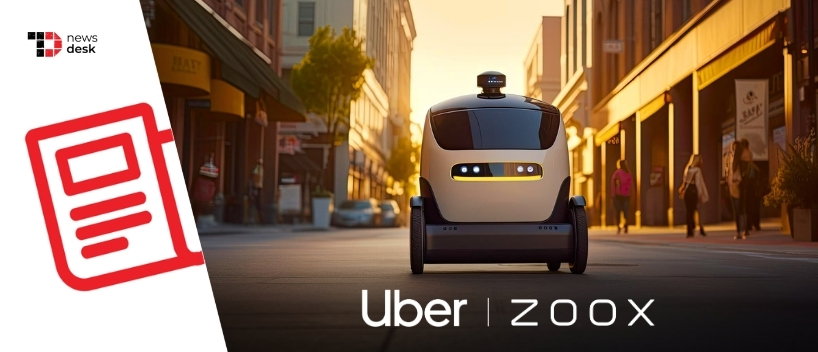
The rollout will begin in Las Vegas this summer and Los Angeles to follow next year.
The move marks the first time Zoox has partnered with a third-party platform to distribute its driverless ride service, expanding access to its technology through Uber’s massive global rider network.
TL;DR
- Zoox and Uber have announced a strategic partnership to deploy Zoox robotaxis on the Uber network.
- The service will launch in Las Vegas this summer, followed by Los Angeles in 2027.
- Riders using the Uber app may be matched with Zoox’s fully autonomous robotaxis on eligible trips.
- Zoox will continue offering rides through its own app alongside Uber integration.
Uber riders will soon have a chance to experience autonomous travel powered by Zoox. Under a multi-year agreement, Zoox robotaxis will be deployed on the Uber platform beginning in Las Vegas this summer, with Los Angeles slated to join the rollout by mid-2027.
Once operational, riders requesting eligible trips on the Uber app may be matched with a Zoox autonomous vehicle. The companies said the partnership will initially begin with a controlled deployment before expanding as both firms refine operations, technology, and the overall rider experience.
Zoox will also continue operating rides through its own app in both cities. This dual approach allows the company to maintain its direct service model while reaching new customers through Uber’s widely used ride-hailing platform.
Executives Highlight Shared Vision For Autonomous Transportation
Company leaders say the partnership reflects a shared ambition to reshape urban mobility through automation.
“We are excited to partner with Uber, a company that shares our vision for transforming mobility,” said Aicha Evans, CEO of Zoox. “This partnership is an opportunity to continue advancing the use of autonomous mobility in daily life. Through our collaboration, Zoox will provide a differentiated rider experience to those who already know and love the convenience of riding with Uber.”
Uber CEO Dara Khosrowshahi also emphasized the unique nature of Zoox’s vehicles and their technology.
“The Zoox robotaxi is unlike any other vehicle on the planet, it was purpose-built from the ground up to deliver an extraordinary experience,” said Khosrowshahi. “Zoox’s commitment to safety and their advanced autonomous driving technology make them an ideal partner. We’re thrilled to work together to introduce more riders to the future of mobility.”
The partnership is expected to follow a gradual rollout strategy. The companies plan to start with a limited deployment, collect insights from real-world usage, and scale the service as technology, safety systems, and rider experience improve.
It aligns with Uber’s broader strategy to build an autonomous vehicle network that integrates multiple technologies and partners.
Topics For More Insights
- Uber, Nissan & Wayve Bring AI Robotaxis To Tokyo!
- Self-Driving Firm Wayve Raises $1.2 Billion From NVIDIA, Uber, Microsoft & 3 Major Automakers
- Uber Wants To Become The Operating System For Autonomous Mobility
- Waabi Raises $1B To Explore Robotaxis With Uber As Uber Sets Up Early-Stage AV Labs Division
- Uber, Lucid & Nuro Agree A $300M, 6-Year, 20,000 Robotaxi Deal As Waymo Grows
Purpose-Built Robotaxis Designed Specifically For Ride-Hailing
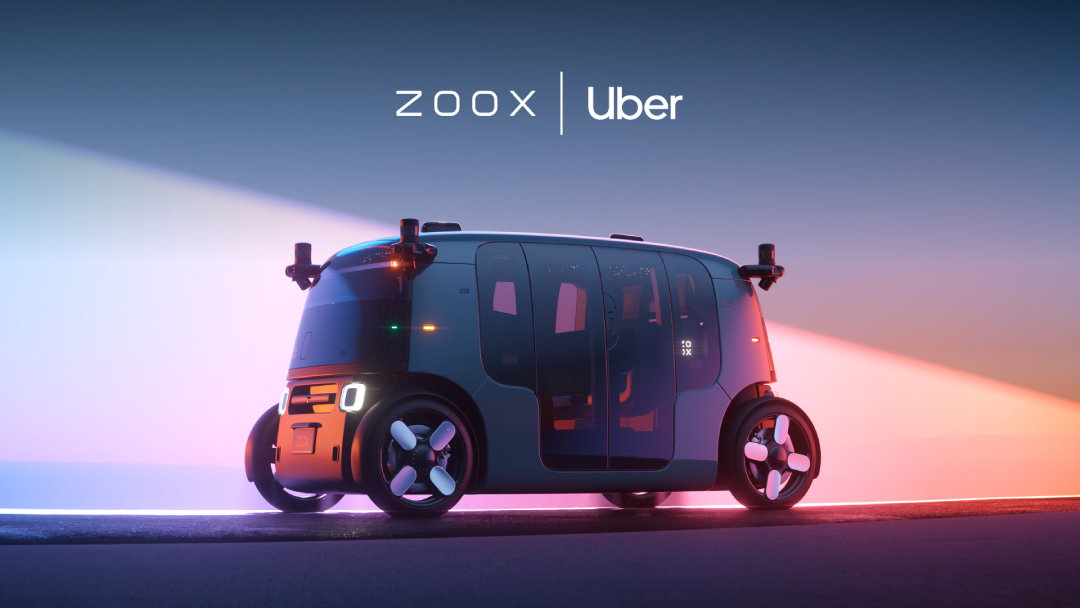
Unlike many autonomous vehicles currently being tested on public roads, Zoox robotaxis are not modified passenger cars. The vehicles are built from the ground up specifically for ride-hailing, with a design centered on passenger comfort and social interaction.
The vehicles are fully autonomous, all-electric, and bidirectional. Their layout is engineered to encourage conversation and shared experiences among passengers, reflecting Zoox’s belief that reimagining transportation requires designing both the vehicle and service together from the start.
Zoox was founded in 2014 with the goal of reinventing urban mobility. Instead of retrofitting existing vehicles with autonomous systems, the company chose to develop an entirely new vehicle architecture optimized for ride-hailing services.
This design philosophy remains central to its long-term vision of creating safer, cleaner, and more enjoyable city transportation.
Zoox, which operates as an independent subsidiary of Amazon, says its goal remains the same, building a safer and cleaner future for urban transportation while making autonomous mobility a practical everyday option for riders.
The agreement comes as Zoox steadily moves toward large-scale commercialization of its robotaxi service. Over the past year, the company has expanded operations in Las Vegas and introduced its Zoox Explorers program in San Francisco.
So far, Zoox reports that its autonomous fleet has driven more than one million miles and served over 300,000 riders.
At the same time, Uber announced a partnership with Nissan and Wayve to develop and pilot robotaxis in Tokyo, scheduled for a late 2026 rollout.
