
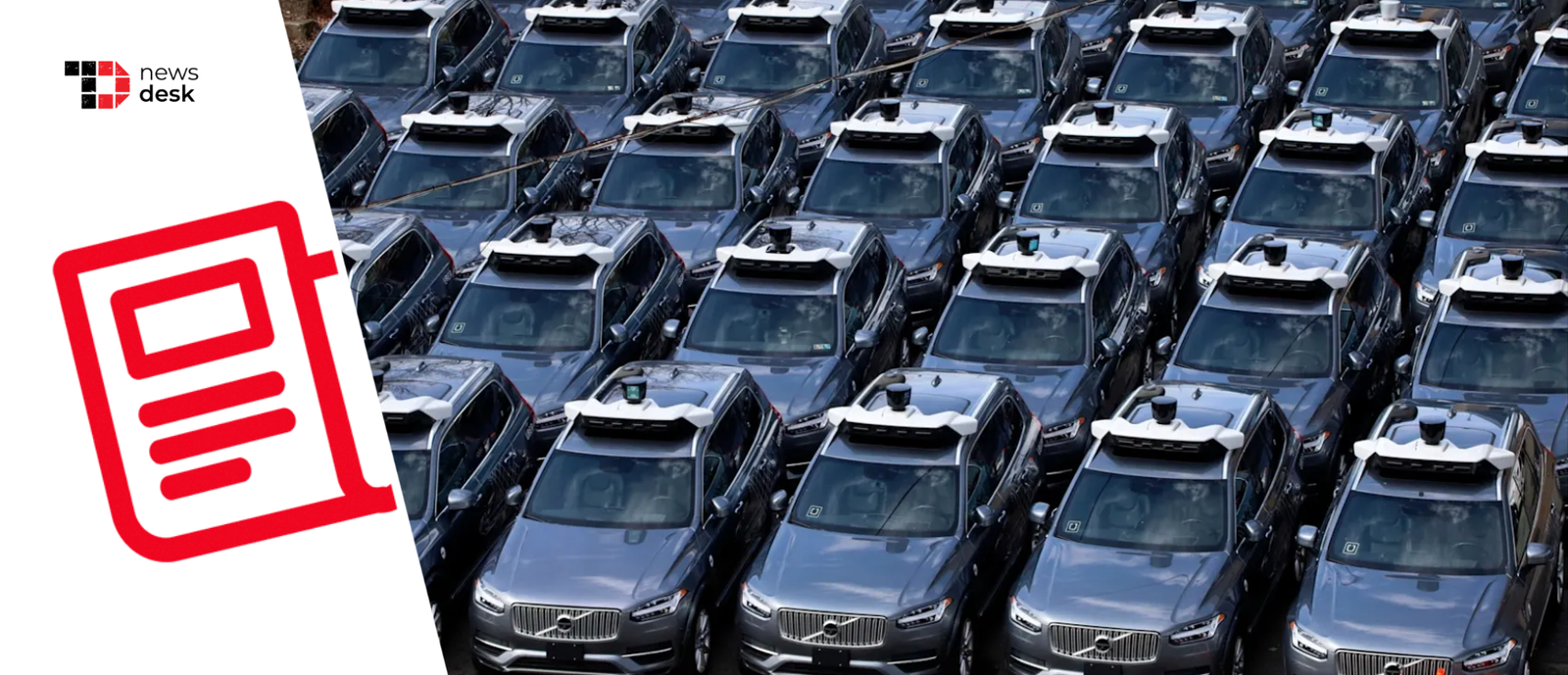
Uber Technologies has unveiled Uber Autonomous Solutions, a new business unit designed to help autonomous vehicle companies commercialize their technology at scale by leveraging Uber’s marketplace, infrastructure, operational tools, and global regulatory expertise.
The move positions Uber as the commercial backbone of the emerging robotaxi economy, enabling autonomous vehicle developers to focus on building self-driving systems while Uber manages demand generation, fleet orchestration, rider experience, and compliance across global markets.
TL;DR
- Uber launched Uber Autonomous Solutions to accelerate AV commercialization globally
- The suite spans infrastructure, user experience, and fleet operations
- Partners include Nuro, WeRide, Wayve, and Avride
- Uber provides training data, mapping, insurance, and fleet intelligence tools
Uber said the new division externalizes more than a decade of operational experience built from running its global ride-hailing marketplace, which supports over a billion trips per month.
“Autonomous technology has remarkable potential to make transportation safer and more affordable,” said Dara Khosrowshahi, CEO of Uber. “Innovation in autonomy is moving quickly, but meaningful commercialization will take much longer. With Uber Autonomous Solutions, we’re externalizing these hard-won competencies for our partners.”The company structured the offering across three pillars: infrastructure, user experience, and fleet operations.

Under infrastructure, Uber is providing AV 2.0 training data collected from thousands of specially equipped vehicles across dozens of cities in the United States and Europe. The fleet has logged millions of miles of multi-sensor data, which Uber says can accelerate model training toward Level 4 autonomy. The company is also building on partnerships such as its Data Factory collaboration with NVIDIA.
Uber’s data-enriched mapping platform, informed by tens of billions of trips worldwide, is designed to help AV partners refine pickup points, routing, and ETAs in real-world conditions. The company also offers regulatory support and fleet financing models intended to reduce cost per mile and shorten time to market.
On the user experience front, Uber is introducing an AV-first in-car interface that standardizes rider controls across autonomous fleets. The Nuro-Lucid-Uber robotaxi will be the first to integrate this system later this year, including Nuro’s real-time driving visualization on in-car tablets.
“AV tech teams should be able to focus on what they do best, building software that can safely power an autonomous world,” said Sarfraz Maredia, Global Head of Autonomous Mobility and Delivery at Uber. “Uber Autonomous Solutions is designed to complement their strengths by providing operational depth wherever they need it.”
Uber also highlighted complex deployment models such as Uber Reserve and shared autonomous rides. The company already offers autonomous vehicles through Uber Reserve in Phoenix and has announced a shared AV product with Volkswagen launching later this year in Los Angeles.
Fleet operations represent another core focus area. Uber introduced AV Mission Control, a fleet intelligence platform that provides real-time visibility into vehicle status across autonomous fleets. The system aggregates telemetry data and applies orchestration logic to optimize deployment and minimize service interruptions.

Additional offerings include remote assistance, field support operations for issues such as towing or lost items, and a dedicated autonomous vehicle insurance policy designed to consolidate coverage for manufacturers, ADS providers, fleet managers, and supporting participants.
Industry partners welcomed the move. Dmitry Polishchuk, CEO at Avride, said Uber’s platform data helps inform deployment decisions and Operational Design Domain expansion. Andrew Chapin, COO at Nuro, emphasized the importance of a rider-centric in-vehicle experience for building consumer trust.
ayve’s Kaity Fischer noted that Uber’s multi-sensor data across global markets accelerates commercialization. Dr. Tony Han, Founder and CEO at WeRide, said the collaboration supports commercial robotaxi deployments in cities including Abu Dhabi, Dubai, and Riyadh.
As competition intensifies across the autonomous vehicle sector, Uber is positioning itself not as a manufacturer of driverless systems, but as the commercialization and operating layer connecting autonomous fleets to real-world demand.
The defining challenge for the industry is no longer just technical capability, but trusted, large-scale deployment. With Uber Autonomous Solutions, the company is betting that controlling the marketplace and operational stack may ultimately prove more powerful than building the vehicles themselves.
