
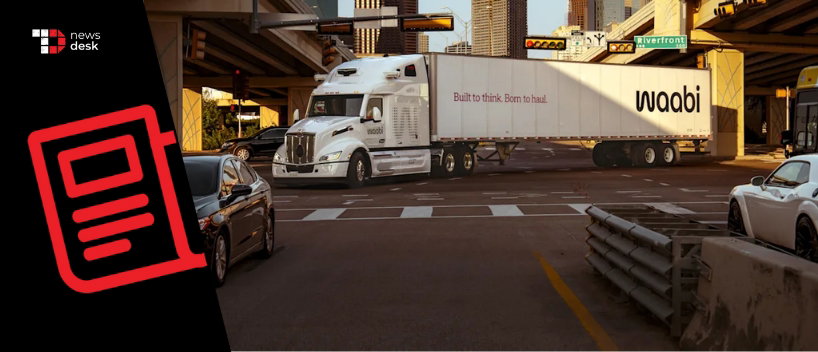
Autonomous driving startup Waabi has raised $1 billion to broaden its long-term ambitions beyond self-driving trucks and explore robotaxis in partnership with Uber, while Uber has unveiled a new AV Labs division aimed at supporting autonomous partners through early-stage data initiatives.
Together, the announcements point to strategic positioning rather than imminent deployment, as both companies prepare foundational technology and infrastructure for a future autonomous ride-hailing ecosystem.
TL;DR
- Waabi has raised $1 billion to support expansion beyond autonomous trucking.
- The company plans to explore robotaxis through a partnership with Uber.
- Uber has launched AV Labs as an early initiative focused on driving data for AV partners.
- Both moves reflect long-term strategy, not near-term robotaxi rollouts.
Waabi, founded in 2021 by Raquel Urtasun, said the new funding will help it extend its AI-first autonomy platform beyond long-haul trucking into additional vehicle categories, including robotaxis. The company has so far focused on autonomous freight, with its technology built around simulation-heavy training and validation rather than large-scale real-world mileage.
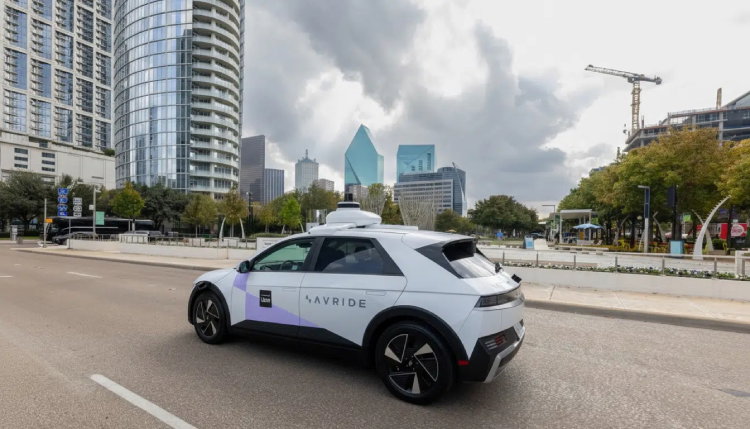
Urtasun said the expansion into robotaxis reflects confidence that Waabi’s core AI architecture can be adapted to more complex urban environments over time. However, the company emphasized that this work remains exploratory, with development, testing, and regulatory readiness still ahead.
“Our goal has always been to build a generalizable autonomy system,” Urtasun said. “Robotaxis represent a future opportunity to apply that system, but we are approaching this carefully and methodically.”
As part of the announcement, Waabi confirmed that it will work with Uber as a strategic partner. The collaboration is expected to focus initially on technical integration and long-term planning, rather than immediate commercial deployment. Neither company has shared timelines, geographic markets, or vehicle counts, underscoring that the effort is still in its early stages.
In parallel, Uber announced the creation of a new internal unit called AV Labs. The division is designed to help the company better support its autonomous vehicle partners by improving how driving data is collected, organized, and shared across Uber’s platform.
Topics For More Insights
Uber said AV Labs is an early initiative rather than a large, standalone organization. Its initial focus will be on building tools and processes that make it easier for partners to access relevant real-world driving data, which is often cited as a major challenge in autonomous development.
“AV Labs is about laying groundwork,” an Uber spokesperson said. “We are focused on learning what data partners need most and how we can responsibly support them as autonomy evolves.”
Uber currently works with multiple autonomous technology companies across ride-hailing, delivery, and logistics. Instead of developing its own self-driving system, Uber has positioned itself as a platform provider, aiming to connect riders, fleet operators, and autonomous developers when the technology is ready.
Industry analysts note that both announcements should be viewed through a long-term lens. Robotaxi deployment remains constrained by technical complexity, regulatory oversight, and public trust, and most companies in the sector are still refining foundational capabilities rather than scaling operations.
By raising significant capital and investing in data infrastructure, Waabi and Uber appear to be preparing for that future phase, while stopping short of signaling that widespread autonomous ride-hailing is imminent.
