
The Series D round was led by Eclipse, Balderton, and SoftBank Vision Fund 2. New institutional investors include Ontario Teachers’ Pension Plan, Baillie Gifford, British Business Bank, Icehouse Ventures, and Schroders Capital.
Strategic investors Microsoft, NVIDIA, and Uber also participated, alongside global automakers Mercedes-Benz, Nissan, and Stellantis. Uber has committed additional milestone-based capital to support multi-year robotaxi deployments, bringing the total secured funding tied to the round to $1.5 billion.
The round marks a turning point as the UK-based company shifts from research leadership to large-scale commercial deployment of its end-to-end embodied AI platform.
TL;DR
- Wayve raised $1.2 billion in Series D, with up to $1.5 billion secured including Uber’s milestone-based capital.
- Backers include Microsoft, NVIDIA, Uber, and automakers Mercedes-Benz, Nissan, and Stellantis.
- Robotaxi trials with Uber begin in 2026, consumer vehicle deployments start in 2027.
- Platform supports L2+ hands-off to L4 eyes-off driving without HD maps.
Wayve Raises $1.2B To Scale End-To-End AI Autonomy Globally
The raise accelerates Wayve’s transition from pioneering research to scaled commercial rollout of its embodied AI driving platform.
Alex Kendall, Co-Founder and CEO of Wayve, said, “With $1.5 billion secured, we are building for a total addressable market that spans every vehicle that moves. Autonomy will not scale through city-by-city robotaxi deployments alone. It will scale through a trusted platform that automakers and fleets can deploy globally and improve continuously.”
He added that the investment positions Wayve to “build the autonomy layer that will power any vehicle, anywhere.”
Commercial Robotaxi Trials With Uber Set For 2026 Launch
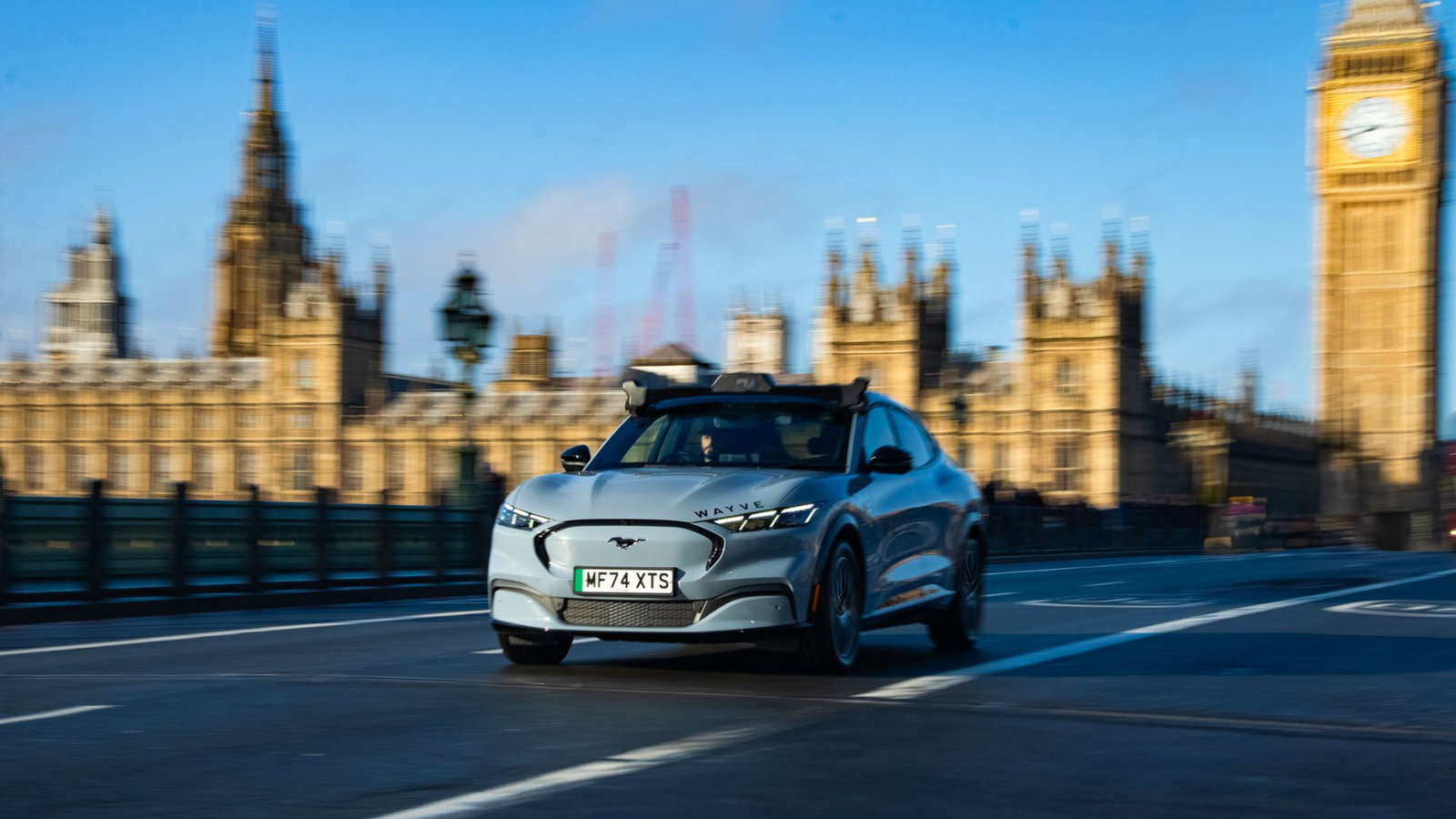
Wayve and Uber plan to begin commercial robotaxi trials in London in 2026, with expansion to more than 10 global markets over time.
Under the partnership, Wayve will deploy its AI Driver into L4-capable vehicles supplied by participating automakers, while Uber will own and operate the fleet through its ride-hailing network.
Dara Khosrowshahi, CEO of Uber, said, “We are very proud to continue to deepen our partnership with Wayve, with plans to deploy together in more than 10 markets around the world. Wayve’s powerful end-to-end approach is purpose-built for scale, safety, and effectiveness, and we’re excited to work with them across multiple OEMs and geographies, which we’ll share more about soon.”
Beyond ride-hailing, Wayve’s technology will enter consumer vehicles starting in 2027. Nissan confirmed it will integrate Wayve’s AI to enhance advanced driver-assistance systems in its cars, supporting L2+ hands-off capabilities before progressing to L3 and L4 eyes-off autonomy.
Microsoft Chairman and CEO Satya Nadella said, “Wayve is pushing the frontier of embodied AI for autonomous driving, and Azure supports the scale, reliability, and safety needed to bring that innovation into the real world. Through our partnership and investment, we’re helping accelerate the path from breakthrough research to scaled commercial deployment with automakers worldwide.”
End-To-End Embodied AI Platform Enables Map-Free, Hardware-Agnostic Deployment
Founded in 2017, Wayve pioneered an end-to-end deep learning approach to autonomous driving. Its AI Driver runs entirely on onboard compute and embedded sensors, without relying on high-definition maps or city-specific engineering.
The platform is designed to generalize across vehicles, brands, and geographies. In the past year, Wayve became the first autonomous vehicle developer to drive zero-shot in more than 500 cities across Europe, North America, and Japan within a single year, meaning it deployed without city-level fine-tuning.
The company’s foundation model has been trained on globally diverse data spanning over 70 countries and multiple vehicle platforms, enabling it to adapt to new environments with minimal reconfiguration.
Topics For More Insights
With automakers backing the platform and mobility providers preparing deployments, Wayve’s latest funding round reflects a broader industry shift toward end-to-end AI as the foundation for scalable, production-ready autonomy.
