
Chinese automakers such as BYD are developing autonomous vehicles that offer better performance at cheaper rates in Europe and other parts of the world, and may soon come for the United States market.
Currently, BYD does not sell consumer passenger vehicles in the United States due to high tariffs.
Still, this is seeing popular brands rethink their strategies and pricing, to better match current requirements.
To match this, Tesla has expanded its U.S. lineup with a new all-wheel drive (AWD) variant of its bestselling Model Y midsize SUV, priced at $41,990.
The move highlights Tesla’s ongoing effort to recalibrate pricing as demand softens, incentives fade, and competition intensifies across the EV market.
TL;DR
- Tesla launches a new Model Y all-wheel drive variant in the U.S. priced at $41,990
- The new trim sits above the rear-wheel drive Standard Model Y
- The strategy focuses on lowering entry prices without launching a new mass-market vehicle
- Analysts warn that margin pressure could increase as lower-priced models gain share
The New Model Y AWD Variant
Tesla has quietly added a new all-wheel drive version of the Model Y to its U.S. configurator, pricing it at $41,990.
The variant slots above the rear-wheel drive Standard Model Y and expands the range of options available to buyers seeking additional traction and performance without stepping into higher-end trims.
Other options include the base Rear-Wheel Drive (RWD) starting at $39,990, Premium RWD ($44,990), Premium AWD ($48,990), and Performance AWD ($57,490).
The new Model Y offers a top speed of 125 miles per hour (mph), a range of 294 miles (EPA estimate), and can go from 0 mph to 60 mph in 4.6 seconds. The vehicle can be leased at $499 per month or customers can avail the financing option of $599 per month.
Additional costs include a one-time payment of $8,000 for supervised full self-driving (FSD) at a monthly subscription of $99 per month. Tow Hitch costs an additional $1,000, $500 for a roof rack, $145 for a pet liner, $450 for a home charger, $240 for all-weather interior liners.
As per the website, availability ranges from 3 to 5 weeks, and comprises of a $250 non-refundable order deposit when purchasing. The upfront cost can increase based on additional components purchased.
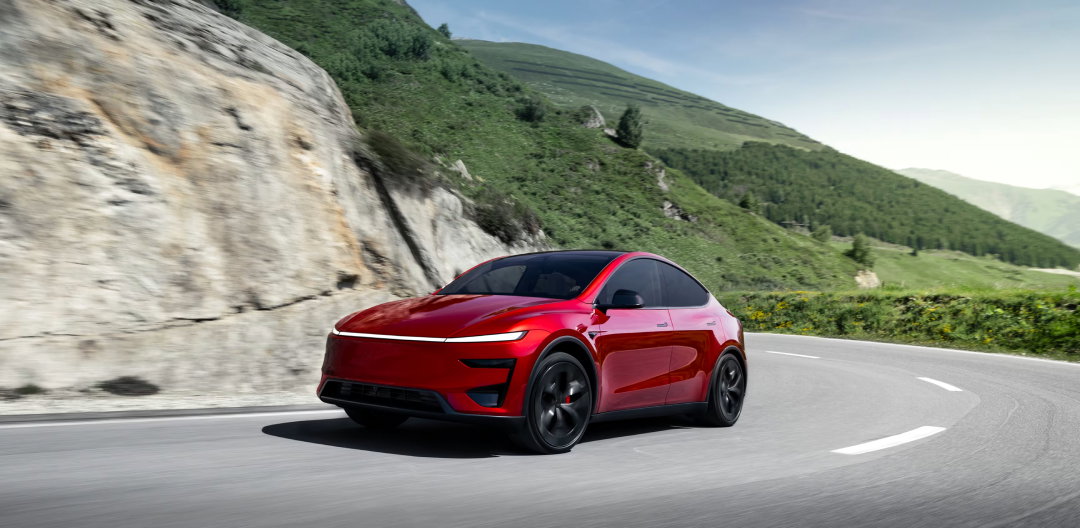
In comparison to the base variant, the rear-wheel drive (RWD), the new AWD version shares most features.
Mainly, the two differ in price ($39,990 for the RWD vs $41,990 for the AWD), range (321 miles vs 294 miles), pickup speed from 0 to 60 mph (6.8 seconds vs 4.6 seconds), and 15-minute supercharge (up to 160 miles vs up to 152 miles).
The remain same across audio capabilities, connectivity, wheels options, display, interior features, decor, air filtration, climate control, seating, exterior, ride comfort, and other features that are common across all variants.
As with several recent product changes, Tesla did not issue a formal announcement, instead reflecting the update directly on its website. This understated rollout approach has become typical of Tesla’s recent lineup and pricing adjustments.
Pricing Strategy And Lower-Cost Trims
The launch builds on Tesla’s October introduction of lower-priced Standard versions of both the Model Y and Model 3. These trims were priced roughly $5,000 below previous base models and marked a meaningful shift in Tesla’s go-to-market strategy.
Rather than waiting to introduce a new mass-market vehicle, Tesla has opted to reduce entry prices across its existing lineup. These lower-cost trims are now a central part of the company’s longer-term strategy as consumers grow increasingly price-sensitive.
Topics For More Insights
Impact Of Incentive Changes In The US
In the US, Tesla’s pricing recalibration follows the end of the $7,500 federal EV tax credit. The loss of incentives contributed to a cooling EV market, increasing effective purchase prices for consumers.
However, some states still offer incentives, which apply on the final price while purchasing.
By introducing lower-priced variants, Tesla has moved sticker prices closer to pre-incentive levels, helping maintain affordability and protect demand.
Global Markets And Competitive Pressure
In international markets, Tesla’s Standard trims have resulted in more visible price reductions, often around $5,000. These cuts are designed to stimulate demand as competition increases from global automakers, particularly in Europe and China.
Rivals in these regions are expanding aggressively, offering competitive pricing, improved range, and localized features that continue to challenge Tesla’s dominance.
Furthermore, the pricing changes come alongside broader strategic moves.
Tesla CEO Elon Musk said last week that the company would end production of the Model S and Model X, repurposing space at its California factory for humanoid robot manufacturing.
The decision reflects Tesla’s ambition to diversify beyond vehicles, even as its core EV business navigates slower growth and intensifying competition.
