

OpenAI has officially started testing advertising in ChatGPT, marking a major shift in how it plans to monetize its AI assistant while expanding access to free users.
The test phase will last several months.
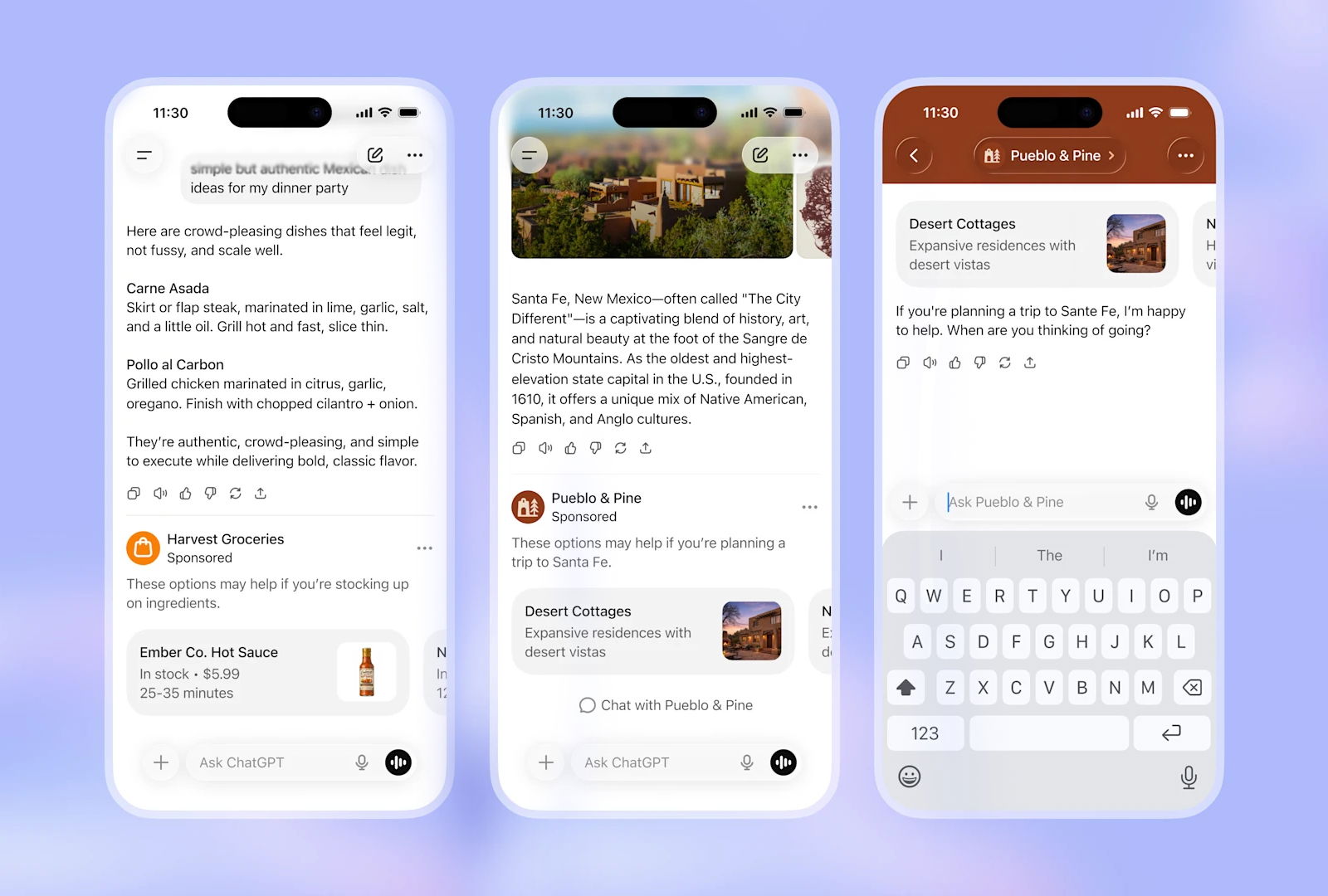
The company announced that the rollout will begin with limited tests of sponsored messages in ChatGPT’s free and ChatGPT Go accounts, its low-cost subscription tier.
OpenAI launched ChatGPT Go globally on January 16, for $8 per month, following a launch in India in August 2025. The worldwide launch of Go makes it the newest plan, adding to existing subscription tiers: ChatGPT Plus at $20 per month and ChatGPT Pro at $200 per month.
TL;DR
- OpenAI begins testing sponsored messages in ChatGPT as part of its new ad strategy.
- The initiative aims to sustain the free tier and expand global access.
- Advertisers will reach users contextually through relevant AI chat interactions.
- User privacy, transparency, and control remain central to OpenAI’s approach.
- Ads will appear first in the U.S., with plans for gradual global rollout.
Targeted Ads In ChatGPT
In a blog post titled Our Approach to Advertising and Expanding Access to ChatGPT, OpenAI outlined its decision to test contextual ads inside ChatGPT’s free and Plus versions. According to the company, the aim is to make its most capable AI experiences widely available while ensuring a sustainable business model.
"AI is reaching a point where everyone can have a personal super-assistant that helps them learn and do almost anything," said Fidji Simo, the CEO of applications at OpenAI, in the blog post. "Who gets access to that level of intelligence will shape whether AI expands opportunity or reinforces the same divides."
The move is part of a broader strategy to expand access to ChatGPT globally, especially as its usage continues to surge. The company added that these sponsored messages will appear contextually, that is, in relevant conversations, rather than through traditional banner or intrusive formats.
This approach mirrors modern digital advertising but within an AI-powered context where the ad is conversational, personalized, and relevant to user intent.
Transparency And Privacy Focus
OpenAI emphasized that privacy and user trust will remain central and ads will be clearly labeled, while users will have transparency over what data informs ad targeting. The company clarified that ChatGPT does not share personal conversation data with advertisers.
The company also noted that its ads won’t disrupt user experiences or influence core AI outputs in ways that compromise neutrality.
The AI startup also listed out the principles it will follow in its advertising:
-
Mission Alignment: All advertising efforts will directly support its mission to ensure AGI benefits all of humanity, while making AI more accessible.
-
Answer Independence: Ads won't influence the answers ChatGPT gives, which will remain optimized for helpfulness and accuracy. Ads will "always" be separate and clearly labeled.
-
Conversation Privacy: User conversations will remain entirely private, and no user data will be sold to advertisers.
-
Choice and Control: Users will have full control over personalization settings. They will be able to turn off ad personalization, clear data used for ads, or opt for a paid, ad-free tier at any time.
-
Long-Term Value: OpenAI will not optimize for time spent within ChatGPT, as it prioritizes user trust and experience over maximizing revenue.
These principles reflect OpenAI’s broader commitment to building advertising systems that enhance accessibility while maintaining transparency, fairness, and user autonomy.
Topics For More Insight
Broader Context
This marks a significant change for OpenAI, which has primarily relied on subscription revenue through ChatGPT Plus and enterprise licensing. The addition of advertising aligns it more closely with tech giants like Google and Meta, though OpenAI stresses that its approach will differ by prioritizing usefulness over exposure.Experts see the move as a step toward long-term financial sustainability.
With over 800 million weekly active users on ChatGPT, the ad-based revenue model could unlock a substantial new income stream while keeping the free version accessible worldwide.
"Once we begin testing our first ad formats in the coming weeks and months, we look forward to getting people's feedback and ensuring that ads can support broad access to AI and keep the trust that makes ChatGPT valuable," concluded OpenAI's Fidji Simo.
