

The announcement was made at the American Meteorological Society’s annual meeting in Houston and represents a major step in NVIDIA’s broader effort to build an open ecosystem for AI-powered scientific computing.
NVIDIA also published a video explaining the NVIDIA Earth-2 family of open models, the world’s first fully open AI weather stack.
TL;DR
- NVIDIA launched three new open-source AI models under its Earth-2 initiative
- The models target 15-day forecasts, short-term storm prediction, and global data assimilation
- AI-based forecasting can run up to 1,000 times faster than traditional simulations
- Industries such as insurance, energy, and public weather services are already evaluating or deploying the models
Why NVIDIA Is Leveraging AI For Weather Forecasting
Historically, weather forecasting has relied on physics-based numerical simulations running on powerful supercomputers. While accurate, these systems are expensive to operate and slow to scale, particularly when forecasters need to run large ensembles to assess uncertainty or rare extreme events.
NVIDIA is positioning AI as a practical alternative. The company says its trained AI models can rival or exceed the accuracy of conventional approaches while drastically reducing the time and cost required to generate forecasts.
This shift removes long-standing constraints around computational resources and opens weather prediction to a much broader range of organizations.
A key advantage lies in ensemble forecasting. Traditional methods require running many individual simulations to explore different possible outcomes, which becomes prohibitively expensive at high resolution.
With AI, NVIDIA says these ensembles can be expanded dramatically without the same computational burden.
Business Applications, With Insurance In Focus
One of the most immediate commercial use cases for NVIDIA’s AI weather models is the insurance industry. Insurers frequently need detailed forecasts of extreme outlier events such as floods or hurricanes to assess risk exposure.
Mike Pritchard, NVIDIA’s director of climate simulation research, explained that insurers often rely on ensemble forecasting to understand how a single weather event might unfold across various scenarios.
Running these simulations in fine detail has traditionally been slow and costly.
“The tension is gone, because once trained, AI is 1,000 times faster. So you're free to run massive ensembles. And insurance companies are running like 10,000-member ensembles,” Pritchard said.
New Open Models Join The Earth-2 Family
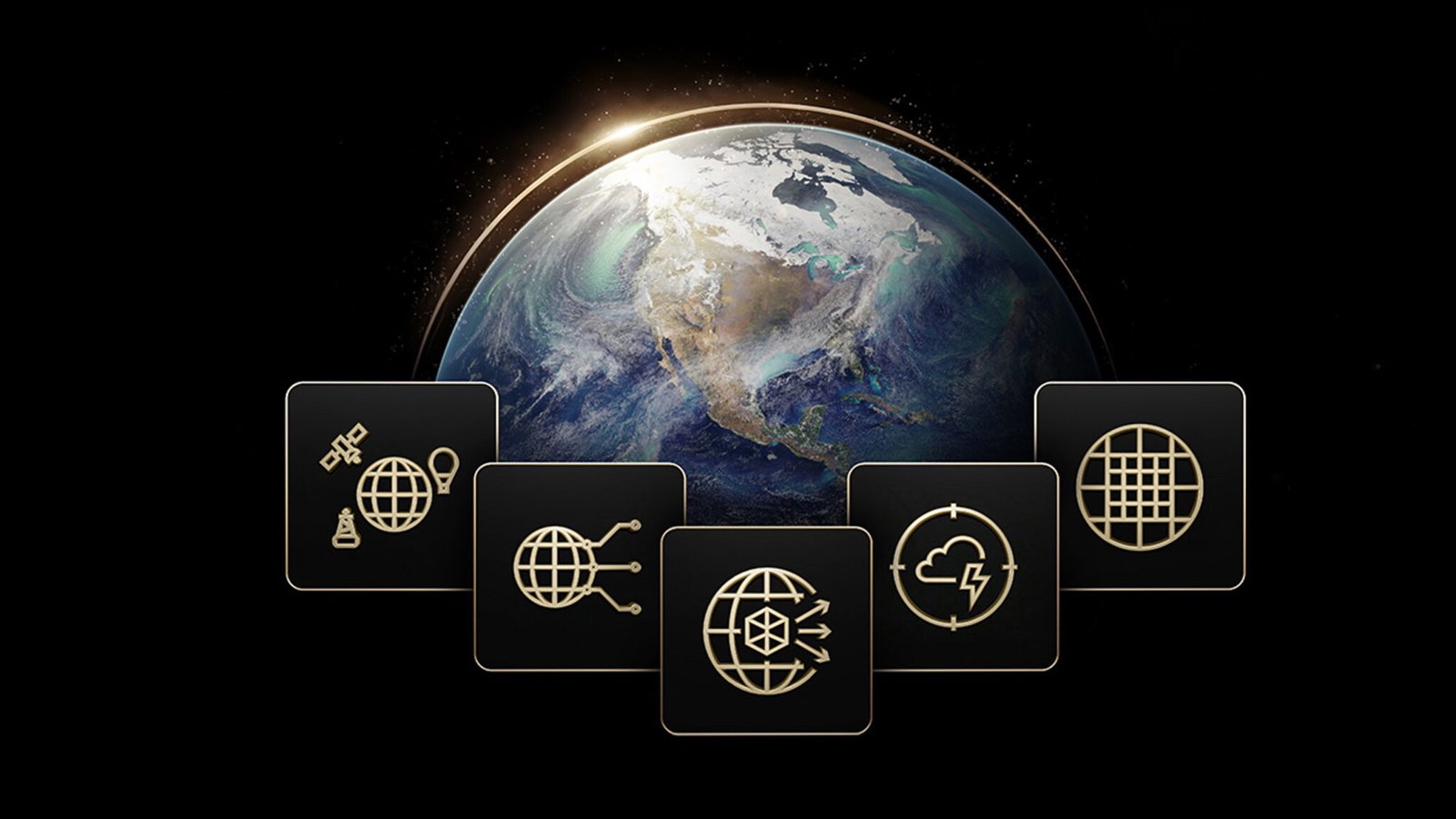
NVIDIA introduced three new open weather models as part of its Earth-2 platform.
Earth-2 Medium Range is designed for medium-range forecasts of up to 15 days in advance, covering more than 70 weather variables including temperature, pressure, wind, and humidity. NVIDIA said the model outperforms leading open models on standard industry benchmarks.
Earth-2 Nowcasting focuses on short-term forecasting, generating zero- to six-hour predictions of local storms and hazardous weather at kilometer-scale resolution. The model uses generative AI to directly simulate storm dynamics and predict satellite and radar imagery in minutes.
Earth-2 Global Data Assimilation addresses the starting point of forecasting by rapidly generating snapshots of the current atmosphere across thousands of global locations. NVIDIA said this process can be completed in seconds on GPUs instead of hours on supercomputers, enabling a fully AI-driven forecasting pipeline when paired with Earth-2 Medium Range.
Topics For More Insights
Building An Open Ecosystem For Weather Intelligence
These new models join existing components in the NVIDIA Earth-2 stack, including CorrDiff and FourCastNet3, as well as integrations with open models from organizations such as the European Centre for Medium-Range Weather Forecasts, Microsoft, and Google.
NVIDIA said Earth-2 is designed to be production-ready and fully open, allowing scientists, startups, enterprises, and government agencies to run, fine-tune, and deploy weather AI on their own infrastructure. The company believes this approach will accelerate collaboration, reduce forecasting costs, and improve decision-making across industries ranging from energy and agriculture to public safety and financial risk assessment.
