

Artificial Intelligence
Meta Launches Muse, A Personal AI Agent That Can Act On User's Behalf
Updated on Wed, Sep 9, 2026
Share
Meta has launched Muse, a new personal AI agent capable of taking real-world actions on a user’s behalf, including sending emails, booking travel, making purchases, filling out forms, negotiating bills and working on longer-term goals in the background.
TL;DR
- Meta’s Muse goes beyond answering questions by completing tasks across connected apps, websites and services.
- Muse runs on a dedicated Muse Secure VM and uses a separate Sentinel agent to monitor actions and request permission for sensitive tasks.
- The service has a free tier, with heavier-use subscriptions reportedly priced at $20 and $100 per month.
- Reuters reported security and reliability problems during Meta’s internal testing.
What Can Meta Muse Do?
According to Meta’s official announcement, Muse is powered by Muse Spark, which the company calls its most capable model yet for real-world agentic work. Rather than simply responding to prompts, Muse can create plans around a user’s goals and continue carrying out tasks even after they close the app.
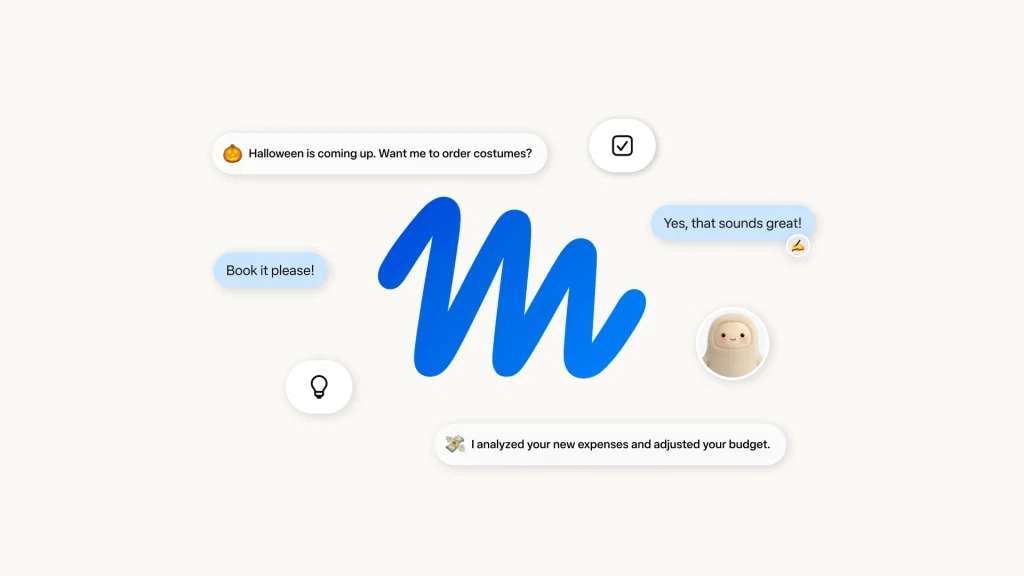
For example, Meta says Muse can send emails, book travel, open websites, fill out forms, negotiate on a user’s behalf and help with longer-term projects. It can also use information it remembers about a person to make proactive suggestions, such as converting a saved Instagram recipe into a grocery list or remembering dietary restrictions while organizing a dinner.
Quartz’s coverage similarly highlighted Muse’s ability to handle email, travel and purchases, while iThinkDiff noted that the agent can work through services users already rely on and use its browser when a direct integration is unavailable.
When payments are involved, Muse supports Link by Stripe. Meta says Link can generate a one-time-use card so a user’s real card details remain hidden, while Shop Pay and 1Password support are expected to follow.
Muse Is Built Around A Dedicated Secure Virtual Machine
Giving an AI permission to interact with email, calendars, shopping services and payment tools naturally raises privacy and security concerns.
Meta says each Muse runs inside its own Muse Secure VM, a dedicated cloud-based virtual computer where the agent and connected user data are stored. A separate Sentinel agent is isolated from Muse at the system level and reviews actions before they reach the internet, requesting user authorization when required.
Meta also says Muse cannot directly see passwords or payment methods stored for it to use, and users can decide which apps it connects to and what permissions each connection receives. Users can revoke that access, opt out of having Muse interactions used for training Meta’s AI models, and review an audit trail of what the agent has done or plans to do.
The company further says conversations and data stored within Muse’s VM are not shared with Meta’s advertising systems. Later in 2026, Meta plans to introduce Muse Confidential VM, which it says will encrypt the entire virtual machine using a key held by the user.
However, The Security Story Is Not Completely Settled
Despite those safeguards, independent reporting suggests Muse still has risks to work through.
Yahoo Tech’s Forbes-syndicated coverage highlighted Reuters reporting that Meta employees testing Muse shortly before launch had encountered security failures and unreliable behavior. Reuters reported one case where an internal test resulted in access to private iCloud photos despite guardrails, while other testers reported the agent stalling during monitoring tasks or unexpectedly disabling them.
Meta Chief Technology Officer Andrew Bosworth reportedly experienced repeated logout problems during testing. Reuters said Meta did not comment on the specific incidents described in the internal employee posts.
Topics for more insights:
Vishal Shah, Meta’s Vice President of AI Products, told Reuters that Meta had delayed Muse’s planned April release to strengthen its security.
“It is impossible to say that there is never going to be a mistake, but every single part of the architecture has been designed to make this as safe, as secure, as private as we can possibly make it,” Shah said.
iThinkDiff reported that Meta has opened a bug bounty offering researchers rewards of up to $300,000 for identifying security flaws in the system.
How Much Does Meta Muse Cost?
Meta’s first-party announcement says Muse will be free for most users, with subscription plans available for people requiring greater usage. Reuters independently reported monthly subscription prices of $20 and $100.
iThinkDiff identifies these plans as Power at $20 per month and Maximum at $100 per month, with the free tier intended to cover most mainstream use cases.
Muse is initially rolling out in the United States. Meta says it is available across iOS, Android and muse.ai, can be used through WhatsApp, and will come to its AI glasses in the future.
The launch marks an important step in Meta CEO Mark Zuckerberg’s broader push toward what the company describes as “personal superintelligence.” More importantly for users, Muse represents Meta’s attempt to move AI beyond answering questions and toward software that can independently act across a person’s digital life, putting the effectiveness of its privacy and safety controls under much greater scrutiny.
First published on Wed, Sep 9, 2026

Liked what you read? That’s only the tip of the tech iceberg!
Explore our vast collection of tech articles including introductory guides, product reviews, trends and more, stay up to date with the latest news, relish thought-provoking interviews and the hottest AI blogs, and tickle your funny bone with hilarious tech memes!
Plus, get access to branded insights from industry-leading global brands through informative white papers, engaging case studies, in-depth reports, enlightening videos and exciting events and webinars.
Dive into TechDogs' treasure trove today and Know Your World of technology like never before!
Disclaimer - Reference to any specific product, software or entity does not constitute an endorsement or recommendation by TechDogs nor should any data or content published be relied upon. The views expressed by TechDogs' members and guests are their own and their appearance on our site does not imply an endorsement of them or any entity they represent. Views and opinions expressed by TechDogs' Authors are those of the Authors and do not necessarily reflect the view of TechDogs or any of its officials. While we aim to provide valuable and helpful information, some content on TechDogs' site may not have been thoroughly reviewed for every detail or aspect. We encourage users to verify any information independently where necessary.
Loading comments...