
Artificial Intelligence
All About Muse Spark: Meta’s First Step Towards Personal Superintelligence
Share
TL;DR
-
Meta Muse Spark is an AI-powered assistant that is designed to generate creative ideas, refine concepts, and boost the creative process.
-
The AI tool is completely free of charge as of now, with talks for a possible subscription tier in the future.
-
The assistant gives you real-time feedback, customizable templates, and even integrates with other Meta products.
-
Meta has plans to incorporate this AI into its glasses (smart specs).
Introduction
As artificial intelligence tools rapidly evolve, the race is no longer just about chatbots. It is about who can own the creative workflow.
From OpenAI to Adobe, tech giants are building tools that don’t just answer questions but help users think, design, and create faster. Now, Meta has stepped into this space with Muse Spark, its first major move toward what it calls personal superintelligence.
Unlike traditional AI assistants, Muse Spark is designed to go beyond text. It combines real-time collaboration, visual ideation, and multimodal reasoning into a single experience aimed at creators.
So, what exactly is Muse Spark, and does it live up to the hype?
What Is Muse Spark?
Meta Muse Spark is the first model in Meta’s new Muse series and the first major release from Meta Superintelligence Labs. Announced on April 8, 2026, Muse Spark now powers the upgraded Meta AI experience in the Meta AI app and on meta.ai, where Meta is positioning it as a faster, more capable assistant for multimodal tasks, stronger reasoning, and more personalized help.
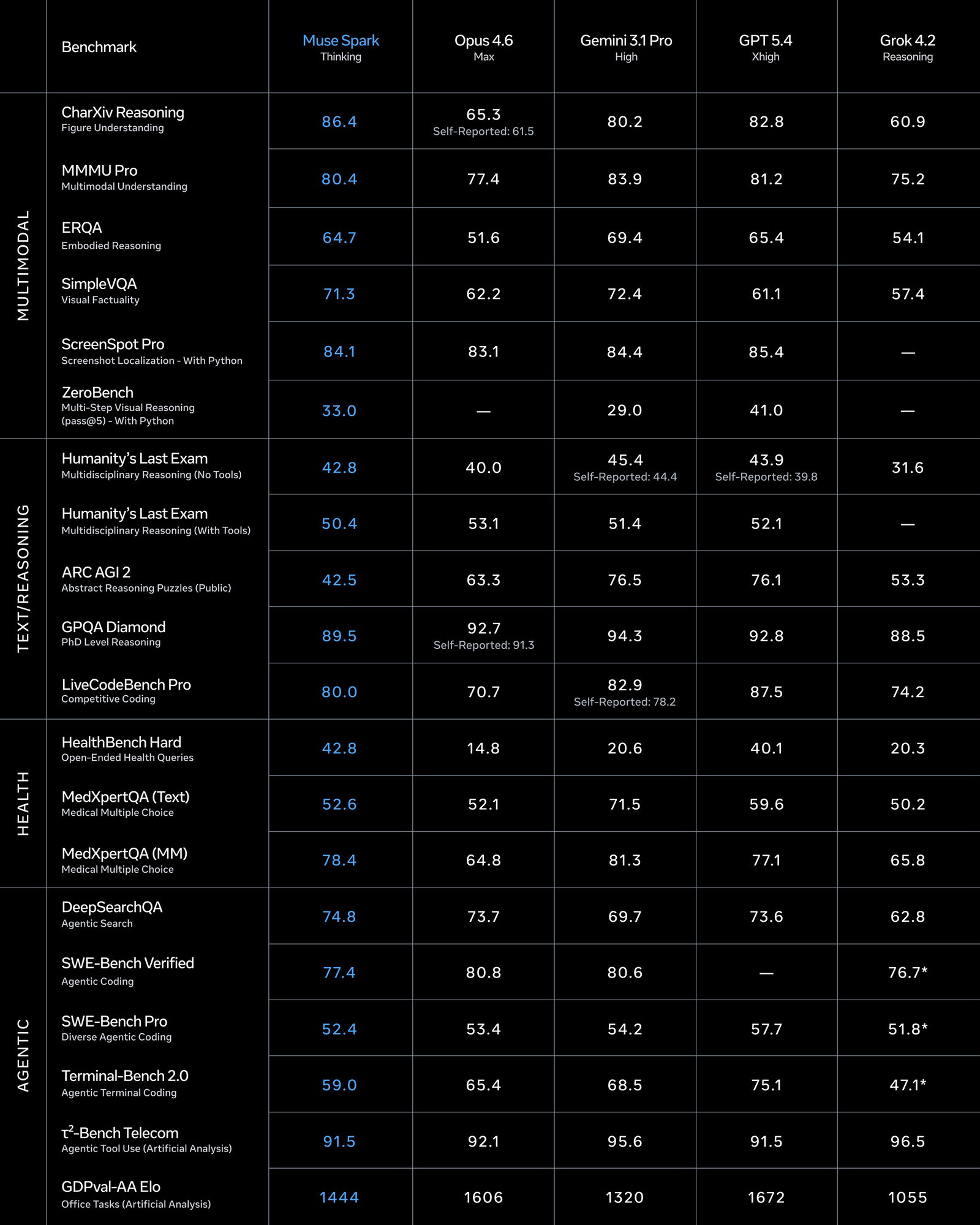
That makes Muse Spark more than just another chatbot launch. According to Meta, the model is small and fast by design, but still capable of handling complex questions across areas such as science, math, and health.
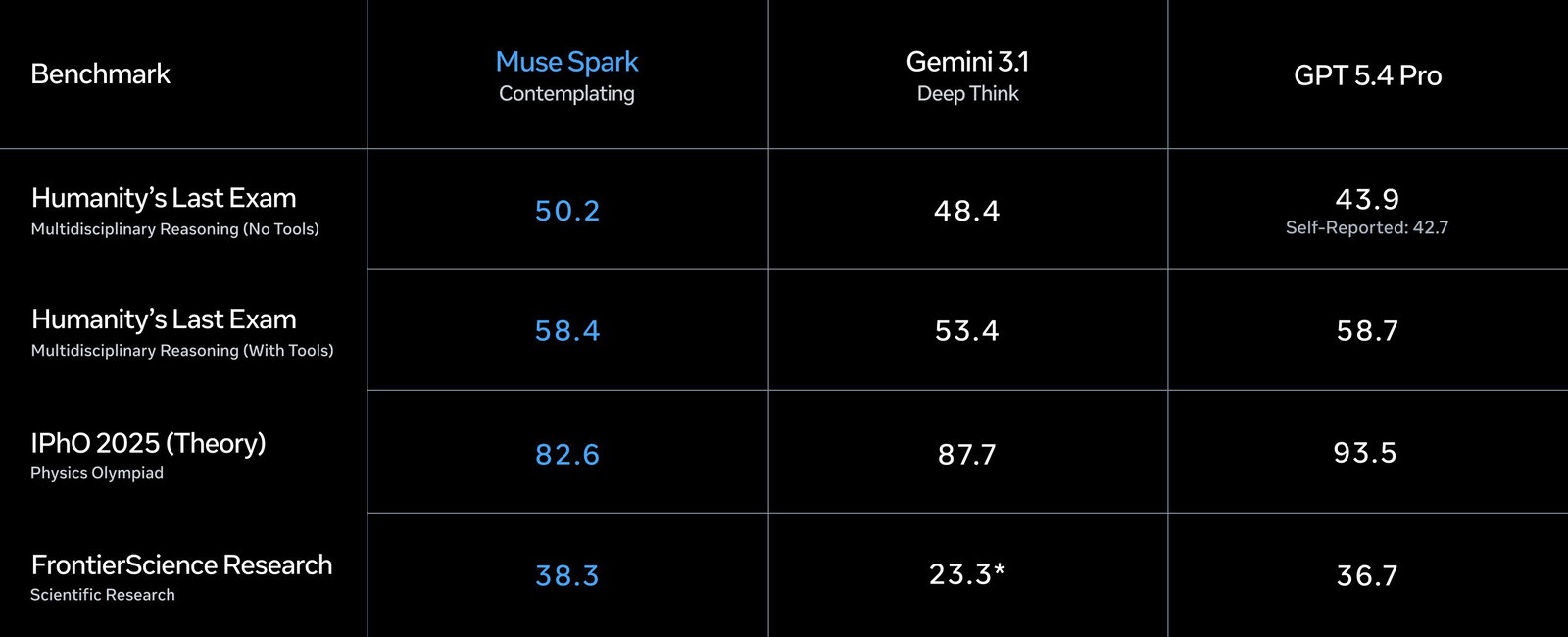
It also introduces features that push Meta AI beyond basic text prompts, including image understanding, multiple subagents working in parallel, visual coding, shopping help, and richer answers informed by public content across Meta’s ecosystem.
Understanding what Muse Spark is sets the foundation, but its real value becomes clearer when you look at how it fits into everyday creative workflows.
Applications Of Meta Muse Spark
If Muse Spark’s architecture defines what it can do, its real impact is better understood through how it reshapes the way creative work actually gets done.
-
Creative Writing
Whether you’re planning a whole story or simply crafting dialogue, Muse Spark will generate fresh ideas for you and completely bring your story to life. It can suggest plot twists and character development and is a must-have for any writer.
-
Design And Art
It’ll come as no surprise to you that Muse Spark can generate mood boards (no matter how complex), color palettes, and even concept sketches for your design, making it every artist’s perfect assistant.
-
Marketing And Advertising
Muse Spark can be used by marketers to create polished and compelling ad campaigns, posts for social media, and even product descriptions. A very useful tool for brands.
-
World Building
Did you know that Muse Spark can also help game developers? It can be used to generate character designs and concepts for the environment of your game. It's especially helpful for large visual projects.
-
Content Creation
Content creators on social media can use Muse Spark to brainstorm new ideas, write scripts, and create digital assets for their page, like infographics and banners.
Taken together, these suggest that Muse Spark is subtly redefining the creative process itself, and that raises a more practical question: how do users actually interact with it on a day-to-day basis?
How Creators Actually Interact With Muse Spark Day-To-Day
If Muse Spark is designed to support the creative process, its effectiveness ultimately depends on how naturally it fits into everyday usage.
-
Conversational Iteration
Muse Spark is built around back-and-forth interaction, where each response evolves based on previous inputs. This allows creators to shape ideas progressively rather than relying on a single generated result.
-
Low-Barrier Idea Development
The system does not require fully formed prompts to begin. Rough inputs like keywords, fragments, or partial concepts can be expanded into structured outputs, reducing friction at the earliest stage of creation.
-
Seamless Multimodal Input Handling
Users can combine text, visual references, and contextual feedback within the same workflow. This eliminates the need to move between tools when working across formats.
-
Real-Time Output Refinement
Instead of separating drafting and editing, Muse Spark enables continuous refinement within the same interaction loop, allowing creators to adjust direction instantly.
-
High-Speed Response
Fast generation times make it possible to test multiple creative directions in quick succession, supporting experimentation without slowing down the process.
-
Guided Output Quality
While the system generates responses independently, the final quality is shaped by how effectively users guide iterations, making it a tool that amplifies intent rather than replaces it.
Taken together, these capabilities position Muse Spark as an active layer within the creative workflow, but how does it measure up against the tools creators are already relying on? Let’s get into that.
How Muse Spark Compares To Other AI Tools
While Muse Spark introduces a more integrated approach to creativity, most AI tools in the market are still built around specific strengths. To understand where Muse Spark stands, it helps to compare it directly with the tools creators are already using:
| Aspect | Muse Spark | Jasper | Runway | Midjourney | ChatGPT |
| Core Strength | Integrated creative workflows | Writing & marketing copy | Video & visual production | Image generation | Language & reasoning |
| Where It Excels | Ideation, collaboration, multi-format use | Long-form content, structured writing | AI video creation and editing | High-quality stylized visuals | Writing, problem-solving, coding |
| Limitations | Still evolving in specialized depth | Limited beyond text | Narrow focus on media | No workflow integration | Less visual + ecosystem integration |
| Key Advantage | All-in-one creative workflow | Deep writing specialization | Advanced visual production | Best-in-class image quality | Strong reasoning and flexibility |
What stands out is a clear divide in how these tools are built. Most are designed to go deep in a single domain, while Muse Spark is structured to connect multiple stages of the creative process into one system.
That difference may not always show up in feature comparisons, but it becomes more apparent in real workflows, and that naturally leads to a more grounded evaluation: where does Muse Spark perform best, and where does it still fall short?
Strengths And Limitations Of Meta Muse Spark
If comparisons help position Muse Spark in the market, a closer look at its strengths and limitations reveals how it performs in practice.
-
A More Connected Creative Workflow
Muse Spark’s biggest advantage lies in how it brings different stages of creation into a single flow. Instead of moving between tools for ideation, drafting, and refinement, users can manage these steps within one environment, reducing friction and improving speed.
-
Accessibility
By offering the tool for free at launch, Meta significantly lowers the barrier to entry. This makes it easier for individual creators and small teams to experiment without committing to paid platforms.
-
Real-Time Iteration At Scale
Fast response times and continuous refinement allow users to explore multiple directions without slowing down, making it especially useful in workflows where speed and experimentation matter.
-
Limited Depth In Specialized Tasks
While Muse Spark covers multiple areas, it does not yet match the depth of tools built specifically for writing, image generation, or video production. For highly specialized outputs, dedicated platforms still have an edge.
-
Not Designed For Technical Workflows
The model is not built for complex coding, automation pipelines, or advanced agent-based tasks. Its strengths remain focused on creative and ideation-driven use cases.
-
Ecosystem Still Taking Shape
Much of its long-term value depends on deeper integration across Meta’s ecosystem. While the foundation is in place, the full experience is still evolving.
As this interaction model becomes more familiar, the next consideration is not just how it works, but how accessible it is to creators looking to adopt it at scale.
How Much Does Meta Muse Spark Really Cost?
At launch, Muse Spark is completely free to use, with no subscription tiers, waitlists, or additional requirements beyond access to Meta’s AI platforms. It is available through the Meta AI app as well as the web, making it immediately accessible to a broad user base.
This approach stands in contrast to many competing tools, particularly in writing and visual creation, where advanced features are often locked behind paid plans. By removing that barrier, Meta is effectively prioritizing scale and user adoption over short-term monetization.
However, this may not remain the case indefinitely. As Muse Spark evolves and becomes more deeply integrated into Meta’s ecosystem, the introduction of premium tiers or usage-based pricing models remains a possibility, especially for advanced capabilities or enterprise-level access.
For now, its free availability positions Muse Spark as one of the more accessible entry points into AI-driven creative workflows, particularly for individual creators and small teams experimenting with new tools.
While free access may drive early adoption, Meta’s longer-term strategy will likely determine how far Muse Spark can go, and how deeply it becomes embedded in everyday workflows.
What’s Next For Muse Spark And Meta’s AI Strategy
If Muse Spark marks Meta’s entry into AI-driven creativity, its roadmap suggests ambitions that extend well beyond content generation.
-
Deeper Integration
Muse Spark is expected to function as an embedded intelligence layer across platforms like Instagram, WhatsApp, and Facebook, allowing users to move from ideation to execution without leaving the ecosystem.
-
Hardware-Led Experiences
Meta’s push into smart glasses signals a shift toward real-time, context-aware AI. By combining Muse Spark with visual input, the company is exploring how AI can interact with the physical world, not just digital content.
-
Multi-Agent Systems
Instead of handling tasks sequentially, Muse Spark is being developed to coordinate multiple AI agents in parallel. This could allow it to manage more complex, multi-step creative and analytical tasks with greater efficiency.
-
Potential Developer And API Ecosystem
Early signals suggest that Meta may expand access to Muse Spark through APIs, enabling third-party tools and platforms to build on top of its capabilities and extend its use cases beyond Meta’s own products.
-
AI As A Foundational Layer
More broadly, Muse Spark reflects Meta’s strategy of embedding AI across its entire product stack, positioning it not as a standalone feature, but as a core layer shaping how users interact with content and technology.
Taken together, these developments point to a future where Muse Spark is not just a creative assistant, but part of a much larger system designed to integrate AI into everyday experiences.
That makes the final question more relevant: What does all of this mean for creators today?
Final Thoughts
Muse Spark does not position itself as the most powerful tool in any single category, and that appears to be by design.
Instead, Meta is building toward something broader: a system that connects ideation, creation, and execution within a single, continuous workflow. That approach may not yet rival the depth of specialized tools, but it addresses a different problem. Fragmentation across the creative process.
For creators, the immediate value lies in speed and flexibility. Muse Spark reduces the friction of getting started, supports rapid iteration, and brings multiple formats into one environment. At its current stage, it works best as a complementary layer rather than a complete replacement for dedicated tools.
The more important question, however, is how far Meta can take this model. If deeper integrations, multi-agent systems, and hardware experiences evolve as planned, Muse Spark could become less of a standalone assistant and more of an embedded creative layer across platforms.
For now, it represents an early but meaningful step. A step where AI tools are heading next. Not just to generate content, but to shape how it is created in the first place.
Frequently Asked Questions
Is Meta Muse Spark Free To Use?
Yes, Meta Muse Spark is completely free to use. There are no subscription fees or waitlists. It can be accessed directly on the Meta AI app (available on iOS or Android) or on the meta.ai website.
Will Meta Include Meta Muse Spark Into Their Glasses?
Yes, Meta will be incorporating Meta Muse Spark into their Ray-Ban and Oakley Smart Specs. The AI assistant will be rolled out on glasses in the US first.
Can Meta Muse Spark Help With Coding?
Meta Muse Spark is unfortunately not designed for more specialized tasks like coding and programming. It is more suited for creative ideation and design.
Wed, Apr 15, 2026
Enjoyed what you read? Great news – there’s a lot more to explore!
Dive into our content repository of the latest tech news, a diverse range of articles spanning introductory guides, product reviews, trends and more, along with engaging interviews, up-to-date AI blogs and hilarious tech memes!
Also explore our collection of branded insights via informative white papers, enlightening case studies, in-depth reports, educational videos and exciting events and webinars from leading global brands.
Head to the TechDogs homepage to Know Your World of technology today!
Disclaimer - Reference to any specific product, software or entity does not constitute an endorsement or recommendation by TechDogs nor should any data or content published be relied upon. The views expressed by TechDogs' members and guests are their own and their appearance on our site does not imply an endorsement of them or any entity they represent. Views and opinions expressed by TechDogs' Authors are those of the Authors and do not necessarily reflect the view of TechDogs or any of its officials. While we aim to provide valuable and helpful information, some content on TechDogs' site may not have been thoroughly reviewed for every detail or aspect. We encourage users to verify any information independently where necessary.
Loading comments...