
Artificial Intelligence
Meta Muse Code Vs. Claude Code Which AI Coding Agent Wins For Developers
Share
TL;DR
-
Meta launched Muse Code with Muse Spark 1.2 in August 2026 before upgrading to Spark 1.3.
-
Muse Code keeps specialized background agents active throughout a session.
-
Claude Code offers subagents, experimental agent teams, hooks, checkpoints, and skills.
-
Muse focuses heavily on persistent long-running work while Claude offers more orchestration options.
-
Claude Code currently has the broader developer toolkit while Muse Code is a serious new challenger.
Introduction
Remember when R2-D2 mostly handed Luke the tool he needed? Early AI coding assistants worked a little like that: suggest a function, finish a line, or explain an error.
Meta Muse Code and Anthropic Claude Code want considerably more control of the cockpit.
Meta introduced Muse Code and Muse Spark 1.2 on August 5, 2026. The beta terminal agent was built for complex software engineering across large repositories, including planning changes, writing code, validating results, and coordinating persistent subagents.
Then came an unusually quick update. On September 2, Meta launched Muse Spark 1.3 and said its internal comparisons showed around 20% fewer tool calls and 25% fewer tokens than Spark 1.2.
Claude Code has developed differently, surrounding its coding agent with several ways to delegate, automate, and supervise work.
That makes this AI coding agent comparison less about which model writes a prettier function and more about which system developers would actually trust with the X-wing.
What Are Meta Muse Code And Claude Code?
First, a naming clarification. The coding product is Muse Code. Meta also launched a separate personal AI agent called Muse in September 2026, so calling the coding tool simply "Meta Muse" can cause confusion.
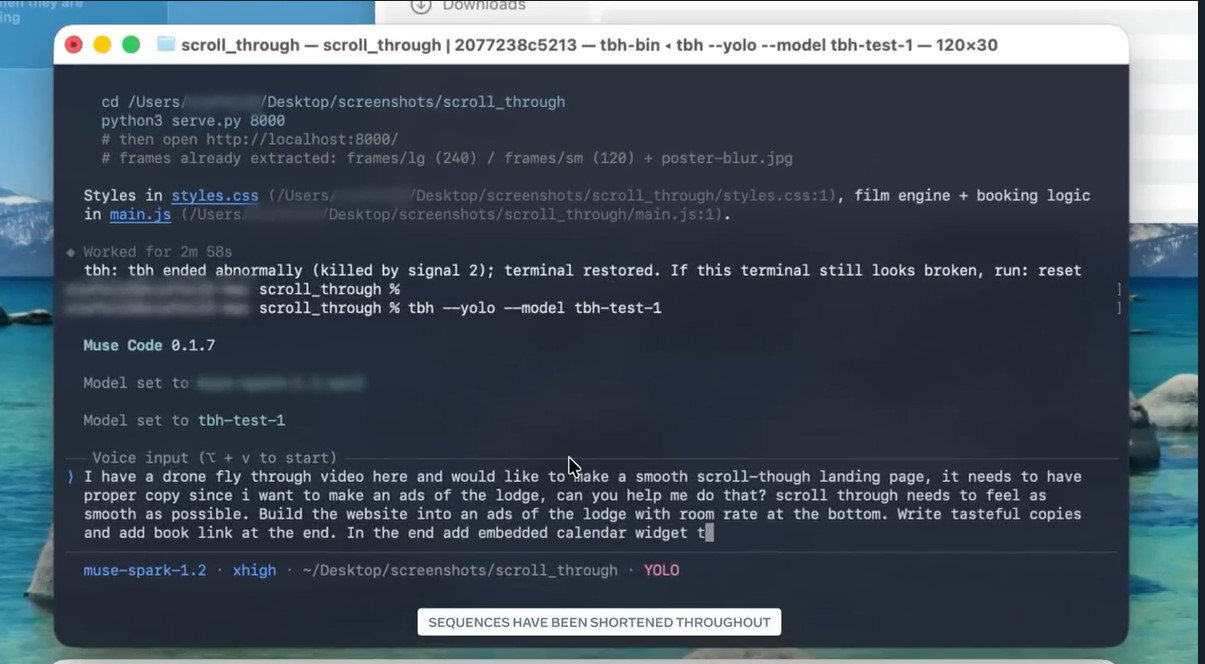
Muse Code is a terminal-based coding agent. Its launch model, Meta Muse Spark 1.2, was co-trained alongside Muse Code for coding and agentic workflows. Meta trained it for areas such as debugging, codebase understanding, and long-horizon development work.
Spark 1.3 is now the current model available in Muse Code and Meta Model API.
Anthropic Claude Code is also an agentic coding environment. Claude can work with repository files, run development tools, delegate jobs, and use customized agents with their own context, permissions, and instructions.
Meta Muse And Claude Code Comparison
Here is the Meta Muse and Claude Code comparison at a glance.
| Area | Meta Muse Code | Claude Code |
| Core Approach | Main agent with persistent background agents | Main sessions with subagents and agent teams |
| Current Model | Muse Spark 1.3 | Claude models available through Claude Code |
| Multi-Agent Design | Helpers remain active through the session | Subagents use separate contexts; agent teams collaborate directly |
| Recovery | Restart-safe local event log | Checkpoints and session controls |
| Developer Controls | /plan, /grill, /goal, approvals | Hooks, skills, checkpoints, permissions, subagents |
The difference is not whether either platform can delegate coding work. Both can. The real distinction is how that delegation is organized and controlled.
Difference Between Meta Muse Multi-Agent Fan-Out And Claude Code
"Multi-agent fan-out" is useful shorthand for Meta's architecture, although Meta officially calls its feature async background agents.
-
Muse Code Keeps Its Helpers Around
Muse Code uses a primary agent alongside specialized helpers that remain active throughout the session instead of being created for a single task and discarded afterward.
Meta says this persistence can reduce repeated information gathering, latency, and the amount of developer steering required during difficult multi-step jobs.
Muse Code also records model calls, tool runs, approvals, and edits in a local event log. If something crashes, Meta says the runtime can resume where it stopped. That gives Muse Code an interesting advantage for autonomous jobs expected to run for hours rather than minutes.
It also includes three straightforward skills:-
/plan creates an approval-gated implementation plan.
-
/grill challenges that plan before implementation.
-
/goal keeps the agent working toward a defined objective.
-
-
Claude Code Offers More Ways To Parallelize
Claude Code takes a more modular approach.
Its subagents work in their own context windows and return relevant findings to the main session. This keeps large searches, logs, or exploration tasks from consuming the main conversation's context.For bigger jobs, Anthropic also offers experimental agent teams. One Claude session acts as the lead while teammates work independently, use a shared task list, and communicate directly with each other.
There is a tradeoff. Anthropic says agent teams consume significantly more tokens and introduce coordination overhead, so they are better suited to tasks that genuinely benefit from parallel work.
In short, Muse focuses on persistent helpers surrounding one primary agent. Claude provides different forms of delegation depending on the job.
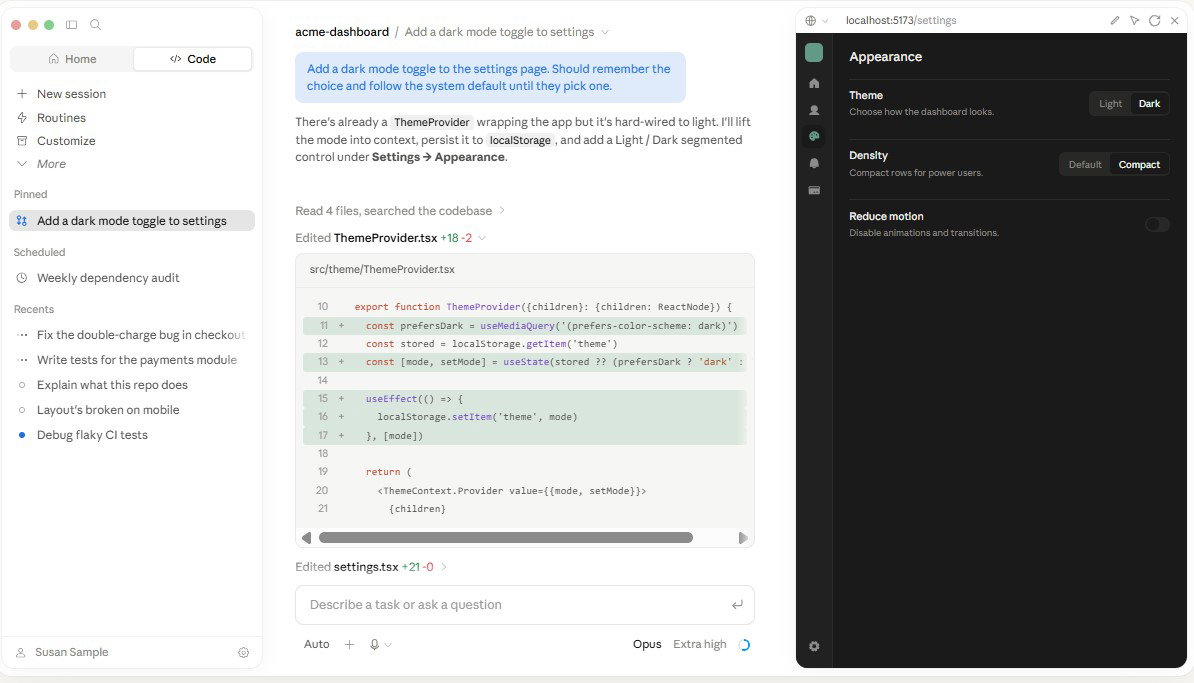
Claude Code CLI Has The Broader Developer Toolkit
The difference becomes clearer once we move beyond raw code generation.
The Claude Code CLI gives developers several useful controls:
-
Checkpoints
Developers can rewind direct file edits when an approach introduces problems. Anthropic notes that Bash-created changes and many subagent edits are not covered. See Claude Code checkpointing documentation.
-
Hooks
User-defined commands can automatically format code, validate commands, send notifications, or enforce project rules at specific stages. See Claude Code hooks documentation.
-
Custom subagents
Developers can control a subagent's model, prompt, permissions, tools, and behavior.
-
Skills
Reusable instructions and supporting files can package recurring development workflows.
-
Agent teams
Multiple Claude instances can divide research, debugging, or feature development.
This makes Claude Code feel less like one autonomous programmer and more like a configurable development environment.
Muse Code is more opinionated. Its persistent agents and restart-safe runtime are built directly into the experience. That simplicity may appeal to developers who want long-running autonomous work without configuring several orchestration layers.
What About Muse Code And Claude Code Pricing?
Pricing needs context because the two products are sold differently.
At launch, Reuters reported that Muse Spark 1.2 cost $1.25 per million input tokens and $4.25 per million output tokens on a pay-as-you-go basis.
Meta later kept Spark 1.3 at the same pricing level as its predecessor.
Claude Code follows another route for individual users. Anthropic's Claude Pro plan includes Claude Code for $20 monthly or $17 per month when billed annually. Max plans start at $100 per month. API usage is billed separately.
So, declaring either one "cheaper" without knowing the workload would be misleading. Token volume, session length, model usage, and multi-agent activity can all change the final cost.
Which AI Is Better Than Claude Code?
There is no universal answer to which AI is better than Claude Code, but the workflow makes the choice clearer.
-
Choose Meta Muse Code When:
-
Long-running terminal jobs are common.
-
Persistent background agents fit your workflow.
-
Restart-safe execution is important.
-
Usage-based billing suits your development pattern.
-
-
Choose Anthropic Claude Code When:
-
You want greater control over agent delegation.
-
Hooks, checkpoints, skills, and custom agents matter.
-
Parallel agent teams could help with complex projects.
-
You want a more configurable developer environment.
-
Muse Code is not simply trying to become another Claude Code. Meta is betting heavily on agent persistence and continuity, while Anthropic is giving developers a larger collection of orchestration tools.
Conclusion
So, which AI coding agent wins for developers?
Muse Code is a compelling challenger because its persistent background agents and restart-safe runtime target a genuine problem in long-running autonomous development. The rapid jump from Meta Muse Spark 1.2 to Spark 1.3 also shows how quickly Meta is iterating.
Claude Code currently wins the broader Meta Muse vs Claude Code comparison. Its subagents, experimental agent teams, hooks, checkpoints, skills, and customizable controls make it easier to adapt the agent to different engineering workflows.
Remember the X-wing? Muse Code is building a promising pilot that can stay on mission. Claude Code currently brings the larger squadron and gives developers more ways to command it.
Frequently Asked Questions
Can Meta Muse Code And Claude Code Work With Images And Visual Inputs?
Yes. Both can use visual context for development work. Meta demonstrated Muse Spark 1.2 turning a video supplied through the terminal into a functional home-booking webpage and says the model can reason over visual inputs. Claude Code supports screenshots, diagrams, and design mockups through drag-and-drop, copy-paste, or file paths, which developers can use for debugging interfaces or generating code from designs.
Can Developers Download And Self-Host Meta Muse Spark?
Not yet for the current Muse Spark model. As of September 2026, Meta provides Muse Spark 1.3 through Muse Code and the Meta Model API. However, Meta has confirmed that an open-weights release for Muse Spark is on its roadmap, which could eventually give developers more freedom to run or customize the model outside Meta's hosted environment.
Does Anthropic Use Claude Code Sessions To Train Its AI Models?
It depends on the account type and privacy settings. For consumer Free, Pro, and Max accounts, Anthropic says coding sessions may be used for model improvement when the user enables that option, explicitly opts in, or when content is flagged for safety review. For commercial products such as Claude for Work and the Anthropic API, inputs and outputs are not used for model training by default.
Wed, Sep 9, 2026

Liked what you read? That’s only the tip of the tech iceberg!
Explore our vast collection of tech articles including introductory guides, product reviews, trends and more, stay up to date with the latest news, relish thought-provoking interviews and the hottest AI blogs, and tickle your funny bone with hilarious tech memes!
Plus, get access to branded insights from industry-leading global brands through informative white papers, engaging case studies, in-depth reports, enlightening videos and exciting events and webinars.
Dive into TechDogs' treasure trove today and Know Your World of technology like never before!
Disclaimer - Reference to any specific product, software or entity does not constitute an endorsement or recommendation by TechDogs nor should any data or content published be relied upon. The views expressed by TechDogs' members and guests are their own and their appearance on our site does not imply an endorsement of them or any entity they represent. Views and opinions expressed by TechDogs' Authors are those of the Authors and do not necessarily reflect the view of TechDogs or any of its officials. While we aim to provide valuable and helpful information, some content on TechDogs' site may not have been thoroughly reviewed for every detail or aspect. We encourage users to verify any information independently where necessary.
Loading comments...