
Artificial Intelligence
Meta Brings Muse AI Agent To Apple Watch And Wear OS After 10 Million Downloads
Updated on Thu, Nov 12, 2026
Share
Meta has expanded its artificial intelligence (AI) agent Muse to Apple Watch and Google's Wear OS smartwatches, allowing users to interact with the assistant through voice calls, text messages, and dictation directly from their wrists.
The rollout comes shortly after Muse reportedly surpassed 10 million downloads in the United States within its first 40 days, highlighting the rapid adoption of Meta's consumer AI assistant.
Here's what happened.
TL;DR
- Meta launched Muse support for Apple Watch and Wear OS on November 9, 2026.
- Users can interact with the AI agent through voice calls, text, and dictation from compatible smartwatches.
- Muse reportedly crossed 10 million U.S. App Store downloads within 40 days of launch.
- The expansion follows recent additions, including video conversations and collaborative Spaces.
Meta Expands Muse AI Agent To Apple Watch And Wear OS
Meta is making its personal AI assistant more accessible by bringing Muse to smartwatches running Apple's watchOS and Google's Wear OS.
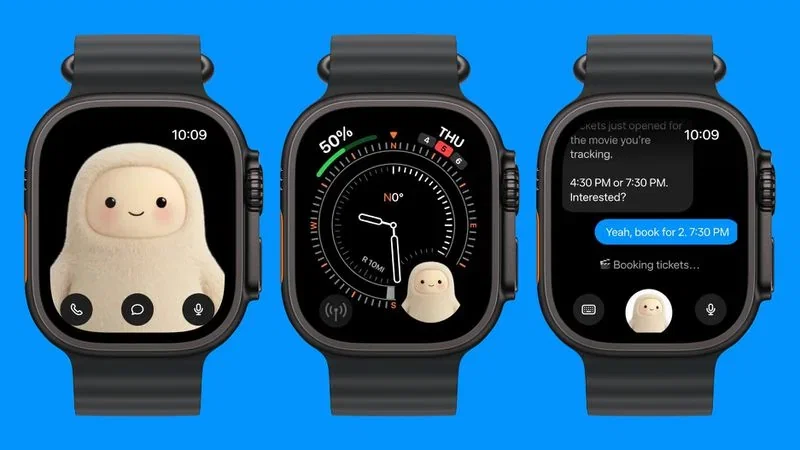
According to a report by TechCrunch, Meta announced the rollout on November 9, allowing users to communicate with Muse through voice conversations, typed messages, and dictated instructions without having to open the assistant on their smartphones.
The official Muse account announced the update on X, saying, "Works around the clock, and now on your wrist."
The Apple Watch application brings Muse's animated character to the smaller screen and includes a watch-face complication that provides quick access to the assistant.
According to MacRumors, users can start conversations, issue instructions, check task progress, and approve certain actions from their smartwatches.
However, the smartwatch version does not independently run Muse's underlying AI model. Instead, it acts as an interface for interacting with the agent, while more complex processing and task execution take place through its supporting infrastructure.
This means smartwatch users can initiate or supervise tasks without navigating the complete experience on a smartphone or computer.
Muse AI Reportedly Crosses 10 Million Downloads In 40 Days
The smartwatch expansion comes as Muse continues to attract attention in the increasingly competitive consumer AI market.
According to TechCrunch, Muse became one of only 12 mobile applications to surpass 10 million U.S. App Store downloads within their first 40 days.
AI Weekly, citing mobile intelligence firm Sensor Tower, reported that only 11 other applications had previously achieved this milestone, with Meta's Threads being the most recent in July 2023.
The milestone is particularly notable considering Muse only arrived on Apple's App Store in September 2026.
Unlike traditional AI chatbots that primarily generate answers and content, Muse is designed to perform actions on behalf of users through connected applications and services.
The assistant can help manage emails, organize meetings, track bills, book reservations, order groceries, make purchases, and support personal goals.
Users can also customize their AI avatar, changing its appearance to resemble a person, an animal, or another character.
However, the reported download milestone represents downloads rather than confirmed active users, and does not independently establish long-term engagement.
Meta Adds Spaces And Video Conversations To Muse
The smartwatch launch follows several recent improvements to Muse.
As reported by TechCrunch, Meta introduced a dedicated iPad application in October, expanding the assistant's availability beyond smartphones.
The company subsequently introduced Spaces, a feature that allows users to organize focused conversations around specific topics and objectives.
Meta describes these Spaces as custom experiences that function similarly to small applications, created dynamically to help the AI agent work toward a particular goal.
The company also introduced video conversations with Muse's AI avatar for users in the United States.
During these interactions, Muse can respond in real time with expressions and gestures that reflect the context and tone of the conversation.
However, TechCrunch noted that Muse does not actually see users during these video interactions. Instead, the assistant listens and responds through audio while its animated avatar provides visual feedback.
These updates demonstrate Meta's efforts to make Muse more interactive while expanding the number of devices and interfaces through which users can access it.
What Does Muse's Smartwatch Expansion Mean For Users?
The latest rollout gives users another way to interact with an AI agent that can perform tasks across multiple services.
For example, a user could ask Muse to check an upcoming appointment, request help with a reservation, or review the progress of an existing task directly from their smartwatch.
Topics For More Insights
According to Gadgets & Wearables, the smartwatch applications primarily serve as remote interfaces for Muse, with the actual AI processing happening outside the device.
This distinction is important because the rollout does not mean that Apple's or Google's smartwatches are independently running Meta's AI models.
The publication also noted that Meta has not announced direct access to smartwatch health sensors as part of the update.
Meanwhile, connecting an AI assistant to email, calendars, financial services, and other personal accounts raises questions about permissions and how actions are approved.
Meta's assistant provides controls for connected services and sensitive actions, although users still need to review its work, particularly when purchases or other consequential tasks are involved.
For Meta, the expansion offers a way to put its AI assistant on existing wearable devices without requiring customers to purchase dedicated AI hardware.
With Muse now accessible through smartphones, tablets, and smartwatches, Meta is extending the reach of its AI agent as competition grows around assistants that can carry out tasks rather than simply respond to prompts.
First published on Thu, Nov 12, 2026

Liked what you read? That’s only the tip of the tech iceberg!
Explore our vast collection of tech articles including introductory guides, product reviews, trends and more, stay up to date with the latest news, relish thought-provoking interviews and the hottest AI blogs, and tickle your funny bone with hilarious tech memes!
Plus, get access to branded insights from industry-leading global brands through informative white papers, engaging case studies, in-depth reports, enlightening videos and exciting events and webinars.
Dive into TechDogs' treasure trove today and Know Your World of technology like never before!
Disclaimer - Reference to any specific product, software or entity does not constitute an endorsement or recommendation by TechDogs nor should any data or content published be relied upon. The views expressed by TechDogs' members and guests are their own and their appearance on our site does not imply an endorsement of them or any entity they represent. Views and opinions expressed by TechDogs' Authors are those of the Authors and do not necessarily reflect the view of TechDogs or any of its officials. While we aim to provide valuable and helpful information, some content on TechDogs' site may not have been thoroughly reviewed for every detail or aspect. We encourage users to verify any information independently where necessary.
Loading comments...