
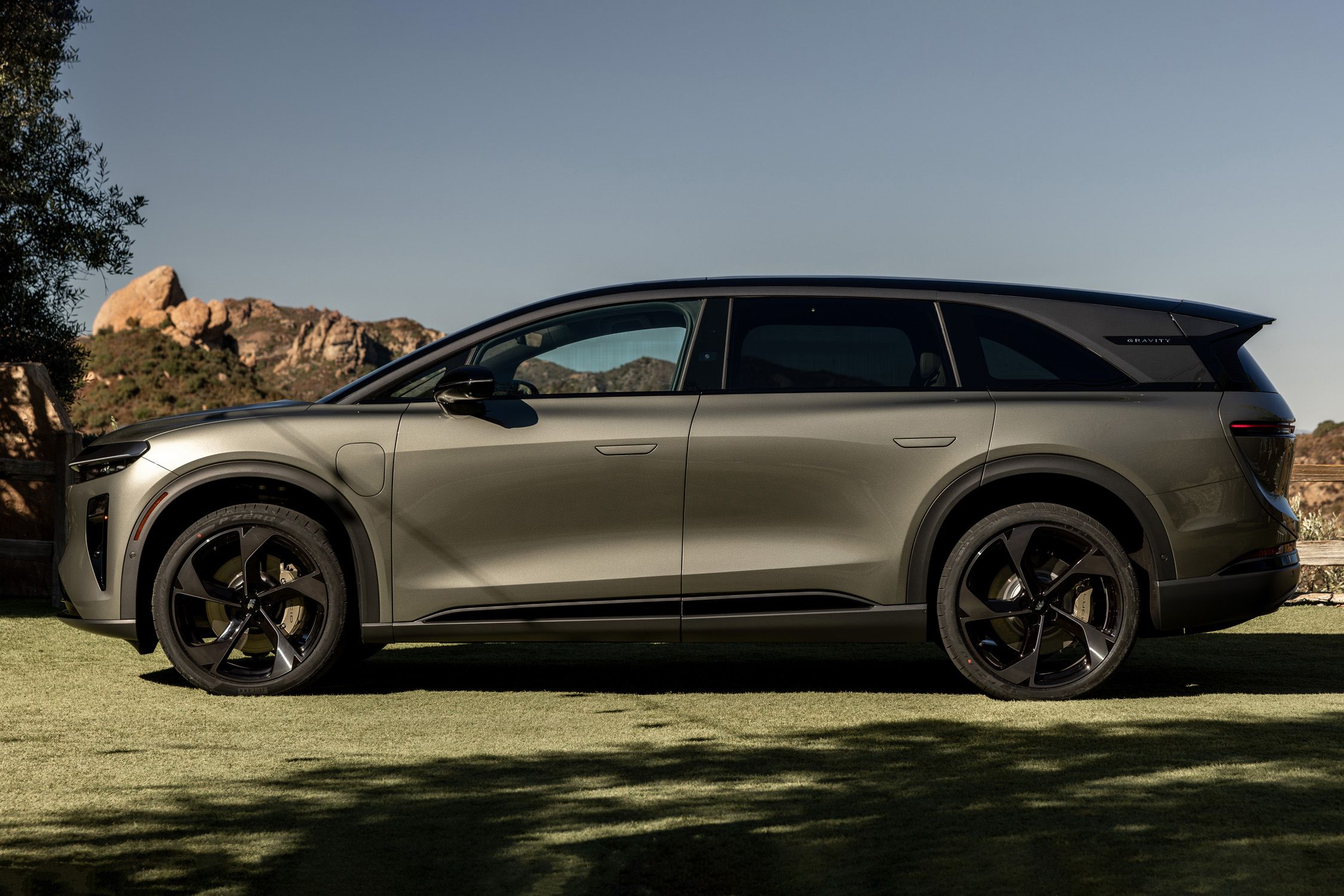
Lucid Motors is recalling 4,476 Gravity SUVs in the U.S. after discovering that a second-row lap belt anchor bracket may not have been welded to specification. The issue affects model year 2025 and 2026 Gravity vehicles built before February 14, 2026, and adds a manufacturing setback just as Lucid works to scale its premium electric SUV.
TL;DR
- Lucid is recalling 4,476 Gravity SUVs in the U.S.
- The issue involves an insufficient or misplaced weld on the second-row lap belt anchor bracket.
- Affected vehicles were built before February 14, 2026.
- Lucid will inspect each vehicle and either install a repair bracket or replace the seat at no cost.
What Happened?
According to Lucid’s Part 573 safety recall report filed with the National Highway Traffic Safety Administration, the defect centers on the outboard lap belt anchor bracket on the second-row seat. Lucid said the weld may be shorter than specified or in the wrong location, which means the vehicle may not comply with Federal Motor Vehicle Safety Standards 207 and 210 for seating systems and seat belt anchorages.
The company said it uncovered the issue on January 22, 2026 while conducting an FMVSS 207/210 combined test on the second-row seat for an unrelated reason. During that test, the lap belt anchor bracket failed to hold under load for the required time. Lucid then worked with seat supplier Camaco Automotive and concluded that the supplier had made weld design changes “without notice to or approval by Lucid.”
How Lucid Is Fixing It?
Lucid issued a stop sale on January 28, 2026 for all Gravity vehicles potentially affected by the non-compliance, then began building vehicles with corrected seats from February 14 onward. The company said seats produced after supplier and process corrections were made to the original Lucid specification.
For customer vehicles already on the road, Lucid will inspect all affected Gravity SUVs. If a seat can be repaired, technicians will install a reinforcing bracket and adhesive. If the weld cannot be brought up to standard that way, Lucid will replace the seat entirely. Lucid told regulators that “There will be NO COST for this service.” Owner notifications are scheduled to begin on May 22, 2026.
Why This Matters?
The Gravity is Lucid’s second production vehicle after the Air sedan and a key part of its push into the luxury electric SUV market. That makes this recall especially important. While the issue appears to have been found internally rather than through a crash investigation, the defect involves a core passenger safety component and comes at a time when manufacturing consistency matters as much as product innovation.
Coverage aligns with Lucid’s filing, noting that the issue affects the second-row seat belt anchors. It was traced to a supplier-side manufacturing change and will require inspection, followed by repair or replacement depending on weld quality.
For Lucid, the recall is a reminder that scaling EV production is not only about range, charging, and software, but also about disciplined supplier control and repeatable build quality across every component.
Topics for more insights:
- All About Smart Factories: The Future Of Manufacturing
- Explore The Latest Manufacturing Technology Trends Of 2026
- A Closer Look: Applications Of Machine Vision In Manufacturing
A Broader Industry Context
The recall also highlights a broader trend within the electric vehicle industry, where rapid innovation and scaling often intersect with manufacturing complexities.
Automakers, both new entrants and established players, have faced recalls tied to battery systems, software glitches, and hardware defects. As EV adoption grows, regulatory scrutiny and safety expectations are becoming increasingly stringent.
Lucid’s proactive recall may help mitigate reputational damage, especially since the issue was identified internally rather than through external incidents.
