
Manufacturing Technology
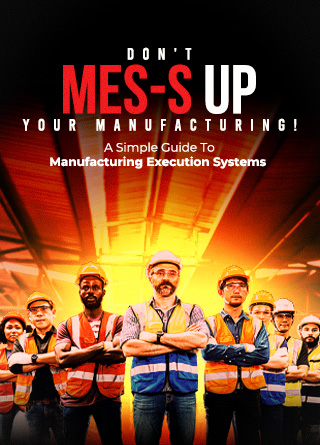
A Simple Guide To Manufacturing Execution Systems
Share
Overview
Well, that’s what a Manufacturing Execution System (MES) does. We mean, manage your manufacturing line smoothly; not plan for the most elaborate and foolproof heist ever. (Wait, unless you’re Danny Ocean – in that case, go ahead, gather the dream team and rob another casino!)
Just like Daniel “Danny” Ocean, MES keeps a vigilant eye on every individual to obtain a comprehensive overview of the production line; it always knows what's going on. If there are any deviations or last-moment changes to the plan, MES (and Clooney) come up with a clever answer. It also ensures the team stays on schedule and everything is executed on time, every time.
Phew, it’s like having a master planner who can ensure everything runs smoothly no matter the task – from planting a smartphone on someone or printing fake notes (just kidding, that’s Mr. Ocean!).
Read about Manufacturing Execution Systems and ensure you don't miss a beat when it comes to manufacturing!
.jpg.aspx "TechDogs-\"A Simple Guide To Manufacturing Execution Systems\" Don't Mes-s Up Your Manufacturing!")
Every team needs a Daniel Ocean; a leader who knows what's going on at every stage of the plan and is capable of adapting to developing situations. This is also true of the manufacturing industry. Since Mr. Ocean is busy robbing the Faberge Egg, ummm, we mean busy holidaying in France, here's the next best thing!
Manufacturing Execution Systems, or MES, are computerized systems used in the manufacturing sector to monitor, streamline and control manufacturing processes and pipelines. From the procurement of raw materials to the transformation into final items, the entire process is documented. Manufacturing decision-makers can better grasp how current circumstances can be optimized to increase production, thanks to the insights gleaned from MES. Moreover, an MES essentially functions as a real-time monitoring system to improve control over multiple components of a manufacturing line.
Sounds similar to Danny Ocean who managed multiple team members without breaking a sweat, right? Here’s more about Manufacturing Execution Systems!
Understanding Manufacturing Execution Systems
A Manufacturing Execution System, also known as an MES, is a comprehensive software system that monitors, tracks, documents and manages the manufacturing process from raw materials to finished goods. It serves as a functional layer between enterprise resource planning (ERP) tools and on-floor process control systems such as SCADA (supervisory control and data acquisition).
An MES provides business decision-makers with real-time data insights they need to enhance the efficiency of production, processes and floor activity in a manufacturing facility. However, just like Danny Ocean, this solution honed its expertise over time – here’s a quick look!
Evolution Of Manufacturing Execution Systems
As you may have guessed, MES is a modern concept that relies on modern technology. Here’s how we got to its existing state:
Computerized systems were introduced to assist production and manufacturing activities when large computers (called mainframes) were commercialized in the 1940s. However, they were only incorporated on a large scale by manufacturing companies in the late 1950s and early 1960s.
The 1980s saw the emergence of Manufacturing Resources Planning (MRP II), which expanded the scope to include people, equipment, energy, money, etc.
In order to address the complexity of industrial systems and offer guidance on the implementation of MES Systems, industry associations such as the MESA International (Manufacturing Enterprise Solutions Association) were established in the early 1990s.
The 11 primary functions of Manufacturing Execution Systems were established in 1997 by the Manufacturing Enterprise Solutions Association International. Despite the MESA-11 model's evolution over time, its initial 11 core functions still serve as the cornerstone for every MES integration used in modern factories and plants.
In 2000, the MESA International model and the Purdue Reference Model (PRM) were combined under the ANSI/ISA-95 standard.
Between 2005 and 2013, the architecture of MES was more specifically defined through revisions to the ANSI/ISA-95 standard, covering how to internally distribute functionality.
That’s how we got to the modern age where MES can resolve every manufacturing worry through automated awesomeness! Yet, how does it all work?
How Do Manufacturing Execution Systems Work?
Manufacturing is undergoing rapid change and innovation daily. This increases variability in the industry and puts pressure on operational teams to maintain quality, productivity, yield and efficiency. Hence, making informed decisions in real time is critical for manufacturers. This is where an MES steps in to help them!
Manufacturing Execution Systems (MES) keep track of the manufacturing processes throughout the plant's distributed systems from end to end. This helps MES coordinate and align every process, activity and protocol in the manufacturing pipeline. By connecting distributed elements in real-time, it removes human error, offers continuous quality checks and ensures optimum performance. Thanks to MES, a higher level of productivity is attained with the added benefit of improved product and process quality.
Manufacturing Execution Systems (MES) also allow manufacturers to modify complex processes and apply the changes right away. Once the changes are applied to the production line, stakeholders need to quickly identify and address problems. No worries; MES offers real-time feedback after any changes are implemented. As every bit of data is captured by MES, manufacturers can understand the improvement in outcomes, production and processes.
This means MES offers several benefits – read on!
Benefits Of Manufacturing Execution Systems
Here’s a list of benefits you’ll get by using an MES:
-
Enhanced Quality Control
Businesses using an MES can immediately halt or slow down production when issues are identified. When quality control information is transmitted in real-time, manufacturers can reduce waste, overages and re-work.
-
Zero Downtime
An MES creates optimized production schedules by balancing the demand for personnel, material, equipment, machinery and support services. By integrating the scheduling and maintenance plans, it can maximize the production flow and resource utilization which means zero downtime.
-
Eliminates Inventory Wastage
A Manufacturing Execution System automatically updates inventory records, so businesses have the most recent purchasing, shipping and scheduling plans. This eliminates just-in-case inventory and work-in-progress (WIP) inventory which saves transportation and storage costs, leading to better inventory monitoring.
-
Paperless Operations
As all data is recorded and immediately made available to decision-makers, real-time automated decision-making is possible. It also means manufacturers can eliminate paper-based records which lowers the chances of human error.
-
Compliant Manufacturing
An MES documents the entire production process from the acquisition of raw material to the finalized product. As it categorizes and organizes the manufacturing data, manufacturers can expect improved compliance with industry regulations.

Woah, we bet even Danny Ocean is jealous! Just kidding, we’re sure he will find a way to include MES in his next heist – well, Danny, here are all the features of MES you need to know!
Features Of Manufacturing Execution Systems
MES has enabled businesses to leverage the power of automation in day-to-day manufacturing. Naturally, this was made possible due to its unique, modern features. Note – any resemblance of its features to Daniel Ocean is NOT a coincidence!
Be warned that the list of features is…

-
Resource Allocation And Instant Status
Real-time data is used to monitor and assess the condition of manufacturing resources, such as equipment, supplies, labor, etc., to make quick adjustments on the fly.
-
Operational Scheduling
MES improves performance by planning, timing and sequencing tasks based on priority and available resources.
-
Resource Dispatching
With MES, the production data flow is managed in real-time when dispatching production units, allowing a quick estimate of yield and efficiency.
-
Document Control
MES assists with the management and distribution of documents, such as work instructions, SOPs, batch records, etc. Since these documents are easily accessible and editable, managers can make modifications more quickly.
-
Real-time Data Collection
The system tracks and collates data about processes, materials, operations, delays, etc. in real-time and uses it to enhance automated decisions.
-
Labor Management
By tracking employee schedules, credentials, authorizations, human errors and other information about the workforce, MES improves labor management
-
Quality Management
To maintain or improve quality, MES manages and documents the quality deviations and exceptions throughout the manufacturing cycle.
-
Process Management
MES automates and controls every step of the manufacturing process to ease bottlenecks and deviations that compromise quality, efficiency and yield.
-
Maintenance Management
Bu analyzing production data, MES can predict potential equipment problems and optimize the maintenance schedules for machinery, tools, equipment, etc. to minimize downtime.
-
Performance Analysis
MES can compare outcomes of process changes to find the manufacturing process's strengths and weaknesses to improve resilience, performance and efficiency
Now, let’s look at the trailer for Ocean’s 15 – sorry, we mean the future of MES! #SpoilerAlert
The Future Of Manufacturing Execution Systems
Danny Ocean always looked toward the future, right?

By the end of 2025, the global MES market is expected to generate a revenue of USD 18.06 billion, according to a Transparency Market Research report. Industrial automation will be adopted by a variety of industries, there will be a greater need for regulatory compliance and MES deployment costs will reduce; all of these factors will contribute to the growth of MES.
The foundation of digital factories will be cloud connectivity, which enables the autonomous interaction of advanced manufacturing systems, equipment, devices and systems. Industrial Internet of Things (IIoT) sensors are already constantly collecting data. When combined with MES, real-time data-based automation will be possible, enabling smart factories to independently improve their operations. Such smart factories will automate and improve production workflows, provide specialized services and grow more efficient over time.
Well, the future of MES looks MES-merizing!
Conclusion
A capable Manufacturing Execution System provides comprehensive and automated support for a wide range of manufacturing processes. MES optimizes a wide range of functions, including automated data collection, batch process optimization, complex process workflows, etc. You can think of it as the Danny Ocean of the manufacturing scene – a highly configurable platform that adjusts to the needs of the team to guarantee quick scaling, increased production yield, lower operating costs and increased compliance. What’s not to love?
Frequently Asked Questions
What is a Manufacturing Execution System (MES) and how does it benefit manufacturing businesses?
A Manufacturing Execution System (MES) is a software system designed to monitor, track, document, and manage the entire manufacturing process from raw materials to finished goods. It acts as a bridge between enterprise resource planning (ERP) tools and on-floor process control systems. MES provides real-time data insights to decision-makers, enhancing production efficiency, processes, and floor activities. Its benefits include improved quality control, zero downtime, elimination of inventory wastage, paperless operations, and compliance with industry regulations.
How do Manufacturing Execution Systems (MES) work?
Manufacturing Execution Systems (MES) function by keeping track of manufacturing processes across distributed systems, coordinating and aligning every process, activity, and protocol in the manufacturing pipeline. By connecting distributed elements in real-time, MES minimizes human error, offers continuous quality checks, ensures optimum performance, and allows for quick modifications to complex processes. Real-time feedback is provided after implementing changes, enabling manufacturers to understand improvements in outcomes, production, and processes.
What are the features of Manufacturing Execution Systems (MES)?
MES offers various features that enable businesses to leverage automation in day-to-day manufacturing operations. These features include resource allocation and instant status monitoring, operational scheduling, resource dispatching, document control, real-time data collection, labor management, quality management, process management, maintenance management, and performance analysis. MES optimizes production workflows, reduces downtime, improves quality, enhances efficiency, and facilitates compliance with industry standards and regulations.
Fri, Jul 14, 2023

Enjoyed what you've read so far? Great news - there's more to explore!
Stay up to date with the latest news, a vast collection of tech articles including introductory guides, product reviews, trends and more, thought-provoking interviews, hottest AI blogs and entertaining tech memes.
Plus, get access to branded insights such as informative white papers, intriguing case studies, in-depth reports, enlightening videos and exciting events and webinars from industry-leading global brands.
Dive into TechDogs' treasure trove today and Know Your World of technology!
Disclaimer - Reference to any specific product, software or entity does not constitute an endorsement or recommendation by TechDogs nor should any data or content published be relied upon. The views expressed by TechDogs' members and guests are their own and their appearance on our site does not imply an endorsement of them or any entity they represent. Views and opinions expressed by TechDogs' Authors are those of the Authors and do not necessarily reflect the view of TechDogs or any of its officials. While we aim to provide valuable and helpful information, some content on TechDogs' site may not have been thoroughly reviewed for every detail or aspect. We encourage users to verify any information independently where necessary.
Loading comments...