
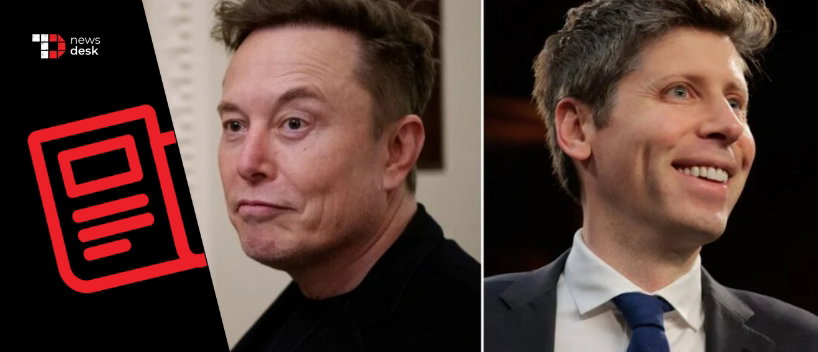
Elon Musk has lost his high-profile lawsuit against OpenAI, Sam Altman, Greg Brockman, and Microsoft, after a nine-person California jury unanimously found that his claims were filed too late. The ruling removes a major legal threat hanging over OpenAI, though Musk plans to appeal.
TL;DR
-
A federal jury in Oakland ruled against Elon Musk in his lawsuit against OpenAI, Sam Altman, Greg Brockman, and Microsoft.
- The jury found Musk’s claims were barred by the statute of limitations, with Judge Yvonne Gonzalez Rogers accepting the advisory verdict.
- Musk had accused OpenAI’s leaders of betraying its original nonprofit mission and sought major damages and structural changes.
- Musk plans to appeal, while Microsoft welcomed the verdict and reaffirmed its OpenAI partnership.
Elon Musk’s legal battle with OpenAI has ended in a major courtroom defeat, at least for now.
A nine-person jury in Oakland, California, unanimously rejected Musk’s claims against OpenAI, CEO Sam Altman, president Greg Brockman, and Microsoft. The jury found that Musk waited too long to bring the case, meaning his claims were barred by the statute of limitations. U.S. District Judge Yvonne Gonzalez Rogers accepted the advisory verdict, effectively dismissing the case.
The lawsuit centered on Musk’s allegation that OpenAI and its leaders had moved away from the organization’s founding nonprofit mission. Musk, who co-founded OpenAI in 2015 and later left the company, argued that his early contributions were meant to support artificial intelligence development for the benefit of humanity, not a commercial enterprise tied closely to Microsoft.
Musk claimed that Altman and Brockman unjustly enriched themselves by helping shift OpenAI toward a for-profit structure. Microsoft was also named in the case for allegedly aiding OpenAI’s breach of charitable trust. However, the jury concluded the claims were brought too late, rather than ruling on the full merits of Musk’s broader accusations.
The deliberation was swift. According to multiple reports, jurors reached their decision in under two hours after a trial that ran for about three weeks. The outcome is a significant win for OpenAI, which had argued that Musk was already aware of the company’s evolving structure years before he filed the lawsuit.
Musk had reportedly sought damages ranging from $79 billion to $134 billion, alongside remedies that could have forced OpenAI to reverse parts of its corporate transition. Reuters reported that Musk said he had contributed around $38 million to OpenAI and claimed he was misled about how the company would operate.
Topics For More Insights
The trial also highlighted the long-running breakdown between Musk and OpenAI’s leadership. Testimony and reporting around the case revisited OpenAI’s founding, Musk’s 2018 departure, OpenAI’s partnership with Microsoft, and the internal tensions that have followed the company’s rise after ChatGPT.
Microsoft welcomed the verdict. A company spokesperson told TechCrunch that Microsoft “remained committed to our work with OpenAI to advance and scale AI for people and organizations around the world.”
Musk has not accepted the result as the end of the matter. Reports said he plans to appeal, with Musk and his legal team arguing that the ruling did not decide the deeper question of whether OpenAI violated its founding mission. Business Today reported that Musk described the verdict as turning on a “calendar technicality.”
For OpenAI, the decision removes one of the most visible legal challenges facing the company as it continues to expand its commercial AI business. Reuters reported that the verdict also removes a major obstacle as OpenAI moves toward a potential public-market future.
However, the case still leaves behind larger questions around AI governance, nonprofit control, investor influence, and how frontier AI companies should balance public-benefit commitments with large-scale commercialization.
