
Artificial Intelligence
The Rise Of AI Slop On Social Media
Share
TL;DR
-
AI slop prioritizes speed, repetition, and engagement over originality or lasting value.
-
Emotional cat stories and anthropomorphic food videos use betrayal, danger, romance, and rescue to hold viewers.
-
Fruit Love Island reportedly gained 3.1 million TikTok followers in only nine days.
-
Pangram found that 25.72% of long-form social posts in its dataset were fully AI-generated.
-
Meta, TikTok, Pinterest, YouTube, and LinkedIn are using labels, controls, downranking, and spam detection.
-
The resulting flood affects online trust, human creators, moderation systems, electricity demand, and water resources.
Introduction
When DC Films’ 2017 Justice League was released, it was massively trolled on social media. Not only for a poor plot, bad acting, or cheesy dialogue, but also for its surprisingly bad CGI.
While the amateur-hour graphics weren’t across the whole movie, the flick was remembered for a specific scene that irked fans and critics alike. We’re talking about Superman’s mustache removal.
See, Henry Cavill grew his mustache for his role in Mission: Impossible - Fallout when Justice League called him for reshoots. The mustache was supposed to be digitally removed, but a fast-approaching release date resulted in sloppy output.
Today, social media is filled with similarly sloppy videos. Except the creators aren’t multibillion-dollar production houses, but actual amateurs powered by generative artificial intelligence.
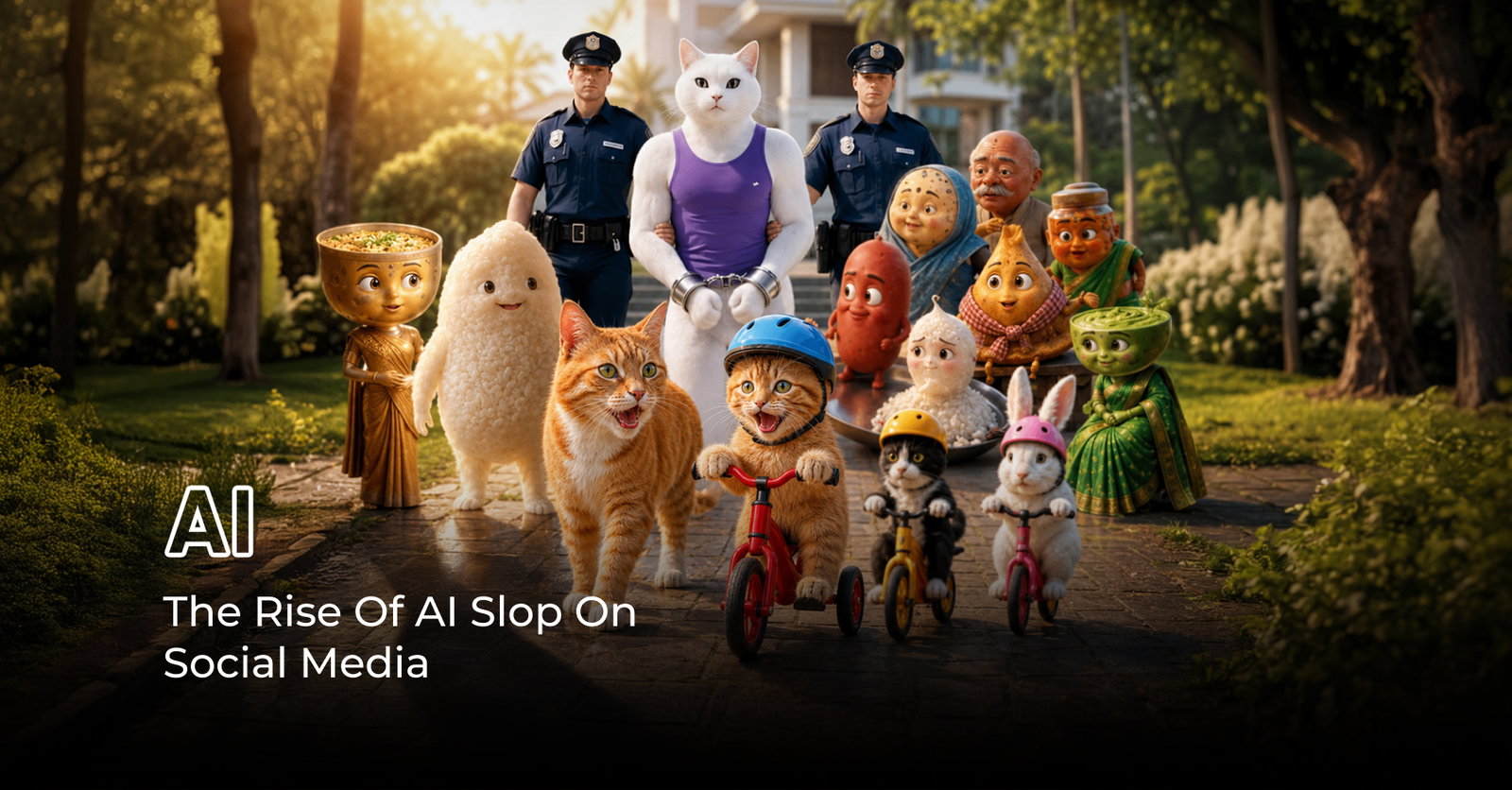
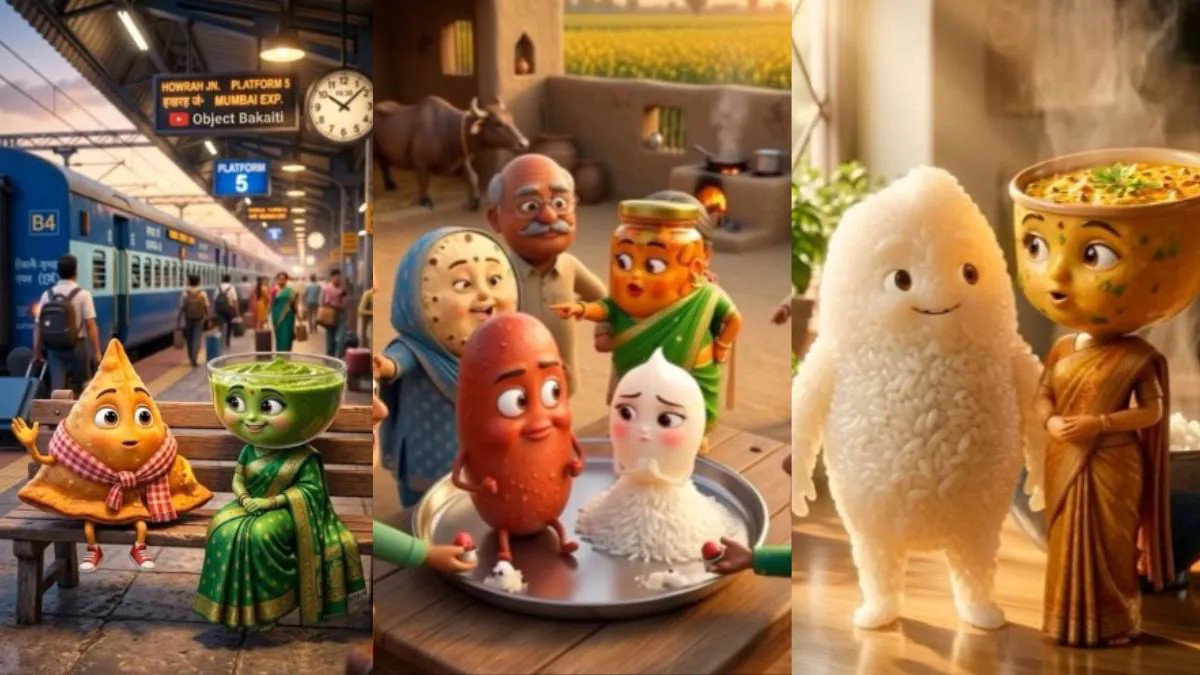
Their kryptonite? Believable videos. These artistic geniuses use GenAI capabilities to personify animals and objects such as vegetables and fruits, placing them in supposedly inspirational and emotional situations. Once again, people are irked.
However, unlike Justice League’s infamous CGI mishap, these videos do not disappear when the credits roll. They multiply across feeds, chasing reactions, engagement, and reach. The industry has a name for this flood of disposable synthetic media: AI slop.
So, what exactly is AI slop on social media platforms, and why is it suddenly everywhere?
What Is AI Slop?
AI slop is not simply anything created with AI.
It is digital material produced with little effort, limited originality, and enough surface-level polish to attract a pause, like, comment, or share. The key factor here is volume over value. Scripts, images, voices, music, and videos can be generated rapidly, then published in variations until one catches the algorithm.
That makes low-quality AI content closer to spam than a new artistic medium. A cat with a human job or a crying tomato can still be clever. Slop emerges when the same emotional formula, visual style, and recycled plot are repeated at industrial scale, often without disclosure or a meaningful creative point.
Its common traits include superficial competence, easy mass production, and far less effort from the maker than the attention demanded from the viewer.
The mustache may convince for a second, but the production line explains why the feed never ends.
Why Is AI Slop Taking Over Social Media?
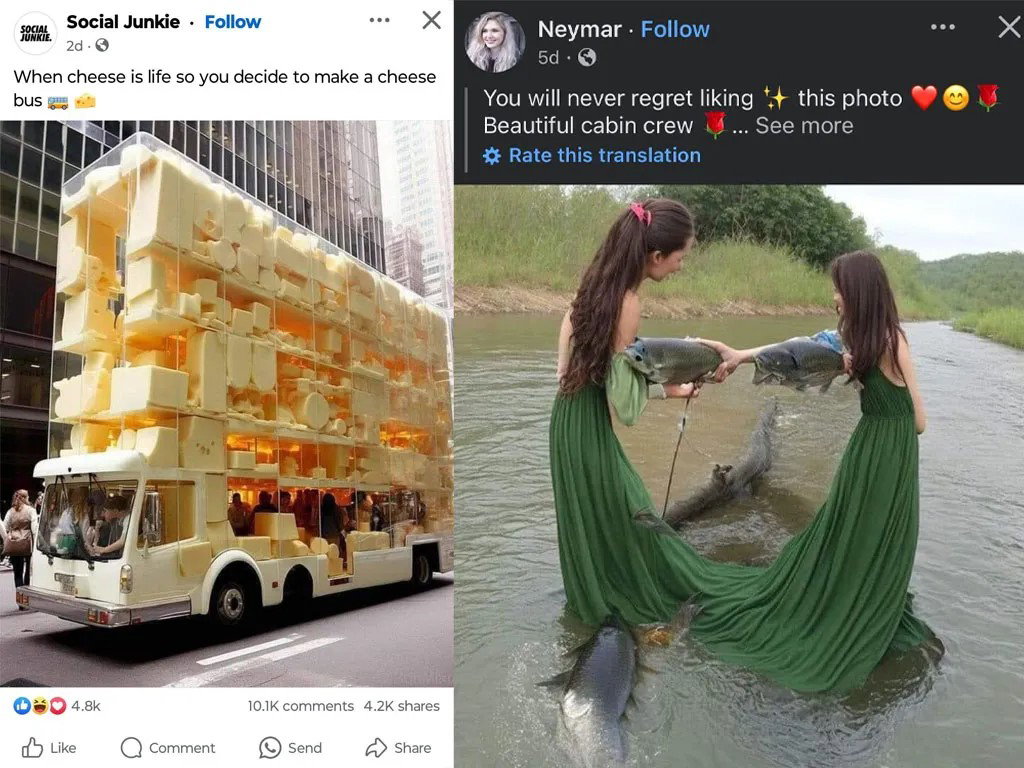
AI slop did not take over social media because audiences suddenly developed a passion for crying vegetables and heartbroken cats. Its growth comes from the way GenAI tools and social platforms now work together.
Creators can produce endless variations with minimal time, money, or technical skill, while recommendation systems reward anything that holds attention. That combination has turned strange synthetic videos from occasional experiments into a repeatable content strategy.
The rise of AI slop follows a simple equation: generation is cheap, publishing is easy, and platforms reward attention.
Text-to-video systems, image generators, synthetic voices, captions, and editing tools have reduced a multi-person workflow to a sequence of prompts. One account can test dozens of hooks and endings faster than an animator could finish one short.
The stories are built for recommendation systems. A crying kitten, frightened noodle family, or jealous strawberry creates curiosity without context. Strong emotions encourage viewers to watch for the resolution, replay confusing scenes, argue, or share.
Even disgust becomes engagement. One Object Talk prompt can reportedly be turned into a talking-food video within minutes, removing much of the time and friction traditionally involved in animation.
The flood extends beyond video. Pangram analyzed more than one million posts across five platforms in 2026 and found 25.72% of posts longer than 250 words were fully AI-generated. LinkedIn represented about one-third of scanned posts but 62% of detected AI content, making LinkedIn AI spam part of the wider AI slop on social media problem.
When every emotional scene may be synthetic, scrolling becomes forensic.
How Have Social Media Platforms Responded To AI Slop?
Platforms are moving toward labels, reduced distribution, spam detection, and user controls.
-
Meta applies “AI info” labels when it detects technical indicators or receives creator disclosure, while keeping most synthetic material online unless it violates another rule.
-
Pinterest labels detected AI-modified Pins and lets users request less GenAI imagery, including within its food and drink category.
-
TikTok said in July 2026 that it had labeled more than three billion videos using creator labels, Content Credentials, and invisible watermarking. It is also testing improved detection of accounts mass-producing AI spam and a feature that lets users adjust how much AI-generated material appears in their feeds.
-
YouTube is strengthening established spam and clickbait systems to reduce repetitive AI uploads.
-
LinkedIn has started limiting the distribution of generic posts beyond users’ immediate networks and said its initial tests correctly identified generic material 94% of the time.
While platforms are trying their best to reduce AI slop, the question is which content moderation tool is most effective?
Which Content Moderation Tools Are Most Effective At Filtering Out AI Slop?
No single detector is enough.
The strongest approach combines provenance metadata, watermarks, media classifiers, repeated-template detection, account-behavior signals, disclosure labels, user controls, and human review for disputed or harmful cases.
Content Credentials can provide information about where media originated, which tools were used, and how it was edited. However, the standard’s developers acknowledge that provenance is only part of the solution and must complement fact-checking, media literacy, and wider adoption.
That balance has triggered synthetic content backlash from both directions. Users argue that labels do not stop artificial content from flooding feeds, while creators worry that legitimate AI-assisted work may be penalized.
Fruit Love Island’s creator protested after TikTok reportedly removed numerous episodes, while YouTube had to clarify that its monetization changes targeted mass-produced and repetitive uploads rather than every video involving AI.
The crackdown is stronger, but the moderation mustache remains unfinished.
Who Are The Most Famous AI Slop Characters?
AI slop has created figures across cat dramas, talking-food stories, and “brainrot” memes.
Feline archetypes include muscular fathers, helpless kittens, cheating partners, and employers. Mr. Whiskers loses a paw, his job, and his family before rebuilding his life, while Luigi Meowgione seeks revenge on an insurance company. Other clips show buff cats surviving fires, rescuing babies, or avenging relatives.
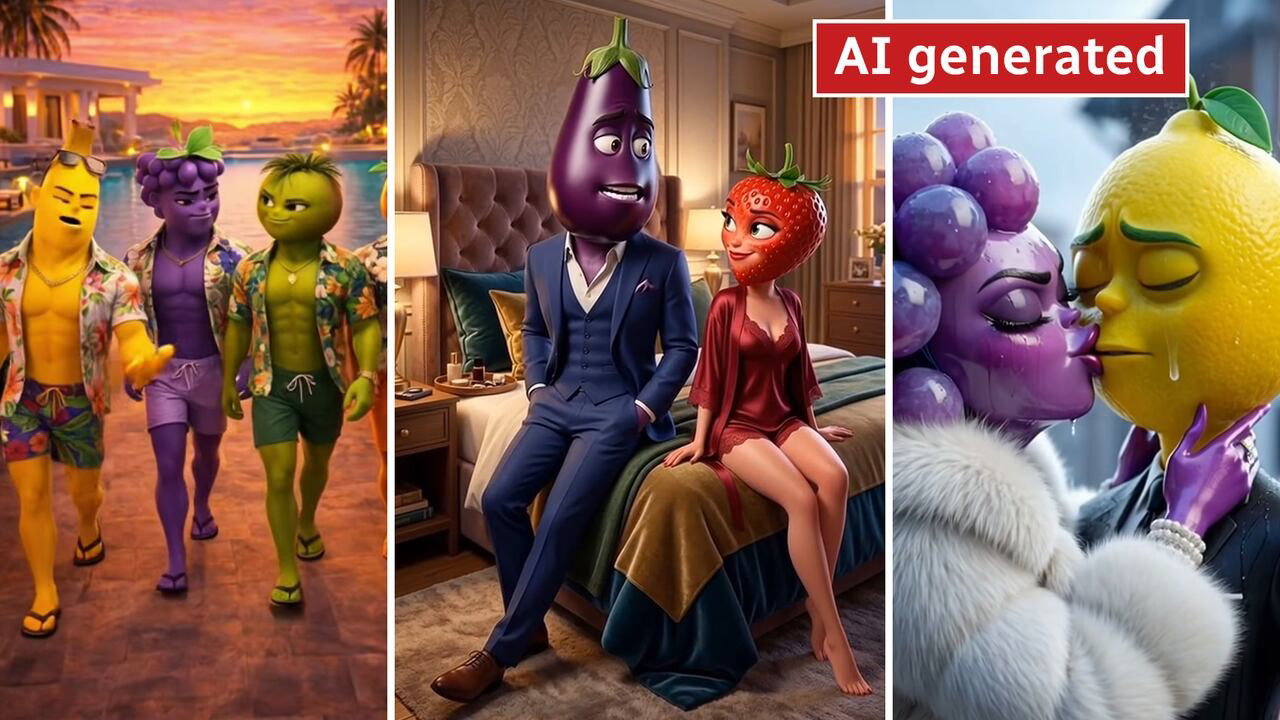
Fruit Love Island turns Bananito, Cherrita, Grapenzo, Kiwilo, Mangella, Draco, Watermelina, Strawberrina, Pineapena, and Orangelo into reality-show contestants. The series reportedly gained 3.1 million TikTok followers within nine days. Object Talk videos dramatize noodles, broccoli, strawberries, and chicken nuggets.
The wider lineup includes Shrimp Jesus, Ballerina Cappuccina, Tralalero Tralala, Bombardiro Crocodilo, Lirilì Larilà, and Armadillo Crocodillo.
Ganji Chudail is often grouped with brainrot culture in India, although she originated as a traditionally animated character, not an AI-generated one.
Their bizarre designs and emotional plots make them endlessly remixable online today.
Why Is AI Slop A Problem For Users And Creators?
The most immediate cost of AI slop is trust.
A Raptive study involving 3,000 American adults found involving 3,000 American adults found that when participants suspected AI involvement, they rated content 48% less trustworthy and 57% less authentic, while reporting a 60% weaker emotional connection. Once a touching rescue or devastated kitten is exposed as fabricated, that suspicion can spread to authentic posts too.
Slop also overwhelms human creators. A person may spend days researching, filming, illustrating, or editing one story while automated accounts publish dozens of imitations. This can bury original work, reward copied styles, and teach platforms that cheap emotional intensity deserves more reach than lived experience.
The content itself can also become troubling, especially when it reaches younger viewers. A recent GNET analysis reported by Euronews highlighted AI-generated fruit and vegetable videos containing aggression, graphic violence, torture, mutilation, and even extremist themes beneath colorful animation.
Researchers warned that repeated exposure to highly stimulating material could contribute to desensitization and wider concerns around cognitive decline or “brain rot.”
There could be psychological and neurological consequences as well. AI slop combines rapid scene changes, emotional shocks, absurdity, cliff-hangers, and unpredictable recommendations with the same endless-scroll mechanics behind doomscrolling and compulsive social media use.
Mental-health experts have raised concerns about how AI-generated content feeds may affect users’ mental health, particularly when highly personalized feeds repeatedly serve emotionally stimulating material.
Social media also interacts with brain circuits involved in reward, motivation, and reinforcement. Dopamine plays a role in these processes, while unpredictable recommendations can encourage users to keep scrolling in search of the next interesting or emotionally rewarding post.
Researchers have suggested that prolonged exposure to algorithmically optimized reward loops may influence how users respond to rewards, especially among younger audiences.
However, calling every swipe a “dopamine hit” or saying AI slop directly rewires brain chemistry would oversimplify the science. Current research supports links between excessive short-form social media use, poorer attention, inhibitory control, psychological distress, and problematic use, but direct evidence that scrolling permanently changes dopamine chemistry remains limited.
What AI slop does particularly well is intensify that existing loop. A tragic cat, bizarre fruit character, violent twist, or absurd reveal can deliver novelty every few seconds before the next swipe begins the process again.
When artificial emotion becomes this easy to manufacture, separating what deserves our attention from what merely demands it becomes much harder.
How Can Users Differentiate Between Authentic Content And AI Slop?
Start with provenance rather than trusting a quick visual guess. Check the creator’s history, original source, caption, AI disclosure, posting frequency, and whether Content Credentials are available.
Then look for inconsistent paws, shadows, text, scale, or object continuity; unnatural voices or lip movement; sudden background changes; and accounts posting near-identical stories at extreme frequency. These glitches are warning signs rather than proof, as better models can hide them.
Content Credentials can reveal aspects of an asset’s origin and editing history, but their absence does not automatically mean a post is deceptive. Source checking and context remain essential.
Once attention became income, Superman’s kryptonite became a business model.
Topics For More Insights
Conclusion
The rise of AI slop shows what happens when powerful creative tools meet platforms optimized for relentless engagement. Cat tragedies and crying vegetables may seem harmless, but their scale affects trust, creator visibility, moderation, and resource use. AI-generated entertainment is not automatically worthless. The problem begins when volume replaces intention and artificial emotion crowds out genuine connection.
Superman’s face recovered after one movie. Our feeds may take longer.
Frequently Asked Questions
Is Every AI-Generated Video Considered AI Slop?
No. AI can support animation, dubbing, editing, accessibility, or imaginative storytelling without turning the result into slop. The distinction usually comes down to intention and execution. A creator who develops an original idea, checks the output, adds meaningful human direction, discloses synthetic elements when appropriate, and avoids mass-producing near-identical posts is making considered work. The label fits better when automation replaces judgment and the content exists mainly to exploit attention at scale across every available platform online.
Why Do People Keep Watching AI Slop Videos When They Dislike Them?
These videos compress familiar storytelling triggers into seconds. Cute characters lower viewers’ guard, while danger, betrayal, illness, separation, or rescue creates an immediate reason to keep watching for longer. Recommendation systems then learn from completion rates, replays, comments, and shares, even when people respond negatively. Curiosity also matters because the scenes are strange enough to make viewers wonder what happens next. The result is a loop where absurdity and emotional manipulation can outperform subtle, carefully developed stories.
Will Better AI Make Synthetic Videos Harder To Recognize?
Better models will remove many obvious giveaways, including warped anatomy, unstable backgrounds, and poorly synchronized speech. That does not mean detection will become impossible, but visual inspection alone will become less dependable. Users will need stronger provenance signals, such as creator history, original files, Content Credentials, platform labels, and corroborating sources. Platforms will also need to examine posting behavior and repeated templates, because polished synthetic media can still be spam when produced and distributed without meaningful oversight.
Fri, Jul 17, 2026

Liked what you read? That’s only the tip of the tech iceberg!
Explore our vast collection of tech articles including introductory guides, product reviews, trends and more, stay up to date with the latest news, relish thought-provoking interviews and the hottest AI blogs, and tickle your funny bone with hilarious tech memes!
Plus, get access to branded insights from industry-leading global brands through informative white papers, engaging case studies, in-depth reports, enlightening videos and exciting events and webinars.
Dive into TechDogs' treasure trove today and Know Your World of technology like never before!
Disclaimer - Reference to any specific product, software or entity does not constitute an endorsement or recommendation by TechDogs nor should any data or content published be relied upon. The views expressed by TechDogs' members and guests are their own and their appearance on our site does not imply an endorsement of them or any entity they represent. Views and opinions expressed by TechDogs' Authors are those of the Authors and do not necessarily reflect the view of TechDogs or any of its officials. While we aim to provide valuable and helpful information, some content on TechDogs' site may not have been thoroughly reviewed for every detail or aspect. We encourage users to verify any information independently where necessary.
Loading comments...