
Media and Entertainment
Is YouTube Killing The Faceless Channels? New AI Policies Punish Faceless Creators
Share
TL;DR
-
YouTube is not killing faceless YouTube channels; it is targeting repetitive and mass-produced AI content.
-
Faceless creators can still monetize by adding research, commentary, storytelling, and human insight.
-
AI-generated YouTube video content is allowed, but generic scripts and reused clips can put monetization at risk.
-
YouTube’s new AI policies focus on authenticity and viewer value, not whether creators show their face.
-
In 2026, successful faceless channels will use generative AI as a tool and not as the whole content engine.
Introduction
Most of us have a favorite bakery, cafe, or restaurant that we keep returning to. Maybe it's the smell of freshly baked bread drifting onto the street every morning, the warm croissants stacked behind the counter, or that one signature recipe you can't seem to find anywhere else. The place feels special because it has its own character that keeps people coming back.
Now imagine walking down the same street a few months later. New bakeries have popped up everywhere. The shelves are packed, the displays look impressive, and fresh batches seem to appear every hour. Yet after a while, something feels off. Many of the pastries look similar, taste similar, and lack the uniqueness that made the original bakery memorable. Suddenly, the challenge becomes finding something worth savoring.
YouTube is facing a similar situation today. The easier AI makes it to create videos, the harder it becomes to separate truly original content from the endless stream of lookalikes. While that's great for accessibility, it has also raised questions about originality, quality, and what truly deserves to be rewarded.
To better understand how YouTube's 2026 AI policies impact faceless creators, it's important to look beyond the headlines and focus on what the platform is actually trying to achieve. Let’s dive in!
What Are Faceless YouTube Channels?
Faceless YouTube channels are channels where the creator does not appear on camera but still builds the entire video around a clear idea, story, or topic. These channels can include explainers, documentaries, finance breakdowns, tech guides, animation, gaming commentary, mystery videos, and educational content.

Instead of appearing on camera, these creators tell their stories through voiceovers, stock footage, screen recordings, animations, motion graphics, AI-generated narration, or a combination of these elements. Well, that's perfectly normal. Some of YouTube's most informative, entertaining, and successful channels have never shown a creator's face.
The concern starts when “faceless” becomes another word for fully automated. A well-researched documentary with strong storytelling is very different from a video made with a generic AI script, robotic voiceover, random stock clips, and the same repeated template.
So, does this mean faceless channels are in trouble? The answer is more nuanced than many headlines suggest.
What Changed In YouTube’s New AI And Monetization Rules?
YouTube’s new AI and monetization rules are not only about whether a creator uses AI. The bigger focus is on whether the final video feels original, authentic, and useful to viewers. In its YouTube Partner Program monetization policies, YouTube makes it clear that channels cannot rely on mass-produced, repetitive, or low-effort content just to generate views.
This is where many faceless creators are now worried. A channel may use AI voiceovers, AI scripts, stock footage, or automated editing tools, but YouTube wants to see real human input behind the content. That could mean original research, clear commentary, stronger storytelling, fact-checking, personal analysis, or a unique way of explaining the topic.
YouTube says, on average, over 20 million videos are uploaded to the platform every day. This is a strong stat to explain why YouTube is becoming stricter with repetitive, mass-produced, and AI-generated content. When upload volume is this high, originality becomes harder to protect and easier to fake.
If there's one thing these numbers show, it's that YouTube is still very much in the business of rewarding content creators. The platform's advertising revenue grew 11% year-over-year to $9.9 billion in the first quarter of 2026, proving that there's still plenty of opportunity for channels that create value for viewers.
In short, if a channel uploads dozens of videos with generic AI narration, reused visuals, similar scripts, and no fresh insight, it may be seen as inauthentic or low-value. So, the issue is not AI itself. The issue is using AI to mass-produce content without adding anything meaningful.
Why Did YouTube Change Its Repetitious Content Policy?
The major wording change is that YouTube renamed “repetitious content” to “inauthentic content.” YouTube’s inauthentic content policy describes inauthentic content as mass-produced or repetitive content, especially videos that look like they were made from the same template with little or no variation.
This matters because many AI-powered faceless channels follow one pattern, having a generic intro, robotic narration, stock clips, simple captions, and no creator perspective. YouTube is also not just looking at one video. Monetization may be removed from the whole channel if it violates these guidelines.

Mass-Produced Content Can Put Monetization At Risk
Mass-produced videos may lose monetization because YouTube wants every video to offer something meaningfully different. YouTube lists AI-generated content made with generic templates, image slideshows, scrolling text, and repetitive videos with low commentary or educational value as examples that may not be monetized.
This has led many creators to wonder whether faceless channels themselves are under threat or whether YouTube is targeting something else entirely.
Is YouTube Really Killing Faceless Channels?
No, YouTube is not banning faceless channels. It is becoming stricter with low-effort faceless automation.
A faceless video can still be deeply original. A creator can write a strong script, use original research, add expert analysis, cite reliable sources, explain a complicated topic, or build a strong narrative without ever appearing on camera.
The real target is content that feels made only to get views. This includes videos that repeat the same format, scrape websites, reuse clips without adding value, or rely on AI with no human judgment. YouTube is not asking, “Where is your face?” It is asking, “Where is your contribution?”
In other words, faceless content is not the problem; content that lacks originality is.
That naturally raises another question. If some faceless channels are still safe, which ones are most likely to face problems under YouTube's updated policies? Let’s find out.
Which Faceless Channels Are Most At Risk?
Not all faceless channels are at risk. The channels most likely to face issues are those that depend heavily on automation and add little original value to their content.
AI Voiceover Channels With Generic Scripts
Channels that publish AI-written scripts with no original angle are at high risk. If the narration sounds like a summary anyone could generate in seconds, it may struggle to prove originality.
Reused Clip Channels Without Commentary Or Context
Compilation channels using movie scenes, TikTok clips, podcast cuts, sports highlights, or viral videos without meaningful commentary can also be risky. YouTube’s reused content policy says reused material must add significant original commentary, substantive modification, or educational or entertainment value.
Template-Based Videos Made At Scale
If every video has the same structure, visuals, AI voice, and only the topic name changes, it may look like inauthentic content.
Misleading AI Videos Or Fake News Content
Creators should be careful with realistic AI content. YouTube’s GenAI disclosure rules require disclosure when AI meaningfully alters or generates realistic content.
Which Faceless Channels Can Still Survive And Monetize?
The first question that comes to mind is: can you still monetize a faceless YouTube channel in 2026? The good news is that many faceless channels can still thrive on YouTube. As long as creators add original insights, storytelling, research, or meaningful value, faceless content remains monetization-friendly.

Educational Channels With Original Research
Educational faceless channels can still work when they bring research, diagrams, case studies, comparisons, examples, or practical takeaways.
Documentary-Style Channels With Strong Storytelling
Documentary channels are safer when they build a real story with context, evidence, and a conclusion.
Commentary Channels With A Clear Opinion
A faceless commentary channel can still monetize if it adds opinion, analysis, humor, criticism, or context. The key is transformation.
Animation And Explainer Channels With Original Scripts
Animation, motion graphics, whiteboard explainers, and infographic videos can still monetize when the script and structure are original.
The common theme here is creators who bring something original to the table still have plenty of opportunities on YouTube. It's not about showing your face, but giving viewers a reason to watch.
Topics For More Insights:
How Faceless Creators Can Stay Safe Under YouTube’s New Policies
Add Human Insight, Examples, Or Personal Analysis
Do not just explain what happened. Explain why it matters. Add comparisons, real examples, and your own conclusion. That separates a creator from a content machine.
Use AI As A Tool, Not As The Whole Creator
AI can help brainstorm titles, clean audio, create outlines, or speed up editing. But the final judgment should be yours. Your research, structure, examples, and editing choices should feel human.
Avoid Reused Footage Without Transformation
If you use clips, add commentary, analysis, editing, or context. A few captions over someone else’s video will not be enough. The viewer should understand what you added.
Fact-Check AI-Generated Claims Before Publishing
This is important for news, finance, health, public figures, crime, and politics. AI can sound confident even when it is wrong. YouTube’s advertiser-friendly guidelines also remind creators that context matters around sensitive or unreliable content.
If you've noticed, none of these recommendations involve avoiding AI altogether. In fact, many successful creators use AI every day as part of their workflow. Well, that leads us to the next section.
Are AI Tools Still Allowed On YouTube?
Yes, AI tools are still allowed on YouTube. The platform is not saying creators cannot use AI voiceovers, AI editing tools, AI thumbnails, or AI-assisted scripts. The issue is whether the final video is original, authentic, and valuable.
A faceless creator using AI to speed up production can still be fine. A channel using AI to mass-produce generic videos with no real viewpoint is the one in trouble.
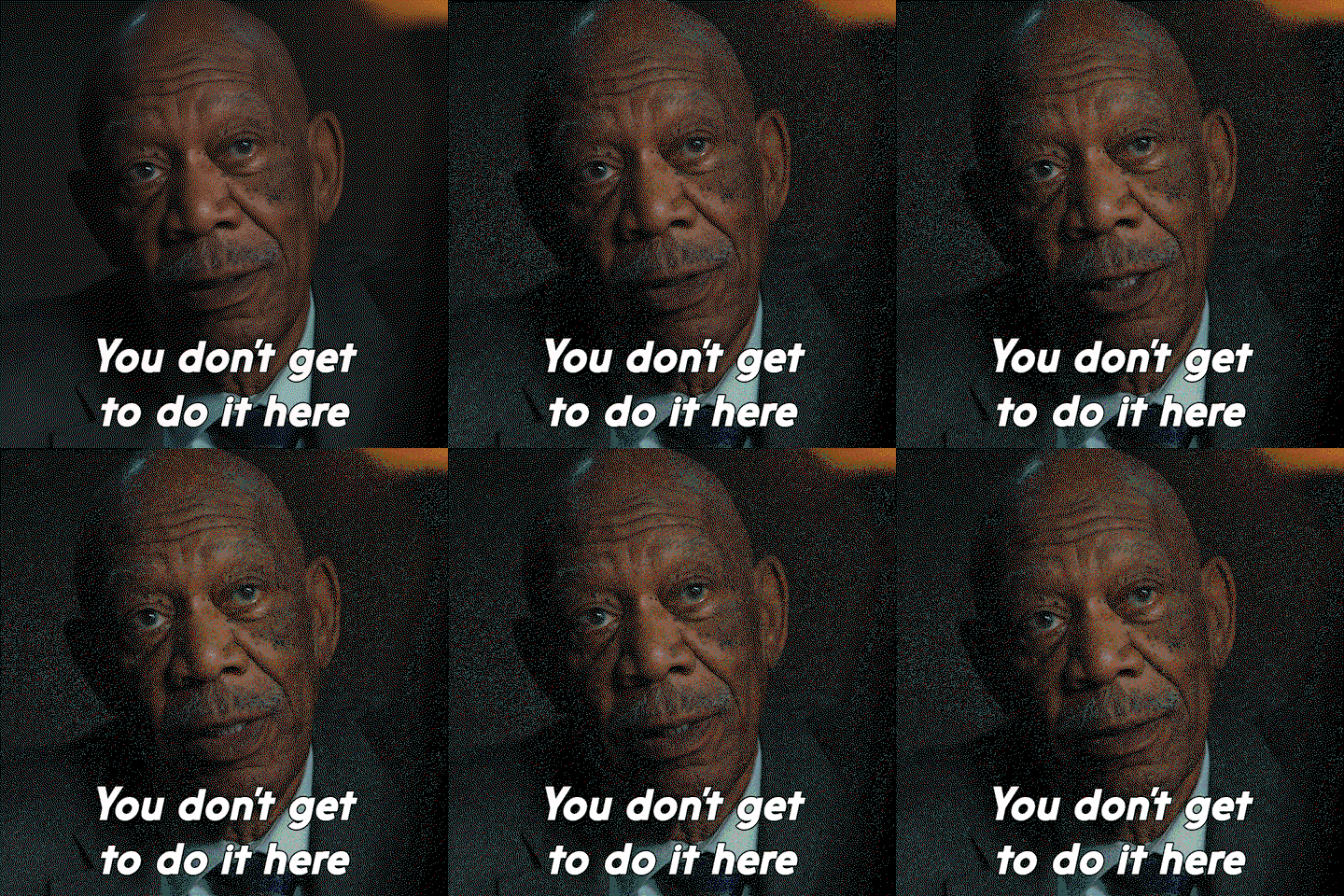
Well, here is the catch. YouTube CEO Neal Mohan has made the platform’s direction clear. He said AI will remain “a tool for expression, not a replacement,” which fits directly into YouTube’s larger push against AI automation.
Ultimately, YouTube wants creators to use AI to make better content and not just produce more of it.
What This Means For New YouTube Creators In 2026
For new YouTube creators in 2026, the message is clear: not to build a channel only around automation; build it around a point of view.
Faceless channels can still grow, but the easy era of uploading hundreds of similar AI videos and expecting monetization is weaker. New creators should focus on a niche they understand, write human scripts, use sources carefully, and make videos for viewers, not just the algorithm.
Final Thoughts
So, are faceless YouTube channels being pushed out of the oven? Not really. Well, YouTube is clearly checking the recipe more closely now.
The platform is not saying every creator needs to show their face, smile into a ring light, and become the main character of every video. What it is saying is simpler. If your channel is serving the same bland batch of AI-made content as everyone else, viewers and advertisers may not want another bite. Faceless content still has a place, but half-baked automation does not.
All in all, YouTube is not killing faceless channels. It is simply refusing to reward content that feels copied, cold, and conveyor-belt fresh. The creators who bring their own recipe will still rise. The ones relying only on lazy AI shortcuts may finally be toast!
Frequently Asked Questions
Is YouTube banning faceless channels?
No. YouTube is not banning faceless channels. It is targeting inauthentic, repetitive, mass-produced, or low-value content. A faceless channel can still monetize if it offers research, commentary, storytelling, education, or meaningful transformation.
Can faceless YouTube channels still be monetized?
Yes. Faceless YouTube channels can still be monetized if they follow YouTube Partner Program rules and create original, authentic content. The creator does not need to appear on camera, but the content must add value.
What Is Inauthentic Content On YouTube?
Inauthentic content usually means mass-produced or repetitive videos with little variation, low educational value, generic templates, or minimal creator input. YouTube may review the whole channel, not just one video.
Mon, Jun 29, 2026

Enjoyed what you've read so far? Great news - there's more to explore!
Stay up to date with the latest news, a vast collection of tech articles including introductory guides, product reviews, trends and more, thought-provoking interviews, hottest AI blogs and entertaining tech memes.
Plus, get access to branded insights such as informative white papers, intriguing case studies, in-depth reports, enlightening videos and exciting events and webinars from industry-leading global brands.
Dive into TechDogs' treasure trove today and Know Your World of technology!
Disclaimer - Reference to any specific product, software or entity does not constitute an endorsement or recommendation by TechDogs nor should any data or content published be relied upon. The views expressed by TechDogs' members and guests are their own and their appearance on our site does not imply an endorsement of them or any entity they represent. Views and opinions expressed by TechDogs' Authors are those of the Authors and do not necessarily reflect the view of TechDogs or any of its officials. While we aim to provide valuable and helpful information, some content on TechDogs' site may not have been thoroughly reviewed for every detail or aspect. We encourage users to verify any information independently where necessary.
Loading comments...