
Artificial Intelligence
Inside The RAM And Storage Crisis: How AI Is Squeezing Supply
Share
TL;DR
-
AI infrastructure is driving huge demand for HBM, DRAM, NAND flash, and enterprise storage.
-
Memory makers are prioritizing higher-value AI and server products, tightening supply for consumer electronics.
-
PCs, smartphones, tablets, consoles, smart-home devices, cars, and storage accessories are all exposed.
-
RAM, SSDs, USB drives, microSD cards, laptops, and Amazon devices have all recorded significant price increases.
-
New semiconductor capacity takes years to build, so manufacturers cannot quickly flood the market with more memory.
-
Industry warnings suggest tight memory supply could persist through 2028, with some pressure potentially lasting longer.
Introduction
Do you remember the 1996 Christmas action-comedy film Jingle All The Way starring Arnold Schwarzenegger? If you do, you're welcome for the stroll down Nostalgia Street.
If you don't: always-busy mattress salesman Howard Langston has to buy his son a Turbo Man action figure for Christmas but gets so busy that he forgets to do so. In a last-minute scramble, he runs all over town and competes with other parents to find this out-of-stock toy.
He does eventually get the toy for his son (happy ending, obviously). However, the mad scramble to obtain the Turbo Man toy is a testament to how crazy the world gets to acquire in-demand products.
One such mental moment is transpiring in the real world as we speak: the RAM and storage crisis.
Essentially, the AI boom has seen cloud computing companies and AI firms scramble to buy vast amounts of memory and storage capacity, along with other computing components, resulting in tighter supply and surging prices for such products.
So, what exactly does this crisis spell out for the world, and how long will it last? Dive in to find out!
Inside The RAM And Storage Crisis: How The AI Boom Is Squeezing Supply
Howard Langston had one problem: everybody wanted the same Turbo Man toy.
The memory market is facing its own version of that scramble, except the buyers include some of the world's biggest technology companies.
So, why is there a global RAM and storage shortage? It's quite simple, actually.
The rapid expansion of artificial intelligence (AI) infrastructure has sharply increased demand for the memory and storage used inside data centers. Generative artificial intelligence (GenAI) workloads need huge amounts of fast memory to train models, run inference, and keep data moving between processors.
The biggest pressure is on high-bandwidth memory (HBM). It stacks multiple DRAM dies together, offers much more bandwidth than standard consumer memory, and is more valuable to manufacturers.
As suppliers dedicate more production and investment toward HBM and server-grade products, less capacity is available for conventional DRAM used in PCs, smartphones, and other electronics.
That is why the global DRAM shortage does not mean AI companies are literally buying the DDR5 kit you wanted for your gaming PC. The squeeze comes from shared fabrication capacity, packaging resources, investment priorities, and manufacturers directing output toward higher-margin AI products.
Storage is caught in the same storm.
Data centers also need enormous volumes of NAND flash and hard-drive capacity, tightening supplies for SSDs and other storage products. Together, these pressures have created a global RAM and SSD shortage far beyond AI data centers.
This AI boom memory shortage is also difficult to correct quickly. Semiconductor fabs take years to build or expand, while demand keeps growing. What started as an emerging technology boom has therefore become a wider memory price crisis.
So, Turbo Man may have been one toy. This time, the shortage is hitting entire industries.
Which Industries Are Hit?
The most obvious casualties are PC makers and the DIY computer market, where memory is a basic part of every system.
Laptop and desktop manufacturers face higher component costs, while builders are paying far more for both DDR5 and older DDR4 kits. DDR5 price increases neared 500% year over year for some configurations in August 2026, while DDR4 kits were up roughly 120% to 180%.
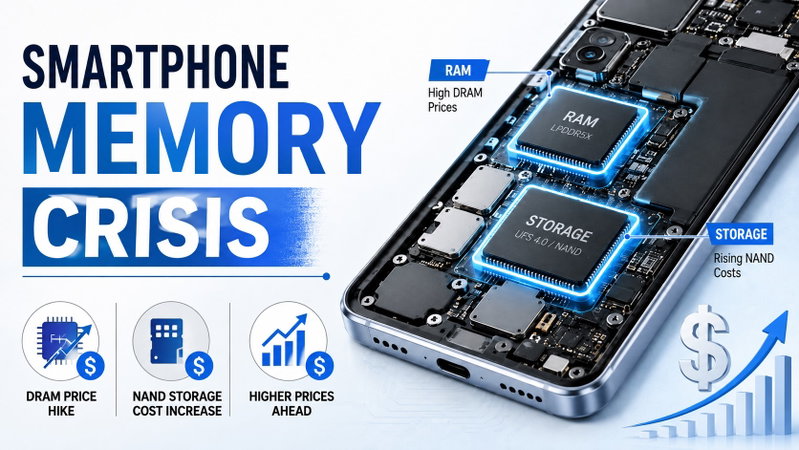
Smartphone makers face the same pressure because phones rely on DRAM for working memory and NAND flash for storage. Higher costs can force manufacturers to raise prices, accept lower margins, reduce memory configurations, or compromise elsewhere in the device.
The impact stretches further.
Gaming consoles, televisions, networking hardware, smart-home devices, cars, cloud infrastructure, and enterprise IT systems depend on memory or storage somewhere inside them.
In other words, the RAM shortage is not simply a PC problem.
For manufacturers, that turns the RAM crisis into a supply-chain problem. For buyers, it becomes
Which Consumer Products Are Affected?
Start with computers.
RAM modules, internal SSDs, external storage, laptops, and desktops are directly exposed to higher memory costs. DDR4 prices have risen sharply too, partly because buyers priced out of DDR5 began looking at older platforms.
Then come smartphones and tablets.
Rising DRAM and NAND costs increase their bill of materials, particularly on devices with larger RAM and storage capacities. Nothing co-founder Akis Evangelidis offered a striking example: memory that had accounted for roughly $20 in the bill of materials of a phone targeting around $400 could now cost more than $100, potentially reaching $120 to $130 in some cases.
E-readers, streaming sticks, smart speakers, routers, and game consoles are also feeling the pressure. Amazon, for example, raised US prices across several Echo, Kindle, Fire TV, and eero products in August 2026, citing significant increases in memory and storage component costs.
Flash products are not immune either.
USB drives and microSD cards use NAND, while portable SSDs depend on the same broader flash ecosystem. Prices showed major year-over-year increases across USB-A, USB-C, SD, and microSD storage in April 2026.
That means the global memory and storage crisis can reach products consumers rarely associate with AI.
The shortage may begin inside fabs and data centers, but just like the hunt for Turbo Man, the effects become obvious when shoppers reach the shelf.

How Has The RAM And Storage Crisis Affected Prices?
The easiest way to understand the shortage is to look at price tags.
Some DDR5 configurations approached 500% annual increases by August 2026, while DDR4 had also risen sharply. Apple and Amazon have meanwhile passed at least some higher memory and storage costs on to customers.
Here are a few recent US examples:
| Product Or Component | Earlier Price | Later Price | Approx. Rise |
| DDR5-5600 64GB kit | $191 (Aug 2025) | $1,118 (Aug 2026) | 485% |
| DDR4-3200 32GB kit | $105 (Aug 2025) | $281 (Aug 2026) | 168% |
| Samsung 990 EVO Plus 2TB SSD | $113 (Prime Day 2025) | $363.49 (July 2026) | 221.5% |
| 512GB USB-A flash drive | $37 (Apr 2025) | $80 (Apr 2026) | 116% |
| 512GB microSD card | $39 (Apr 2025) | $107 (Apr 2026) | 174% |
| Samsung Galaxy S25 FE 256GB | $709.99 (Apr 14, 2026) | $749.99 (Apr 14, 2026) | 5.6% |
| Amazon Echo Dot | $49.99 (Aug 21, 2026) | $79.99 (Aug 21, 2026) | 60% |
| Amazon Kindle 16GB | $109.99 (Aug 21, 2026) | $149.99 (Aug 21, 2026) | 36% |
| Amazon Fire TV Stick 4K Max | $59.99 (Aug 21, 2026) | $84.99 (Aug 21, 2026) | 42% |
| Apple MacBook Neo | $599 (Mar 2026) | $699 (June 25, 2026) | 17% |
The RAM figures come from August 2026 pricing data, the SSD comparison from a July 2026 price check, and the USB and microSD figures from an April year-over-year comparison. Amazon's August 2026 price changes, Apple's June 2026 price changes, and Samsung's April 2026 smartphone increases show the same pressure reaching finished devices.
These figures are not a universal price index, since promotions, capacities, and product generations vary. Still, the direction is hard to miss. An SSD price hike or suddenly expensive RAM kit is increasingly part of the same supply story.
The price surge has even spilled into product warranties.
Right-to-repair advocate Louis Rossmann bought a 4TB Samsung 990 Pro SSD for around $330 before the storage crunch, only for the drive to fail while under warranty. When the same drive cost around $949, Samsung's initial $330 refund offer led Rossmann to threaten legal action.
The matter was eventually settled, with Samsung refunding him $1,234.04 based on the drive's then-current replacement value. The dispute highlighted just how dramatically the memory crisis had changed the economics of replacing previously purchased hardware.
This also raises another common question: why is there a RAM shortage if memory chip companies are earning more? Higher revenue does not instantly create fabrication capacity. Suppliers can sell more expensive products while still lacking enough physical capacity to satisfy every market.
That is what makes the current RAM and storage crisis so unusual. Demand is strong, supply expansion is slow, and the biggest buyers are competing aggressively for future production.
So, when does this particular Turbo Man rush finally calm down?
When Will The RAM And Storage Crisis End?
There is no firm date.
Micron expects supply-demand conditions for both DRAM and NAND to remain tight beyond 2027. SK Hynix CEO Kwak Noh-jung has gone further, saying 2027 could be the worst year in the industry's history from a supply perspective.
Manufacturers are investing heavily in additional capacity, but fabs cannot be switched on like extra checkout lanes.
Micron, for example, is expanding US production capacity, with first wafer output expected from new Idaho fabs in mid-2027 and late 2028. New facilities still take years to build, equip, qualify, and ramp to useful production volumes.
Even when additional capacity arrives, that does not guarantee prices will quickly return to old lows. Strong data-center demand, long-term supply agreements, and continued AI infrastructure investment could keep memory valuable even as more supply comes online.
The market will eventually rebalance, but this RAM and storage crisis is unlikely to disappear overnight.
Sadly, cheap, plentiful memory may take a while to make its comeback.
Topics For More Insights
Conclusion
Howard Langston eventually escaped his Turbo Man scramble, but the memory industry has no equally tidy ending in sight. AI demand has turned RAM and storage from routine components into fiercely contested resources, pushing costs into everything from PC upgrades to everyday electronics. More production capacity is coming, but not quickly. Until supply catches up, this crisis looks less like a temporary stock problem and more like a new reality for technology buyers.
Frequently Asked Questions
Why Can't Companies Make More Memory?
Memory production is not something manufacturers can scale overnight. Building a new semiconductor fab can take several years, followed by additional time to install equipment, qualify processes, and reach efficient production volumes. Companies must also decide which types of memory deserve that capacity. With AI-focused products offering strong demand and higher margins, simply producing more conventional chips is not always the most attractive option. Expanding output therefore requires both enormous investment and long lead times.
Will Memory And Storage Prices Go Back Down?
Prices could fall as new production capacity arrives and supply begins catching up with demand, but a return to the unusually low prices seen before the current squeeze is not guaranteed. Manufacturers are signing long-term agreements with major data-center customers, while AI infrastructure spending remains strong. Even if component availability improves, finished-device makers may not reverse every price increase immediately. Retail competition, demand, inventory, and broader economic conditions will also influence what consumers ultimately pay.
Should You Buy Memory And Storage Now Or Wait?
It depends on what you need and how urgently you need it. If an upgrade is essential for work, study, or a failing device, waiting indefinitely may not be practical. Buyers who have more flexibility can compare promotions, consider lower capacities, or watch prices before purchasing. Older-generation hardware can sometimes offer better value, although its own prices may rise as demand shifts. The smartest approach is to buy for a real need rather than scarcity-driven panic.
Mon, Aug 31, 2026

Enjoyed what you've read so far? Great news - there's more to explore!
Stay up to date with the latest news, a vast collection of tech articles including introductory guides, product reviews, trends and more, thought-provoking interviews, hottest AI blogs and entertaining tech memes.
Plus, get access to branded insights such as informative white papers, intriguing case studies, in-depth reports, enlightening videos and exciting events and webinars from industry-leading global brands.
Dive into TechDogs' treasure trove today and Know Your World of technology!
Disclaimer - Reference to any specific product, software or entity does not constitute an endorsement or recommendation by TechDogs nor should any data or content published be relied upon. The views expressed by TechDogs' members and guests are their own and their appearance on our site does not imply an endorsement of them or any entity they represent. Views and opinions expressed by TechDogs' Authors are those of the Authors and do not necessarily reflect the view of TechDogs or any of its officials. While we aim to provide valuable and helpful information, some content on TechDogs' site may not have been thoroughly reviewed for every detail or aspect. We encourage users to verify any information independently where necessary.
Loading comments...