
Artificial Intelligence
Is AI Draining Our Water Supply? The Hidden Cost Of Data Centers
Share
TL;DR
-
AI is not draining water supplies everywhere, but data centers can place serious pressure on water-stressed communities.
-
AI data centers use water for cooling, electricity generation, and chip manufacturing, making their true footprint larger than it appears.
-
A large data center can consume gallons of water daily, depending on its location, cooling system, and energy source.
-
AI’s impact on water depends less on individual prompts and more on where data centers are built and how efficiently they operate.
-
Recycled water, closed-loop cooling, smarter site selection, and transparent reporting can significantly reduce AI’s growing water footprint.
Introduction
In the movie The Wizard of Oz, a powerful Wizard appears larger than life until Dorothy pulls the curtain and discovers the machinery, levers, and very human operator making the spectacle possible.
Artificial Intelligence creates a similar illusion. A prompt is entered, an answer appears almost instantly, but the complex systems behind it remain out of sight. Every response relies on physical infrastructure, including processors, cooling equipment, electricity grids, chip factories, pipelines, and local water networks.
Once that curtain is raised, an uncomfortable question emerges: is AI draining our water supply?
The answer is not a simple yes or no. AI data center's water consumption is rising, and some large facilities use millions of gallons each day. However, the actual impact depends on location, climate, cooling technology, energy sources, and whether a facility uses freshwater, reclaimed wastewater, or closed-loop systems.
The worldwide totals may appear manageable, but the pressure on a drought-prone town or stressed aquifer can be far more serious. The real issue is not only how much water AI uses, but where that water comes from, when it is needed, how much is returned, and who ultimately carries the environmental cost.
The discussion put forth highlights data center's demand for water, proportion of water usage, AI's water footprint, water drained per prompt, effect on daily water supply, cost dynamics, and broader environmental impact.
Why Do AI Data Centers Require Millions Of Gallons Of Freshwater?
AI systems run on dense clusters of graphics processing units and other accelerators. These chips perform enormous numbers of calculations while training models and responding to users. The process generates heat, which must be dissipated to protect equipment and maintain performance.
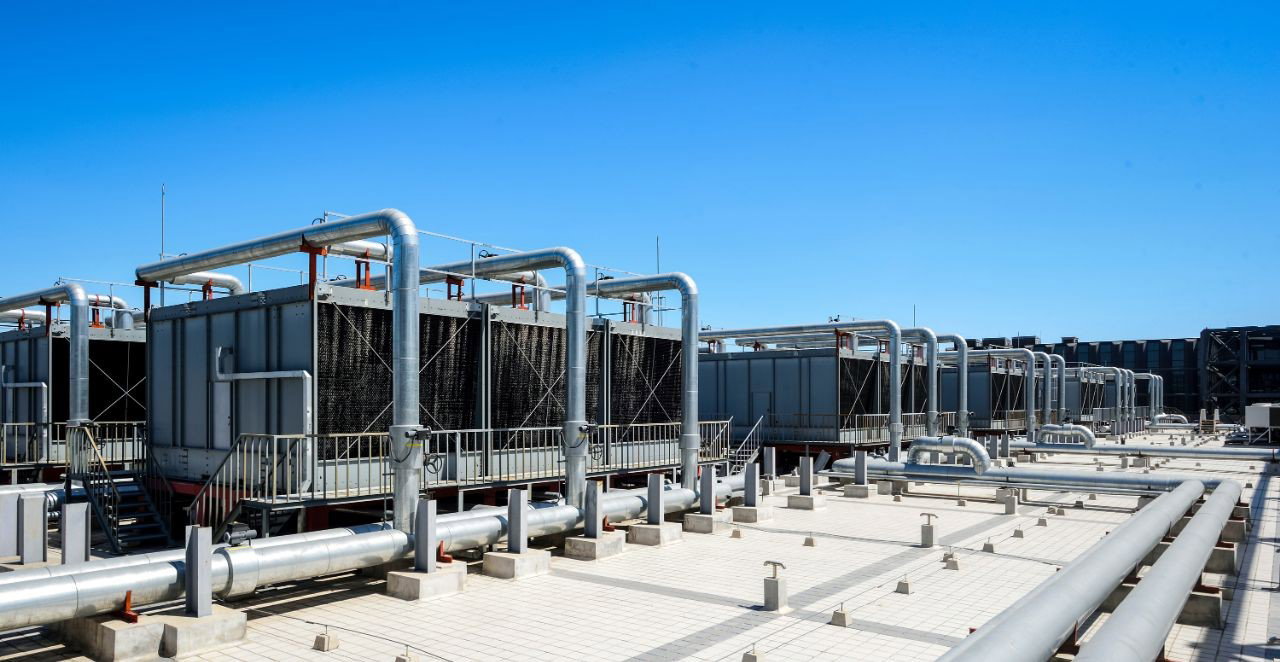
Many facilities use evaporative cooling. Water absorbs heat from the servers and is evaporated through cooling towers or similar systems. Evaporation removes heat efficiently and can consume less electricity than air cooling, but the evaporated water is no longer immediately available to the local water system. This explains why do AI data centers require gallons of freshwater in certain cases.
Large campuses can contain several buildings and high-density AI racks operating continuously. Hot weather increases cooling demand precisely when households, farms, and businesses may also need more water.
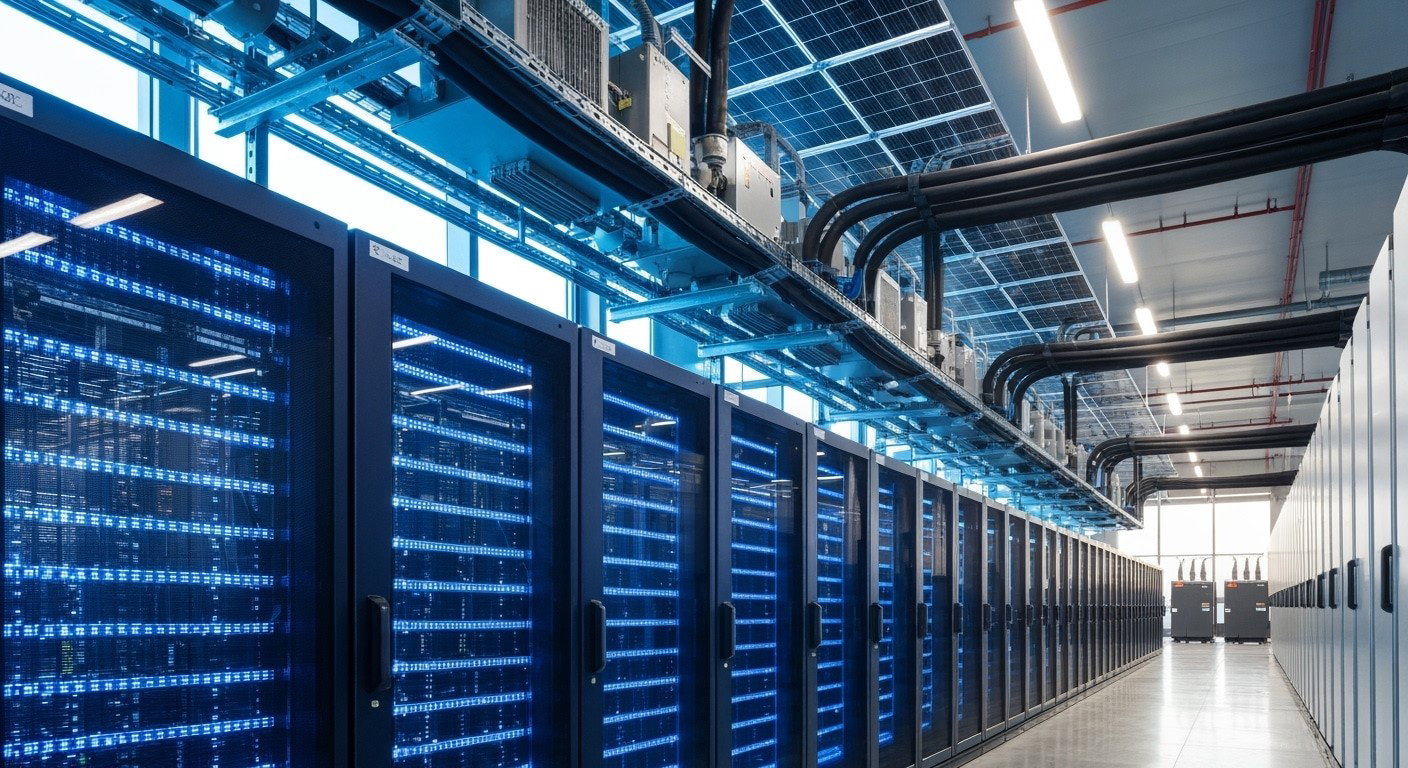
However, data centers do not use the same design. Air cooling may require little direct water but more electricity. Closed-loop systems recirculate water. Direct-to-chip and immersion cooling transfer heat more efficiently, while reclaimed wastewater can replace drinking-quality water. AI data center's water usage can therefore range from minimal direct consumption to millions of gallons daily.
While these cooling demands explain why data centers require so much water, the actual volume varies widely by facility size, location, climate, and cooling technology. This raises the concern about water proportion AI data centers actually use.
How Much Water Does An AI Data Center Use?
There is no universal answer to how much water does an AI data center use. Size, computing density, climate, cooling design, workload, and the local power grid all change the result.
The Environmental and Energy Study Institute says a medium-sized data center can consume roughly 110 million gallons of water annually for cooling. A large facility may use up to five million gallons per day, or around 1.8 billion gallons a year, comparable to the daily water use of a town with 10,000 to 50,000 residents.
According to Energy and AI, based on the average mix of cooling technologies, a 100 MW hyperscale data center in the United States consumes around two million liters of water per day across its direct and indirect operations, equivalent to approximately 6,500 households.
These figures are not always directly comparable. A facility might withdraw a large volume, but discharge part of it for treatment. Another might withdraw less but evaporate a higher percentage.
That distinction is essential when discussing data center water usage. Withdrawal measures what enters the facility. Consumption measures the portion that does not quickly return to the watershed. Yet the water used for on-site cooling is only one part of AI’s much wider environmental extent.
AI’s Water Footprint Extends Beyond The Facility
On-site cooling is only the visible part of AI’s water footprint. Electricity generation can require even more water than the data center itself.
Thermal power plants often withdraw water for steam production and cooling. When a data center uses electricity from a grid powered by gas, coal, or nuclear generation, part of the water used at those plants becomes an indirect component of AI data center's water consumption. IEEE Spectrum notes that indirect water use can represent 80% or more of the overall footprint in some assessments.
Chip manufacturing adds another layer. Advanced processors must be cleaned repeatedly with ultrapure water during fabrication. The Lincoln Institute of Land Policy notes that a typical chip factory can use about ten million gallons of ultrapure water per day. Producing one gallon of ultrapure water may also require around 1.5 gallons of ordinary tap water.
AI’s water footprint therefore spans semiconductor production, on-site cooling, electricity generation, hardware replacement, and waste. Looking only at cooling towers understates the full system. Although every AI prompt may seem instant and invisible, each one still consumes a small, measurable amount of water behind the screen.
How Much Water Is Drained By AI's Per Prompt?
Per-prompt estimates are among the most widely shared and easily misunderstood figures in this debate.
A widely cited research suggests that AI may consume one 500 mL bottle of water across 10 to 50 responses, although newer studies report significantly lower usage.
IEEE Spectrum cited a study estimating that a 150-to-300-word GPT-3 output consumed about 16.9 milliliters of water in an average US data center, including direct cooling and electricity-related usage.
The estimates differ because they examine different models, hardware, locations, cooling systems, energy mixes, seasons, and accounting boundaries. A prompt processed in a cool region with efficient hardware will not have the same footprint as a larger model operating in a hot, water-stressed area on a water-intensive grid.
Output type matters too. United Nations University reported that the electricity-associated water footprint of a typical AI image is around 29 milliliters, while a complex AI-generated video can reach approximately 4.1 liters. Model choice, output length, resolution, and format can all materially affect resource use.
Therefore, how much water is drained by AI cannot be answered reliably with one viral number. A better question is how much water a specific model, task, data center, and electricity grid use together. Still, the water linked to an individual prompt tells only part of the story, as the real impact depends on where and how AI infrastructure operates.
Is AI Draining Water Supply Everywhere?
At a national level, data centers remain a relatively small share of total water withdrawals. According to the US data center energy usage, an estimate of around 17.5 billion gallons of direct US data center water consumption in 2023. Assuming a 50% consumption ratio, withdrawals were approximately 35 billion gallons, or about 0.3% of the contiguous United States’ public water supply.
However, national percentages can hide concentrated local pressure. According to the Bloomberg, it has been found that more than 160 new AI data centers had been built in high-water-stress areas of the United States during the three years covered by its analysis. It also reported that roughly two-thirds of recent US data centers were being developed in water-stressed regions. The concern extends globally, including parts of India, China, and the Middle East where data center growth overlaps with existing scarcity.
Topics For More Insights
Demand can also peak during the hottest days of the year. Science Direct reported that summer water use at an Arizona data center can be nearly twice its average level. This creates pressure at the same time households, businesses, farms, and utilities may be experiencing their highest demand.
This is why 'Is AI draining water supply?' remains a major question of geography and governance. AI does not drain every reservoir equally. It concentrates on demand in the communities hosting the infrastructure, although digital services may be used worldwide.
The issue is especially sensitive in the Global South, where regions may already face limited water access, rapid urbanization, climate stress, or infrastructure gaps.
The supplied ResearchGate discussion reflects this concern, although it is an expert discussion rather than a peer-reviewed quantitative study. Its central policy point remains useful: reclaimed water, stronger regulation, and efficient cooling can reduce competition with freshwater supplies.
What Does The “Water Drained By AI Cost” Include?
The water drained by AI cost is not limited to the utility bill paid by a technology company. It can include several public and environmental expenses.
Utilities may need to expand treatment plants, pipelines, storage systems, and pumping capacity. Heavy withdrawals can reduce flexibility during droughts or heat waves, even when annual supply appears sufficient. Rivers, aquifers, and ecosystems may be affected, while discharged cooling water can carry heat, concentrated minerals, or treatment chemicals.
There is also an opportunity cost. Water committed to a data center cannot always be used simultaneously for housing, agriculture, manufacturing, habitat restoration, or drought reserves. The real cost depends on what a community gives up and whether the facility’s economic benefits justify the trade-off.
Local impacts can be disproportionate even when national consumption appears low. For example, the Lincoln Institute reported that a Meta data center in Newton County, Georgia, uses around 500,000 gallons of water per day, representing approximately ten percent of the county’s total consumption. Proposed facilities in the same county could require even more water than the county currently consumes each day.
United Nations University frames this as an environmental justice and governance issue. AI’s benefits are distributed widely, while water, electricity, land, mineral extraction, and waste burdens can be concentrated in specific communities.
The Bigger Data Center Environmental Impact Explained
Water is only one part of the environmental impact created by the AI infrastructure boom.
United Nations University projects that global data center electricity demand could reach 945 terawatt-hours by 2030. It estimates an associated water footprint of 9.3 trillion liters, alongside substantial carbon and land footprints. The organization compares that water footprint to the basic annual domestic water requirement of approximately 1.3 billion people in Sub-Saharan Africa.
Moreover, depleting carbon does not automatically reduce water use. Different energy sources carry different resource trade-offs. An electricity source that produces fewer carbon emissions may require more water or land, making carbon-only sustainability claims incomplete.
Data center campuses also require land, transmission lines, substations, backup generators, roads, and construction materials. Chip production consumes water and minerals, while rapid hardware replacement creates electronic waste.
AI can still deliver environmental value through power-grid optimization, water leak detection, weather forecasting, logistics, climate modeling, and scientific research. The question is whether those benefits are produced through responsible infrastructure, and whether resource-intensive applications provide enough value to justify their footprint.
Conclusion: So, Is AI Draining Our Water Supply?
AI is increasing water demand, but the evidence does not support the idea that every AI query is directly emptying the world’s drinking-water reserves. The more credible conclusion is that AI infrastructure can place substantial and sometimes unacceptable pressure on particular communities, especially when large data centers are built in hot or water-stressed regions and rely on potable water or water-intensive electricity.
The solution is not to pretend AI is weightless, nor to reduce the debate to one dramatic per-prompt estimate. It is to measure the entire footprint, select sites carefully, use reclaimed water, improve cooling, clean up electricity supplies, publish comparable data, and involve communities before projects are approved.
Whether AI drains local water supplies will depend less on AI’s existence than on choices made by data center operators, utilities, governments, and users. The technology may be digital, but its environmental costs are physical. Managing them responsibly is now part of building responsible AI.
Frequently Asked Questions
Why Do AI Data Centers Use So Much Water?
AI servers generate intense heat and often rely on water-based cooling systems to prevent equipment from overheating. Water is also used indirectly in electricity generation and semiconductor manufacturing.
Why Do Per-Prompt Water Estimates Vary So Widely?
Estimates depend on the AI model, output length, data center location, cooling method, hardware efficiency, and electricity source. They also vary according to whether calculations include only on-site cooling or the wider water used across power generation and chip production.
How Does Data Center Location Affect AI’s Water Demand?
Facilities in hot or water-stressed regions may require more cooling and compete with households, agriculture, and local industries for limited supplies. By contrast, cooler locations with reclaimed water access and less water-intensive power grids can reduce overall demand.
Thu, Jul 23, 2026

Enjoyed what you've read so far? Great news - there's more to explore!
Stay up to date with the latest news, a vast collection of tech articles including introductory guides, product reviews, trends and more, thought-provoking interviews, hottest AI blogs and entertaining tech memes.
Plus, get access to branded insights such as informative white papers, intriguing case studies, in-depth reports, enlightening videos and exciting events and webinars from industry-leading global brands.
Dive into TechDogs' treasure trove today and Know Your World of technology!
Disclaimer - Reference to any specific product, software or entity does not constitute an endorsement or recommendation by TechDogs nor should any data or content published be relied upon. The views expressed by TechDogs' members and guests are their own and their appearance on our site does not imply an endorsement of them or any entity they represent. Views and opinions expressed by TechDogs' Authors are those of the Authors and do not necessarily reflect the view of TechDogs or any of its officials. While we aim to provide valuable and helpful information, some content on TechDogs' site may not have been thoroughly reviewed for every detail or aspect. We encourage users to verify any information independently where necessary.
Loading comments...