
Gaming Technology
7 Ways Online Gaming Platforms Are Increasing Retention With AI
Share
TL;DR
-
AI-powered personalization helps gaming platforms recommend relevant content, missions, and experiences based on individual player preferences and behavior.
-
Dynamic difficulty adjustment uses AI to balance gameplay challenges, preventing frustration and boredom while encouraging players to keep progressing.
-
Predictive churn analytics uses machine learning to identify early signs of disengagement, allowing gaming platforms to intervene before players leave.
-
Intelligent rewards and AI chatbots improve player engagement through personalized incentives, timely assistance, and smoother gameplay experiences.
-
AI-driven matchmaking and localization help create fairer multiplayer environments, improve community interactions, and deliver culturally relevant gaming experiences worldwide.
Introduction
Remember Squid Game, where every round introduced a new challenge, tested players in unexpected ways, and kept audiences wondering what would happen next? While the stakes in the show were extreme, its ability to build anticipation, introduce fresh challenges, and sustain curiosity offers an interesting parallel to online gaming.
After all, attracting players is one thing, but keeping them engaged enough to return for another round is an entirely different challenge.
That's where artificial intelligence enters the picture. With countless gaming experiences competing for attention, platforms are using AI to understand player preferences, adjust difficulty levels, deliver personalized rewards, and predict when users might lose interest.
From behavioral analytics to intelligent recommendations, online gaming retention AI tools are helping developers create experiences that feel more relevant, engaging, and rewarding.
So, how are gaming platforms using AI to keep players coming back for more? Let's explore seven ways AI is transforming player retention in online gaming.
Why Is AI Becoming Essential For Online Gaming Player Retention?
Player retention measures how effectively a gaming platform encourages users to return over time. Common indicators include Day 1, Day 7, and Day 30 retention rates, alongside session frequency, engagement duration, and churn rates.
Traditionally, gaming companies relied on broad player segments, fixed rewards, and scheduled content updates to maintain engagement. However, these approaches often overlooked individual behaviors and changing player expectations.
AI introduces a more responsive approach. By analyzing gameplay patterns, session histories, player interactions, and progression data, AI player retention strategies in gaming can identify opportunities to improve the experience before users lose interest.
Machine learning models can also detect early signs of disengagement, allowing platforms to make timely adjustments rather than waiting until players abandon the game.
Here's how these capabilities translate into practical retention strategies.
1. AI-Powered Personalization Creates Unique Gaming Experiences
Every player approaches a game differently. Some enjoy competitive challenges, others prefer exploration, while many are motivated by achievements and rewards. AI-powered personalization helps platforms recognize these preferences and adapt the experience accordingly.

Machine learning algorithms examine gameplay history, preferred game modes, session frequency, and engagement patterns to identify content that individual players are more likely to enjoy.
For example, a player who regularly participates in strategy-based challenges might receive recommendations for similar missions. Meanwhile, someone interested in casual games could discover shorter, less demanding experiences.
Personalization can extend beyond game recommendations to include customized interfaces, event suggestions, progression paths, and in-game experiences. The objective is straightforward: help players spend more time enjoying relevant content and less time searching for something interesting.
However, personalized experiences work best when the challenge remains appropriate. That's where another AI capability becomes particularly valuable.
2. Dynamic Difficulty Adjustment Keeps Players Challenged Without Frustration
A game that's too easy can quickly become boring. Make it excessively difficult, and players may abandon it before making meaningful progress. AI-driven dynamic difficulty adjustment (DDA) helps gaming platforms maintain a balance between challenge and enjoyment.
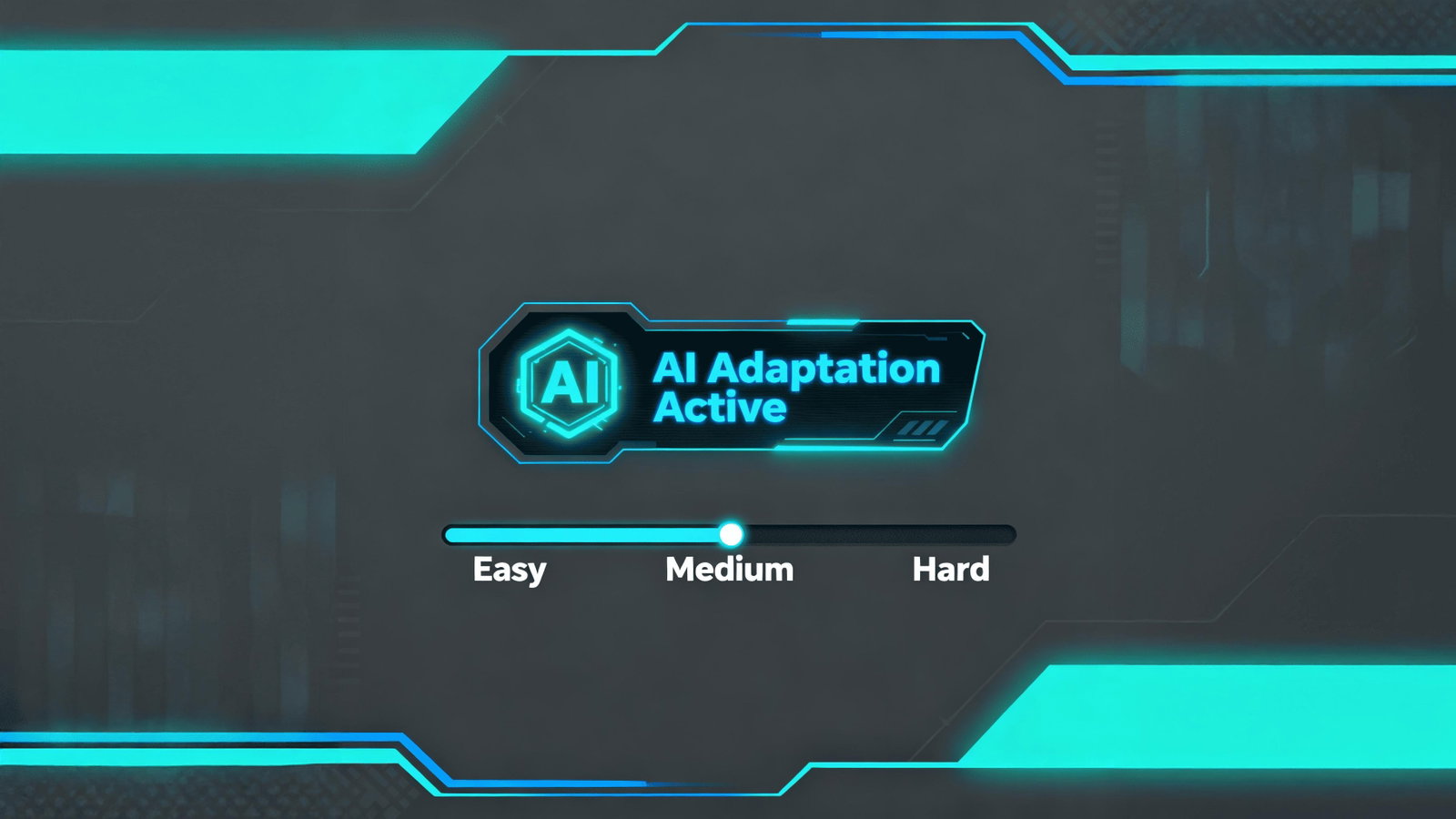
These systems analyze factors such as player performance, completion rates, repeated failures, and progression speed. Based on these signals, they can modify certain gameplay parameters to better match individual abilities.
For example, a puzzle game might introduce simpler challenges when a player repeatedly struggles with a level. Conversely, an experienced player could encounter more demanding tasks to maintain interest.
This approach can be particularly useful in mobile and free-to-play games, where unsuccessful progression may contribute to early abandonment.
The benefits are supported by research. A large, randomized experiment involving more than 300,000 players found that adjusting difficulty for players at risk of leaving improved engagement and retention, contributing to stronger long-term monetization.
Still, adapting gameplay is only one part of retaining players. Platforms also need to recognize when someone is becoming less interested.
3. Machine Learning Predicts Player Churn Before Users Leave
One of AI's most valuable applications in gaming is identifying players who may stop returning.
Traditional retention analysis often identifies churn after inactivity has already occurred. Machine learning churn prediction in gaming takes a proactive approach by recognizing behavioral changes associated with potential disengagement.

Predictive models can examine indicators such as:
-
Declining session frequency or gameplay duration
-
Repeated failures or stalled progression
-
Reduced participation in events and social activities
-
Changes in purchasing or reward-claiming behavior
Using historical gameplay data, these models estimate the likelihood that a player will become inactive within a defined period.
Gaming platforms can then test suitable interventions, such as personalized challenges, helpful gameplay suggestions, or relevant content recommendations.
Research into early-stage churn prediction has demonstrated the potential of this approach. One study involving more than 713,000 player records reported a 20% improvement in Day 1 retention during real-world testing of targeted interventions.
Significantly, churn predictions represent probabilities rather than guarantees. Their effectiveness depends on data quality, appropriate interventions, and continuous evaluation.
4. Intelligent Rewards And Loyalty Programs Encourage Repeat Engagement
Rewards are a familiar part of online gaming, but offering every player identical incentives doesn't necessarily encourage long-term participation. AI enables platforms to create more relevant reward experiences by identifying what motivates different players.

For instance, some users may value cosmetic upgrades or exclusive collectibles, while others respond better to progression bonuses, achievements, or access to special challenges. AI systems can analyze these preferences to recommend rewards aligned with individual interests and gameplay behavior.
They can also help optimize the timing of loyalty offers, daily challenges, and event invitations. A player who enjoys cooperative missions might receive an invitation to an upcoming team-based event. Someone returning after a long break could be offered a guided challenge designed to help them regain familiarity with the game.
However, effective rewards should encourage meaningful participation rather than pressure users into excessive spending or prolonged sessions.
5. AI Chatbots And Virtual Assistants Improve Player Support
Technical issues, confusing instructions, and unresolved account problems can disrupt gameplay and discourage players from returning.
AI-powered chatbots and virtual assistants help gaming platforms deliver faster, more personalized support. Using natural language processing (NLP), these systems can answer gameplay questions, troubleshoot common issues, and guide users through unfamiliar features.
For example, a player struggling with a game mechanic could receive contextual assistance without leaving the platform. AI can also identify recurring support problems, helping developers improve frustrating gameplay elements.
While effective support removes barriers to engagement, multiplayer platforms must also ensure players enjoy fair and positive interactions.
6. AI-Powered Matchmaking And Community Moderation Improve Multiplayer Experiences
Multiplayer retention depends on balanced competition, fair gameplay, and positive community interactions. Poor matchmaking, cheating, and toxic behavior can quickly push players away.

AI-powered matchmaking analyzes player skill, performance history, and preferences to create more balanced competitive experiences. Meanwhile, machine learning systems can flag suspicious gameplay patterns and potentially abusive behavior for moderation.
These capabilities help platforms reduce frustration, encourage fair competition, and create welcoming gaming communities. However, keeping players engaged also means making experiences accessible and relevant to audiences across different languages and cultures.
7. AI-Driven Localization And Content Optimization Expand Player Engagement
Language barriers and unfamiliar cultural references can make even engaging games difficult for international audiences to enjoy.
Topics For More Insights:
AI-powered localization helps gaming platforms adapt interfaces, dialogue, instructions, and promotional content across languages more efficiently. Combined with human review, these tools can improve translation consistency and cultural relevance.
AI can also analyze regional engagement patterns to help developers tailor events, challenges, and content updates to different player preferences. By creating more accessible and relevant experiences, gaming platforms can strengthen engagement across global audiences and encourage repeat participation.
How Can Gaming Platforms Measure The Success Of AI Retention Strategies?
Implementing AI doesn't automatically translate into higher retention. Gaming platforms need to establish whether their interventions genuinely improve player experiences.
Several performance indicators can help measure effectiveness:
-
Day 1, Day 7, and Day 30 retention: Measures how many players return after defined intervals.
-
Churn rate: Tracks the proportion of players who stop engaging within a particular period.
-
Session frequency and duration: Reveals how often users return and how long they remain active.
-
Player lifetime value (LTV): Estimates the economic value generated throughout a player's relationship with the platform.
-
Player satisfaction: Uses feedback, support trends, and experience measures to evaluate perceived quality.
Controlled experiments and A/B testing can help distinguish genuine retention improvements from seasonal trends or unrelated changes.
Gaming companies should also evaluate privacy, fairness, and player well-being. Increased session duration or spending shouldn't be treated as proof of a better experience without considering broader outcomes.
Ultimately, successful AI adoption requires a balance between business performance and sustainable player engagement.
Conclusion: The Future Of Online Gaming Retention Is Personalized, Predictive, And Player-Centric
AI is changing how gaming platforms understand, engage, and retain their audiences. What once depended on standardized rewards and generic content updates is becoming increasingly responsive to individual player needs.
From personalized recommendations and dynamic difficulty adjustments to churn prediction and intelligent matchmaking, these seven strategies demonstrate how gaming platforms increase player retention with AI. Yet technology alone cannot guarantee loyalty. Players still expect enjoyable gameplay, fair treatment, relevant content, and dependable support.
For developers and platform operators, the opportunity lies in using AI to strengthen those fundamentals rather than simply maximizing screen time. After all, the most effective retention strategy isn't convincing players to stay longer. It's giving them a genuinely good reason to come back.
Frequently Asked Questions
How Can Reinforcement Learning Optimize Long-Term Player Retention In Online Gaming?
Reinforcement learning enables AI systems to continuously refine engagement strategies based on player responses and long-term outcomes. Unlike traditional predictive models, it learns which actions deliver sustained engagement through feedback-driven experimentation.
How Can Federated Learning Improve AI-Driven Player Retention Without Compromising Privacy?
Federated learning allows gaming platforms to train AI models across decentralized devices without transferring raw player data to central servers. This approach can improve behavioral predictions while reducing data exposure, although additional privacy safeguards remain necessary.
How Can Causal AI Help Gaming Platforms Identify Which Retention Strategies Actually Work?
Causal AI helps distinguish between player behaviors merely associated with retention and interventions that genuinely influence return rates. Combined with controlled experiments, it can reveal which gameplay changes improve loyalty instead of simply correlating with engagement.
Tue, Oct 20, 2026

Enjoyed what you read? Great news – there’s a lot more to explore!
Dive into our content repository of the latest tech news, a diverse range of articles spanning introductory guides, product reviews, trends and more, along with engaging interviews, up-to-date AI blogs and hilarious tech memes!
Also explore our collection of branded insights via informative white papers, enlightening case studies, in-depth reports, educational videos and exciting events and webinars from leading global brands.
Head to the TechDogs homepage to Know Your World of technology today!
Disclaimer - Reference to any specific product, software or entity does not constitute an endorsement or recommendation by TechDogs nor should any data or content published be relied upon. The views expressed by TechDogs' members and guests are their own and their appearance on our site does not imply an endorsement of them or any entity they represent. Views and opinions expressed by TechDogs' Authors are those of the Authors and do not necessarily reflect the view of TechDogs or any of its officials. While we aim to provide valuable and helpful information, some content on TechDogs' site may not have been thoroughly reviewed for every detail or aspect. We encourage users to verify any information independently where necessary.
Loading comments...