
Artificial Intelligence
Is Microsoft's Muse AI The Future Of Game Development?
Share
Overview
Are you a fan of gaming? Well, not everyone is, but you’ve probably heard of or played Flappy Bird, right?
When it came out 12 years ago, in May 2013, this incredibly addictive one-tap mobile game went viral right away. A single independent developer named Dong Nguyen made it in just a few days, though, which is really impressive.
Flappy Bird had millions of players all over the world, thanks to its pixel-art graphics, easy controls, and challenging gameplay (although it was just a tap on a smartphone screen). This shows that sometimes, keeping things simple is the best way to succeed.
What made Flappy Bird so unique wasn’t its complexity, it was its simplicity and speed of execution. Nguyen didn’t spend years designing elaborate mechanics, crafting vast open worlds, or writing intricate storylines that most games have nowadays. Instead, he focused on a minimalist yet engaging experience that resonated with millions.

Over the years, we have wondered if game development could be this fast and effortless without compromising creativity, especially someone with no technical knowledge of how to build a game.
Well, Microsoft’s Muse AI has something to say. This AI tool promises to streamline game development by automating various tedious tasks, assisting in prototyping, and even generating in-game elements. Flappy Bird proved that a simple idea can dominate the industry, and Muse AI's development suggests that simplified game creation could be the future. It has the potential to help both indie developers and large video game studios bring ideas to life faster than ever before.
So, with Artificial Intelligence (AI) becoming an increasingly powerful tool in gaming, let's explore what Muse AI is and how it boosts the future of game development. Dive in!
Understanding Muse AI
Microsoft Muse is a generative AI model that can create game visuals and controller actions. Before renaming it as Muse, Microsoft called it the World and Human Action Model (WHAM). Glad they renamed it!

For this project, the Microsoft Research Game Intelligence team partnered with Xbox Game Studios' Ninja Theory and the Teachable AI Experiences (TAI X) developer team.
This collaboration helped train the AI model, which used extensive gameplay data of over 1 billion images and controller actions, corresponding to over 7 years of continuous human gameplay from online games. The goal? To transform how developers create game content.
Well, this project isn’t just about saving time. It’s about creating a foundation for future game development, where such tools work alongside developers rather than replacing them.
Yet, it also raises the question: can AI-generated content really capture the magic of human creativity, especially in gaming?
With AI-driven models set to reshape game development, let’s explore its potential applications.
Potential Applications Of Muse AI In Game Development
Muse AI has the potential to reshape how games are imagined, designed, and built. Here’s how it could make a difference.
1. Assisting Game Developers
Game developers might enjoy a quicker start due to Muse AI, as it can help spark ideas and form rough layouts. Using the approach of game prototyping drawn from methods by Ninja Theory, the tool cuts down early-stage work.

As per the Unity Gaming Report 2024, 71% of studios utilizing AI reported improvements in delivery and operations, with AI aiding in rapid prototyping, idea generation, and testing gameplay loops. Given the market value of this industry, this one's a huge deal!
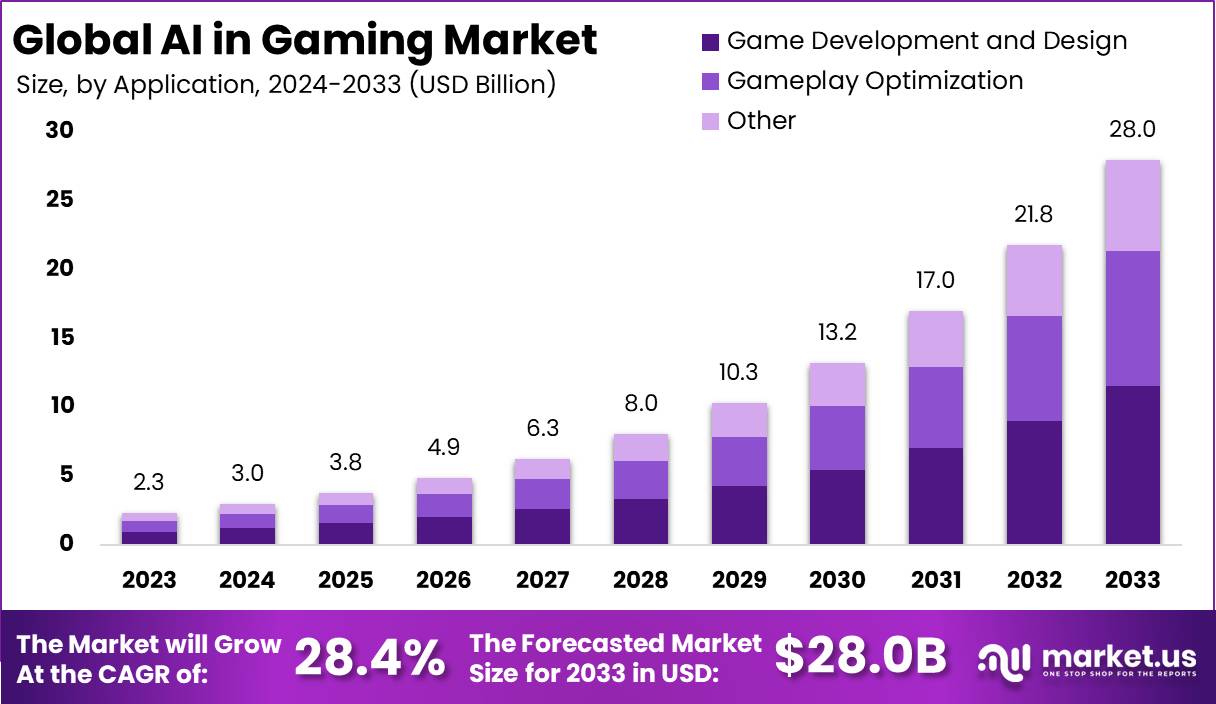
This will also help developers with:
-
Fast rough sketches turning ideas into visions.
-
Immediate visual feedback aiding faster game development.
-
Smaller teams utilizing creative risk without huge budgets.
2. Enhancing Game Preservation
Muse AI is helping old games feel new again by updating their art and textures while keeping their original charm, making game preservation easier and more effective. This allows consoles to give a new shine to retro games without losing what made them special.
One standout example of this potential came in early 2025, when Microsoft showcased a demo of Quake II recreated using Muse AI. Instead of using the original source code or engine, Muse learned how the game functioned through gameplay data alone—and then generated its visuals and interactions to replicate the experience.

While it wasn’t released for public play, the demo stunned many by showing how AI could preserve and recreate legacy games using only gameplay footage and behavior data.
This is how Muse AI does all that (technically):

-
Efficiently converts vintage assets to current standards.
-
Keeps the nostalgic feel even in high-resolution environments.
-
Saves time and cost for remastering efforts.
Classic games matter. With modern AI, they can be both preserved and refreshed, blending the rich past with emerging customer trends.
3. Streamlining Complex Game Creation
Muse AI also eases the load when constructing heavy game worlds. Developers can build elaborate settings with fewer steps. This is done by importing assets, running simulation routines, and making tweaks along the way.
Here's how developers can do this in simplified steps:
-
Import game assets with ease.
-
Run AI trials to simulate game mechanics.
-
Tweak environments based on dynamic feedback.
You see, AI is leading the future of gaming by cutting through complexity, and versatile applications like Muse AI are reshaping everything from prototyping to building intricate environments.
With all these advancements, how do you think developers, gamers, and industry leaders feel about them? Don't think twice as the next section provides all the details. Keep reading!
Industry Reactions And Implications Of Muse AI
Opinions on Muse AI are split. Some developers say it offers a quick boost in creating game assets, while others worry it might be just another passing tech fad.
Here's a quick table comparing the survey findings on AI in game development:
|
Survey Source |
Year |
Developers Using AI |
Positive Outlook |
Negative Outlook |
Mixed Sentiments |
|
GDC State of the Game Industry |
2025 |
36% |
13% |
30% |
57% |
|
a16z Games Survey |
2024 |
73% |
N/A |
N/A |
N/A |
|
Inworld.ai AI NPCs Survey |
2024 |
N/A |
~75% (AI NPCs) |
N/A |
N/A |
|
User-Cited GameDev Insider Survey |
2025 |
N/A |
48% (Optimistic) |
37% (Skeptical) |
N/A |
Bridging this gap between excitement and doubt, industry experts continue to debate the role of AI in game development.
The big question remains: is Muse AI set to replace the creative minds behind games, or will it just be another tool on the game developer’s desk?
Critics argue that over-reliance on AI might dim the unique human spark. Here are some recurring points in the discussion:
|
Expert |
Institution |
Viewpoint Described |
|
Francesca Gino et al. |
Harvard Business School |
AI frees time for deeper creative focus by automating routine tasks. (Positive) |
|
SingularityNET Authors |
SingularityNET |
AI handles routine tasks, enabling focus on strategic, creative thinking. (Positive) |
|
Ethan Mollick, Lilach Mollick |
Wharton School |
AI-generated content could flood markets, overshadowing human creatives. (Skeptical) |
|
NYU SPS Blog Authors |
NYU School of Professional Studies |
Over-reliance on AI may hinder skill development, affecting the creative process. (Skeptical) |
With the above mixed ideology towards AI in creative tasks, it is essential to consider the implications of integrating such technology into the creative process. Microsoft has made it clear that Muse AI is meant to help developers, not replace them.
Some key takeaways include:
-
Microsoft insisting that Muse AI handles routine tasks, letting developers focus on storytelling and character design.
-
The strategy is to use AI as a way to spark further ideas, not to finalize them.
Microsoft’s stance is a reminder that the creative process remains human at its core. The intent is to provide support, giving professionals more breathing room to explore and experiment. Overall, the industry is watching closely as early data and opinions continue to unfold. This debate about the balance of man and machine is as old as the first computer, yet it never fails to intrigue.
Now with every innovation comes a set of challenges. Can Muse AI truly support game design without compromising originality?
Let’s explore!
Challenges And Limitations Of Muse AI
Muse AI shows promise but comes with clear technical limits. Here's a quick breakdown of the challenges:
Technical Limitations
-
Low-Resolution Outputs: Muse AI currently generates visuals at 300×180 pixels, significantly lower than the 1920×1080 standard for modern games. This gap, highlighted in the Microsoft Research Blog, raises concerns about its ability to produce high-quality visuals suitable for commercial titles.
-
Dependence On Specific Training Data: The AI model was trained primarily on gameplay data from Bleeding Edge, a multiplayer action game. While the dataset helped the AI understand game mechanics, it limited the versatility that different game genres might need. Developers worry that relying too heavily on AI-generated content could stifle creativity and lead to repetitive design patterns.
-
Processing Delays: Larger AI models tend to have slower inference times, making them less suitable for real-time applications. After all, slow processing can disrupt the iterative nature of game development, where rapid feedback and quick adjustments are crucial.
Ethical Concerns
-
Authorship And Originality: As mentioned previously, the 2025 Game Developers Conference (GDC) survey of 3,000 developers found that 50% expressed concerns about AI’s impact on the industry, specifically its ability to generate unique and nuanced content. Many fear that AI-generated content may lack the depth and creativity that human designers bring, leading to homogenized game experiences.
-
Over-Reliance On AI: AI models, such as Muse AI, are trained on existing data, and cannot generate truly original ideas but variations of what already exists. Overusing AI in game development could lead to repetitive mechanics, uninspired designs, and a lack of innovation.
-
Job Displacement: The above-quoted 2025 GDC survey revealed that 50% of developers are concerned about AI’s impact on job security. Layoffs in major gaming companies have been linked to the increased use of generative AI in game development. Think of this: in 2023, an estimated 10,500 gaming industry jobs were lost and 11,000 in 2024, with AI automation playing a major role in these cuts.
 Source
This situation is a bit like a sitcom plot gone awry, what seemed promising initially may not always hit the mark. The balance between AI automation and human creativity is unique and the question remains whether the trade-off is worth it.
Despite such concerns in the industry, there is still great potential for improvement - and Muse AI might just be step one of the future of game development.
Wrapping It Up!
So, is Microsoft's Muse AI the next big thing in game development? Well, it's kind of a mixed one!
On one hand, it's like having a super-helpful friend who can handle the boring mechanics and asset creation, dgiving developers more time to work on making epic stories and characters that people will remember.
On the other hand, it feels like using a brand-new device and you're still trying to figure out what it's for. It might work for its purpose, but not quite ready to wipe the floor with its competition.
It will be interesting to see how Muse AI changes over time and whether it really reshapes game development.
Either way, the future of games is sure to be AI-powered and exciting!
Frequently Asked Questions
What Is Microsoft's Muse AI?
Muse AI is a new tool from Microsoft designed to help game developers create games more easily. It uses advanced technology to generate game elements like characters and environments.
How Can Muse AI Help Game Developers?
Muse AI can assist developers by speeding up the process of making games. It helps with brainstorming ideas, creating game visuals, and even handling some repetitive tasks.
Are There Any Concerns About Using Muse AI?
Yes, some people worry that using AI in game development might take away the creativity and unique touch that human developers bring. Microsoft says that Muse is meant to support, not replace, human creativity.
Tue, Mar 4, 2025

Enjoyed what you've read so far? Great news - there's more to explore!
Stay up to date with the latest news, a vast collection of tech articles including introductory guides, product reviews, trends and more, thought-provoking interviews, hottest AI blogs and entertaining tech memes.
Plus, get access to branded insights such as informative white papers, intriguing case studies, in-depth reports, enlightening videos and exciting events and webinars from industry-leading global brands.
Dive into TechDogs' treasure trove today and Know Your World of technology!
Disclaimer - Reference to any specific product, software or entity does not constitute an endorsement or recommendation by TechDogs nor should any data or content published be relied upon. The views expressed by TechDogs' members and guests are their own and their appearance on our site does not imply an endorsement of them or any entity they represent. Views and opinions expressed by TechDogs' Authors are those of the Authors and do not necessarily reflect the view of TechDogs or any of its officials. While we aim to provide valuable and helpful information, some content on TechDogs' site may not have been thoroughly reviewed for every detail or aspect. We encourage users to verify any information independently where necessary.
AI-Crafted, Human-Reviewed and Refined - The content above has been automatically generated by an AI language model and is intended for informational purposes only. While in-house experts research, fact-check, edit and proofread every piece, the accuracy, completeness, and timeliness of the information or inclusion of the latest developments or expert opinions isn't guaranteed. We recommend seeking qualified expertise or conducting further research to validate and supplement the information provided.
Loading comments...