Marketing Technology
AI-Driven Marketing Vs. Traditional Marketing: The Ultimate Guide
Share
What this means is the foundational assumptions about audiences, execution and measurement are being challenged. Instead of segmenting broad demographic buckets, we are inching toward one-to-one relevancy. Instead of planning six months, we are responding in hours. Instead of measuring what happened, we are predicting what’s next.
This is not digital transformation; it is marketing’s great recalibration. Those who treat AI as just another feature risk missing the deeper truth: the playbook has changed entirely.
What Truly Divides the Two Eras
Traditional marketing believed that the right process could guarantee success. Plan, publish, promote, repeat. AI-driven marketing flips that equation. It is not about process anymore; it is about philosophy, how we think about creativity, connection, and context. The traditional era trusted instinct and mass appeal; the new era trusts intelligence and micro-relevance. One builds campaigns around audiences. The other builds experiences around individuals.
This shift is not about replacing creativity with computation; it is about expanding what creativity means. Data has become the new imagination, and algorithms have become the new collaborators. Where marketers once asked, “How do we reach more people?” they now ask, “How do we matter to one?” The discipline has not lost its soul; it is simply learning to speak a smarter language.
Rethinking the ‘Who’
The question of who we market to has undergone its most radical rewrite yet. Traditional marketing projected messages toward broad demographics, such as age, income, and geography, hoping that resonance would follow reach. AI-driven marketing reverses that flow. It begins with data-defined identity, not assumption. According to McKinsey’s 2025 State of Personalization Report, 71% of consumers now expect brands to deliver personalized interactions, and 76% feel frustrated when this expectation is not met.
In this new order, audiences are not segments; they are signals. Netflix does not market to “movie lovers;” it curates experiences for you, shaped by every click, skip, and pause. The marketer’s role has evolved from storyteller to systems thinker, someone who designs precision without losing empathy. Because in a world of infinite data, relevance is the new reach.
Redefining the ‘How’
Automation is not the enemy of creativity; it is the engine behind it. Traditional marketing was built on repetitive cycles: plan, execute, analyze, and start again. AI-driven systems collapse into a continuous learning model, creating campaigns that optimize themselves while humans focus on what machines cannot: narrative, empathy, and imagination. Salesforce’s 2025 Marketing Intelligence Trends notes that 78% of high-performing marketers use automation to personalize engagement at scale, proving efficiency now fuels creativity, not replaces it.
Automation’s true dividend lies in time and transformation. It gives marketers the freedom to think strategically, rather than operationally, and to design experiences rather than deliver ads. The “how” of marketing has evolved from managing campaigns to orchestrating ecosystems that are fluid, responsive, and infinitely adaptive.
Redefining the ‘Why’
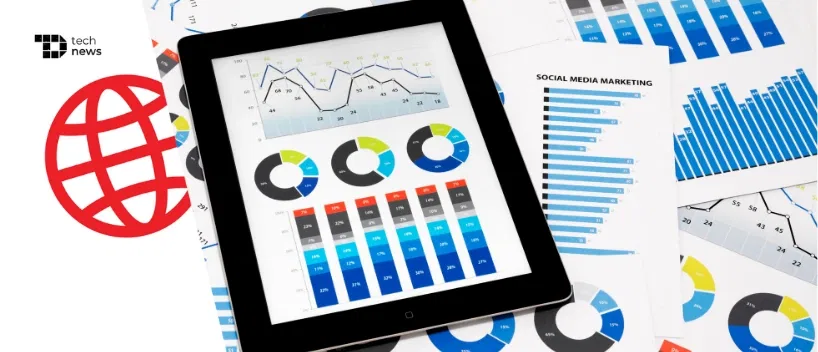
The marketing dashboard has evolved from a mirror to a microscope, and increasingly, to a crystal ball. Reports once told us what happened; now they predict what is next. According to Salesforce’s 2025 State of Marketing, 78% of high-performing teams use predictive analytics to guide decisions, while the Digital Marketing Institute notes that AI-led campaigns deliver up to 40% higher ROI than traditional methods.
The story the data tells is clear: AI-driven marketing is winning in terms of speed, precision, and adaptability. Traditional marketing still commands storytelling and trust, but it struggles to match AI’s foresight. The real evolution is not about metrics; it is about momentum. Marketing’s ‘why’ has shifted from proving outcomes to anticipating opportunity, from static reports to continuous intelligence.
Why ‘AI Vs. Traditional’ Misses the Point
The “AI Vs. traditional” debate is more like arguing whether brains matter or hearts matter more; marketing needs both to stay alive. In 2026, the smartest brands have stopped choosing sides and started building chemistry between the two. AI brings speed, scale, and predictive power; traditional marketing brings emotion, trust, and cultural intuition. Together, they make campaigns that feel human but think digital.
Take how Coca-Cola blends generative AI to co-create art with human designers, or how Nike’s campaigns merge machine-personalized experiences with storytelling that still gives you goosebumps. The future is not about automation replacing intuition; it is about amplifying it. The real winners are not tech-first or tradition-first; they are integration-first, mastering the balance between data and empathy.
Where Human Intuition Meets Machine Precision
The best marketers in 2026 are not choosing sides; they are building systems that think and feel. The Hybrid Playbook blends data discipline with human empathy through five steps:
-
Sense: Use AI to detect intent and real-time audience signals.
-
Interpret: Let humans translate those signals into context and insight.
-
Create: Co-develop ideas, machines for speed, humans for story.
-
Refine: Automate testing and learning for continuous optimization.
-
Empathize: Keep a human in every loop to ensure emotional alignment.
This Hybrid Framework forms an ever-learning flywheel, where algorithms drive accuracy and humans anchor meaning. The result? Campaigns that not only perform better but also resonate more deeply.
Conclusion
So, who is winning, AI-driven or traditional marketing?
Neither. And that is the point.
AI-driven marketing has rewritten the rules of precision, prediction, and performance. Traditional marketing remains a cornerstone of the industry, relying on trust, storytelling, and emotional resonance to drive results. But the real victory belongs to those who blend both, the integrators.
The future of marketing is not a duel between man and machine; it is a duet. AI will continue to power the scale, speed, and science of marketing, while humans will define the story, purpose, and soul behind it. The brands that thrive will not be the most automated or the most artistic; they will be the most aligned. Because the ultimate marketing advantage is not intelligence alone; it is the integration of intelligence with intent.
Fri, Nov 14, 2025

Enjoyed what you read? Great news – there’s a lot more to explore!
Dive into our content repository of the latest tech news, a diverse range of articles spanning introductory guides, product reviews, trends and more, along with engaging interviews, up-to-date AI blogs and hilarious tech memes!
Also explore our collection of branded insights via informative white papers, enlightening case studies, in-depth reports, educational videos and exciting events and webinars from leading global brands.
Head to the TechDogs homepage to Know Your World of technology today!
Disclaimer - Reference to any specific product, software or entity does not constitute an endorsement or recommendation by TechDogs nor should any data or content published be relied upon. The views expressed by TechDogs' members and guests are their own and their appearance on our site does not imply an endorsement of them or any entity they represent. Views and opinions expressed by TechDogs' Authors are those of the Authors and do not necessarily reflect the view of TechDogs or any of its officials. While we aim to provide valuable and helpful information, some content on TechDogs' site may not have been thoroughly reviewed for every detail or aspect. We encourage users to verify any information independently where necessary.
Loading comments...