
Microsoft’s stock fell 19% in June, marking its worst monthly performance since the dot-com crash era, as investors weighed heavy AI (artificial intelligence) infrastructure spending, slower Azure growth, and reports of another major round of layoffs.
TL;DR
- Microsoft stock dropped 19% in June, its steepest monthly fall since December 2000.
- The company lost about $650 billion in market value last month.
- Investors are watching Microsoft’s estimated $190 billion AI infrastructure spending this year.
- A third major layoff round is reportedly expected, affecting fewer than 5,500 people.
Microsoft Stock Posts Its Worst Month Since 2000 As Market Value Slides
Microsoft’s June performance gave Wall Street a sharp reminder that even the biggest AI winners are not immune to investor pressure.
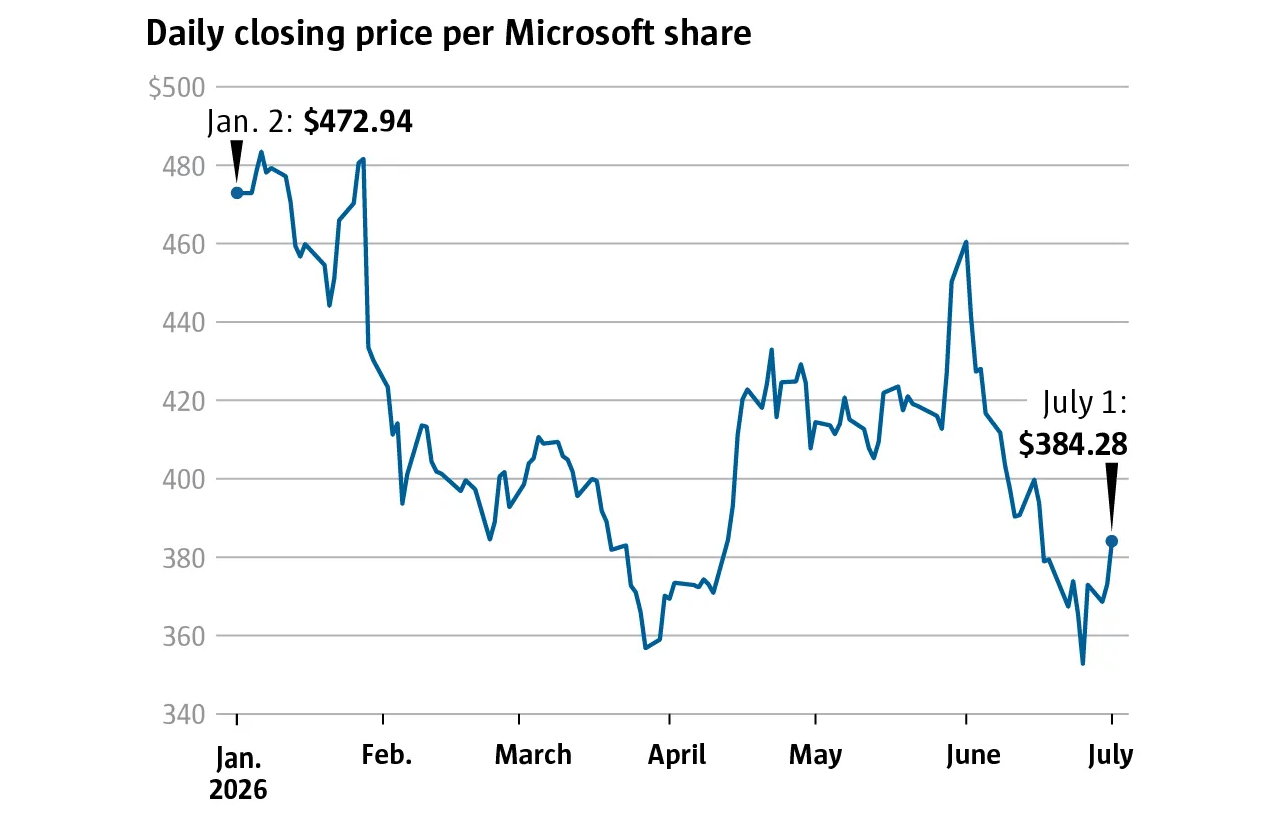
The company’s stock fell 19% last month, its worst monthly decline since December 2000, when its share price dropped 23.4% during the aftermath of the dot-com bubble. June’s fall was also steeper than Microsoft’s 16.5% monthly drop in February 2008, shortly before the financial crisis intensified.
The decline erased roughly $650 billion from Microsoft’s market value in June alone, adding pressure to a fiscal year in which the company has lost more than $800 billion in market value. Its share price closed Tuesday at $373.02, far below its record high of around $542.07 on Oct. 28.
While other Big Tech stocks also had a rough June, including Amazon, NVIDIA, Meta, and Google parent Alphabet, Microsoft’s drop outpaced the group.
Microsoft’s AI Spending And Azure Growth Are Testing Investor Confidence
The selloff comes at a complicated moment for Microsoft. The company remains one of the biggest forces in enterprise technology and artificial intelligence, helped by its early investments and partnerships with OpenAI.
Yet the same AI race that strengthened Microsoft’s market position is now raising questions from investors. The biggest concern is spending.
Microsoft’s investments in AI infrastructure, including computer chips and data centers, rose to $88 billion during its 2025 fiscal year, which ended in June last year. The company’s capital expenditure plans have continued to climb, with spending expected to reach about $190 billion this calendar year.
That scale of investment has made Wall Street more cautious, especially as the timeline for returns on AI spending remains unclear. Investors are also watching whether AI could reshape software sales in ways that affect a major part of Microsoft’s business.
Microsoft Revenue Is Still Strong, But Cloud Growth Has Not Fully Reassured Investors
Microsoft’s stock slide does not mean its business has stopped growing. During the first nine months of its 2026 fiscal year, from July 2025 through March, the company reported more than $241 billion in revenue and nearly $98 billion in profit.
Still, investors have focused on whether Microsoft’s cloud business is growing fast enough to justify its AI spending push.
The company has reported strong cloud revenue, but its year-over-year Azure growth has not fully satisfied the market. Earlier this year, Microsoft said Azure growth had slowed, with Chief Financial Officer Amy Hood attributing the softer pace to supply constraints as more advanced chips were directed toward research and development.
That has created a gap between Microsoft’s current financial strength and investor expectations for future AI-driven returns.
Topics For More Insights
- Microsoft Surface Pro 12 And Laptop 8 Breakdown: Pricing And Specifications
- Microsoft Sued By Shareholders Over AI Infrastructure Costs And Azure Cloud Growth!
- Microsoft’s Majorana 2 Quantum Chip Gets 1,000x Reliability Boost With Agentic AI
- Microsoft Build 2026 Reveals AI Agents, RTX Dev Box, Smarter Windows And Majorana 2 Quantum Chip
Microsoft Layoffs Reportedly Loom As A New Fiscal Year Begins
As Microsoft begins its new fiscal year, the company is also expected to move forward with another round of job cuts.
According to reports citing Business Insider sources, Microsoft is expected to announce its third major layoff round in over a year next week. The cuts are expected to affect fewer than 5,500 employees, primarily across sales, consulting, and the Xbox gaming division.
