
Artificial Intelligence
Microsoft Ignite 2026 Unveils New AI Models, Copilot Workspaces, Security Agents, And More
Updated on Wed, Nov 18, 2026
Share
Microsoft wants artificial intelligence (AI) to do more than answer questions.
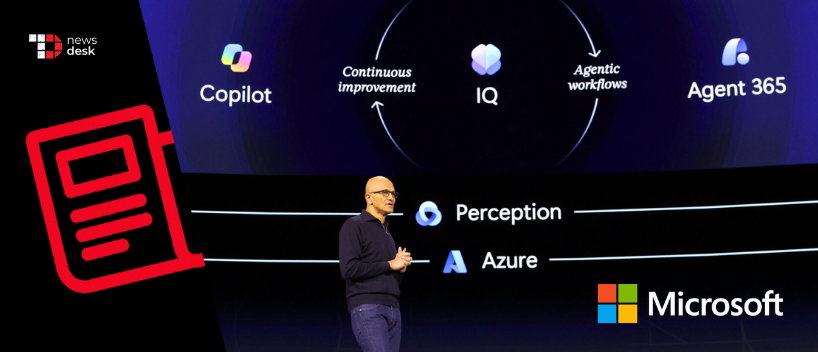
At Microsoft Ignite 2026, the company unveiled new AI models, collaborative Copilot tools, cybersecurity agents, and business intelligence capabilities designed to help people complete work faster while giving organizations greater control over their AI investments.
The announcements, made at the November 17 opening keynote in San Francisco, also introduced new approaches to AI transparency, governance, and spending. Here's what Microsoft has brought to the table.
TL;DR
- Microsoft introduced Copilot Workspaces for employees and AI agents to collaborate in shared environments.
- Microsoft IQ connects company knowledge across platforms to make AI agents more useful.
- New MAI models target coding, cybersecurity, image generation, and voice interactions.
- Microsoft Perception coordinates AI security agents, while Agent 365 tracks AI spending and business value.
- A new transparency initiative involves more than 40 organizations.
Microsoft Copilot Workspaces Brings Employees And AI Agents Together
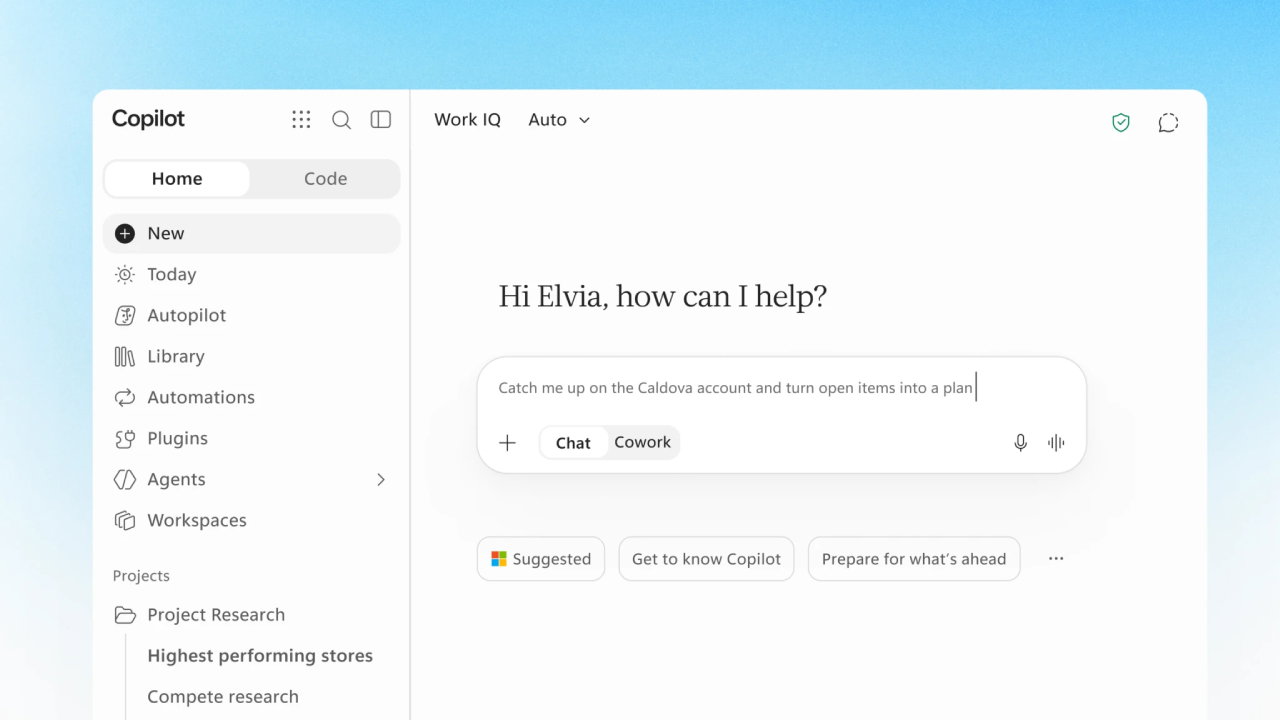
Working with AI has largely been a one-person experience. Microsoft wants to change that through Copilot Workspaces, where employees and AI agents collaborate on projects rather than operate separately.
The feature brings documents, conversations, team members, and AI agents into a shared environment. An agent could prepare a report, employees could review it and suggest changes, and the agent could continue working without everyone having to explain the project again.
Workspaces is available through Microsoft's Frontier program, with collaboration extending into Microsoft Teams.
Meanwhile, Copilot Home and Office in Copilot are now generally available, bringing conversations, documents, and everyday productivity tasks closer together.
This builds on Microsoft's previously announced plans to combine Copilot's AI capabilities into one experience.
Microsoft IQ Connects Company Knowledge To Make AI Agents Smarter
Of course, AI agents need more than instructions to perform useful work. They also need to understand the business they're helping.
That's where Microsoft IQ enters the picture.
The new enterprise platform connects knowledge across Microsoft 365, Fabric, Foundry, and external systems using more than 350 third-party connectors.
Businesses can turn their internal expertise, rules, and processes into reusable, governed plugins that different AI agents can access.
For example, a customer service agent could reference approved company policies, while another agent uses the same information to prepare reports or resolve workplace requests.
Instead of repeatedly teaching AI how a business operates, organizations can create a shared foundation of knowledge for their agents.
Microsoft Unveils New MAI Models For Coding, Images, Cybersecurity, And Voice AI
Microsoft also introduced new AI models focused on improving performance while reducing costs.
MAI Code 2 and Code 2 Flash help developers create applications, identify errors, and improve software more efficiently. Code 2 can handle complex debugging and changes across multiple files, reducing the manual effort involved in software development.
Meanwhile, MAI Cyber 2 Flash helps cybersecurity teams discover vulnerabilities, investigate threats, and recommend fixes at a lower computational cost.
For creative work, MAI Image 2.7 targets improved image generation and editing, potentially helping designers, marketers, and content creators produce visuals with less effort. Microsoft also introduced Image 2.7 Flash and Canvas for interactive image creation.
MAI Realtime 1 focuses on more natural voice-based AI interactions, including handling interruptions and conversations, with pricing starting at $0.01 per audio minute.
Microsoft additionally highlighted Dragon Copilot Transcribe for healthcare documentation and Decision 1.1 for faster, less expensive AI decision-making.
Supporting these models is Microsoft's Maia 200 accelerator, already running production AI workloads to improve infrastructure efficiency.
Microsoft's performance comparisons are based on its published evaluations, and actual results may vary by application.
Microsoft Perception Uses AI Security Agents To Detect And Fix Threats
As AI becomes more capable, Microsoft is also strengthening how organizations defend their systems.
Microsoft Perception, now generally available, brings three types of AI security agents together.
Red agents simulate attacks to identify weaknesses, blue agents investigate suspicious activity, and green agents help resolve vulnerabilities.
Rather than leaving security teams to coordinate these activities manually, Perception allows agents to work together through automated response playbooks.
Organizations can establish safeguards and require human approval before significant actions take place.
The launch extends Microsoft's earlier efforts to detect and contain security risks involving AI agents.
Microsoft Agent 365 Business Analytics Helps Companies Track AI Spending And ROI
Deploying AI across an organization can be expensive. Understanding whether those investments actually deliver results is another challenge.
Microsoft's Agent 365 Business Analytics aims to address both.
The platform connects AI spending with usage and business outcomes, allowing leaders to examine metrics such as assisted work hours, task success rates, and user satisfaction.
Companies can identify expensive operations, generate reports, and evaluate where AI investments are delivering measurable value.
Agent 365 Cost Management also helps IT administrators introduce spending policies, monitor costs, and receive alerts.
Together, these capabilities aim to make AI investments easier to justify and manage as adoption grows.
Topics For More Insights
- Microsoft Confirms 2026 Copilot Super App Combining Chat, Code, And Agents
- Microsoft Expands Project Perception To Detect And Contain Security Risks From AI Agents
- Microsoft Launches Decision-1 AI Model Built On Qwen3.5-9B For Faster, Cheaper Decisions
- All You Need To Know About Microsoft's Humanist AI
Microsoft AI Transparency Initiative Aims To Make AI Agents More Accountable
Finally, Microsoft introduced the AI Transparency Initiative, bringing together more than 40 organizations to develop common approaches to AI security, transparency, and governance.
The initiative aims to help businesses understand what AI agents access, which actions they perform, and whether those actions can be independently verified.
Microsoft is also expanding its collaboration with the National Institute of Standards and Technology (NIST) on agent standards.
The objective is to help organizations maintain oversight of AI systems regardless of which models or providers they use.
Across Ignite 2026, Microsoft's message is becoming clear: AI is moving from assisting individual employees toward performing tasks across entire organizations, with businesses needing better ways to manage the work, security, and costs involved.
First published on Wed, Nov 18, 2026

Enjoyed what you read? Great news – there’s a lot more to explore!
Dive into our content repository of the latest tech news, a diverse range of articles spanning introductory guides, product reviews, trends and more, along with engaging interviews, up-to-date AI blogs and hilarious tech memes!
Also explore our collection of branded insights via informative white papers, enlightening case studies, in-depth reports, educational videos and exciting events and webinars from leading global brands.
Head to the TechDogs homepage to Know Your World of technology today!
Disclaimer - Reference to any specific product, software or entity does not constitute an endorsement or recommendation by TechDogs nor should any data or content published be relied upon. The views expressed by TechDogs' members and guests are their own and their appearance on our site does not imply an endorsement of them or any entity they represent. Views and opinions expressed by TechDogs' Authors are those of the Authors and do not necessarily reflect the view of TechDogs or any of its officials. While we aim to provide valuable and helpful information, some content on TechDogs' site may not have been thoroughly reviewed for every detail or aspect. We encourage users to verify any information independently where necessary.
Loading comments...