
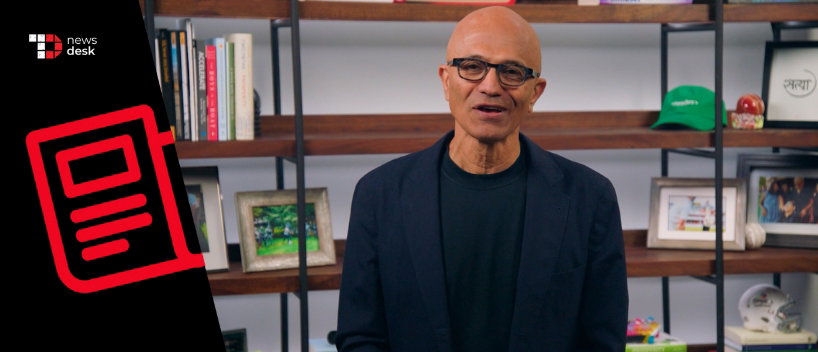
Microsoft CEO Satya Nadella has issued a stern warning to companies using AI: trust one provider with too much data, and the business may surrender its competitive intelligence.
The irony: Microsoft invests in OpenAI and Anthropic while Nadella tells enterprises not to depend on AI labs.
TL;DR
- Nadella says firms that outsource their thinking to one AI provider may not survive.
- Companies should retain prompts, metadata, memory, feedback, and usage data.
- Enterprises should separate AI tools from models so they can switch providers.
- The warning supports infrastructure Microsoft now sells.
Why Satya Nadella Says AI-Dependent Companies May Not Survive
On CNN’s “Fareed Zakaria GPS,” Nadella said businesses must guard everything they hand AI providers, from data and prompts to corrections and workflow context.
“Any firm that doesn’t have this control, I will claim will not remain a firm because you’ve essentially outsourced your thinking,” he said.
His safeguard is retaining model-use metadata, then using it to train weights or an open model. Companies should keep context, memory, and coding harnesses separate from the model.
That setup would let enterprises switch models if a provider changes terms, raises prices, or launches a competing service.
Why Nadella Wants AI Coding Tools Separated From Models
Nadella warned against depending on provider-controlled coding harnesses such as Anthropic’s Claude Code and OpenAI’s ChatGPT Codex.
“By keeping the harness separate from the model and the context and memory separate from the model, you absolutely can use multiple models for what they’re great at,” he said.
Microsoft benefits because its cloud business sells the orchestration and infrastructure Nadella recommends, making the warning self-serving as coding agents drive enterprise AI spending.
Even so, his concern extends beyond cost. As AI agents access workflows and decisions, model providers could learn enough to offer competing services, turning a vendor into a rival.
Topics For More Insights
- Microsoft Surface Pro 12 And Laptop 8 Breakdown: Pricing And Specifications
- Nvidia, Microsoft Launch Open Secure AI Alliance Following Hugging Face Breach
- Microsoft Reportedly Tests Kimi K3 For Copilot As Azure Support Takes Shape
- Microsoft Arms Sales Team To Challenge OpenAI And Anthropic With Full-Stack AI Pitch
How The Reverse Information Paradox Explains Enterprise AI Risk
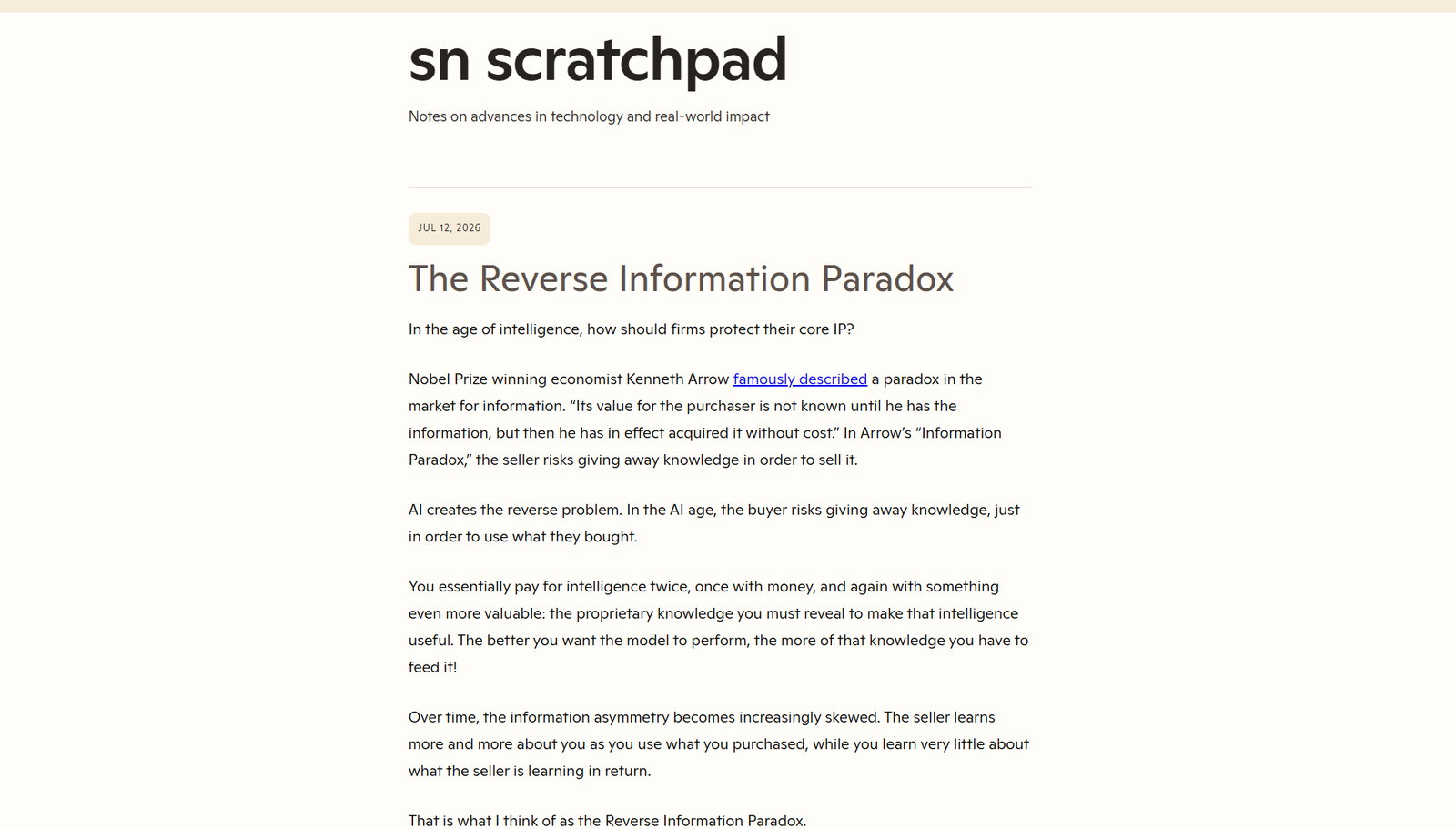
Nadella previously called this the “Reverse Information Paradox.” In traditional information markets, sellers risk giving away knowledge before buyers understand its value. In AI, buyers risk giving away knowledge by using what they purchased.
Companies pay twice, first with money and then with the proprietary knowledge needed to make the system useful. The more context they provide, the more capable the model becomes, while the provider learns more about the customer.
Prompts, corrections, evaluations, traces, memory, and adapted weights create intelligence exhaust. That material can reveal how a company thinks, what it values, and how it defines success.
His answer is a trust boundary based on control, capability, choice, cost, and compounding. Enterprises should own evaluations, retain institutional memory, build private learning environments, decouple orchestration from any one model, and preserve the ability to operate if a provider is removed.
For consumers, Nadella drew a different line. He said sharing data can be part of the value exchange for free services. For companies, giving away how they learn could mean surrendering the advantage that keeps them competitive.
