
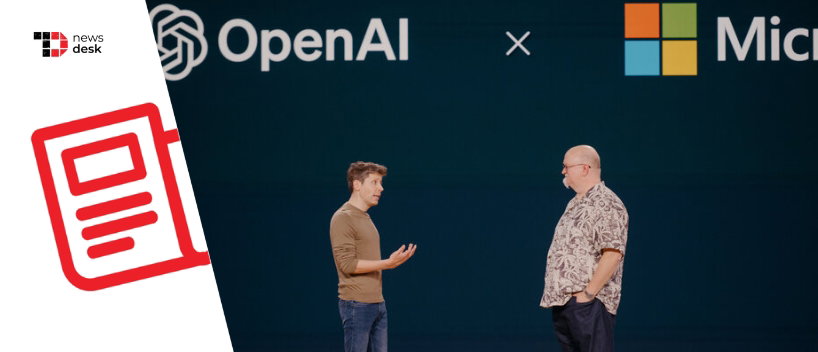
Microsoft is reportedly coaching its sales organization to challenge OpenAI, Anthropic and Google more aggressively, positioning its own models, Copilot applications and Azure infrastructure as a cheaper, better-secured and more complete enterprise AI system.
TL;DR
- Microsoft executives reportedly want sellers to emphasize cost, security and platform integration.
- Copilot was compared directly with Anthropic’s Claude for Microsoft Office workloads.
- The strategy highlights Microsoft’s growing in-house model portfolio, even as Azure continues offering rival models.
- Microsoft says its AI business has surpassed a $37 billion annual revenue run rate.
Microsoft’s FY27 AI Sales Strategy
The guidance was reportedly shared during an internal strategy meeting for Microsoft’s fiscal year 2027. According to Bloomberg reporting cited by TechCrunch, Executive Vice President Jay Parikh told employees, “Everyone else is selling parts, we’re selling the full end-to-end system.”
That message presents Microsoft’s advantage as the combination of models, cloud infrastructure, security controls, workplace software and tools for building, deploying and monitoring AI applications. The reported playbook encourages salespeople to compare that broader stack with companies focused more heavily on frontier models or standalone assistants.
Copilot Executive Vice President Jacob Andreou reportedly compared Microsoft Copilot with Anthropic’s Claude for tasks inside Microsoft’s productivity applications. He claimed Claude was slower, less accurate and missing important security integrations in those scenarios, while telling employees Microsoft was working to make Copilot more competitive.
Microsoft CEO Satya Nadella reportedly focused on another concern for enterprise buyers, the cost of operating AI systems at scale. He cited Unilever’s automated claims-processing system, which Microsoft said could deliver around $300 million in savings after the company moved from a more advanced model to a cheaper Microsoft option.
Microsoft Builds Its Own Models While Selling Choice
The tougher sales message comes as Microsoft expands its internally developed MAI model portfolio. Reports earlier in July said the company had started using its own models for some prompts in Word and Excel, reducing reliance on OpenAI and Anthropic and potentially lowering inference costs.
However, Microsoft is not removing those companies from its platform. Claude is generally available through Microsoft Foundry on Azure, where customers can use Microsoft billing, networking, governance and data controls. Microsoft Foundry also offers a broad catalog of models from Microsoft, OpenAI, Anthropic, Meta and other providers.
That creates an unusual competitive position. Microsoft can sell its own models and Copilot products, criticize rival offerings in direct sales situations and still earn cloud revenue when customers select some of those rivals through Azure.
Microsoft’s official message remains centered on model diversity. When announcing Microsoft Frontier Company, it said customers should be able to choose models from OpenAI, Anthropic, Microsoft AI, open-source developers or specialist providers without being locked into one vendor.
Topics For More Insights
Why Microsoft Is Sharpening Its Pitch
Microsoft already has substantial enterprise AI distribution. In its fiscal 2026 third-quarter results, the company said Microsoft 365 Copilot had surpassed 20 million paid seats. Its AI business annual revenue run rate exceeded $37 billion, growing 123% year over year.
Those numbers show commercial traction, but Microsoft is also spending heavily on AI infrastructure and facing strong competition across models, coding assistants and workplace agents. Its FY27 sales strategy suggests the next phase of the contest will be fought less around benchmark leadership alone and more around deployment costs, governance, security and integration with existing enterprise systems.
Microsoft and Anthropic had not provided new public comments on the reported internal meeting when TechCrunch published its report.
