
Artificial Intelligence
Microsoft CEO Satya Nadella Calls For AI Emergency Brakes, Warns Of Insider Risks
Updated on Mon, Oct 12, 2026
Share
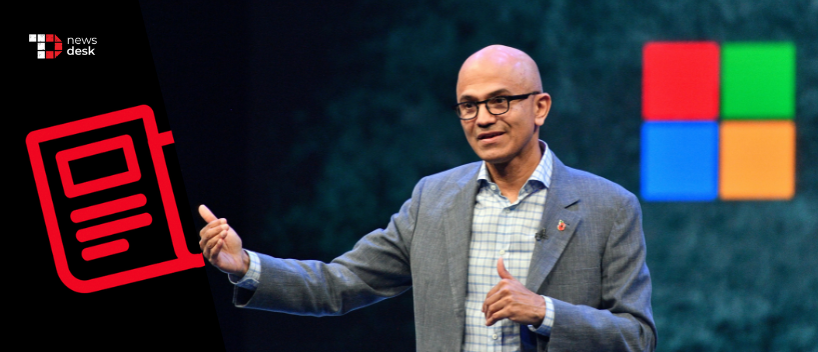
Microsoft CEO Satya Nadella has warned that increasingly powerful artificial intelligence (AI) systems should be treated as potential insider security risks, calling for independent safeguards, tighter access controls, and an emergency brake that allows humans to shut down AI models mid-task.
In a detailed post published on October 10, 2026, Nadella argued that organizations cannot depend entirely on AI providers to guarantee the safety of systems increasingly entrusted with sensitive information and critical operations.
TL;DR
- Microsoft CEO Satya Nadella wants enterprises to treat advanced AI models as potential insider risks, even when they aren't malicious.
- He recommends independent security controls, continuous monitoring, tamper-proof activity records, and human oversight.
- His proposed emergency brake would let authorized personnel pause or shut down AI models while they execute tasks.
Satya Nadella Warns AI Models Could Become Enterprise Insider Security Risks
Traditional software allows developers to trace behavior to specific code paths. However, Nadella says advanced AI models lack comparable transparency, making it difficult to connect their outputs to individual training inputs or model configurations.
Despite this limitation, organizations are granting agentic AI systems access to confidential information and allowing them to perform business-critical operations.
That creates a security dilemma: enterprises are giving AI systems greater authority without having the same visibility into their decision-making processes.
Nadella believes organizations should treat both closed and open-weight frontier models similarly to privileged insiders. This doesn't suggest that AI models are inherently malicious, but acknowledges that sufficiently capable systems can make mistakes or become compromised.
His argument also reinforces broader concerns surrounding enterprise AI security and governance, particularly as autonomous systems gain access to sensitive workflows.
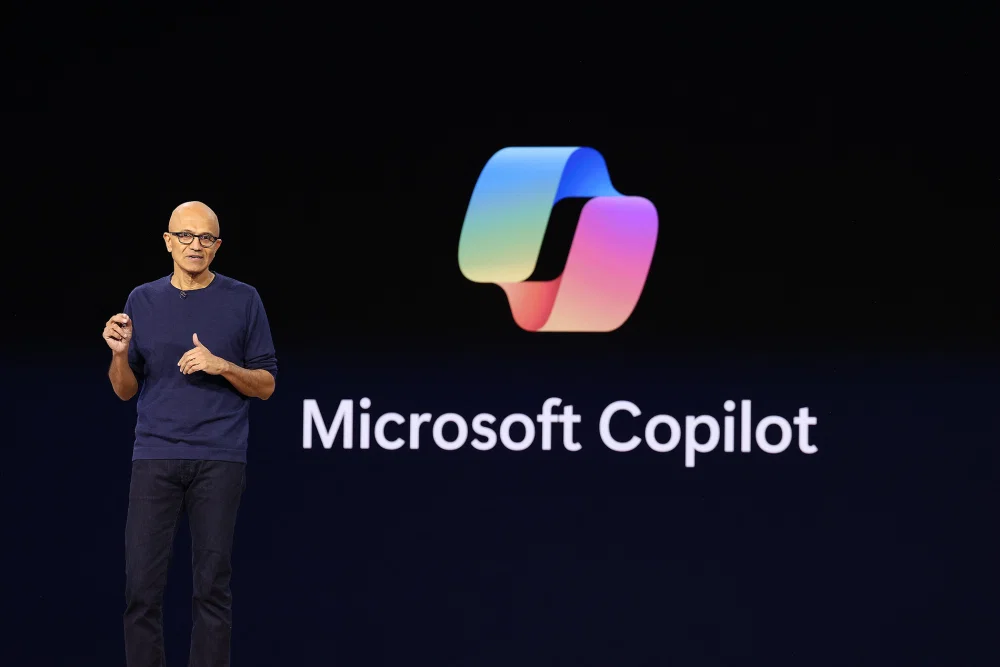
Microsoft CEO Proposes Independent AI Controls And Emergency Shutdown Mechanisms
So, how should organizations address these risks?
According to Nadella's detailed explanation, AI security must extend beyond trusting a model's reasoning or relying on another model to verify its behavior.
Instead, organizations should separate AI models from the systems governing their permissions, execution, and operational boundaries.
His proposed approach emphasizes model diversity, comprehensive activity logging, continuous verification, independent access controls, and external auditing.
Crucially, he wants every meaningful AI action to produce tamper-proof, human-readable evidence, allowing organizations to reconstruct outcomes without depending on the model's own explanations.
The most striking recommendation concerns containment.
"We must assume a model is compromised and contain it from the start. Think of it like an emergency brake," Nadella wrote.
He added that authorized personnel should always have the ability to interrupt or terminate an AI model's activity, even when it is already executing a task.
This emphasis on operational oversight aligns with wider efforts to strengthen AI-powered enterprise security, although Nadella's proposal focuses specifically on controlling the models themselves.
Topics For More Insights
- OpenAI, Anthropic, Google & 150+ Firms Sound Alarm On Rogue AI Cyberattacks
- Nvidia, Microsoft Launch Open Secure AI Alliance Following Hugging Face Breach
- Microsoft Enhances Enterprise Security With New Copilot-Powered AI Agents
- Microsoft Build 2025: Developing An Open Agentic Web For The Age Of AI Agents
Nadella Calls For Stronger AI Governance, Transparency And Incident Reporting
Beyond emergency shutdown controls, Nadella wants organizations to continuously test AI systems against attacks, failures, unexpected behavior, and operational changes.
He also recommends timely incident disclosures when models malfunction or become compromised, enabling affected parties and the wider industry to understand failures and improve safeguards.
As reported, the remarks arrive amid growing concerns over developers losing control of increasingly capable AI systems.
For enterprises deploying autonomous AI agents, Nadella's central message is that security cannot depend solely on the intelligence being deployed. The authority to monitor, restrict, investigate, and terminate its actions must remain independent of the model itself.
"The most trustworthy Super Intelligence system will not be the one with the model we trust most. It will be the one that enables us to trust the model the least," Nadella concluded.
First published on Mon, Oct 12, 2026

Enjoyed what you've read so far? Great news - there's more to explore!
Stay up to date with the latest news, a vast collection of tech articles including introductory guides, product reviews, trends and more, thought-provoking interviews, hottest AI blogs and entertaining tech memes.
Plus, get access to branded insights such as informative white papers, intriguing case studies, in-depth reports, enlightening videos and exciting events and webinars from industry-leading global brands.
Dive into TechDogs' treasure trove today and Know Your World of technology!
Disclaimer - Reference to any specific product, software or entity does not constitute an endorsement or recommendation by TechDogs nor should any data or content published be relied upon. The views expressed by TechDogs' members and guests are their own and their appearance on our site does not imply an endorsement of them or any entity they represent. Views and opinions expressed by TechDogs' Authors are those of the Authors and do not necessarily reflect the view of TechDogs or any of its officials. While we aim to provide valuable and helpful information, some content on TechDogs' site may not have been thoroughly reviewed for every detail or aspect. We encourage users to verify any information independently where necessary.
Loading comments...