
An adult birthday may no longer be enough to avoid Instagram's teen restrictions. Meta is expanding AI-powered age estimation worldwide, saying millions more teenagers will receive automatic protections even when their profiles claim they are adults.
TL;DR
- Meta is expanding Instagram's AI age-estimation technology globally to identify teenagers who entered adult birthdays.
- Suspected teens will receive built-in protections governing contacts, content, and time spent on Meta's apps.
- US parents will receive Instagram guidance this month, while Facebook, Threads, and Apple's Australian age-range signal feature in Meta's wider plans.
Meta's Instagram AI Age Detection Targets Teens Using Adult Birthdays
Teen Account safeguards already restrict who can contact younger users, the content they see, and their time on Meta's apps. However, those protections depend on recognizing someone's actual age rather than simply accepting the birthday entered during registration.
Meta says its AI can identify accounts likely to belong to teenagers even when their profiles list adult birthdays. Those users can then be placed under protections automatically, building on the company's earlier global expansion of 13+ Teen Account content controls.
The announcement does not supply fresh accuracy rates or an exact figure beyond millions for the newly covered Instagram audience. Nor does it announce identity checks for every Instagram user.
Meta Brings Instagram Age Guidance To US Parents And Plans Threads Rollout
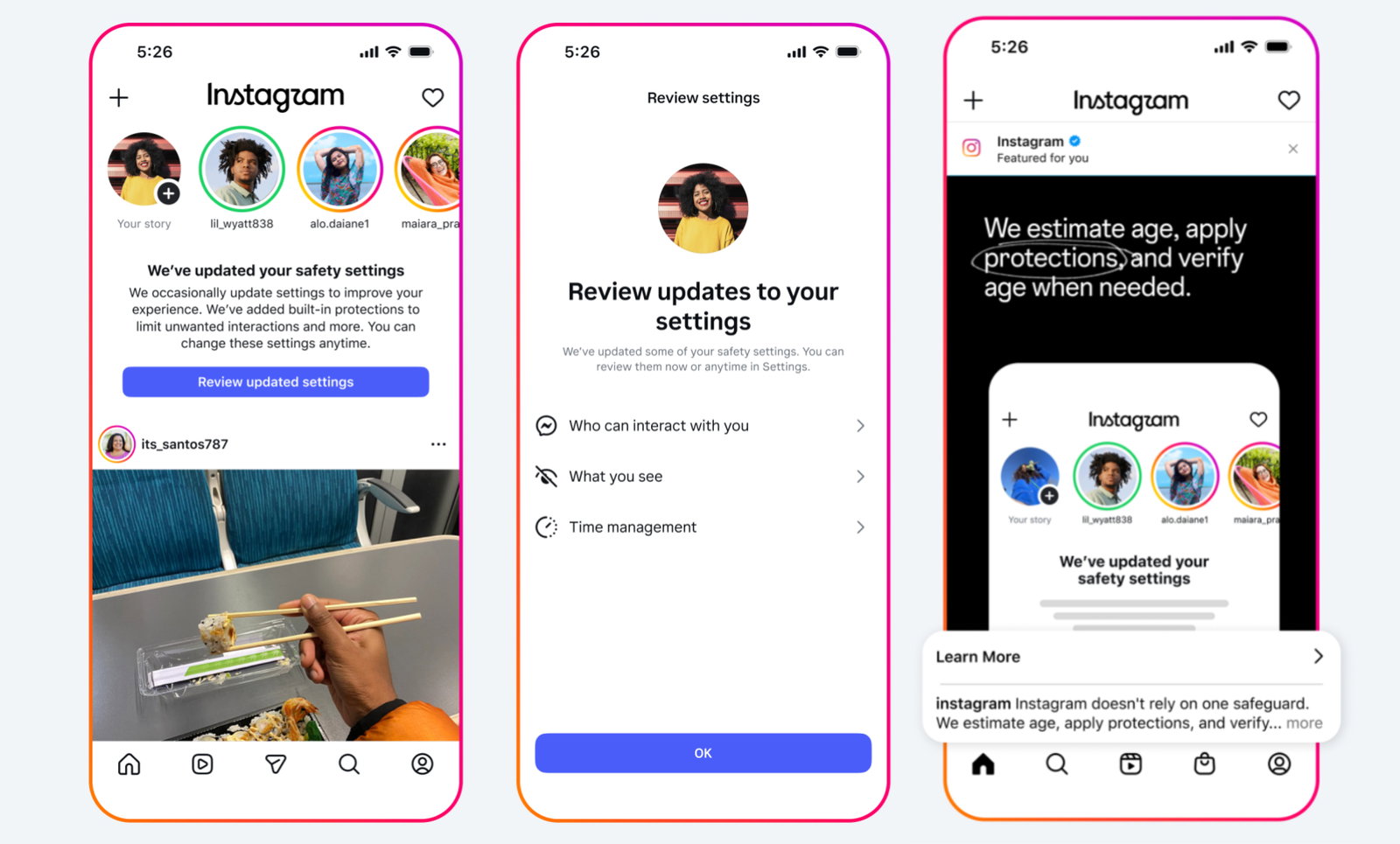
Beginning in November, US parents will see an Instagram in-feed video explaining Meta's approach to age-appropriate safeguards and how families can ensure their teenagers' profile ages are correct.
The video links to guidance by Larry Magid, internet safety advocate and President and CEO of ConnectSafely. It explains Meta's efforts to keep children under 13 off its platforms, provide suitable experiences for teens, and involve parents.
Unlike the US-only notices, that guidance is available to parents worldwide.
The expansion does not end with Instagram. Facebook's AI rollout remains underway, and Meta intends to begin introducing a similar system globally on Threads later in 2026.
Meta Adds Apple's Age-Range Signal To Teen Checks In Australia
In Australia, Meta has started using Apple's age-range signal to complement its own estimates. When setting up a teenager's smartphone, parents may choose to have the app store confirm an age range, which Apple then passes to a developer whenever the teenager downloads an app.
This helps developers determine whether a user meets an app's age requirements without each service performing a separate check.
Meta says adoption is voluntary but warns that optional participation by app stores and developers could produce uneven protections.
The move adds another layer to the age-assurance debate surrounding Australia's under-16 social media rules. The Apple signal is an additional method, not a replacement for Meta's AI.
Topics For More Insights
- Kids Are Fooling AI Age Checks With Fake Mustaches As Online Safety Laws Face Reality Test
- WhatsApp Adds Parental Controls For Teen Accounts, But Messages Stay Private
- One-Fifth Of Australian Teens Still Use TikTok And Snapchat Despite Social Media Ban
- Meta AI Now Alerts Parents When Teen Chats Signal Suicide Or Self-Harm Risk
Meta Pushes App Store Age Verification And Challenges TikTok And YouTube
Meta favors age verification and parental-consent requirements at app stores, arguing that a reusable device-based signal would be more consistent and privacy-preserving than repeated platform-level checks. It says its own AI could serve as a fallback when an age signal is inaccurate.
The company points to different online safety laws worldwide. Some, it says, require intrusive verification for everyone, while others leave platforms to determine ages without clear guidance on avoiding sensitive data such as government IDs.
Under its agreement with 52 bipartisan attorneys general across US states, territories, and the District of Columbia, Meta says it is investing in better detection of accounts potentially belonging to children under 13, while strengthening identification of users aged 13 to 17.
Meta is also urging TikTok and YouTube to adopt similar proactive age-estimation practices, taking the debate beyond Instagram to the wider social media industry.


