

Wearable Technology
Meta Testing Super Sensing AI Glasses: Will Always-On Cameras Kill Privacy?
Share
TL;DR
-
According to the Financial Times, a prototype would capture audio continuously and take photos every few seconds so an AI assistant could help the wearer recall what they saw or heard.
-
Meta executives are reportedly considering keeping the capture LED off during super sensing, although the plan could still change.
-
Omdia estimated that Meta shipped 7.4 million AI glasses in 2025, up 281.3%; Q1 2026 share estimates ranged from 69.2% at IDC to nearly 84% at Counterpoint because the firms track the category differently.
-
The feature could reportedly reach existing Ray-Ban Meta glasses through a software update, so a new purchase might not be required.
-
A March 2026 class action alleges private imagery and audio from Meta AI glasses were routed to third-party annotators without express consent, while recording-law requirements vary by state.
Introduction
Remember The Truman Show? Jim Carrey's character spent 30 years being filmed every waking moment inside a giant TV set, the only person on Earth who did not know the cameras were rolling. Turns out you do not need a fake town and a hidden production crew to pull that off anymore. A $299 pair of glasses might do it.
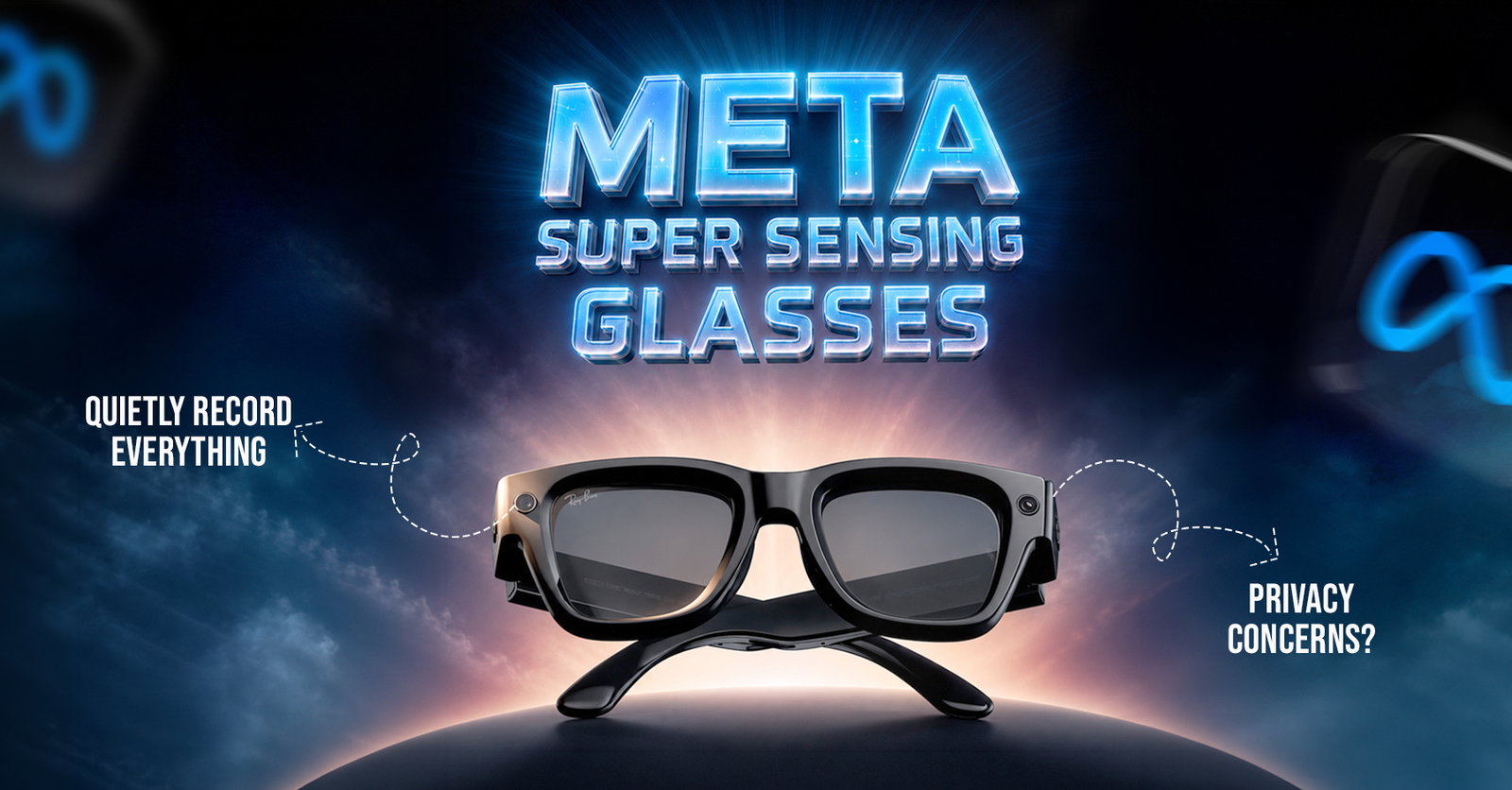
Meta is reportedly testing "super sensing," an AI mode for its next Ray-Ban glasses that snaps a photo every few seconds and records audio continuously all day, according to a Financial Times report published on July 9, 2026. The detail worrying privacy researchers: the small white light-emitting diode (LED) that currently tells bystanders when Meta's glasses are recording may not turn on for super sensing at all.
Truman never got a warning light either. Here is what Meta is actually building.
What Are Meta Super Sensing AI Smart Glasses?
Super sensing is Meta's internal name for a proposed AI mode that would keep gathering audio and frequent visual snapshots in the background for extended periods. The resulting data could let a wearer ask where they left their keys or what was said earlier in the day. Unlike today's user-triggered interactions, the reported design is intended to make the assistant more continuously aware of the wearer's surroundings.
Meta has not announced the feature. It told the Financial Times that it does not comment on internal prototypes and that its approach is built with privacy "from the ground up." Earlier reporting linked the codenames Aperol and Bellini to next-generation Meta glasses, but Meta has not announced either product or a shipping date.
How Meta Always-On Glasses Track Surroundings Via Metadata
Meta is reportedly exploring several ways to make the feature work without permanently storing every photo or audio clip.
-
Frequent Image Capture
The glasses could take photos every few seconds instead of trying to record video throughout the day.
-
Continuous Audio
The microphone could collect audio context that helps the AI understand conversations and events.
-
Metadata Processing
The system may extract information about objects, places, people or activities instead of retaining every original file.
-
AI Recall
Meta AI could search that information when users ask where they left an item or what happened earlier.
-
Possible Software Update
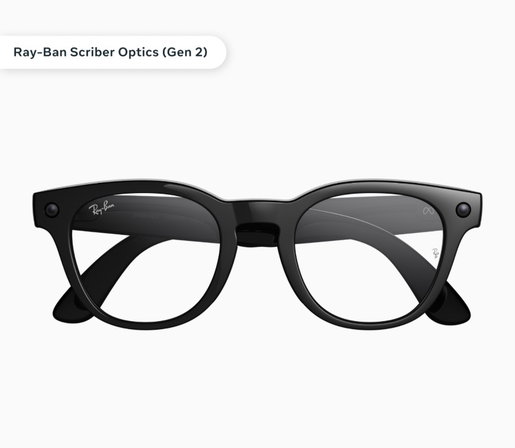
The feature could potentially reach existing Meta Ray-Ban smart glasses without requiring new hardware.
-
Capture-Light Debate
Meta is reportedly considering whether the LED should activate while super sensing is running.
Metadata can still reveal sensitive details about a person's activities, location and interactions. Deleting the original image does not automatically remove every privacy risk associated with the information extracted from it.
The Case For Always-On AI
Always-on smart glasses could offer genuine benefits. An AI assistant with access to recent visual and audio context could help users remember tasks, locate missing objects and understand unfamiliar surroundings.
The technology could also support people with memory, attention or vision-related needs. However, these benefits remain hypothetical because Meta has not confirmed that super sensing will become a public feature.
The challenge is that the glasses would collect information about more than their owner. Anyone standing nearby could become part of the system's visual or audio context without knowingly participating.
Ray-Ban Meta Privacy Issues: What Bystanders Should Know
Meta's current glasses already lack any visual signal when AI is analyzing what a wearer sees. A class action filed in March 2026, Bartone v. Meta Platforms, alleges intimate recordings from inside people's homes were reviewed by outsourced contractors in Kenya as part of an AI training pipeline, with at least one bystander recorded without her knowledge or consent.
Turning off the LED during always-on capture removes bystanders' only chance of knowing they are on camera, and legal experts warn this collides with existing law:
-
All-Party Consent States
Federal law generally allows a participant to record a conversation, but about 11 states primarily require every party's consent, with exceptions and additional rules that vary by context.
-
Biometric Data Rules
Illinois's Biometric Information Privacy Act requires written consent before biometric data is collected, with penalties of up to $5,000 per intentional violation.
-
Facial Recognition Backlash
Meta drew separate criticism over a facial recognition feature it was reportedly exploring. In April 2026, the American Civil Liberties Union (ACLU) led a coalition of more than 75 organizations demanding Meta abandon the idea. "The principle here is quite simple: Your glasses should not know my name," said Cody Venzke, senior staff attorney for the ACLU.

Meta later removed unactivated "NameTag" face-recognition code from the Meta AI app after WIRED identified it. Meta described the feature as exploratory and said no final decision had been made.
Regulators And Institutions Are Already Reacting
Governments are not waiting for Meta to finish deciding:
-
New York And Pennsylvania courts
New York's Unified Court System reportedly ordered a statewide ban effective July 20, 2026. Philadelphia's First Judicial District separately prohibited recording-capable smart glasses in its facilities without prior written authorization.
-
California Legislation
State Senator Eloise Gomez Reyes introduced Senate Bill 1130, the Wearable Device Privacy Protection Act, targeting secret recording inside businesses and manufacturers who help disable recording indicators.
-
EU AI Act
The law already prohibits AI systems that perform real-time biometric categorization in public spaces, with full enforcement of related obligations expected around August 2026.
The U.S. still has no single comprehensive federal consumer privacy law. Instead, sector-specific federal rules and a growing patchwork of state laws would apply to smart-glasses data and recording practices.
What The Backlash Says About The Category
Meta is not losing this market, it is running away with it:
-
Meta shipped roughly 7.4 million Ray-Ban glasses in 2025, a 281% year-over-year jump per Omdia data.
-
Meta held between 69% and 84% of the global smart glasses market in Q1 2026, depending on whether IDC or Counterpoint Research is doing the counting.
-
Ray-Ban Meta glasses generated more hardware revenue in 2025 than Meta's own Quest headsets for the first time.
A niche gadget's privacy settings may be a footnote; a device category with millions of units in circulation is a policy question. Reports of people using camera glasses to film strangers without their knowledge have revived the social backlash that followed Google Glass.
Apple and Google are circling the same space. Apple has been reported to be developing camera- and microphone-equipped smart glasses, though it has not announced a product. Google said at I/O 2026 that its first Android XR audio glasses, developed with Samsung and eyewear partners, would launch in fall 2026. Neither company has announced an always-on recording mode.
Conclusion
Meta was not wrong to defend its capture LED this week. It bricked cameras on tampered devices and promised legal action against anyone who tries to sell modifications that disable the light. The same week, it was reportedly weighing whether to leave that exact light off for its next major feature. That is not really a contradiction, it is a preview of how the company ranks its priorities when the light gets in the way of a feature it wants to ship.
Super sensing has not launched, and Meta has not confirmed a final design, though the direction is clear enough: cameras that used to switch on when you asked them to are moving toward switching on by default, and the legal and social rules for that shift are still being written state by state. Truman found out his whole life had been filmed only when he sailed his boat into the edge of the set. The rest of us may not get a wall to bump into. We might just have to ask the person across the table whether their glasses are the kind that never stop watching.
Frequently Asked Questions
Has Meta Confirmed Super Sensing Will Ship?
No. Meta told the Financial Times it does not comment on internal prototypes. The reporting is based on people familiar with the project, and Meta has said any final decision on the capture LED has not been made.
Can Super Sensing Reach Glasses I Already Own?
Possibly. Several reports note the feature could arrive through a software update rather than requiring a new device, meaning current Ray-Ban Meta owners could gain the capability without a new purchase if Meta ships it.
Is It Legal For Someone To Record Me With Always-On Glasses?
It depends on the state and the setting. Recording in public is generally allowed in the U.S., but roughly a dozen states require every party's consent to record a conversation, and hidden-camera laws generally still apply in spaces like bathrooms and changing rooms regardless of what device is used.
Thu, Sep 17, 2026

Liked what you read? That’s only the tip of the tech iceberg!
Explore our vast collection of tech articles including introductory guides, product reviews, trends and more, stay up to date with the latest news, relish thought-provoking interviews and the hottest AI blogs, and tickle your funny bone with hilarious tech memes!
Plus, get access to branded insights from industry-leading global brands through informative white papers, engaging case studies, in-depth reports, enlightening videos and exciting events and webinars.
Dive into TechDogs' treasure trove today and Know Your World of technology like never before!
Disclaimer - Reference to any specific product, software or entity does not constitute an endorsement or recommendation by TechDogs nor should any data or content published be relied upon. The views expressed by TechDogs' members and guests are their own and their appearance on our site does not imply an endorsement of them or any entity they represent. Views and opinions expressed by TechDogs' Authors are those of the Authors and do not necessarily reflect the view of TechDogs or any of its officials. While we aim to provide valuable and helpful information, some content on TechDogs' site may not have been thoroughly reviewed for every detail or aspect. We encourage users to verify any information independently where necessary.
Loading comments...