
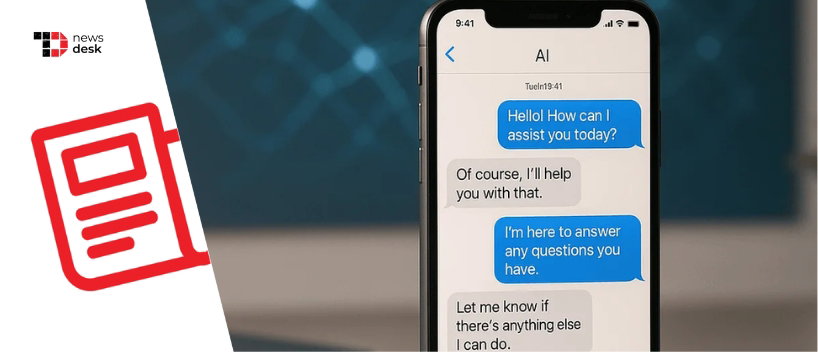
Linq has raised $20 million in new funding to develop AI assistants that operate directly inside core messaging protocols such as iMessage, SMS, and RCS, positioning everyday messaging as a primary surface for AI-driven interactions.
TL;DR
- Linq raised $20 million in a funding round reported by TechCrunch.
- The startup is focused on embedding AI into iMessage, SMS, and RCS.
- The round was led by TQ Ventures with participation from Mucker Capital.
- Linq is building AI centered on messaging engagement rather than standalone apps.
Linq, a conversational AI startup, has secured $20 million in funding to continue building AI assistants that live directly inside widely used messaging protocols such as iMessage, SMS, and RCS, according to TechCrunch.
The company’s approach is centered on messaging itself as the interface. Instead of introducing a new application or dashboard, Linq’s AI is designed to function within existing text conversations, allowing users to interact with AI in the same environments they already use to communicate with people and businesses.
The funding round was led by TQ Ventures, with participation from Mucker Capital. Investors backing the company appear to be betting on the scale and durability of messaging protocols, which reach billions of users globally and remain one of the most consistent forms of digital communication.
TechCrunch reported that Linq has shown early traction, reflecting interest in AI experiences that feel native to everyday messaging rather than experimental or separate from normal communication habits. By working within protocols like SMS and iMessage, Linq can reach users without requiring downloads, logins, or behavior changes.
Topics For More Insights
- AI Assistants: Your Personal Guide In The Digital Age
- Apple's iMessage PQ3 Revolutionizes Privacy With Its Quantum-Secure Messaging
While industry observers often frame messaging-based AI as a stepping stone toward broader conversational capabilities, the current reporting focuses on Linq’s emphasis on messaging engagement itself. The company’s present positioning highlights responsiveness, accessibility, and persistence within text threads, rather than outlining specific advanced automation or task execution features.
Operating at the protocol level also introduces constraints. Messaging platforms differ in their technical capabilities, policies, and levels of openness. Linq’s strategy suggests a willingness to build within those boundaries in exchange for access to highly embedded communication channels.
The company plans to use the newly raised capital to expand its team and continue developing its messaging-first AI infrastructure. As more AI products compete for user attention, Linq’s bet is that the most effective assistants may not feel like tools at all, but simply like another participant in the conversation.
