
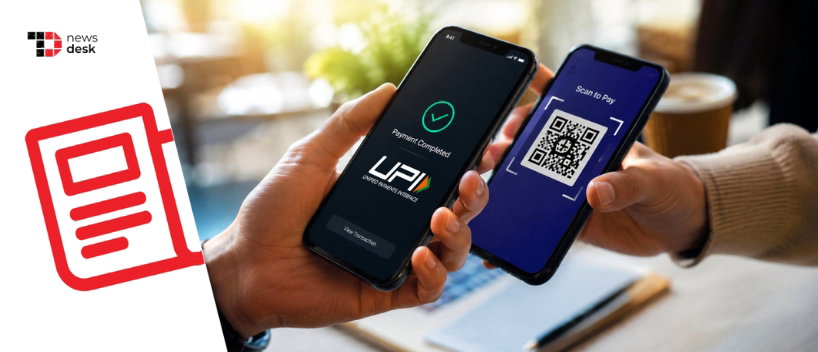
Financial Management Solutions
India’s UPI Ends Six-Year Free Ride As 0.4% MDR Returns For Merchants
Updated on Wed, Sep 16, 2026
Share
India spent years making UPI (Unified Payment Interface) synonymous with free, instant digital payments.
Now, its zero-fee era is ending for some merchant transactions, with a 0.4% Merchant Discount Rate (MDR) set to take effect from October 15, 2026.
The change applies to qualifying UPI merchant payments above ₹2,000, while person-to-person transfers remain free. It marks a significant shift for a payment network that has operated under a zero-MDR regime for more than six years.
TL;DR
- India will introduce a 0.4% MDR on qualifying UPI merchant payments above ₹2,000 from October 15.
- Different rates apply to railways, telecom, insurance, fuel and capital-market transactions.
- Person-to-person transfers, small merchants and eligible rural and semi-urban merchants remain exempt.
- General merchant fees are capped at ₹300 for transactions above ₹75,000.
What UPI Transactions Will Be Charged And How Much?
The new UPI pricing structure varies depending on transaction value, merchant type and payment category. Here is what changes from October 15:
- General merchant payments above ₹2,000: 0.4% Merchant Discount Rate, or 40 basis points.
- General merchant payments above ₹75,000: The MDR will be capped at ₹300.
- Railways, telecom, insurance and fuel payments: A flat ₹5 MDR will apply.
- Mutual fund and stock investment payments: 0.02% of the transaction value, capped at ₹300.
- Small merchants: No MDR, provided they receive up to ₹100,000 per month through UPI QR-code payments.
- Rural and semi-urban merchants: UPI payments made through QR codes will remain free.
- Person-to-person UPI transfers: No fee will apply.
The MDR will be paid by merchants rather than consumers. The largest portion will go to the payer’s bank, while the remainder will be divided among the merchant-acquiring bank, payment app and other payment service providers.
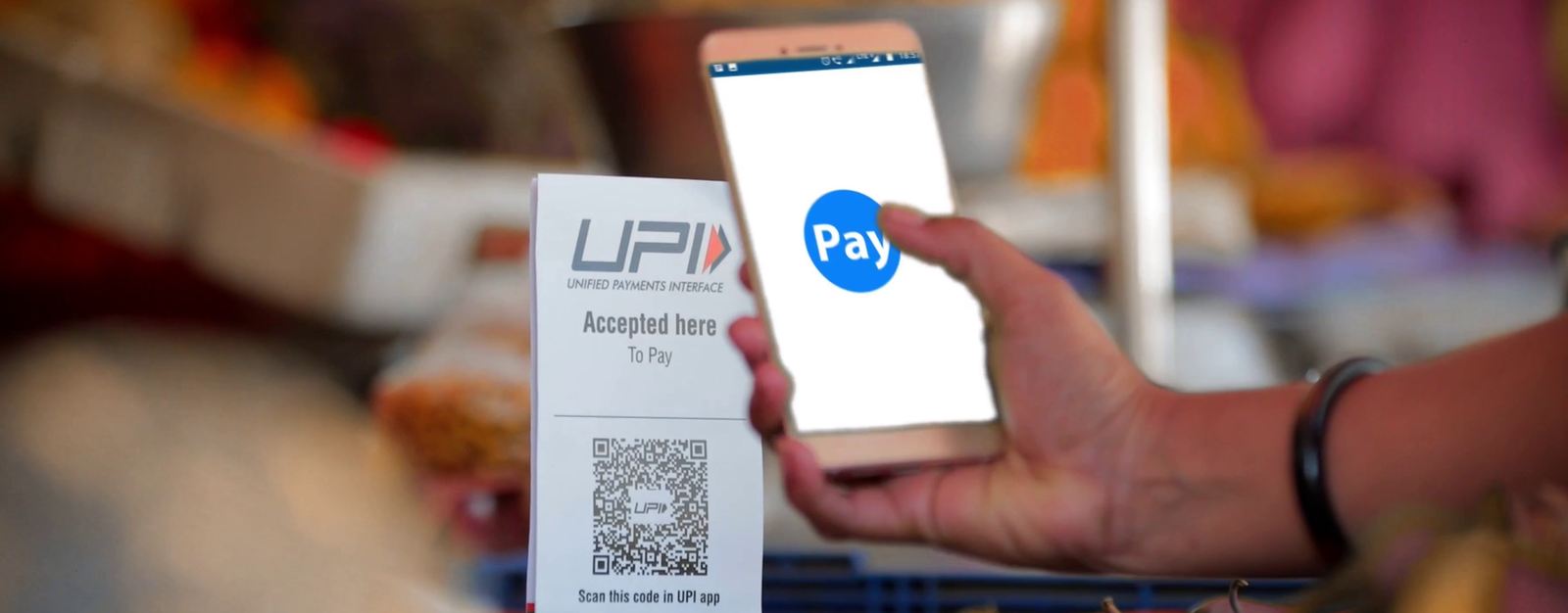
India’s UPI Merchant Fee Ends The Zero-MDR Era
UPI launched in 2016 with nominal charges, which were temporarily waived in 2017. India then removed such charges in 2020, creating the zero-MDR regime that is now being partially reversed.
The return of transaction-linked charges changes the economics behind UPI without turning the payment network itself into a paid service for most consumers.
UPI Users Will Not Be Charged Directly Under The New MDR Rules
The National Payments Corporation of India has said merchants cannot directly pass the MDR on to consumers. However, concerns remain that businesses could eventually recover the additional expense through pricing or encourage customers to use cash instead.
The scale makes even a narrowly applied fee significant. UPI processed 24.5 billion transactions worth ₹29,823 billion in August across more than 550 million users.
The government says UPI accounts for 84% of India’s digital payment volume and 49% of global real-time payment volumes.
PhonePe and Google Pay together represented about 80% of UPI transaction value in August, making the new transaction-linked model particularly significant for companies operating across India’s payments ecosystem.
Topics For More Insights
UPI MDR Creates A New Revenue Pool For Banks And Payment Firms
The revenue opportunity quickly reached the markets.
Shares of Paytm, Axis Bank and Yes Bank gained between 2% and 8% in early trading following the announcement, while Mobikwik climbed about 6.5% before reversing course later in the session.
Citi estimated the change could create an annual revenue pool of ₹160 billion to ₹170 billion. Around 60% could go to banks, 25% to app providers and 15% to aggregators.
Brokerages cautioned that the eventual earnings benefit will depend on transaction mix, exemptions and how the fees are shared across the payments ecosystem.
The government, central bank and payments authority say the MDR is intended to make UPI more self-sustaining, support expansion in rural and semi-urban areas and preserve free access for most transactions.
For users, UPI is not suddenly becoming a paid service. However, after more than six years of zero MDR, the economics powering India’s dominant digital payment network are changing.
First published on Wed, Sep 16, 2026

Enjoyed what you read? Great news – there’s a lot more to explore!
Dive into our content repository of the latest tech news, a diverse range of articles spanning introductory guides, product reviews, trends and more, along with engaging interviews, up-to-date AI blogs and hilarious tech memes!
Also explore our collection of branded insights via informative white papers, enlightening case studies, in-depth reports, educational videos and exciting events and webinars from leading global brands.
Head to the TechDogs homepage to Know Your World of technology today!
Disclaimer - Reference to any specific product, software or entity does not constitute an endorsement or recommendation by TechDogs nor should any data or content published be relied upon. The views expressed by TechDogs' members and guests are their own and their appearance on our site does not imply an endorsement of them or any entity they represent. Views and opinions expressed by TechDogs' Authors are those of the Authors and do not necessarily reflect the view of TechDogs or any of its officials. While we aim to provide valuable and helpful information, some content on TechDogs' site may not have been thoroughly reviewed for every detail or aspect. We encourage users to verify any information independently where necessary.
Loading comments...