
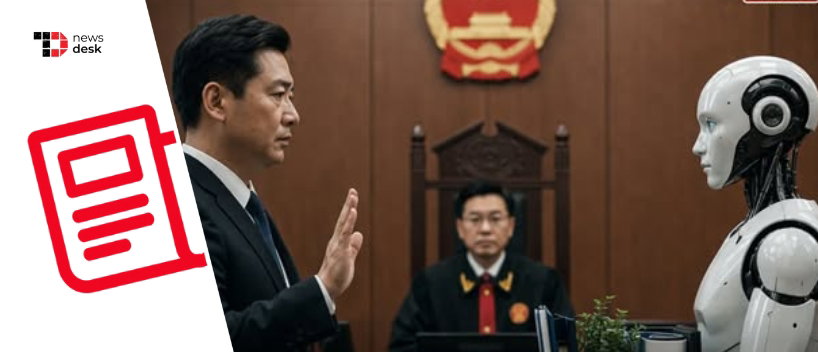
A Chinese court has ruled that employers cannot dismiss workers purely to replace them with artificial intelligence, reinforcing labor law protections and clarifying that automation alone does not constitute lawful grounds for termination.
TL;DR
- Chinese court rejects AI replacement as sole reason for layoffs.
- Employers must follow Labor Contract Law provisions for termination.
- Reinforces worker protections amid automation growth.
- Signals stricter compliance for AI-driven restructuring.
China Court Clarifies Limits Of AI-Led Layoffs
In a key legal ruling, a Chinese court stated that companies cannot terminate employees solely to replace them with AI systems. The judgment comes amid increasing adoption of automation across industries.
The case involved an employer citing efficiency gains from AI as justification for layoffs. The court rejected this argument, stating that technological replacement alone is not a lawful basis for dismissal.
How China’s Labor Laws Apply To AI Adoption
China’s Labor Contract Law requires valid legal grounds for termination, including incompetence after training, misconduct, or major operational changes.
Articles 40 and 41 specifically outline conditions under which employers may terminate contracts or conduct layoffs, including procedural requirements such as notice and compensation.
The court reinforced that AI adoption does not override these legal obligations.
Topics For More Insights
Balancing Innovation With Employment Stability
China has been accelerating AI adoption across sectors such as manufacturing and services, while maintaining strict labor protections to ensure social stability.
The ruling aligns with this approach by ensuring companies remain compliant with employment laws while implementing new technologies.
Implications For Businesses And Global Context
The decision means companies must justify layoffs with legally valid reasons beyond automation.
Employers may need to focus on reskilling, reassignment, or gradual workforce transition strategies instead of direct replacement.
The ruling contributes to a broader global discussion on AI’s impact on employment and regulation.
