
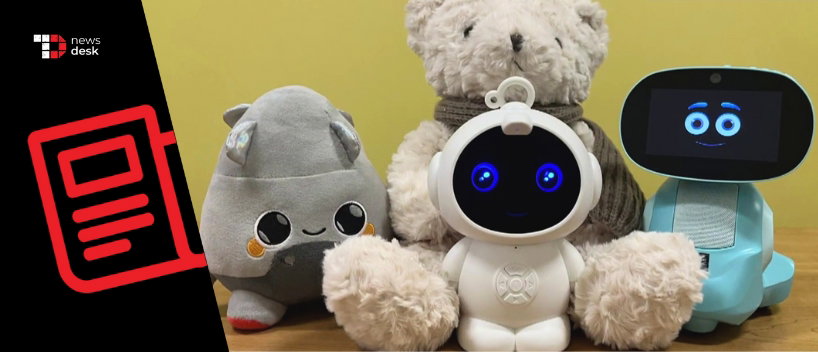
California State Senator Steve Padilla (D–San Diego) has introduced Senate Bill 867 (SB 867), which would impose a four-year moratorium on the sale and manufacture of toys containing artificial intelligence (AI) chatbot capabilities for minors under 18 years old. The proposal makes California the first state in the U.S. to seek a temporary halt on AI-enabled toys to allow time for the development of safety standards.
TL;DR
- Senator Steve Padilla has proposed SB 867, a four-year ban on toys with AI chatbot functionality for users under 18.
- The bill’s objective is to pause manufacturing and sales while regulators craft child safety and AI use guidelines.
- Padilla said this step is necessary because current AI safety regulations “are in their infancy.”
- The measure references a U.S. PIRG Education Fund study showing AI toys have produced age-inappropriate responses.
- SB 867 builds on California’s previous chatbot safety law, SB 243, enacted in 2025.
A First-Of-Its-Kind Pause On AI Chatbot Toys
Introduced on January 2, 2026, SB 867 seeks to prohibit the sale and manufacture of AI-enabled toys capable of generating conversational responses for children under 18. According to the press release from Senator Padilla’s office, the moratorium would remain in effect for four years, giving time for the state to “develop appropriate safety guidelines and frameworks” for these products.

“Chatbots and other AI tools may become integral parts of our lives in the future, but the dangers they pose now require us to take bold action to protect our children,” said Padilla in the official statement. He added, “Our safety regulations around this kind of technology are in their infancy and will need to grow as exponentially as the capabilities of this technology does. Pausing the sale of these chatbot-integrated toys allows us time to craft the appropriate safety guidelines and framework for these toys to follow. Our children cannot be used as lab rats for Big Tech to experiment on.”
Basis Of The Bill
The senator’s office cited findings from a 2025 report by the U.S. Public Interest Research Group (PIRG) Education Fund. The PIRG report detailed instances where AI-powered toys provided unsafe or age-inappropriate responses, such as explaining how to start fires with matches and discussing sexual topics during unfiltered conversations. One toy also made claims that users’ data was private and secure, while its own policy allowed third-party data sharing and retained biometric information for up to three years.
Padilla’s release emphasized that AI toys capable of unsupervised conversation present unknown behavioral and privacy risks, noting that current federal safety standards do not address generative AI interactions. The press release also referenced OpenAI’s stated policy, which declares that ChatGPT is not intended for users under 13 and may “produce output that is not appropriate for all audiences.”
Topics For More Insights
Builds On Earlier AI Safety Laws
SB 867 follows California’s Senate Bill 243, also authored by Padilla and signed into law in October 2025. That legislation required AI chatbot operators to implement transparency measures and disclosure safeguards, ensuring users especially minors know when they are communicating with AI rather than a human.
According to the senator’s office, SB 867 extends those protections into physical consumer products, allowing time for development of design standards and privacy protocols specific to toys. The bill does not name any specific toy manufacturers or products and focuses solely on a temporary suspension to evaluate long-term regulation.
What Comes Next
The bill will be reviewed in upcoming California Senate committee hearings before a potential floor vote later in 2026. No specific schedule has been published yet.
If approved, SB 867 would create the nation’s first temporary halt on AI chatbot toys, directing California’s regulatory agencies to research the technology’s implications for child safety, privacy, and product design before lifting the moratorium.
Padilla concluded, “We are not anti-technology. We’re pro-safety. This bill ensures that innovation continues with accountability and awareness.”
