
Artificial Intelligence
Alibaba Bans Claude Code For Workers For Own Model Qoder As US-China AI Rivalry Grows
Updated on Mon, Jul 6, 2026
Share
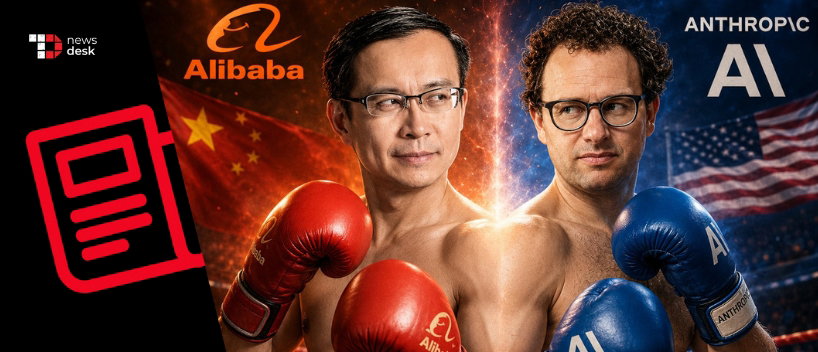
Alibaba is reportedly preparing to block employees from using Anthropic’s Claude Code from July 10, pushing staff toward its own Qoder coding assistant as AI (artificial intelligence) access rules between the US and China grow tighter.
TL;DR
- Alibaba has reportedly classified Claude Code as high-risk software and will ban internal use from July 10.
- Employees are being directed to Qoder, Alibaba’s own AI programming tool.
- Anthropic already restricts Chinese companies from using its models and has been tightening access controls.
- The move reflects a deeper split between US and Chinese AI ecosystems.
Alibaba Reportedly Moves Staff From Claude Code To Qoder
Alibaba is reportedly set to prohibit employees from using Anthropic’s Claude Code, marking another example of how AI tools are becoming part of the broader US-China technology divide.
Multiple reports note that the Chinese technology giant has categorized Claude Code as high-risk software and plans to block its internal use starting July 10. Employees have reportedly been told to use Qoder, Alibaba’s in-house AI programming assistant, instead.
The reported move is not just about switching one coding tool for another. It signals how large technology companies are becoming more cautious about foreign AI tools, especially as access rules, corporate security policies, and geopolitical concerns become harder to separate.
Claude Code Restrictions Add Pressure On Chinese AI Users
Anthropic already prohibits Chinese companies, along with foreign entities owned by those companies, from using its models. However, reports suggest some users in China have still managed to access Claude through overseas cloud providers, resellers, and foreign subsidiaries.
To close such gaps, Anthropic has reportedly been working on stronger controls to detect unauthorized access. One recent Reddit post claimed that a version of Claude Code could secretly identify Chinese users, raising questions about how far AI companies may go to enforce regional restrictions.
Anthropic executive Thariq Shihipar addressed the issue publicly, saying the measure was temporary and tied to platform abuse prevention.
“This is an experiment we launched in March that was meant to prevent account abuse from unauthorized resellers and protect against distillation. The team has landed stronger mitigations since then and we’ve actually been meaning to take this down for a while,” Shihipar wrote on X.
Distillation refers to the practice of training AI models using outputs from other models, a concern for companies looking to protect their proprietary systems.
Alibaba’s Qoder Push Highlights China’s Domestic AI Momentum
By directing employees to Qoder, Alibaba appears to be reinforcing its own AI software ecosystem at a time when Chinese companies are investing heavily in domestic alternatives.
China’s AI industry has been gaining attention for capable and lower-cost models that aim to challenge leading Western systems. Beijing-based startup Z.ai, for example, has drawn interest with its GLM-5.2 model, which has been noted for coding capabilities and agentic task execution.
Some observers have described Z.ai’s rise as a “mini DeepSeek moment,” reflecting growing confidence in China’s homegrown AI sector. That momentum matters because companies in China are increasingly looking for tools that can deliver competitive performance without depending on restricted Western models.
The same pressure is shaping enterprise software choices. Alibaba’s reported Claude Code ban suggests that AI coding assistants are now part of strategic infrastructure, not just developer productivity tools.
Topics For More Insights
US-China AI Rivalry Is Moving Beyond Model Performance
The Alibaba and Anthropic developments show that the AI race is no longer only about which model codes better, reasons faster, or costs less to run. Access controls, export restrictions, account monitoring, and corporate risk policies are now shaping how companies decide which tools employees can use.
US export controls have also influenced demand for alternatives. Restrictions affecting some Anthropic models, including Claude Fable 5 and Mythos 5, had encouraged more interest in Chinese AI tools among businesses seeking similar capabilities.
Anthropic later said the US Department of Commerce lifted export restrictions on those two models earlier this month, potentially easing access for some international customers.
Still, the wider picture remains tense. Alibaba’s reported decision to block Claude Code and promote Qoder underscores a future where US and Chinese AI ecosystems may continue to separate, even as companies on both sides race to build better models, smarter coding assistants, and stronger safeguards.
First published on Mon, Jul 6, 2026

Liked what you read? That’s only the tip of the tech iceberg!
Explore our vast collection of tech articles including introductory guides, product reviews, trends and more, stay up to date with the latest news, relish thought-provoking interviews and the hottest AI blogs, and tickle your funny bone with hilarious tech memes!
Plus, get access to branded insights from industry-leading global brands through informative white papers, engaging case studies, in-depth reports, enlightening videos and exciting events and webinars.
Dive into TechDogs' treasure trove today and Know Your World of technology like never before!
Disclaimer - Reference to any specific product, software or entity does not constitute an endorsement or recommendation by TechDogs nor should any data or content published be relied upon. The views expressed by TechDogs' members and guests are their own and their appearance on our site does not imply an endorsement of them or any entity they represent. Views and opinions expressed by TechDogs' Authors are those of the Authors and do not necessarily reflect the view of TechDogs or any of its officials. While we aim to provide valuable and helpful information, some content on TechDogs' site may not have been thoroughly reviewed for every detail or aspect. We encourage users to verify any information independently where necessary.
Loading comments...