
Alibaba has introduced its first artificial intelligence (AI) model suite for robots, signaling a sharper push into embodied intelligence as tech firms race to make AI systems navigate, reason, and act physically.
TL;DR
- Alibaba launched Qwen Robot Suite for enterprise pilots through Alibaba Cloud.
- The suite combines navigation, world simulation, and physical manipulation models.
- Qwen-RobotManip was trained on more than 38,000 hours of open-source data.
- Alibaba said Qwen-RobotManip topped RoboChallenge’s generalist track.
Alibaba Moves Qwen From Chatbot Intelligence To Robot Intelligence
Alibaba Group Holding is taking its Qwen AI family beyond screens and chat prompts. The tech giant unveiled Qwen Robot Suite, its collection of AI models built specifically for robots.
The launch marks Alibaba’s latest move into embodied AI, a field focused on machines that can perceive surroundings, reason through changing conditions, and interact with the physical world. The suite was developed by Tongyi Lab and has entered pilot testing with selected Alibaba Cloud enterprise clients.
Qwen has been known for large language and multimodal models competing with OpenAI, Google, DeepSeek, ByteDance, and others. With Qwen Robot Suite, Alibaba is shifting that software intelligence into machines that can execute real-world tasks.
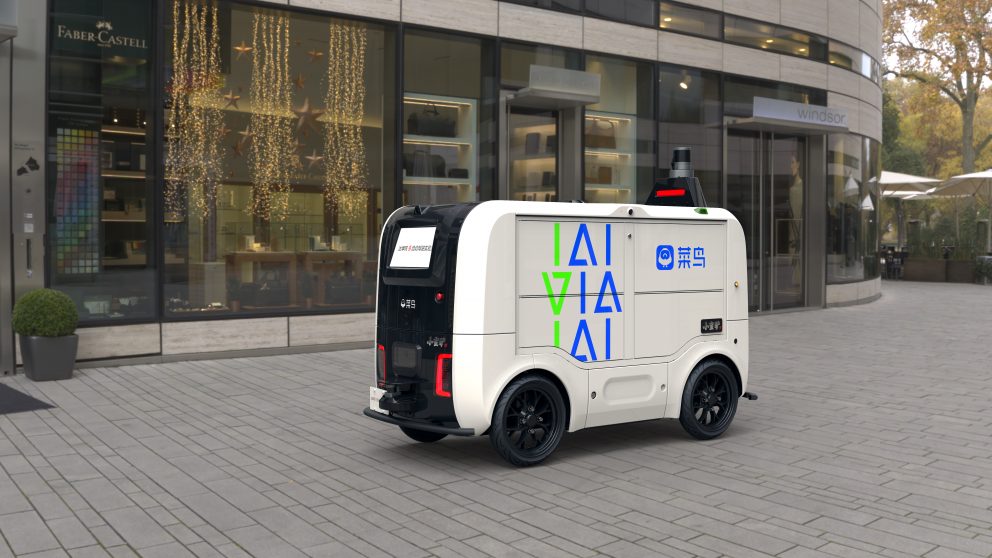
Qwen Robot Suite Splits Robot AI Into Three Working Layers
The new suite breaks robot intelligence into three connected layers, starting with Qwen-RobotNav. This vision-language navigation model helps robots understand physical spaces and move through them.
It works with Qwen-RobotWorld, a video world model that helps robots predict and simulate how a physical scene may change before taking action. That predictive layer gives machines a better sense of what could happen next.
The final layer is Qwen-RobotManip, a generalist vision-language-action model built on the Qwen3.5-4B architecture. This model handles physical execution, especially object manipulation, and Alibaba said it was trained on more than 38,000 hours of open-source data.
Qwen-RobotManip recently topped the generalist track of the RoboChallenge real-robot benchmark. Alibaba said the model posted a process score of 59.83 and a 45% task success rate.
Embodied AI Becomes The Next Battleground For Global Tech Firms
Alibaba’s release lands as embodied intelligence becomes one of AI’s fastest-moving frontiers. Instead of only generating text, images, or code, the next race is about building AI agents that can operate machines, support robotics workflows, and make autonomous decisions.
Google DeepMind is advancing Gemini Robotics, while Nvidia is building a physical AI ecosystem around Cosmos, Isaac, and GR00T. Startups including Physical Intelligence, Skild AI, and Figure AI are also chasing robot intelligence.
China has a strong robotics hardware base because of its supply chain depth, rapid iteration cycles, and lower manufacturing costs. Now, domestic firms are pushing harder to build software brains that make robots more autonomous.
That field includes Alibaba’s Qwen, Tencent’s HY-Embodied, Unitree, AgiBot, UBTech, Galbot, Spirit AI, GigaAI, Xpeng, and Xiaomi.
Topics For More Insights
Alibaba Quark AI Glasses Vs. Meta Ray-Ban AI Display Glasses
India Partners With Alibaba.com For Global MSME Reach
Alibaba-Backed Moonshot AI’s Reported Valuation Rises to $4.8 Billion
Alibaba’s Qwen App Expands AI Capabilities To Order Food, Book Travel & More!
Robot AI Could Draw Fresh Investor Attention In China
The momentum is moving closer to public markets. Unitree has filed for registration after clearing the Shanghai Star Market’s listing committee, a development expected to increase investor attention around China’s robotics sector.
Morgan Stanley industrial analyst Zhong Sheng said in a recent note that proceeds from most Chinese humanoid robot IPOs would likely go toward research and development, “especially robot models,” with a smaller share used for capacity expansion.
That makes Alibaba’s Qwen Robot Suite more than another AI release. It shows how the chatbot era is expanding into agentic and physical AI, where the most valuable models may help machines understand the world, plan their next move, and act on it.
