
Consumer Electronics Technology
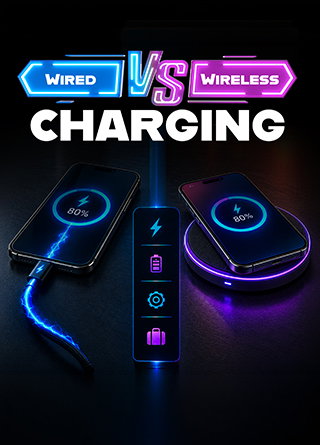
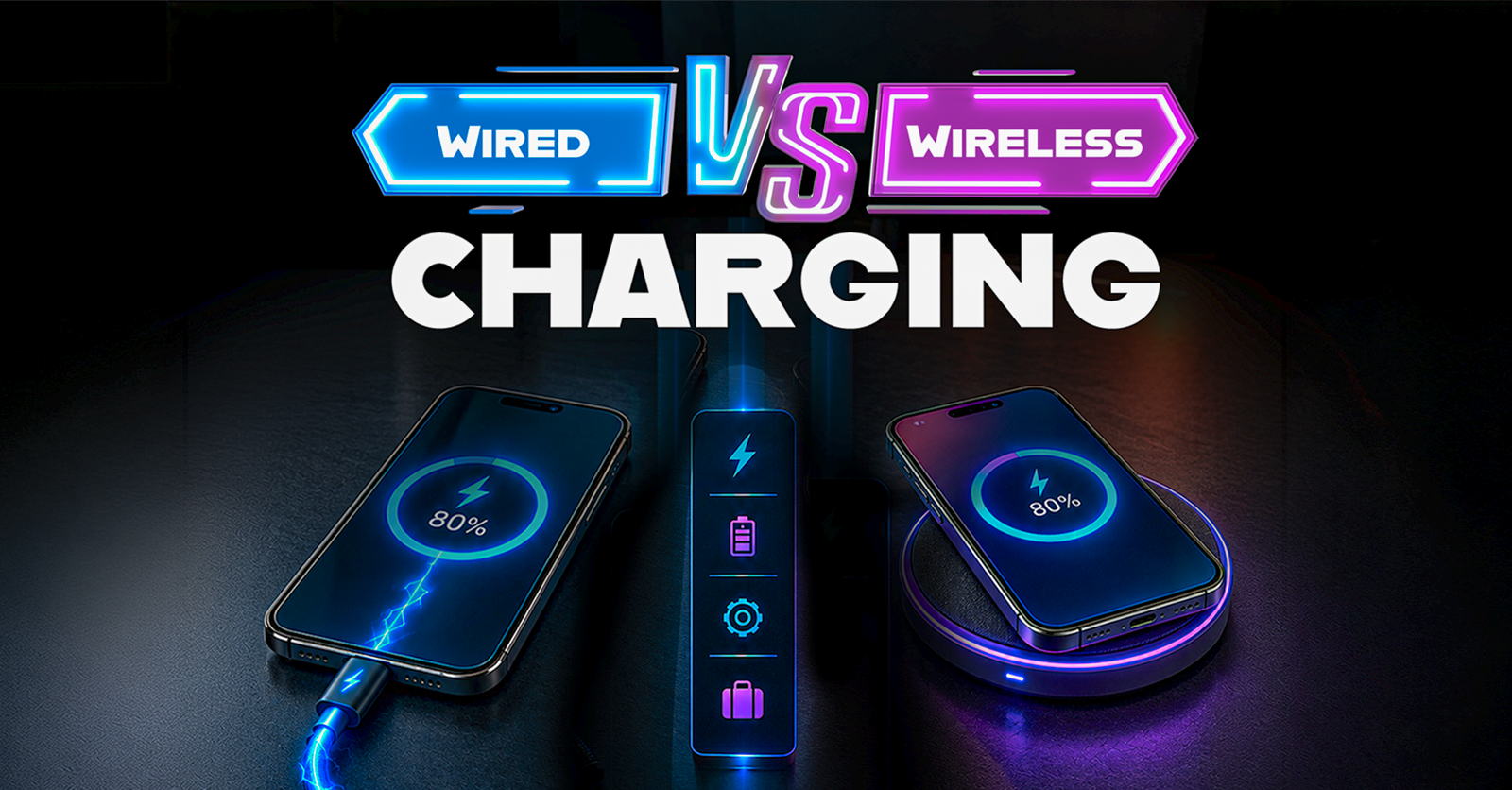
Wired Vs Wireless Charging: Which Charging Method Keeps Batteries Healthier?
Share
TL;DR
-
Wired charging generally produces less heat and can offer a slight advantage for long-term battery health.
-
Wireless charging does not inherently damage batteries, but extra heat from inefficient power transfer can accelerate battery aging.
-
Charging temperature matters more for battery longevity than simply choosing between a cable and a wireless pad.
-
Fast wired charging can also generate heat, so wired charging is not automatically healthier in every situation.
-
Using quality chargers, avoiding excessive heat, and limiting time at 100% can help extend battery life with either method.
Introduction
In the movie Back to the Future, getting the DeLorean moving through time ultimately comes down to one crucial problem: finding the right way to deliver enough power at the right moment. Whether that power comes from plutonium, a lightning strike, or some futuristic solution, the source matters because the machine needs energy without the whole plan falling apart.
Smartphones are obviously dealing with much smaller stakes, but there is a surprisingly similar question sitting on our desks and nightstands every day: does the way we deliver power to a device affect how well it holds up over time?
For years, charging a phone was straightforward. You plugged in a cable, watched the battery percentage climb, and moved on. Then wireless charging changed the routine. Suddenly, a charging pad, stand, car mount, or bedside dock could supply power without repeatedly connecting a cable.
The added convenience was easy to appreciate, but it also introduced a new concern. If wireless charging transfers energy differently, could that difference gradually wear down the battery faster?
That is where the wired vs wireless charging debate becomes more complicated than simply choosing between convenience and speed. Modern smartphones use lithium-ion batteries that naturally lose some capacity as they chemically age.
Every charge cycle contributes to that process, but the charging method alone does not determine how quickly battery health declines. Temperature, charging speed, how long the battery remains near full capacity, ambient conditions, and even what you are doing with the phone while it charges can all influence long-term wear.
So, concerns about wireless charging battery degradation need a little context. Wireless power itself is not automatically harmful to a battery. The crucial issue is how efficiently energy reaches the phone and how much heat is produced along the way. Repeated exposure to excessive heat can accelerate battery aging, which is why the real question is not simply whether wired or wireless charging is “good” or “bad.”
Instead, the more useful comparison is: when looking at wired vs wireless charging longevity, which method is better at keeping temperatures under control, reducing unnecessary stress, and helping the battery retain its capacity over years of everyday use?
How Wired And Wireless Charging Deliver Power?
Wired charging creates a direct electrical connection between a power source and the phone. Energy moves through the charger and cable into the device, where the charging system regulates voltage and current before the battery receives power.
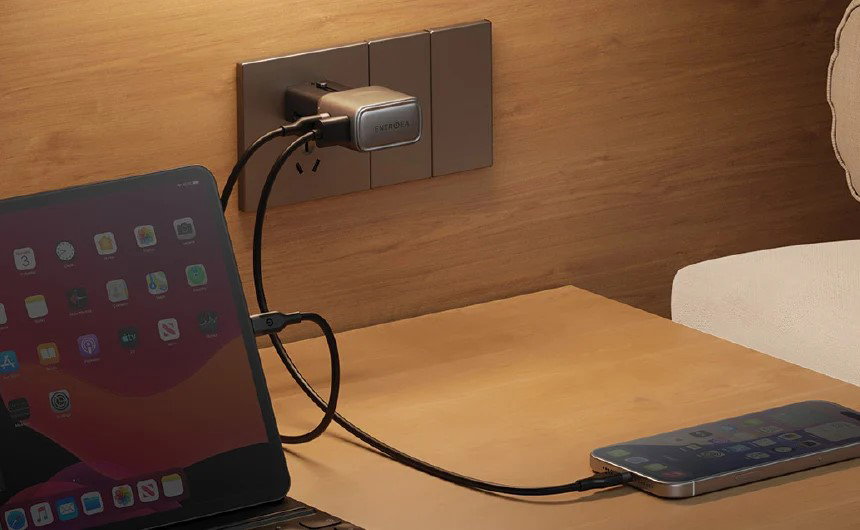
Because the connection is direct, wired charging is generally efficient. Less energy is lost between the charger and phone, which can mean less waste of heat.
Wireless charging uses electromagnetic induction. A charging pad contains a transmitter coil, while the phone contains a receiver coil. When the two are positioned correctly, energy transfers between them and the phone converts it into electrical power.
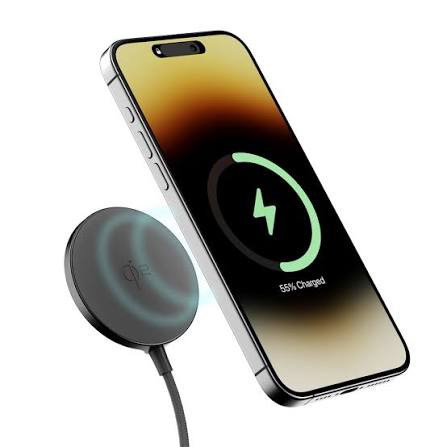
This extra conversion step makes wireless charging more sensitive to alignment, distance, cases, foreign objects, and heat. Magnetic systems such as Qi2 improve alignment, helping the phone and charger maintain a more efficient connection.
Once the phone is powered, the next question is what happens to the battery over repeated charging cycles. That is where factors such as heat, charging intensity, and time spent at high charge levels begin to influence how quickly battery health declines.
What Actually Causes Smartphone Battery Degradation?
To understand wired vs wireless charging longevity, it helps to separate daily battery life from long-term battery health.
Battery life is how long the phone runs between charges. Battery health is how much of its original capacity remains after months or years of use.
Every lithium-ion battery chemically ages, but several conditions can accelerate that process:
-
High temperatures: Repeated or prolonged heat speeds up battery aging.
-
Extended time at very high charge levels: Keeping a battery near 100% for long periods can add stress.
-
Deep discharges: Regularly running a battery extremely low can increase cycling stress.
-
High-power charging in hot conditions: Fast charging is actively managed, but heat matters more when the phone or room is already warm.
-
Heavy use while charging: Gaming, navigation, video calls, or hotspot use can generate processor heat while the charging system is also producing heat.
This is why many newer phones offer optimized charging, adaptive charging, or selectable charge limits. These features can reduce time spent at full charge and slow or pause charging when temperatures become unfavorable.
Among all the factors that contribute to battery exhaustion, one tends to amplify the others more than most: heat. That makes temperature the clearest place to look next when comparing how wired and wireless charging affect battery health.
Wired vs Wireless Charging: Why Heat Matters Most?
Heat is the strongest practical argument in favor of wired charging.
A cable can deliver power with fewer conversion losses, so a good wired charger often keeps the process more efficient. Wireless chargers lose more energy during transfer, and part of that lost energy becomes heat around the coils, phone, and charging surface.
Misalignment can make this worse. If a phone is not centered correctly on a traditional charging pad, power may still transfer, but less efficiently. Charging can slow while heat rises.

Still, wired charging is not automatically cool. A high-wattage fast charger can warm a phone noticeably, especially when the battery is low and accepting power quickly. Gaming, recording video, navigation, or direct sunlight can push temperatures higher at the same time.
So, the meaningful comparison is not simply wired versus wireless. It is cool charging versus hot charging.
If both methods keep the battery at a reasonable temperature, the real-world difference in aging may be modest. If one method repeatedly leaves the phone noticeably hot, that is the setup worth changing.
Since excess heat can accelerate battery aging, it becomes critical to look beyond charging speed and ask whether wireless charging has a measurable impact on battery health.
Does Wireless Charging Permanently Damage Battery Health?
No. Normal wireless charging does not automatically cause permanent battery damage.
Modern smartphones monitor battery temperature and charging behavior. When temperatures rise beyond preferred levels, the operating system can reduce charging speed, pause charging, or delay the final portion of the charge. Certified charging systems also include controls designed to manage power safely.
However, those protections do not make heat irrelevant.
If a phone spends hours every day running warm on a wireless charger, especially in a hot room or thick case, the accumulated thermal exposure can contribute to faster capacity loss. So, when asking, “does wireless charging permanently damage battery health,” the more accurate answer is that the technology itself is not the problem, but consistently hot charging can accelerate normal aging.
If wireless charging is not inherently harmful, the next question is whether the more direct, efficient nature of wired charging gives it an edge over time. That brings us to whether wired charging is the better choice for long-term battery longevity.
Is Wired Charging Better For Your Phone Battery?
If the goal is to minimize battery stress as much as reasonably possible, wired charging generally has the edge.
It is more efficient and avoids alignment losses. It also makes it easy to use a moderate-power adapter when maximum charging speed is unnecessary.
Still, wired charging is not a battery-preservation shortcut. Fast wired charging can generate heat, while frequently keeping the phone at 100% or charging in hot conditions can reduce longevity regardless of the connection type.
A useful way to think about it is that wired charging offers a better starting point for efficiency, while actual battery health still depends on temperature and charging habits.
While wired charging may have a slight edge for long-term battery health, that advantage is only part of the picture. A hands-on comparison helps show how both methods perform under everyday conditions.
Wired vs Wireless Charging Longevity: Side-By-Side Comparison
A close comparison reveals where the real differences emerge across thermal behavior, power efficiency, charging performance, and long-term battery impact.
| Factor | Wired Charging | Wireless Charging |
| Energy Efficiency | Generally higher | Generally lower |
| Heat Generation | Often lower, but varies with wattage | Often higher during transfer |
| Charging Speed | Usually faster | Usually slower, though improving |
| Alignment | Not relevant once connected | Important on many pads |
| Port Wear | Cable and port see mechanical use | Little charging-port wear |
| Convenience | Requires plugging in | Easy drop-and-charge use |
| Overnight Use | Managed by modern charging controls | Managed by modern charging controls |
| Best Use Case | Fast, efficient charging | Convenient desk or bedside charging |
The comparison covers how both methods perform under typical charging conditions, but there is another variable that can significantly change the equation: charging speed. Once fast charging enters the picture, heat, power delivery, and battery stress become even more concerning to consider.
Does Fast Charging Change The Equation?
Fast charging often enters the same debate, but speed alone does not determine battery health.
Modern phones do not normally accept maximum charging power from 0% to 100%. They can take more power when the battery is able to accept it efficiently, then reduce current as the battery approaches a higher state of charge. Charging can also slow when the temperature rises.
That means a high-rated charger does not continuously force its maximum wattage into the battery. The phone controls what it receives.
Still, faster charging can produce more heat during certain stages. If battery longevity is the priority and there is no rush, slower wired charging can be a sensible choice. When fast charging is needed, using a compatible charger in a cool environment matters more than avoiding fast charging altogether.
Wireless fast charging follows the same logic, although its transfer process adds another source of inefficiency. Proper alignment and airflow become more important as charging power rises.
Fast charging adds another layer to the battery-health equation, but speed alone does not determine how well a battery ages. What matters just as much is how the phone manages heat, charge levels, and everyday usage, which brings the focus back to the habits that can help protect battery life regardless of how you choose to charge.
How To Reduce Battery Wear With Either Method?
Most users will gain more from controlling heat and high charge levels than from obsessively switching between cables and pads.
-
Keep The Phone Cool
Avoid charging in direct sunlight, inside a hot car, under a pillow, or beside another heat-producing device. If the phone repeatedly becomes unusually warm, change the setup.
-
Use A Compatible, High-Quality Charger
Reputable chargers are designed to communicate correctly with supported devices and manage power safely. Poorly engineered accessories can create inconsistent charging behavior or unnecessary heat.
-
Check Wireless Alignment
Place the phone correctly on the charging surface. Magnetic systems make this easier. If charging repeatedly starts and stops or the phone becomes unusually warm, alignment may be part of the problem.
-
Remove A Heat-Trapping Case If Needed
Most compatible cases work well, but a thick case can retain heat or increase the distance between wireless coils. If the phone runs significantly warmer with the case on, removing it during longer sessions may help.
-
Use Charge Limits
Many newer phones can stop charging at 80%, 85%, 90%, or another selected level. This can reduce the time a battery spends at a high state of charge, particularly for people who remain near chargers throughout the day.
Good charging habits help either way, but there are situations where wireless charging can make a noticeable difference.
When Wireless Charging Still Makes Sense?
Battery longevity matters, but a phone is also a tool. Charging should fit real life.
Wireless charging works particularly well on desks, bedside tables, counters, and car mounts where convenience matters more than maximum speed. It also reduces repeated mechanical wear on the charging port.
Topics For More Insights
For someone who charges in short bursts during the day, a properly aligned wireless charger may keep the battery comfortably within a middle charge range without creating a meaningful practical problem.
Wired charging makes more sense when speed, efficiency, portability, or temperature control matters most. It is usually the stronger choice for travel, power banks, quick pre-departure charging, or situations where every minute counts.
Conclusion: Which Charging Method Keeps Batteries Healthier?
For pure battery preservation, wired charging has a modest advantage because it is generally more efficient and tends to cause less waste of heat.
However, that difference should not be exaggerated. Wireless charging does not inherently ruin batteries, and modern phones include thermal controls and charging protections that reduce risk. A cool, properly aligned wireless charger can be gentler on a battery than a very hot, high-power wired session.
The deciding factor is not the presence or absence of a cable. It is how much heat reaches the battery, how long the phone stays at high charge levels, and whether the charging setup allows the battery-management system to work as intended.
For most people, the practical approach is simple: use wired charging when speed and efficiency matter, use wireless charging when convenience matters, and treat excessive heat as the warning sign worth paying attention to.
Frequently Asked Questions
Does Wireless Charging Cause More Battery Degradation Than Wired Charging?
It can contribute to slightly faster degradation if it consistently keeps the phone warmer. Wireless charging is generally less efficient, so more energy can be lost as heat. Good alignment, certified hardware, modern thermal management, and a cool environment can reduce the difference.
Is Wired Charging Better For Your Phone Battery If You Charge Overnight?
Not necessarily. Overnight battery health depends heavily on charging controls. If the phone supports optimized charging or a charge limit, it can reduce time spent at 100% whether it is connected by cable or on a wireless charger. Wired charging remains more efficient, but charging behavior matters more than the clock.
Should You Stop Using Wireless Charging To Protect Battery Health?
For most users, no. If the phone stays at a normal temperature and the charger is compatible and properly aligned, wireless charging is reasonable. If the phone becomes noticeably hot every time it charges wirelessly, switching chargers, removing the case, improving alignment, lowering charging power, or using a cable more often would be sensible.
Tue, Sep 22, 2026

Liked what you read? That’s only the tip of the tech iceberg!
Explore our vast collection of tech articles including introductory guides, product reviews, trends and more, stay up to date with the latest news, relish thought-provoking interviews and the hottest AI blogs, and tickle your funny bone with hilarious tech memes!
Plus, get access to branded insights from industry-leading global brands through informative white papers, engaging case studies, in-depth reports, enlightening videos and exciting events and webinars.
Dive into TechDogs' treasure trove today and Know Your World of technology like never before!
Disclaimer - Reference to any specific product, software or entity does not constitute an endorsement or recommendation by TechDogs nor should any data or content published be relied upon. The views expressed by TechDogs' members and guests are their own and their appearance on our site does not imply an endorsement of them or any entity they represent. Views and opinions expressed by TechDogs' Authors are those of the Authors and do not necessarily reflect the view of TechDogs or any of its officials. While we aim to provide valuable and helpful information, some content on TechDogs' site may not have been thoroughly reviewed for every detail or aspect. We encourage users to verify any information independently where necessary.
Loading comments...