
E-commerce
What Is Ecommerce Fulfillment? A Beginner's Guide
Share
TL;DR
-
Ecommerce fulfillment encompasses inventory management, order processing, packaging, shipping, delivery, and returns management.
-
The fulfillment process involves five key stages that ensure accurate order processing, efficient warehouse operations, and timely delivery.
-
Businesses can choose between in-house fulfillment, third-party logistics (3PL), dropshipping, and hybrid models based on operational requirements.
-
Ecommerce fulfillment costs depend on warehousing, order volume, picking and packing, shipping, technology, and returns processing.
-
Choosing the right fulfillment partner requires evaluating scalability, technology integration, pricing transparency, delivery capabilities, and service reliability.
Introduction
Imagine ordering your favorite sneakers online. You browse through different styles, find the perfect pair, complete your payment, and receive a confirmation within seconds. A few days later, your sneakers arrive at your doorstep. Simple, right? Yet, between clicking "Buy Now" and receiving that package, several operations take place behind the scenes.
From locating products in warehouses and packaging orders to arranging deliveries and handling returns, every step contributes to the overall shopping experience. This entire process is known as ecommerce fulfillment.
For online businesses, fulfillment is more than shipping products. It directly affects customer satisfaction, operational costs, inventory management, and long-term profitability.
So, how does ecommerce fulfillment work, and which fulfillment model makes sense for your business? Let's explore its processes, types, costs, and important considerations in this beginner's guide.
What Is Ecommerce Fulfillment?
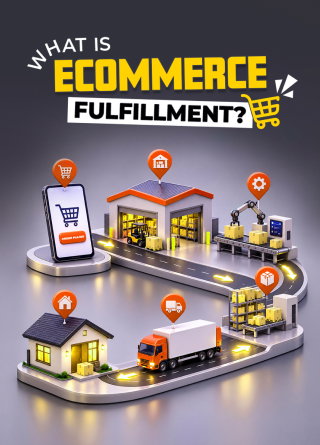
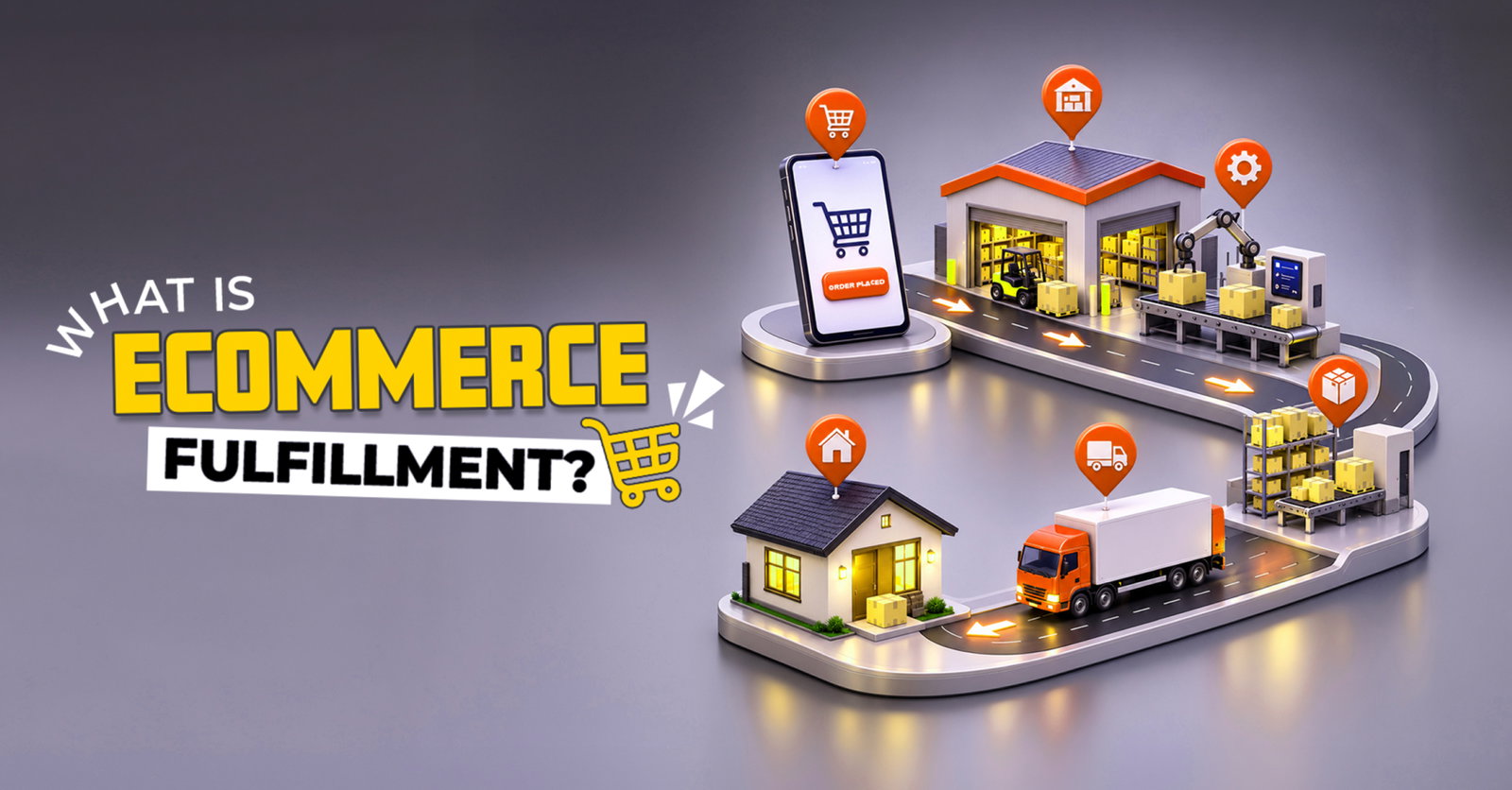
Ecommerce fulfillment is the end-to-end process of receiving, processing, packing, shipping, and delivering products purchased through an online store. It also involves managing inventory and handling customer returns or exchanges.
In simpler terms, ecommerce fulfillment covers everything required to move a product from a seller's inventory to the customer's doorstep. For example, when someone purchases headphones from an online electronics store, the business must verify stock availability, locate the product, package it securely, and coordinate delivery.
Depending on the company's operations, these activities may happen within its own warehouse or through an external logistics provider.
While the concept sounds straightforward, successful order fulfillment depends on several interconnected processes working accurately and efficiently.
How Does Ecommerce Fulfillment Work?
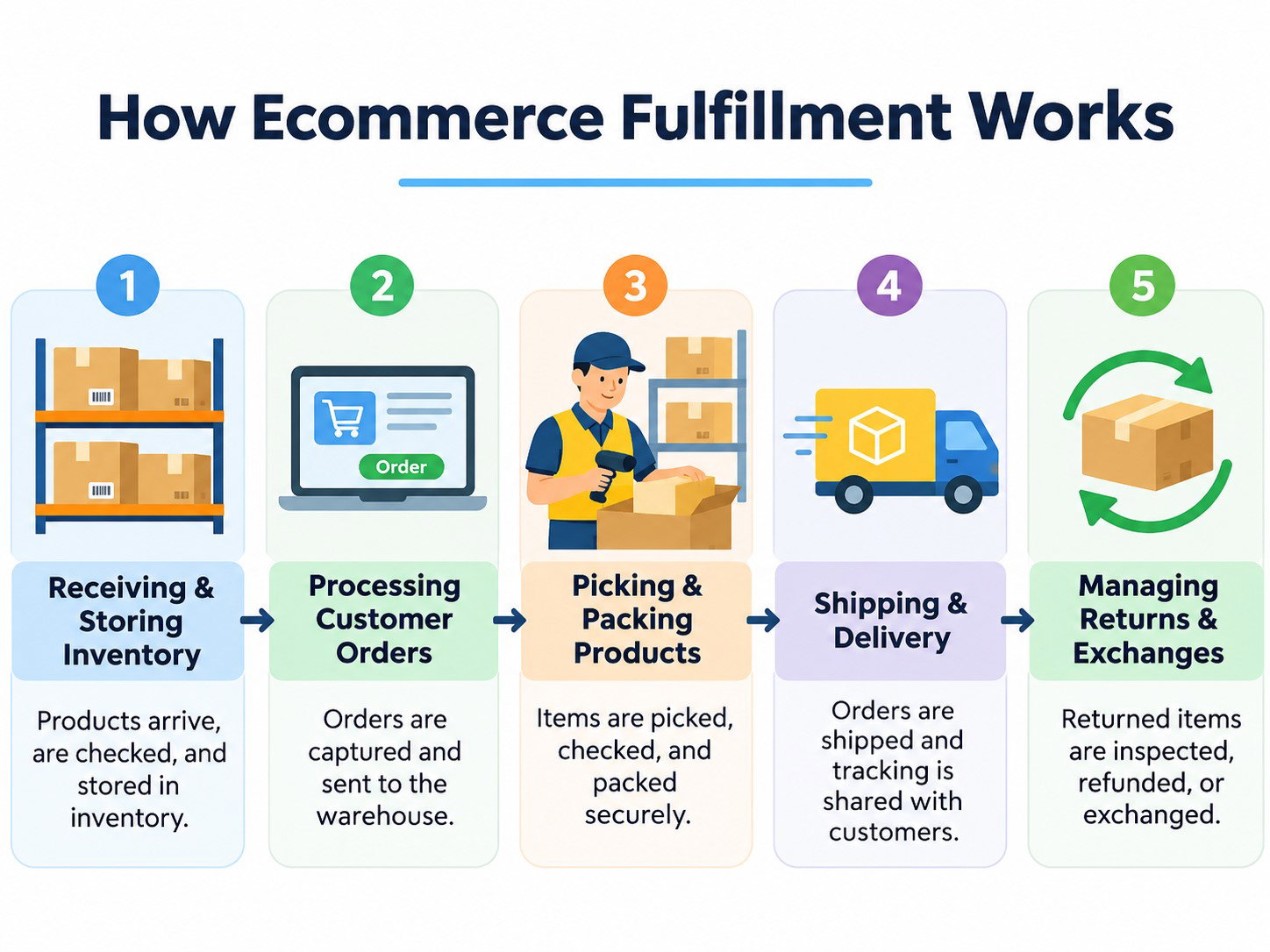
The ecommerce fulfillment process generally involves five important stages, each contributing to accurate and timely order delivery.
1. Receiving And Storing Inventory
The process begins when businesses receive products from manufacturers or suppliers. Warehouse teams inspect incoming shipments, verify quantities, and organize products in designated storage locations.
An inventory management system helps businesses track available stock, monitor product movement, and identify replenishment requirements. Accurate inventory records are essential because even a small discrepancy can lead to canceled orders or delayed deliveries.
2. Processing Customer Orders
Once a customer places an order, the ecommerce platform captures information such as product details, quantities, payment status, and delivery address. An order management system then verifies availability and sends the relevant instructions to the warehouse or fulfillment center.
Automation can simplify this stage by synchronizing orders across multiple sales channels and reducing manual data entry.
3. Picking And Packing Products
Next, warehouse employees locate the ordered products, a process known as picking. The selected items are checked and packed using suitable materials to protect them during transportation.
Businesses may also include branded packaging, invoices, or promotional inserts. Accurate picking and packing help reduce incorrect shipments, damaged products, and avoidable returns.
4. Shipping And Delivery
After packaging, orders are handed over to shipping carriers for transportation. Businesses select delivery services based on factors such as destination, package dimensions, delivery speed, and cost.
Tracking information is typically shared with customers, allowing them to monitor shipment progress.
5. Managing Returns And Exchanges
Fulfillment doesn't necessarily end when a package reaches its destination. Customers may request returns because of damaged products, incorrect items, or changing preferences.
Businesses must inspect returned products, process refunds or exchanges, and update inventory records. This process, commonly called reverse logistics, is essential for maintaining operational accuracy and customer trust.
Now that we've surfed through the fulfillment process, the next segment unveils the underlying types.
What Are The Different Types Of Ecommerce Fulfillment?
Businesses can choose from several fulfillment models depending on their order volume, budget, resources, and customer expectations.
1. In-House Fulfillment
With in-house fulfillment, businesses manage inventory storage, packaging, shipping, and returns using their own facilities and employees. This approach provides greater control over packaging, quality checks, and customer experience.
For example, a small handmade jewelry business might initially store products at its workshop and ship orders independently. However, managing fulfillment internally can become increasingly expensive and time-consuming as orders grow.
2. Third-Party Logistics (3PL)
Third-party logistics, commonly called 3PL, involves outsourcing fulfillment operations to a specialized service provider. A 3PL company typically stores inventory, processes orders, packs products, and coordinates shipping on behalf of the business.
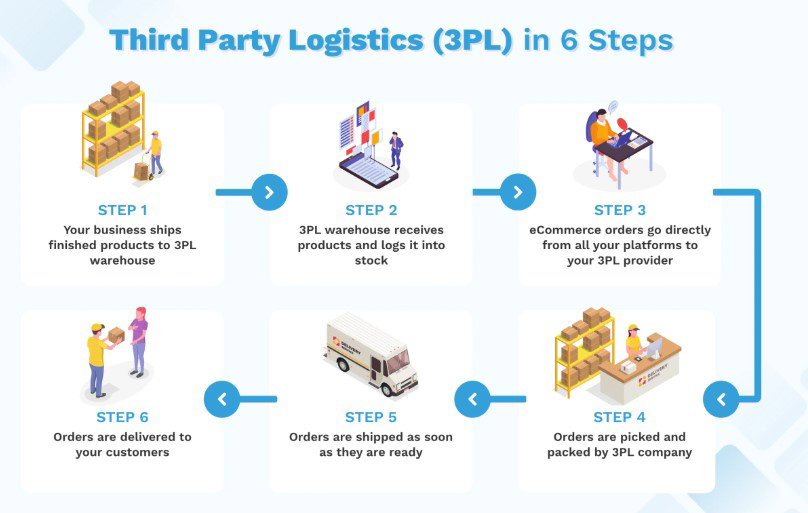
For instance, an apparel brand may send its inventory to a 3PL warehouse, where orders are fulfilled automatically as customers make purchases. This model can help businesses scale operations without establishing their own warehousing infrastructure.
However, businesses must consider service fees, operational visibility, and the provider's reliability.
3. Dropshipping
Dropshipping allows online retailers to sell products without purchasing and storing inventory upfront. When customers place orders, the retailer forwards purchase details to a supplier, who ships the products directly to the customer.
The key distinction in drop shipping vs 3PL is inventory ownership. In a typical 3PL arrangement, the retailer owns the inventory stored by its logistics partner. In dropshipping, the supplier generally owns the inventory until the retailer purchases the item.
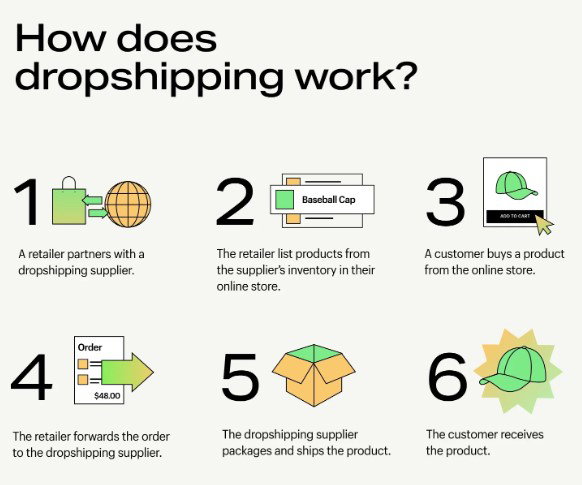
Dropshipping reduces inventory investment but can limit control over product quality, packaging, and delivery.
4. Hybrid Fulfillment
Hybrid fulfillment combines two or more fulfillment methods. For example, a business might manage premium products internally while using a 3PL provider for standard orders.
This approach offers flexibility but requires reliable inventory coordination across different fulfillment locations.
Understanding these models helps businesses evaluate the next important factor: cost.
How Much Does Ecommerce Fulfillment Cost?
Ecommerce fulfillment costs depend on product characteristics, storage requirements, order volume, shipping destinations, and the selected fulfillment model.
Common expenses include:
-
Inventory receiving: Costs associated with accepting and processing incoming stock.
-
Warehousing: Charges for storing products in a warehouse or fulfillment center.
-
Picking and packing: Labor and packaging expenses for preparing individual orders.
-
Shipping: Transportation charges based on distance, weight, dimensions, and delivery speed.
-
Returns processing: Expenses associated with inspecting, restocking, or disposing of returned products.
-
Technology and setup: Fees for fulfillment software, system integrations, and onboarding.
Businesses can calculate their average fulfillment cost per order by dividing total fulfillment expenses during a period by the number of orders shipped. For example, if monthly fulfillment expenses total $5,000 and the business ships 1,000 orders, the average cost is $5 per order.
However, this figure is only meaningful when all relevant expenses are included consistently. Comparing in-house vs outsourced fulfillment therefore requires evaluating total costs rather than focusing solely on individual shipping or storage fees.
As fulfillment expenses increase alongside order volumes, businesses may need to reassess whether managing operations internally remains sustainable. This is where outsourcing to a third-party logistics provider becomes worth considering.
When Should You Switch To A 3PL?
Many ecommerce businesses begin by handling fulfillment independently. However, as sales increase, managing daily shipments can become a significant operational challenge.
Businesses should consider switching to a 3PL when order volumes consistently exceed internal processing capacity, warehouse space becomes insufficient, or shipping operations consume too much employee time.
Topics For More Insights
Expansion into new geographic markets may also make outsourcing attractive, particularly when a logistics provider operates fulfillment centers closer to customers.
However, moving to a 3PL isn't automatically the right decision. Businesses should compare projected outsourcing expenses with their existing costs, evaluate service requirements, and assess whether the transition improves overall operational performance.
How To Choose A Fulfillment Partner?
Selecting the right fulfillment partner requires more than comparing pricing packages. Businesses should evaluate several operational factors before signing an agreement.
-
Fulfillment locations: Check whether warehouse locations support your customers' delivery expectations.
-
Technology integration: Ensure the provider connects with your ecommerce platform and inventory management systems.
-
Order accuracy: Review performance commitments, quality controls, and procedures for resolving fulfillment errors.
-
Transparent pricing: Understand storage fees, minimum charges, shipping costs, and additional service expenses.
-
Scalability: Assess whether the provider can handle seasonal demand and future order growth.
-
Returns management: Confirm how returns, refunds, inspections, and restocking are handled.
Businesses should also examine service-level agreements, reporting capabilities, and procedures for handling damaged or missing inventory. Testing the provider with a limited order volume before expanding the partnership can help identify potential operational problems.
Conclusion
Ecommerce fulfillment plays a critical role in transforming online purchases into successful customer experiences. From inventory management and order processing to shipping and returns, every stage influences delivery reliability, operational efficiency, and customer satisfaction.
Whether businesses choose in-house fulfillment, third-party logistics, dropshipping, or a hybrid approach, the right strategy depends on their resources, growth plans, and customer requirements.
For businesses just getting started, the priority should be building a reliable process that delivers orders accurately and keeps costs manageable. After all, making a sale is only the beginning. Delivering on that promise is what keeps customers coming back.
Frequently Asked Questions
How Does Distributed Inventory Management Improve Ecommerce Fulfillment Efficiency?
Distributed inventory management allows businesses to store products across multiple fulfillment centers based on regional demand. This approach can reduce shipping distances, improve delivery speeds, and lower transportation costs while maintaining inventory visibility across locations.
What Role Do AI And Predictive Analytics Play In Ecommerce Fulfillment?
AI and predictive analytics help businesses forecast demand, optimize inventory allocation, and identify potential supply chain disruptions. These technologies can also improve warehouse efficiency, automate order routing, and reduce stockouts or excess inventory.
Which KPIs Should Businesses Track To Measure Ecommerce Fulfillment Performance?
Businesses should monitor order accuracy rate, on-time delivery rate, order cycle time, inventory turnover, and fulfillment cost per order. Tracking these KPIs helps identify operational bottlenecks, evaluate logistics partners, and improve overall fulfillment efficiency.
Fri, Nov 20, 2026

Liked what you read? That’s only the tip of the tech iceberg!
Explore our vast collection of tech articles including introductory guides, product reviews, trends and more, stay up to date with the latest news, relish thought-provoking interviews and the hottest AI blogs, and tickle your funny bone with hilarious tech memes!
Plus, get access to branded insights from industry-leading global brands through informative white papers, engaging case studies, in-depth reports, enlightening videos and exciting events and webinars.
Dive into TechDogs' treasure trove today and Know Your World of technology like never before!
Disclaimer - Reference to any specific product, software or entity does not constitute an endorsement or recommendation by TechDogs nor should any data or content published be relied upon. The views expressed by TechDogs' members and guests are their own and their appearance on our site does not imply an endorsement of them or any entity they represent. Views and opinions expressed by TechDogs' Authors are those of the Authors and do not necessarily reflect the view of TechDogs or any of its officials. While we aim to provide valuable and helpful information, some content on TechDogs' site may not have been thoroughly reviewed for every detail or aspect. We encourage users to verify any information independently where necessary.
Loading comments...