

Artificial Intelligence
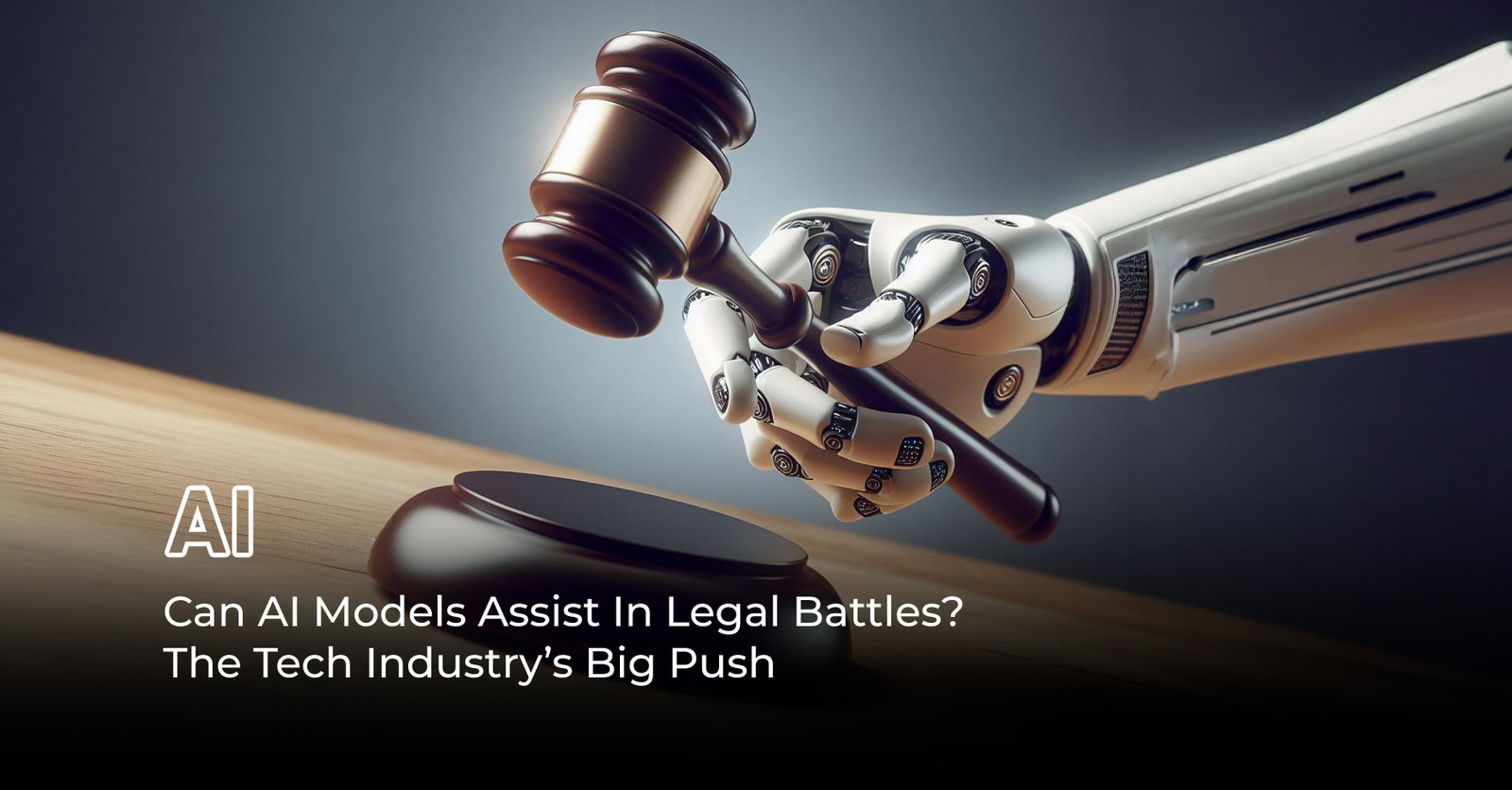
Can AI Models Assist In Legal Battles? The Tech Industry’s Big Push
Share
TL;DR
-
AI can support research, discovery review, drafting, case preparation, and deposition work.
-
OpenAI, Google, Anthropic, and SpaceXAI are pushing deeper into specialized legal AI.
-
Lawyers can generally use AI during active cases, subject to ethical duties and court-specific rules.
-
Grounded legal systems can save time and widen research coverage.
-
Hallucinated citations, bias, confidentiality risks, and weak explainability remain serious problems.
-
Human lawyers remain responsible for verifying facts, authorities, arguments, and filings.
Introduction
Millennials surely remember Jim Carrey, while Gen Zers probably heard about him from your elder siblings, parents, or relatives.
Either way, we're reminiscing about one of his best works: Liar Liar.
The story was simple: Fletcher Reede, a successful lawyer whose career was built on his ability to lie, suddenly faces a major professional problem. Why? Because his son made a birthday wish that his father, who missed his birthday and lied about why, couldn't lie for a whole day.
To beat the curse, Reede resorts to unconventional methods to postpone the court session of a very important legal case, but the attempts prove unsuccessful. Now, this liar lawyer must resort to the absolute truth to win. It takes massive effort but ultimately, he does win the case.
Too bad he didn't have access to A) models, which could have helped him deliver the winning blow a lot sooner. That is, if it didn't hallucinate laws or fabricate legal citations.
Yes, AI in the legal industry is facing its own battle as experts debate whether its use should be permitted or not and to what degree. So, let's dive in and explore this million-dollar question.
Can AI Models Assist In Legal Battles?
Yes, but “assist” is doing a lot of work.
Artificial intelligence (AI) models cannot independently take over a lawyer's professional duties, yet they can support the work surrounding a case.
In practice, legal tech AI litigation tools can review discovery, summarize evidence, search case law, compare contracts, draft first-pass briefs and memos, and help prepare deposition questions.
That is already happening at scale. Thomson Reuters reported in 2026 that 41% of law firms and 47% of corporate legal departments said their legal teams were using generative artificial intelligence (GenAI), up from 28% and 23%, respectively, in 2025.
AI models for courtroom assistance are therefore better understood as research and preparation partners, not robot attorneys taking the floor.
So, Fletcher Reede probably still has to make the argument himself. The difference is that Big Tech increasingly wants AI sitting beside him while he prepares it.

How The Tech Industry Is Making A Big Push
The legal tech industry is moving from general-purpose chatbots toward systems connected to legal sources, firm data, and professional workflows. That shift matters because a confident answer is useless in court if the supporting authority does not exist.
-
OpenAI Astra For Law
OpenAI Astra for Law combines GPT-6 Astra with a dedicated Legal Search Index covering U.S. case law, statutes, regulations, court rules, and administrative decisions. OpenAI says the index is updated daily, while the model can help develop arguments, examine counterarguments, and analyze deal terms. Early access is initially aimed at selected U.S. law firms.
-
Google Gemini Enterprise For Legal
Google's approach centers on connected workflows. Google legal AI connectors, Everlaw and NetDocuments among them, let Gemini Enterprise for Legal reach external legal platforms rather than depend only on model memory. It also offers specialized skills and agents for legal research, regulatory screening, and contract work.
-
Anthropic Claude Legal Solutions
Anthropic legal intelligence models are also moving deeper into professional workflows through Claude Legal Solutions. The service supports legal research, M&A diligence, contract redlining, regulatory work, and outside-counsel management, with connectors to legal platforms and internal knowledge.
-
Grok, Cursor, And SpaceXAI
Grok legal assistance entered the conversation through Cursor and SpaceXAI. Cursor said Grok 4.5 was designed for long-running tasks including legal work, while SpaceXAI now promotes Grok for contract analysis, legal research, compliance monitoring, drafting, and due diligence.
Different products, same pitch: make AI useful for legal work without asking lawyers to trust a chatbot's memory alone. That leads to the harder question of what lawyers are actually allowed to do with it.
Can AI Models Legally Assist Lawyers During Active Court Trials?
At least in the U.S. the short answer is generally yes, but under human responsibility and subject to court-specific rules.
The American Bar Association's Formal Opinion 512 says lawyers using GenAI must still meet duties involving competence, confidentiality, supervision, candor to tribunals, and reasonable fees. Lawyers must understand a tool's limitations and independently review its output.
Courts can add stricter requirements. In September 2026, the 10th U.S. Circuit Court of Appeals proposed a rule for AI-assisted court filings that would require filers to certify that a human reviewed them. If adopted, it would take effect January 1, 2027.
So, can AI models legally assist lawyers during active court trials? Yes, in many circumstances. They cannot make professional responsibility disappear with a prompt.
That legal boundary makes the benefits more useful to examine.

Advantages Of AI Models In Legal Battles
Used carefully, AI can strengthen the work around litigation in several practical ways:
-
Faster case preparation: AI can sort, summarize, and compare large sets of filings, evidence, discovery documents, and case materials much faster than manual review.
-
Broader legal research: Systems grounded in legal databases can surface potentially relevant authorities and opposing arguments that lawyers can then verify.
-
More time for strategy: Harvard Law School research on AI adoption found dramatic productivity gains in some law-firm pilots, allowing attorneys to move time from information collection toward analysis and strategy.
-
More scalable legal work: Smaller teams can process larger document sets, answer clients faster, and handle repetitive research without expanding every task into hours of manual work.
However, faster work only helps when the underlying work is trustworthy. That is where the case against careless AI use becomes much stronger.
Disadvantages Of AI Models In Legal Battles
The biggest problems are not theoretical. They affect evidence, confidentiality, fairness, and the credibility of filings.
-
Hallucinated law: AI can invent cases, quotations, citations, or legal principles. This is one of the most dangerous forms of AI hallucination in legal work. A Stanford RegLab study of specialized legal research tools found hallucination rates above 17%, although those findings involved earlier tools and do not measure the newer 2026 products discussed above.
-
Confidentiality risks: Feeding privileged client information into the wrong service can create privacy, security, and professional-responsibility problems. Firms need clear controls over what data is shared and how vendors handle it.
-
Bias and weak explainability: Models can reflect biases in their data or produce reasoning that is difficult to inspect. These are part of the wider ethical challenges surrounding AI. In a legal dispute, an answer that cannot be properly defended is a serious weakness.
-
Overreliance: Automation can make weak research look polished. Lawyers remain responsible for checking authorities, facts, and arguments before filing them, no matter how specialized the model claims to be.
Liar Liar forced Fletcher Reede to work with the truth. Legal AI has no such curse, which means the human using it still has to supply the verification.
Topics For More Insights
The Final Verdict
AI models can assist in legal battles, and the tech industry is building increasingly specialized tools to make that help useful. Yet a faster researcher is not automatically a reliable one. Lawyers still have to protect confidential information, verify authorities, challenge shaky reasoning, and own what reaches the court. For now, legal AI looks less like replacing Fletcher Reede and more like giving him a very fast, closely supervised research team.
Frequently Asked Questions
Can AI-Generated Evidence Be Used In Court?
AI-generated material is not automatically barred from evidence, but it still has to satisfy the same evidence rules that apply to other material. Courts may examine relevance, authenticity, hearsay, reliability, and whether the evidence has been altered or fabricated. Synthetic images, audio, or documents can create extra authentication challenges. A party relying on AI-generated material may therefore need supporting testimony, metadata, provenance records, or other evidence showing where it came from and why it should be trusted.
Does Attorney-Client Privilege Protect Information Entered Into AI Tools?
Not automatically. Attorney-client privilege generally protects qualifying confidential communications between a lawyer and client, but putting those communications into a third-party AI system can create confidentiality and waiver concerns depending on the service, its terms, security controls, and how the information is handled. Lawyers should understand whether prompts are stored, reviewed, or used for training and follow applicable professional rules before entering privileged material. Enterprise legal tools may provide stronger contractual and technical protections than consumer services.
Can Someone Without A Lawyer Use AI To Help With A Court Case?
Self-represented litigants can use AI tools for research, drafting, or organizing information where court rules permit it, but the AI itself does not become a licensed representative. The person filing a document remains responsible for its accuracy and compliance with court rules. Some courts have issued AI-specific orders or disclosure requirements, while others rely on existing procedural rules. Anyone using AI without a lawyer should independently verify cases, deadlines, procedures, and local requirements before relying on an output.
Thu, Oct 1, 2026

Liked what you read? That’s only the tip of the tech iceberg!
Explore our vast collection of tech articles including introductory guides, product reviews, trends and more, stay up to date with the latest news, relish thought-provoking interviews and the hottest AI blogs, and tickle your funny bone with hilarious tech memes!
Plus, get access to branded insights from industry-leading global brands through informative white papers, engaging case studies, in-depth reports, enlightening videos and exciting events and webinars.
Dive into TechDogs' treasure trove today and Know Your World of technology like never before!
Disclaimer - Reference to any specific product, software or entity does not constitute an endorsement or recommendation by TechDogs nor should any data or content published be relied upon. The views expressed by TechDogs' members and guests are their own and their appearance on our site does not imply an endorsement of them or any entity they represent. Views and opinions expressed by TechDogs' Authors are those of the Authors and do not necessarily reflect the view of TechDogs or any of its officials. While we aim to provide valuable and helpful information, some content on TechDogs' site may not have been thoroughly reviewed for every detail or aspect. We encourage users to verify any information independently where necessary.
Loading comments...