
Digital Marketing
Digital Marketing Trends Every Marketer Needs In 2026
Share
TL;DR
-
Mobile-First Indexing: More than 60% of all global web traffic is now mobile (Statista). A one-second delay in mobile loading time can cut conversion rates by up to 20% (Gartner). Mobile-friendly website optimization directly correlates to search rankings, engagement, and conversions in 2026.
-
Micro-Influencers: Micro-influencers deliver 3.2x higher engagement at 60% lower cost than mega-influencers. Nearly three-quarters of agencies believe micro and niche influencers will have a stronger impact than celebrity endorsements in 2026 (Onclusive).
-
Always-On Marketing: 69% of customers want consistent experiences across physical and digital channels (Involve.me). 76% say they would not purchase from a company they do not trust with their data. Always-on marketing builds the consistency and continuity that episodic campaigns cannot.
-
Privacy-First Marketing: 82% of internet users are very concerned about how their personal information is collected and used (Data Stack Hub). 69% of US consumers abandoned a transaction due to data privacy concerns (Liquid Web/eMarketer). Over 72% of marketers are shifting toward privacy-first data strategies (Deloitte).
-
Sustainability and Purpose-Driven Branding: 88% of consumers now expect brands to be transparent about sourcing and production (Forbes). 65% of consumers prefer eco-conscious brand campaigns. Sephora's Clean Beauty initiative drove a 12% rise in revenue in 2025, demonstrating that sustainability transparency translates directly to growth.

Introduction
In The Matrix, Neo is offered two choices: take the blue pill and keep seeing what he has always seen, or take the red pill and see the world as it actually is. Digital marketing in 2026 is offering brands the same choice. The blue pill is a familiar, desktop-first design, celebrity endorsements, campaign bursts, third-party cookie tracking, and sustainability messaging that sounds good on a press release. The red pill is harder but more valuable: build for the mobile world most users already live in, earn trust through micro-communities, show up every day instead of only during campaigns, protect data because users are watching, and prove your values through action rather than slogans.
Over the years, digital marketing has evolved from simple ads and email blasts to a more intuitive, human-centered approach. In 2026, with global digital advertising spend exceeding $740 billion (Statista), brands are competing for a fixed amount of human attention. The ones winning are the ones who chose the red pill. Here are the five trends defining that choice.
Trend 1: Mobile-First Indexing Will Drive The Next Evolution Of Search
Until recently, most brands designed their websites with desktop users in mind. Mobile visitors dealt with slow-loading pages, awkward layouts, and text that was nearly impossible to read. Google's mobile-first indexing changed everything; sites that weren't mobile-friendly lost their rankings, engagement, and visibility. In 2026, mobile is no longer the second screen. It is the central way people discover, explore, and connect with brands.
With more than 60% of all global web traffic now coming from mobile devices, search engines have made mobile performance the foundation of online visibility. That's where Answer Engine Optimization (AEO) plays a critical role alongside mobile-first indexing, changing how content is surfaced and experienced. With smoother layouts, faster visuals, and voice search, brands are leaving a solid first impression directly in users' hands.
How Is The Industry Responding?
According to SEO Jackers, a local restaurant redesigned its website for mobile, and online bookings jumped by 40% in just three months. Gartner notes that even a one-second delay in mobile loading time can cut conversion rates by up to 20%, making fast-loading SEO-optimized mobile sites critical for keeping users and driving conversions.
Justin Berg, Founder of Rock The Rankings, put it plainly: "If your website isn't mobile-friendly, it will likely rank lower in the search results, leading to reduced visibility and fewer conversions."
The shift is clear: mobile-first is not a design preference; it is a search ranking requirement. In 2026, the brands still optimizing their desktop experience first are not just behind on design; they are systematically invisible to the majority of their potential audience.
Challenges To Watch
The shift sounds simple, but execution is not. Structured data, blocked resources, slow load times, and mobile pages that don't match desktop content all create ranking gaps. Broken links, restricted crawlers, and poor mobile rendering on some CMS platforms compound the problem.
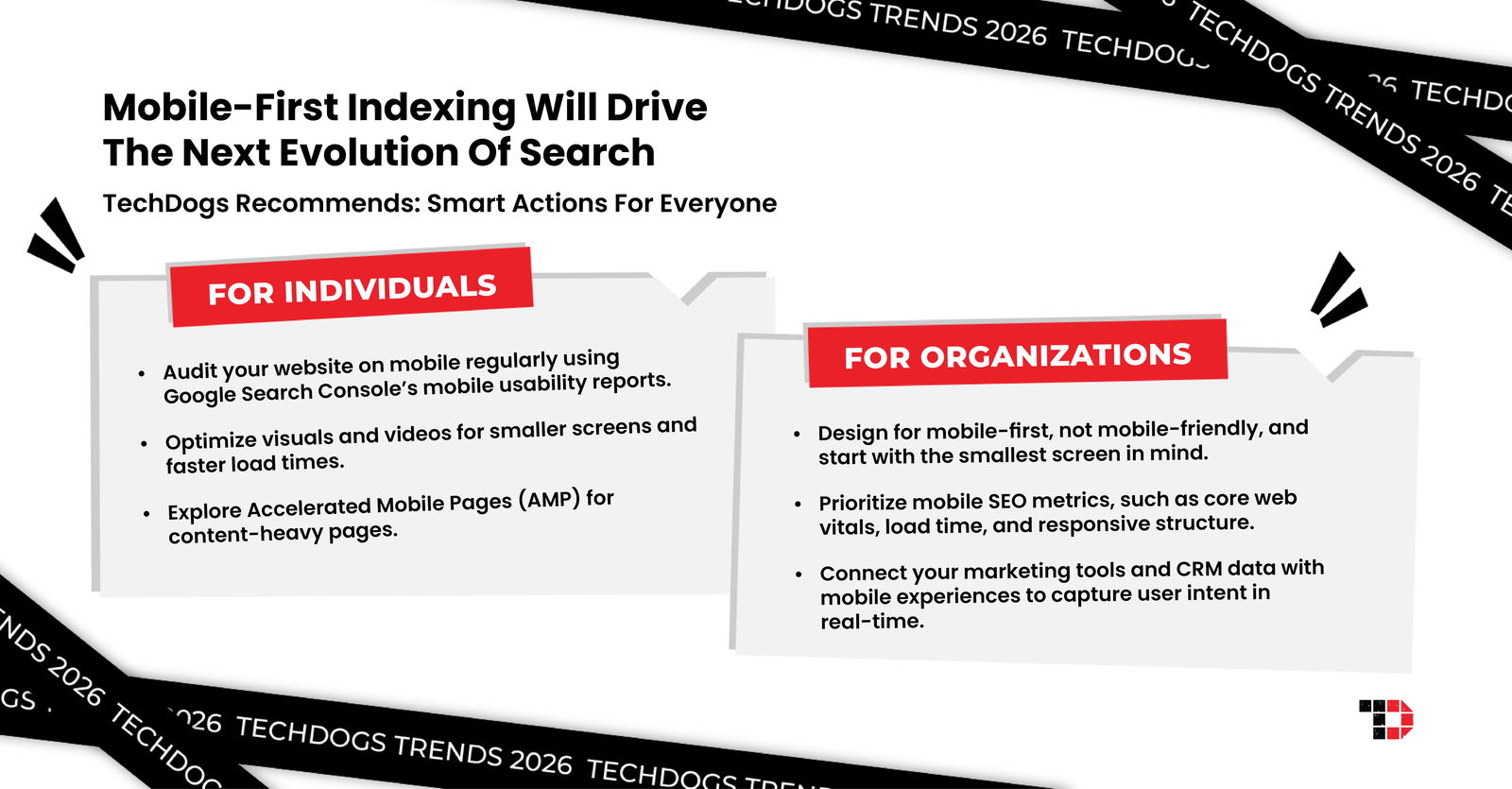
TechDogs Recommends: Smart Actions For Everyone
Trend 2: Micro-Influencers Will Take The Spotlight From Celebrity Endorsements
In marketing, celebrity endorsements are still a common practice. Brands believe that having a famous face can lead to instant trust, visibility, and sales. For years, this practice defined aspirational marketing. This definitely helps in generating leads, but are the leads relevant? Not so much. As audiences have become more selective and social media platforms have given everyone a voice, everyone has become a kind of influencer. People now look for creators who keep it real, who’ve been where they are, and who feel more like a friend than a celebrity.
In 2026, influencer marketing has shifted its focus to building a genuine community. Brands are moving away from one-off celebrity deals and opting for multiple micro-influencers across various niches instead. It’s a smarter, more relatable approach that brings faster content, stronger authenticity, and better value. For the cost of one celebrity campaign, brands can work with 10 to 20 smaller creators and reach close-knit communities where trust actually turns into action. All in all, the real stars of marketing these days aren’t on billboards, but right in your feed, just being themselves.
How Is The Industry Responding?
According to Onclusive, nearly three-quarters of agencies now believe that micro and niche influencers will have a stronger impact than celebrity endorsements in 2026. In fact, Vogue Business noted that people trust creators they relate to. Here, beauty brands are leading the way by partnering with smaller creators who bring genuine trust, stronger engagement, and meaningful connections.
Anthony Rochand from LEW also said, “Micro-influencers are now real creative partners. Long-term collaborations are replacing one-off sponsored posts.”
Lee Oden, TopRank Marketing, validated the same, saying, “The value of a micro-influencer isn’t the size of their audience, but in the quality of the relationship they have with that audience. These are individuals who have earned their following through creating value from first-hand experience, deep expertise, and active participation in their communities.”
Challenges To Watch
Managing multiple micro-influencers is never easy. It demands time, coordination, and strong oversight. Quality, tone, and professionalism vary, which can make maintaining brand alignment and compliance challenging. Tracking ROI across fragmented platforms adds complexity, while over-scripting can dilute authenticity. Balancing creative freedom with brand consistency, ensuring transparent disclosures, and filtering out fake engagement adds another layer of challenge.
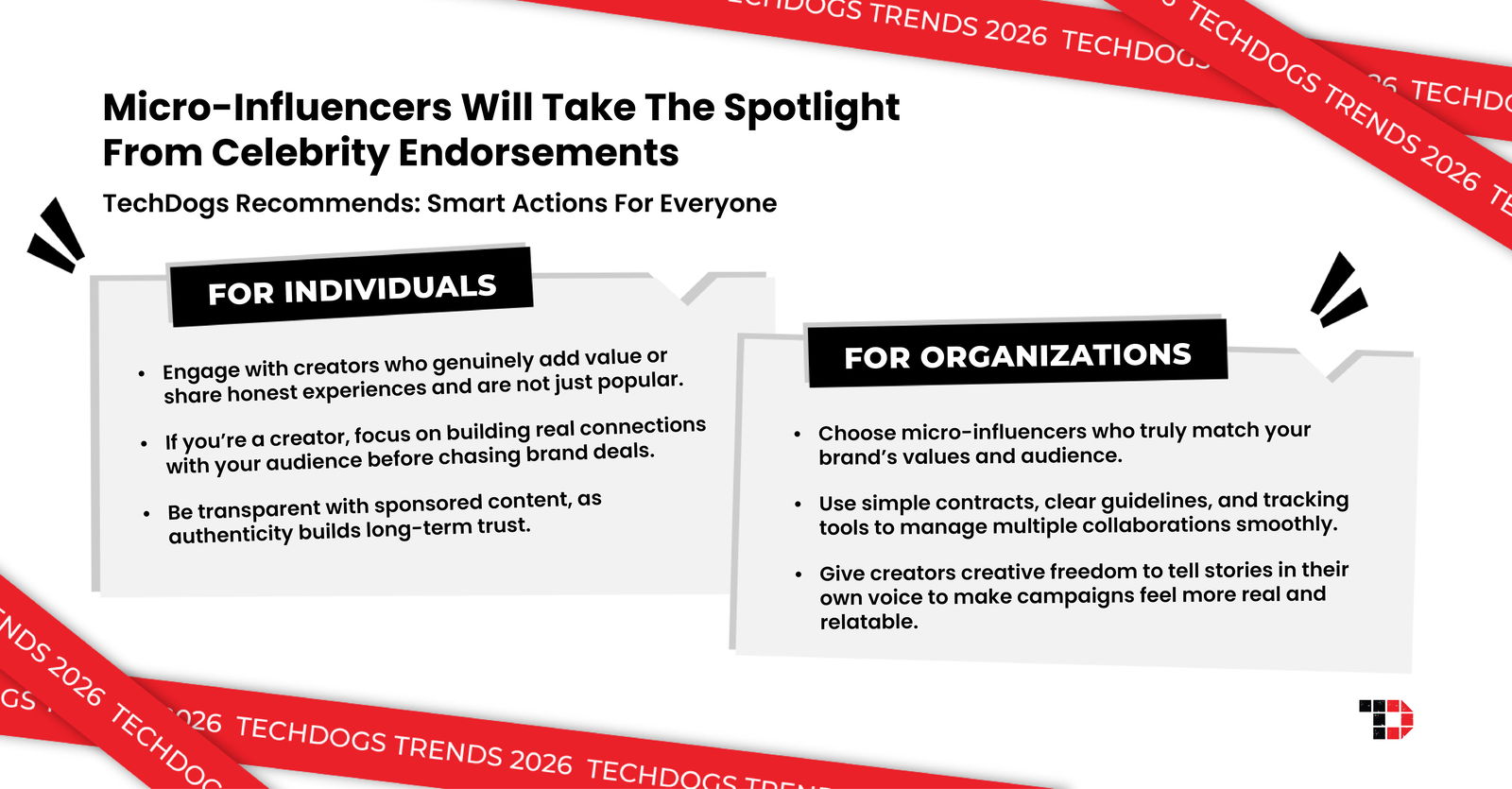
TechDogs Recommends: Smart Actions For Everyone
Trend 3: Always-On Marketing Will Move From Campaigns To Continuous Dialogue
It is no longer enough to launch a campaign, promote it, and then go quiet until the next idea rolls out. Audiences now live in a world of constant interaction, scrolling, commenting, and sharing in real time, and they expect brands to keep pace. In 2026, many marketers are moving toward an always-on approach based on continuous dialogue rather than one-time pushes.
Automation, social listening, and real-time data now help brands respond instantly and make interactions feel personal rather than programmed. Marketing is becoming less about what brands say and more about how consistently they show up. Hyper-personalized content delivered at the right moment, not just during campaign periods, is what builds the ongoing relationship that drives loyalty.
How Is The Industry Responding?
A report from Involve.me reveals that 69% of customers want consistent experiences across both physical and digital channels, while 76% say they would not purchase from a company they do not trust with their data. Consistency and trust are not soft metrics; they are conversion drivers.
Sean Dougherty, Senior Brand Creative at Funnel, said: "Always-on changes your marketing performance measurement, making it continuous and automated instead of periodic. While most marketing teams have real-time tracking and reporting, always-on measurement takes it further by making the actual measuring practices ongoing, too."
The reality is this: episodic marketing trains audiences to ignore you between campaigns. Always-on marketing trains audiences to expect you, and to trust that you'll be there when they need you. In a crowded digital landscape, that consistency is the competitive advantage that campaign-only brands cannot easily replicate.
Challenges To Watch
Maintaining consistency across multiple channels, keeping up with real-time interactions, and managing large volumes of data are major hurdles. Brands also struggle with integrating teams, avoiding over-automation, and delivering personalized experiences without overwhelming their audiences. Protecting customer data while staying responsive adds further complexity.
Topics For More Insights
TechDogs Recommends: Smart Actions For Everyone

Trend 4: Privacy-First And Data-Driven Marketing Will Redefine Customer Trust
Marketers used to treat user data like an endless resource. Hidden scripts and third-party cookies quietly followed people across the web. It worked for a while, but it came at a cost of trust. With data breaches, privacy scandals, and stricter laws, the rules have changed. Today, earning user trust has become the most valuable currency in marketing.
Privacy-first marketing focuses on building relationships through transparency, consent, and giving people control over their data. First-party and zero-party data, collected with permission, now power data-driven personalization that feels respectful instead of intrusive. Contextual ads, cookie-free analytics, and clear policies are redefining what it means to be data-driven.
How Is The Industry Responding?
Data Stack Hub reports that 82% of internet users are very concerned about how their personal information is collected and used. eMarketer (Liquid Web data) finds that 69% of US consumers have abandoned a transaction due to data privacy concerns. Deloitte's 2025 Marketing Transformation Report shows that over 72% of marketers are shifting toward privacy-first data strategies.
Guven Soydan, former VP of product at Remerge, said: "Advertisers should prioritize privacy because it aligns with their customers' desires. Advertising that respects privacy boundaries fosters healthier long-term relationships with potential and existing customers. The future of marketing is about earning the right to use the data."
The advantage is shifting to brands that treat privacy as a design principle rather than a compliance obligation. When 69% of consumers have already abandoned a transaction over data concerns, privacy-first marketing is not a values statement; it is a conversion optimization strategy.
Challenges To Watch
Balancing personalization and privacy is complex. Managing consent across multiple touchpoints, complying with evolving global privacy laws, and maintaining transparency at scale are significant challenges. As third-party cookies disappear, brands must maximize their own first-party insights. Aligning marketing, tech, and legal teams on privacy compliance adds organizational complexity.
TechDogs Recommends: Smart Actions For Everyone

Trend 5: Sustainability Will Become The New Currency Of Brand Credibility
Brands are no longer just judged by what they sell, but by what they stand for. As global awareness around climate change, ethical practices, and social responsibility grows, sustainability is no longer a sidebar to brand strategy; it is the strategy. In 2026, purpose-driven marketing means demonstrating genuine impact, not just communicating intentions.
Customers, especially Gen Z and Millennials, are quick to spot greenwashing and demand proof through action rather than slogans. Sustainability is moving from a marketing message to a measurable business metric. Brands are expected to show how their products, policies, and partnerships reduce carbon footprints, support social causes, and improve digital well-being. Short-form video and social commerce are amplifying this accountability, making brand values visible at every purchase moment.
How Is The Industry Responding?
Sephora's "Clean Beauty" initiative showed how sustainability transparency can translate into measurable growth, leading to a 12% rise in revenue in 2025. A Forbes report highlights that 88% of consumers now expect brands to be transparent about their sourcing and production. Research shows 65% of consumers prefer eco-conscious brand campaigns, making sustainability marketing a core differentiator rather than an optional add-on.
Adam Wagner, COO of Raindrop Agency, explained: "The shift towards digital marketing is not just a cost-saving measure for brands, it's also an essential part of any modern sustainability strategy. With the ability to reach global audiences while minimizing physical waste, digital marketing channels offer businesses an opportunity to align their marketing strategies with their environmental values."
The takeaway for digital marketers: consumers in 2026 have become expert greenwashing detectors. The brands that win on sustainability are not the ones with the best environmental messaging; they are the ones whose actions make the messaging unnecessary. That is where brand credibility compounds into long-term loyalty.
Challenges To Watch
Balancing profit with purpose requires rethinking traditional business models and committing to continuous improvement. Proving authenticity remains a major hurdle, as consumers are quick to call out performative sustainability. As global standards tighten, maintaining transparency, accountability, and consistency, while demonstrating that sustainability promises reflect genuine commitments, is the central challenge for modern brands.
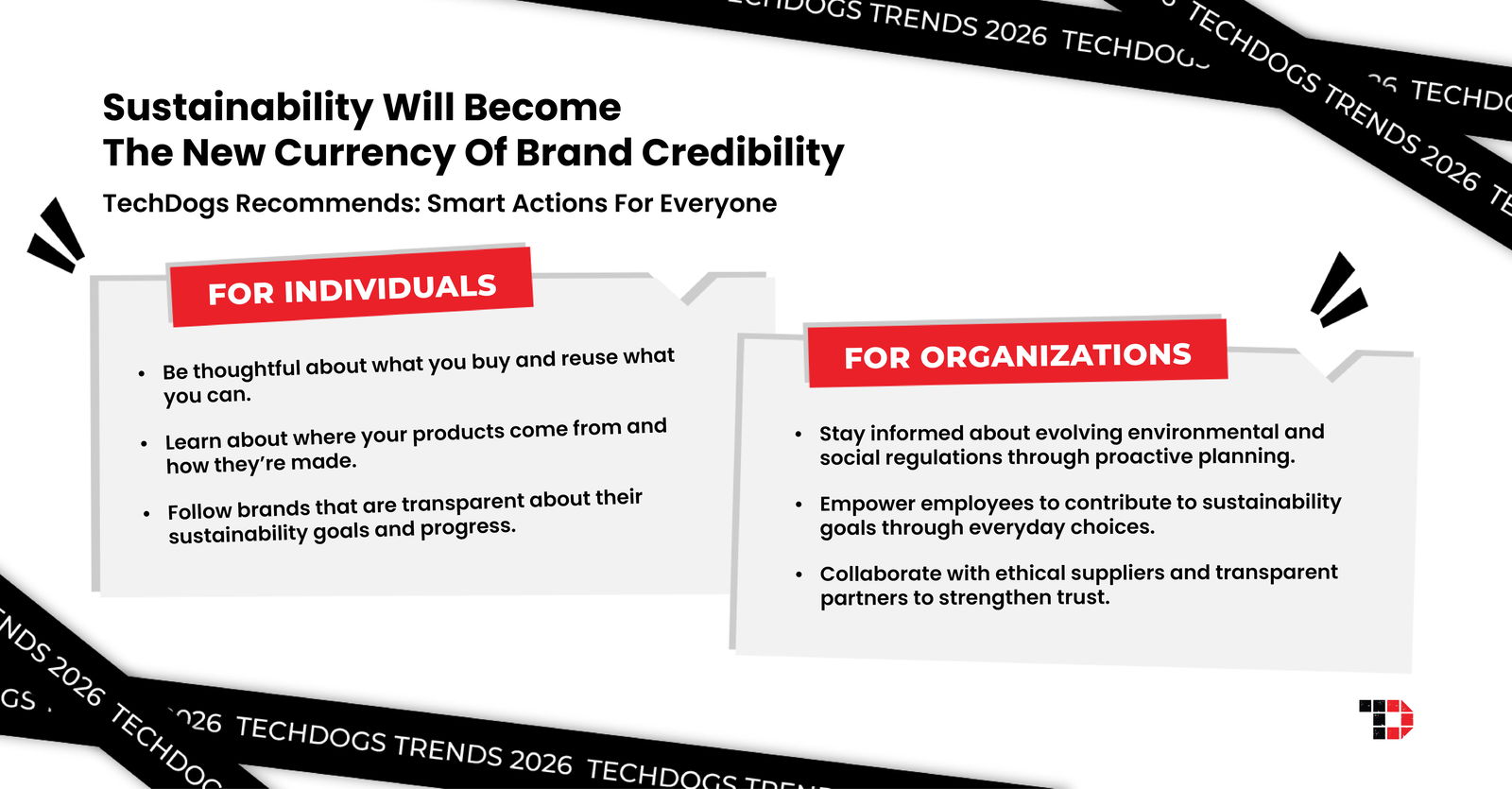
TechDogs Recommends: Smart Actions For Everyone
Conclusion
The red pill is the harder choice. It means rebuilding for the world as it is, mobile-first, micro-community driven, always present, privacy-respecting, and genuinely purposeful, rather than the world brands wished their audience still lived in.
Just like Luna discovering that "Green Choice" tag, the right combination of speed, relevance, and authenticity can turn an ordinary scroll into a moment worth remembering. That is the essence of digital marketing in 2026, marketing that works because it is real.
The digital landscape will keep evolving. Brands that adapt to these five trends, mobile-first design, micro-influencer trust, always-on engagement, privacy-first strategy, and purpose-driven branding, are the ones that will build the connections that last beyond any single campaign.
Frequently Asked Questions
What Are The Top Digital Marketing Trends To Watch In 2026?
In 2026, digital marketing centers on mobile-first indexing, micro-influencers, always-on engagement, privacy-first strategies, and purpose-driven sustainability, blending technology, trust, and authenticity to foster lasting connections. With global digital advertising spend exceeding $740 billion in 2026 (Statista) and micro-influencers delivering 3.2x higher engagement at 60% lower cost, the trends reflect a market where performance and trust have become the same thing.
How Will Mobile-First Indexing Impact Digital Marketing In 2026?
Mobile-first indexing makes mobile optimization crucial for SEO, as fast and user-friendly mobile sites will rank higher and drive stronger engagement. With 60%+ of global web traffic on mobile and a one-second loading delay cutting conversions by up to 20% (Gartner), brands that still design for desktop first are not just behind on UX, they are systematically disadvantaged in search rankings.
Why Is Sustainability Important In Branding Today?
Customers, especially Gen Z and Millennials, prefer brands that prioritize the planet and its people. Sustainable branding builds trust, loyalty, and long-term value for both businesses and society. With 88% of consumers expecting transparency about sourcing and production (Forbes) and 65% preferring eco-conscious campaigns, sustainability has moved from a brand differentiator to a baseline expectation, and brands that fail to meet it face reputational risk that no campaign can easily repair.
Tue, Nov 11, 2025

Enjoyed what you read? Great news – there’s a lot more to explore!
Dive into our content repository of the latest tech news, a diverse range of articles spanning introductory guides, product reviews, trends and more, along with engaging interviews, up-to-date AI blogs and hilarious tech memes!
Also explore our collection of branded insights via informative white papers, enlightening case studies, in-depth reports, educational videos and exciting events and webinars from leading global brands.
Head to the TechDogs homepage to Know Your World of technology today!
Disclaimer - Reference to any specific product, software or entity does not constitute an endorsement or recommendation by TechDogs nor should any data or content published be relied upon. The views expressed by TechDogs' members and guests are their own and their appearance on our site does not imply an endorsement of them or any entity they represent. Views and opinions expressed by TechDogs' Authors are those of the Authors and do not necessarily reflect the view of TechDogs or any of its officials. While we aim to provide valuable and helpful information, some content on TechDogs' site may not have been thoroughly reviewed for every detail or aspect. We encourage users to verify any information independently where necessary.
Loading comments...